
The global surge in demand for clean energy and the rapid development of electric vehicles and energy storage systems have placed battery technology under intense scrutiny. Solid-state batteries, recognized for their superior energy density, enhanced safety, and longer cycle life compared to traditional liquid electrolytes, are regarded as a pivotal breakthrough for future energy storage. However, their path to large-scale commercialization is critically dependent on the choice of packaging format. This decision profoundly influences performance, supply chain logistics, and cost-effectiveness. This paper delves into the feasibility and development trajectory of pouch packaging for solid-state batteries, analyzing its technical synergy, industrial ecosystem, and commercial prospects.
1. Technical Synergy and Compatibility
1.1 Structural Advantages and Adaptive Benefits
Pouch packaging primarily utilizes aluminum laminate film (Al-laminate), a multi-layered composite material. Its structure and functional synergy with solid-state batteries are detailed below.
| Layer | Material | Primary Function | Benefit for Solid-State Battery |
|---|---|---|---|
| Outer Layer | Nylon (PET or PA) | Mechanical strength, abrasion resistance | Protects against physical damage during handling and use. |
| Middle Layer | Aluminum Foil | Barrier against moisture & oxygen | Critical for isolating moisture-sensitive solid electrolytes, preventing parasitic reactions and ensuring long-term stability. |
| Inner Layer | Cast Polypropylene (CPP) | Thermal sealing, chemical resistance | Enables hermetic sealing and is less susceptible to degradation without liquid electrolyte contact. |
The inherent sensitivity of solid-state electrolytes to moisture makes the superior barrier property of the Al-laminate indispensable. Research confirms that even trace amounts of water can severely degrade the electrochemical performance and safety of a solid-state battery.
Unlike liquid lithium-ion batteries where electrolytes can degrade the CPP layer’s adhesion over time, the absence of free-flowing liquid in a solid-state battery eliminates this degradation pathway, enhancing the long-term integrity of the pouch.
Weight reduction is a significant advantage. The lightweight Al-laminate, compared to rigid metal casings (steel or aluminum), can reduce the cell casing weight by 20-40%. This directly translates to higher gravimetric energy density at the cell level, an advantage that compounds with the use of solid electrolytes. The gravimetric energy density advantage can be expressed as:
$$ \eta_g = \frac{E}{m_{cell}} \approx \frac{E}{m_{active} + m_{inactive, pouch}} $$
where \( \eta_g \) is the gravimetric energy density, \( E \) is the total energy, \( m_{active} \) is the mass of active materials, and \( m_{inactive, pouch} \) is the lightweight pouch mass, which is significantly lower than its metal casing counterpart \( m_{inactive, metal} \).
The flexible nature of pouch packaging is perfectly suited to accommodate the large volume changes inherent to high-capacity anodes like silicon-carbon (Si-C) in solid-state batteries, which can expand over 300%:
$$ \text{Expansion Ratio} = \frac{V_{charged} – V_{discharged}}{V_{discharged}} \times 100\% \geq 300\% $$
The pouch can expand and contract, mitigating internal stress that would cause cracking in rigid cases, thereby maintaining interfacial contact and cycle life.
While traditional pouch cells face thermal management challenges due to their form factor, the intrinsically higher thermal stability of the solid electrolyte in a solid-state battery lowers the overall cooling demand. This synergy alleviates the traditional thermal dissipation disadvantage of the pouch format.
1.2 Manufacturing Process Compatibility
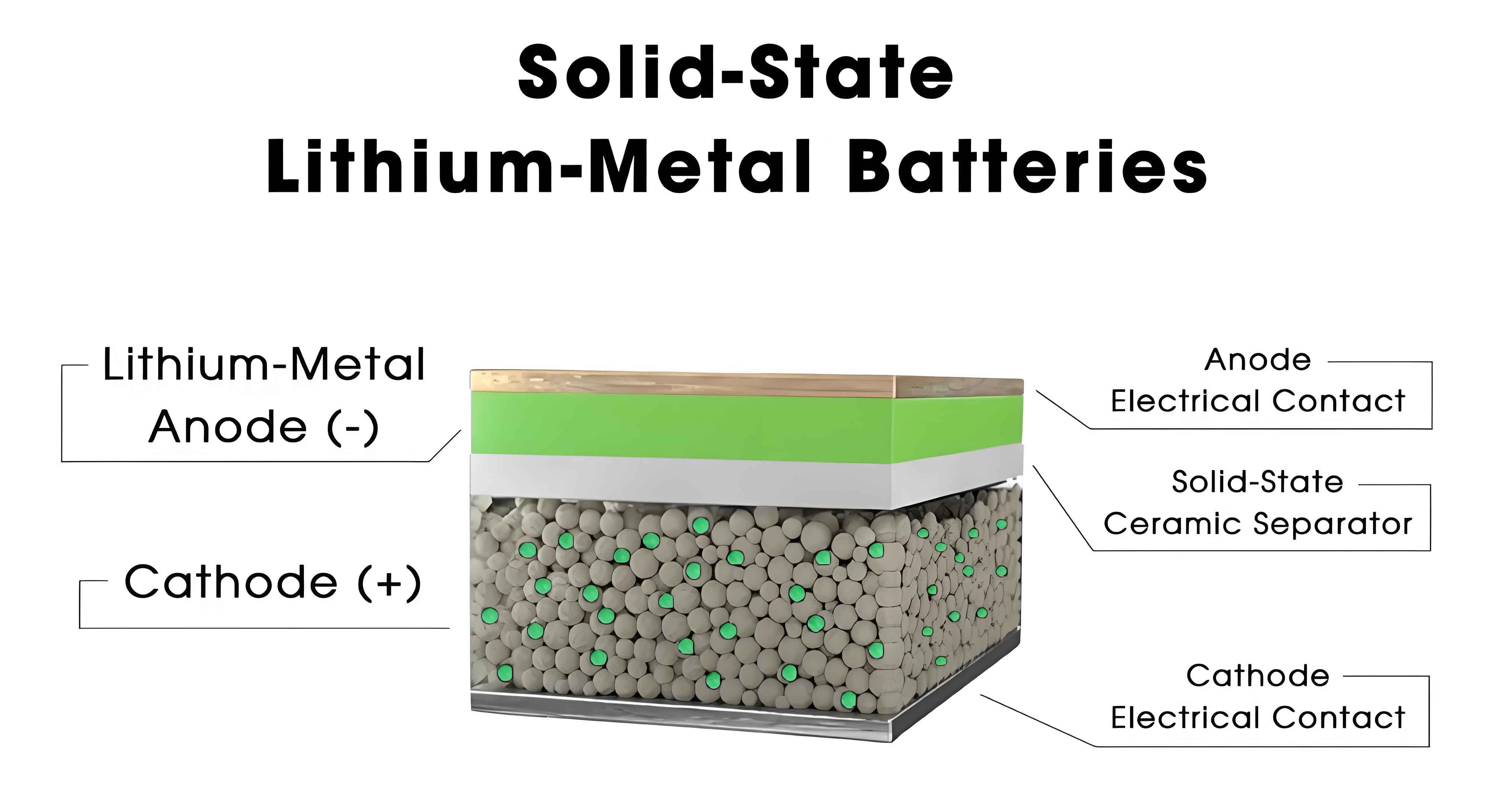
The assembly of solid-state battery cells is most compatible with a lamination (stacking) process followed by thermo-compression, which aligns well with pouch packaging lines.
| Process | Description | Compatibility with Solid-State Battery | Synergy with Pouch |
|---|---|---|---|
| Lamination/Stacking | Alternate stacking of cathode, solid electrolyte separator, and anode sheets. | Avoids bending and cracking of brittle solid electrolyte films; ensures large, uniform solid-solid interfaces. | Creates a flat, rectangular jellyroll ideal for pouch housing. |
| Thermo-compression | Applying heat and pressure to the stacked cell. | Enhances interfacial contact, reduces impedance, and consolidates the cell stack. | Mirrors the pouch sealing process; allows for secondary lamination of pouch to cell for mechanical stability. |
| Pouch Sealing | Heat-sealing two Al-laminate sheets around the cell stack. | Provides hermetic encapsulation in a lightweight, flexible package. | Core process; the sealed pouch can act as a constraint during cell cycling. |
The winding process used for cylindrical and some prismatic cells is unsuitable for brittle solid electrolytes, as bending causes micro-cracks and poor interfacial contact in areas that cannot be filled by a liquid. The lamination process is therefore the de facto standard for high-performance solid-state battery manufacturing.
The thermo-compression bonding of the cell stack can be seamlessly integrated with the subsequent pouch sealing and formation processes. This holistic approach, from stack lamination to final pouch packaging, optimizes the manufacturing flow for the solid-state battery.
2. Industrial Chain Layout and Commercialization Progress
2.1 Strategic Moves by Industry Leaders
Several leading battery and automotive manufacturers are actively pursuing the pouch format for solid-state batteries, signaling strong industry confidence.
| Company | Technology Focus / Plan | Target Timeline | Significance |
|---|---|---|---|
| Farasis Energy (孚能科技) | Stacked pouch cell process for solid-state batteries. | Pilot verification in 2025; small-scale mass production by 2027. | Leverages existing soft-pack expertise for solid-state transition. |
| Changan Auto (长安汽车) | “Golden Bell Jar” all-solid-state battery in pouch format. | Functional prototype (2025), vehicle integration test (2026), mass production (2027). | Major OEM commitment to pouch-formatted solid-state batteries. |
| CATL, BYD, others | Exploring pouch packaging for solid-state variants. | Aligning with overall solid-state roadmap (2026-2030). | Indicates pouch is a serious contender alongside other forms. |
2.2 Development of Supporting Material Industries
The supply chain for key materials, especially Al-laminate, is crucial. Historically dominated by Japanese and Korean firms (e.g., DNP, Showa Denko), the landscape is shifting.
Chinese manufacturers like Zijiang New Materials (紫江新材) have made significant progress, increasing domestic market share to 16.3% in 2022. Its customer base includes major battery makers like ATL and BYD, who are also shareholders. The localization of Al-laminate production is reducing costs and supply chain risks, providing essential support for the future mass production of pouch-type solid-state batteries.
2.3 Mass Production Roadmap and Market Forecast
Aggressive timelines from multiple players point towards the late 2020s as the launch window for commercial solid-state batteries, with pouch formats playing a key role.
Market research forecasts exponential growth. It is projected that global shipments of solid-state batteries could exceed 614 GWh by 2030, capturing about 10% market penetration. Pouch-packaged solid-state batteries are expected to claim a significant share of this market across electric vehicles, energy storage systems, and premium consumer electronics, driven by their performance and safety advantages.
3. Cost Analysis and Economies of Scale
The current high cost of solid-state batteries is a major barrier. Costs are driven by expensive materials (e.g., sulfide electrolytes, high-silicon anodes) and complex, low-volume manufacturing processes.
A critical cost component for pouch cells is the Al-laminate. The price dynamics show a favorable trend:
- 2022: Imported (Japanese) Al-laminate: ~¥30.5/m²; Domestic: ~¥23.5/m².
- Current (Est.): Domestic Al-laminate price has fallen to ~¥14/m², a reduction of approximately 40%.
This cost reduction significantly improves the competitiveness of pouch packaging. A comparative cost analysis for a sample cell (510mm × 120.3mm × 16.8mm) illustrates this:
Aluminum Hardcase:
Weight \( m_{Al-case} \approx 175.18 \, \text{g} \).
Material cost \( C_{Al-case} = m_{Al-case} \times P_{Al} = 0.17518 \, \text{kg} \times 22.78 \, \text{¥/kg} \approx 3.99 \, \text{¥} \).
Pouch (Al-laminate):
Area required per cell \( A_{pouch} \approx 0.178 \, \text{m}^2 \) (including sealing margins).
Material cost with domestic film: \( C_{pouch, dom} = A_{pouch} \times 14 \, \text{¥/m}^2 \approx 2.49 \, \text{¥} \).
Material cost with imported film (2022 price): \( C_{pouch, imp} = A_{pouch} \times 30.5 \, \text{¥/m}^2 \approx 5.43 \, \text{¥} \).
Thus, using current domestic Al-laminate offers a ~38% material cost saving on the casing compared to aluminum, whereas using expensive imported film made the pouch 36% more expensive. This highlights the impact of supply chain localization.
Beyond materials, the complex manufacturing process for solid-state batteries (precise stacking, thermo-compression, conditioning) currently elevates cost. However, the path to cost reduction is clear:
$$ C_{SSB} \approx C_{material} + \frac{C_{capital} + C_{labor} + C_{overhead}}{Production \, Volume} $$
Where \( C_{SSB} \) is the total cost of the solid-state battery. Economies of scale will drastically reduce the per-unit share of fixed costs (\( C_{capital}, C_{overhead} \)). Simultaneous advancements in process simplification, yield improvement, and material innovation (like cheaper electrolyte synthesis) will drive down \( C_{material} \) and \( C_{labor} \).
4. Conclusion and Perspectives
The fusion of pouch packaging and solid-state battery technology presents a compelling pathway for next-generation energy storage. The intrinsic advantages of the pouch format—excellent barrier properties, lightweight, flexibility for volume change, and compatibility with lamination-based manufacturing—align remarkably well with the requirements of solid-state systems.
The industrial ecosystem is rapidly taking shape, with leading battery makers and OEMs committing to pouch-based solid-state battery development, and the upstream supply chain (particularly Al-laminate) maturing and becoming more cost-competitive. Market forecasts indicate substantial growth potential post-2027.
While challenges remain, primarily related to the high initial cost and process complexity of the solid-state battery itself, the trajectory is positive. Economies of scale, sustained R&D, and vertical integration within the supply chain are expected to overcome these hurdles. The pouch-packaged solid-state battery is poised to transition from the laboratory to significant commercial deployment around 2030, offering enhanced performance and safety for electric mobility and grid storage, thereby reshaping the landscape of the new energy industry.