
Since the commercialization of the rocking-chair battery, lithium-ion batteries have established a dominant position in the rechargeable energy storage landscape. Their high energy density has made them indispensable for powering our portable electronics, electric vehicles, and grid storage systems. However, this widespread adoption has cast a spotlight on their inherent vulnerabilities, primarily stemming from the flammable organic liquid electrolytes they employ. Safety incidents, while statistically rare, pose a significant barrier to their unchallenged proliferation, particularly in applications demanding absolute reliability.
The pursuit of all-solid-state batteries, where the liquid electrolyte is replaced by a non-flammable solid-state electrolyte (SSE), is widely seen as the ultimate solution to these safety woes. Beyond safety, SSEs promise higher energy density by enabling the use of high-capacity lithium metal anodes and by improving the weight and volume efficiency of the cell. The high mechanical modulus of many SSEs can also suppress lithium dendrite growth, a major failure mode in conventional systems. This vision has fueled immense research and investment into all-solid-state lithium-ion batteries. Yet, in this fervent pursuit, a critical and often overlooked systemic challenge emerges: the stark reality of lithium resource constraints.
The issue is twofold: abundance and distribution. Lithium is not a plentiful element in the Earth’s crust. More critically, its extraction and refining are geographically concentrated, creating supply chain vulnerabilities and geopolitical risks. This problem is acutely magnified for all-solid-state lithium-ion batteries. The most promising ceramic SSEs, such as garnet-type Li7La3Zr2O12 or sulfide-based Li10GeP2S12 and Li6PS5Cl, are intrinsically lithium-rich materials. Their synthesis consumes significantly more lithium per unit volume than the lithium salts (e.g., LiPF6) used in liquid electrolytes. Furthermore, because solid electrolytes lack the wetting properties of liquids, the entire porous electrode matrix must be densely filled with SSE powder to ensure sufficient ionic pathways. This architectural necessity leads to a massive escalation in lithium inventory per battery cell. A simple calculation illustrates this: the number of lithium atoms contained in a dense pellet of a typical lithium-rich ceramic electrolyte can be tens of times greater than that in an equivalent volume of a standard liquid electrolyte. When coupled with complex, energy-intensive manufacturing processes, these factors translate to high costs and a heavy reliance on a constrained resource base. Until revolutionary advancements in lithium extraction (e.g., efficient seawater mining) materialize, the vision of all-solid-state lithium-ion batteries completely displacing their liquid counterparts faces a long and arduous journey fraught with economic and material sustainability challenges.
This profound resource dilemma directs our attention to an alternative chemistry that shares the safety and high-energy-density aspirations of solid-state design but operates from a position of material strength: the all-solid-state sodium-ion battery.
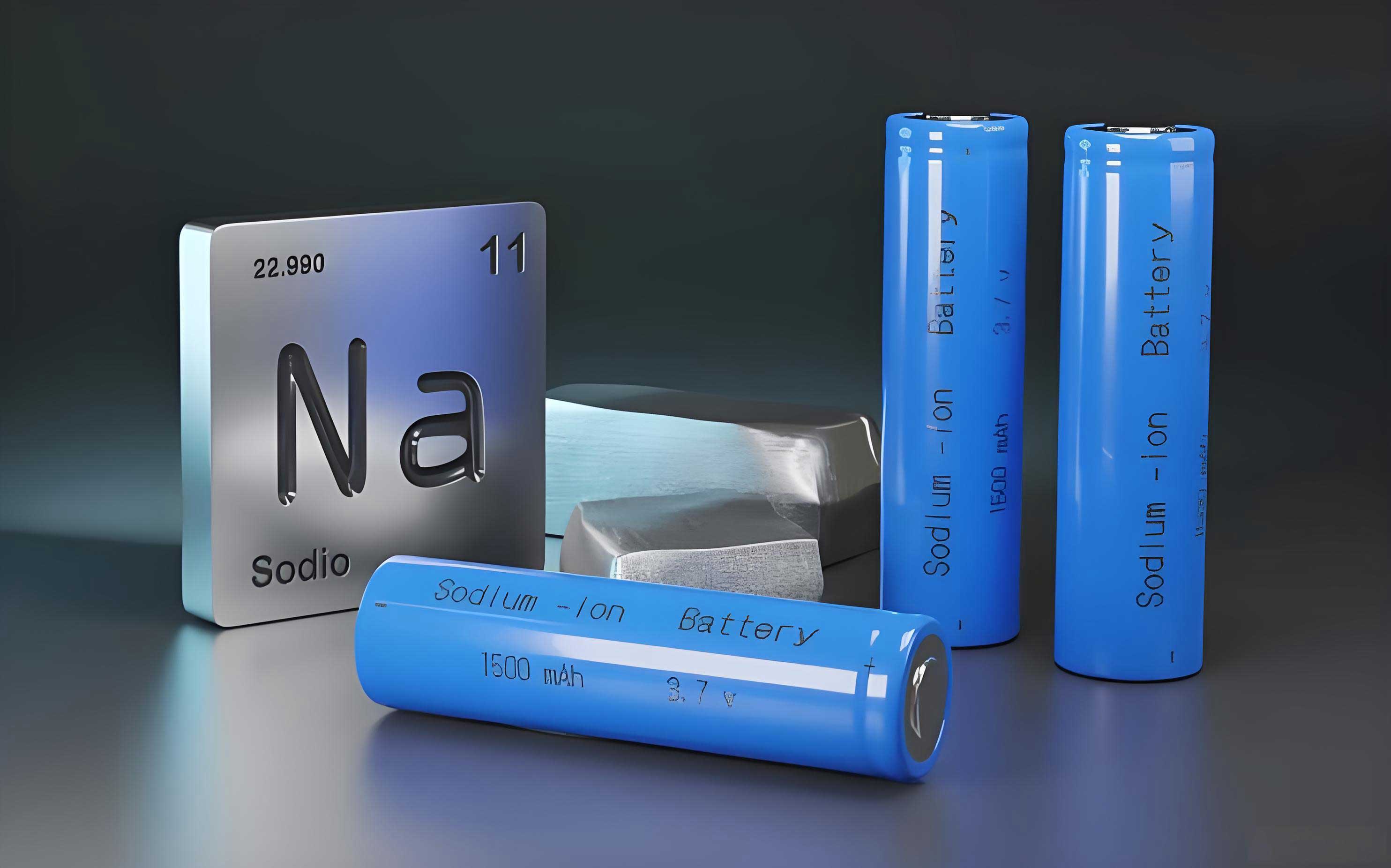
Sodium-ion batteries, utilizing charge carriers from one of the most abundant elements on Earth, inherently circumvent the resource scarcity issue. Sodium is globally ubiquitous, found in seawater and mineral deposits worldwide, ensuring a stable, low-cost, and geopolitically resilient supply chain. While current commercial sodium-ion battery technology using liquid electrolytes offers compelling advantages in cost and safety, its energy density typically lags behind that of mature lithium-ion systems. This gap is attributed to the slightly higher redox potential of Na/Na+ (-2.71 V vs. SHE) compared to Li/Li+ (-3.04 V vs. SHE) and the ongoing development of higher-capacity cathode materials. The transition to an all-solid-state configuration is the key strategy to bridge this energy density gap and unlock the full potential of sodium-based electrochemistry.
The Compelling Advantages of All-Solid-State Sodium-Ion Batteries
The rationale for pursuing all-solid-state sodium-ion batteries is built on a powerful confluence of factors encompassing resources, materials science, and manufacturing synergy.
| Advantage Category | Description | Impact |
|---|---|---|
| Resource Abundance & Security | Sodium is ~1000x more abundant than lithium in the Earth’s crust, with widespread and even geographical distribution. | Eliminates supply chain bottlenecks, reduces cost volatility, and enables sustainable mass production. |
| Material Feasibility | Existence of sodium solid electrolytes with room-temperature ionic conductivity rivaling or exceeding their lithium analogues. | Proves the fundamental scientific viability of constructing high-performance all-solid-state cells. |
| Manufacturing Compatibility | Production processes (powder processing, cell stacking, sintering) are highly analogous to those for all-solid-state lithium-ion batteries. | Leverages existing industrial R&D investments, enabling technology transfer and faster commercialization. |
| Anode Compatibility | Sodium does not alloy with aluminum at low potentials. | Enables the use of low-cost Al foil as the anode current collector, facilitating anode-free or thin Na metal anode designs for maximized energy density. |
The last point is particularly significant for energy density. In a lithium metal battery, copper must be used as the anode current collector because lithium alloys with aluminum. Switching to an all-solid-state sodium-ion battery configuration allows the use of lightweight, low-cost aluminum on both electrodes, reducing inactive weight and cost. This, combined with the potential to use a sodium metal anode (or even an “anode-free” design where Na is plated directly onto the Al current collector from the cathode), positions the all-solid-state sodium-ion battery as a formidable contender for next-generation, high-energy-density storage.
Landscape of Solid Sodium-Ion Conductors
The heart of any all-solid-state battery is its solid electrolyte. For the all-solid-state sodium-ion battery to succeed, the solid sodium-ion conductor must exhibit high ionic conductivity (>1 mS cm-1 at room temperature), good electrochemical stability, and compatibility with electrode materials. Research has progressed along several material families, each with distinct characteristics and challenges.
1. Polymer Electrolytes: Sodium-ion conducting polymers, typically based on complexes of poly(ethylene oxide) (PEO) with sodium salts (e.g., NaTFSI), transport ions via segmental motion of the polymer chains. The larger ionic radius of Na+ (1.02 Å) compared to Li+ (0.76 Å) often leads to stronger polymer-ion interactions and higher activation energy for conduction. This typically results in useful ionic conductivities (on the order of 0.1-1 mS cm-1) only at elevated temperatures (e.g., 60-80 °C). While they offer good flexibility and electrode contact, their modest room-temperature performance and limited oxidative stability remain hurdles.
2. Ceramic Electrolytes (NASICON-type): This family represents the most promising and widely studied class of sodium solid electrolytes. NASICON (Na Super Ionic CONductor) materials have a general formula of Na1+xM2(SiO4)x(PO4)3-x (M = Zr, Ti, Hf, etc.) and possess a robust three-dimensional framework that creates interconnected conduction pathways for Na+ ions. The pristine compound Na3Zr2Si2PO12 exhibits a room-temperature conductivity of ~0.1-0.5 mS cm-1. The conductivity can be dramatically enhanced through aliovalent doping, which increases the sodium ion concentration and optimizes the bottleneck sizes in the conduction pathway.
For example, substituting Zr4+ with a lower-valence cation like Mg2+ or Sc3+ introduces extra Na+ for charge compensation. The ionic conductivity, \(\sigma\), follows an Arrhenius relationship:
$$\sigma T = A \exp\left(-\frac{E_a}{k_B T}\right)$$
where \(E_a\) is the activation energy, \(k_B\) is Boltzmann’s constant, and \(T\) is temperature. Doping aims to minimize \(E_a\). Compounds like Na3.4Mg0.1Zr1.9Si2.2P0.8O12 and Na3.4Sc0.4Zr1.6Si2PO12 have achieved conductivities of 3.6 and 4.0 mS cm-1 at room temperature, respectively, rivaling that of conventional liquid electrolytes (e.g., ~8 mS cm-1 for 1M NaPF6 in EC:DEC). Importantly, their Na+ transference number is essentially 1. The challenge lies in replacing expensive dopants like Sc with more abundant and cheaper elements without sacrificing performance.
3. Glassy and Glass-Ceramic Electrolytes: Amorphous sulfide or oxide-based glasses can offer isotropic ionic conduction and often better interfacial contact with electrodes due to their flow characteristics during processing. Their homogeneous structure avoids grain boundary issues prevalent in polycrystalline ceramics. However, reports of glassy Na-ion conductors with high room-temperature conductivity are less common. Their true potential may lie in their application as interfacial coating layers or as components in composite electrolytes with ceramic materials, where they can heal grain boundaries and enhance overall ionic transport.
4. Polyborate Salts (Complex Hydrides): This emerging class has produced some of the highest room-temperature sodium-ion conductivities ever reported. Salts like Na2(CB9H10)(CB11H12) exhibit astonishing conductivities exceeding 30 mS cm-1 at room temperature, surpassing even the best liquid electrolytes. They are also characterized by excellent thermal stability and soft mechanical properties. The primary barriers are their often narrow electrochemical stability window, complex and costly synthesis involving toxic precursors, and a nascent supply chain. While not immediately practical, they highlight the vast unexplored chemical space for superior sodium-ion conductors.
5. Anti-perovskite and Other Structures: Materials with anti-perovskite crystal structure (e.g., Na3OX, where X is a halide) and other novel frameworks are also under investigation, contributing to the diversification of potential solid electrolyte candidates for the all-solid-state sodium-ion battery.
The Critical Path: Optimizing NASICON-type Electrolytes
Given the balance between performance, stability, and potential for scalable synthesis, NASICON-type ceramics are currently the leading candidate for practical all-solid-state sodium-ion batteries. The optimization strategy revolves around crystal chemistry. The ionic conductivity is governed by the concentration of mobile charge carriers (Na+) and their mobility, which is related to the activation energy for hopping between crystallographic sites.
The effect of doping can be systematically understood. In Na3Zr2Si2PO12, the framework is formed by ZrO6 octahedra and (Si/P)O4 tetrahedra. Doping on the Zr or (Si/P) sites modifies the unit cell volume and the size of the interstitial bottlenecks through which Na+ ions migrate. An optimal bottleneck size reduces the strain energy during ion hopping. Furthermore, aliovalent doping directly increases the sodium content. Replacing Zr4+ with M3+ (e.g., Sc3+, Y3+, In3+) or Si4+ with M3+ (e.g., Al3+) creates a charge imbalance compensated by the incorporation of additional Na+ into the structure, as approximated by:
$$\text{Na}_{3+x}\text{Zr}_{2-x}\text{M}^{3+}_{x}\text{Si}_2\text{PO}_{12} \quad \text{or} \quad \text{Na}_{3+x}\text{Zr}_2\text{Si}_{2-x}\text{M}^{3+}_{x}\text{PO}_{12}$$
The challenge is to find the optimal doping level \(x\) that maximizes conductivity without inducing phase instability or electronic conduction.
A multi-element doping approach is often more effective. For instance, co-doping with two different elements can separately address carrier concentration and bottleneck size. The search for the ideal composition, balancing performance and cost (avoiding expensive rare-earth elements), is a central materials challenge for the advancement of the all-solid-state sodium-ion battery.
Accelerating Discovery with Machine Learning
The development of solid-state electrolytes has traditionally been guided by experimental trial-and-error and intuition-based substitutions, which is time-consuming and resource-intensive. The field is ripe for a paradigm shift powered by computational tools, especially machine learning (ML). The goal is to rapidly screen vast chemical spaces to identify novel sodium-ion conductors with predicted high conductivity and stability.
Constructing an effective ML model for solid electrolyte discovery involves several key steps, each with specific challenges for sodium-ion systems:
| Step | Challenge for Na-ion Conductors | Potential Approach |
|---|---|---|
| Data Acquisition | Scarcity of large, curated experimental datasets compared to Li-ion systems. | Combine data from computational databases (Materials Project, AFLOW) with curated experimental data from literature. Use Density Functional Theory (DFT) to generate initial property datasets. |
| Feature Engineering | Identifying descriptors that accurately capture Na+ migration energetics and structural adaptability. | Use features like ionic radii, electronegativity, unit cell volume, bond lengths, polyhedral distortion indices, and Voronoi tessellation-derived pathway descriptors. |
| Model Selection & Training | Avoiding overfitting due to limited data; ensuring physical interpretability. | Start with simpler models (Random Forest, Gradient Boosting). Employ cross-validation rigorously. Use models that provide feature importance scores. |
| Prediction & Validation | Predictions may suggest thermodynamically unstable or unsynthesizable compounds. | Filter predictions using phase stability (e.g., energy above hull from DFT) and synthetic accessibility scores. Prioritize candidates for experimental validation. |
A particularly promising strategy is to build a hybrid pipeline. A preliminary ML model can be pre-trained on a large dataset of DFT-computed properties for known and hypothetical structures. This model learns the complex relationships between crystal structure features and ionic conductivity/migration barriers. Subsequently, this model can be fine-tuned or its predictions can be weighted by incorporating smaller, high-quality experimental datasets. This “transfer learning” approach leverages the breadth of computational data while grounding the predictions in empirical reality. The iterative cycle of prediction, synthesis, characterization, and data feedback is crucial for refining the model and accelerating the discovery of practical solid electrolytes for the all-solid-state sodium-ion battery.
Key DFT-calculated properties that serve as excellent targets for ML prediction include the Na+ migration energy barrier (\(E_m\)) and the formation energy (\(\Delta H_f\)). A low \(E_m\) is directly correlated with high ionic conductivity, while a negative \(\Delta H_f\) indicates thermodynamic stability. An ML model that can reliably predict these properties from compositional and structural fingerprints would be an invaluable tool for the community.
Beyond the Electrolyte: Interfaces and Integration
High ionic conductivity in the bulk solid electrolyte is a necessary but insufficient condition for a high-performance all-solid-state sodium-ion battery. The solid-solid interfaces between the electrolyte and the electrodes (cathode and anode) are critical and often performance-limiting. Challenges include:
- High Interfacial Resistance: Poor physical contact and space-charge layers can create large impedance.
- Chemical & Electrochemical Instability: The solid electrolyte may react with the electrode materials during cycling, forming resistive interphases.
- Mechanical Degradation: Volume changes in electrodes during sodium (de)insertion can fracture brittle ceramic electrolytes, breaking ionic contact.
Addressing these requires a holistic cell design strategy. For cathodes, this involves developing composite cathodes where active material particles are intimately mixed with electrolyte and conductive carbon, often using a small amount of polymer or glassy electrolyte as a binder/sealant. For the anode side, when using sodium metal, the interface must be engineered to be stable and dendrite-suppressing. The use of alloy anodes or carbon-based anodes presents different interfacial challenges. Furthermore, optimizing sintering or pressing conditions to achieve dense electrolytes while preserving electrode integrity is a key manufacturing consideration. The development of the all-solid-state sodium-ion battery is thus a system-level endeavor, demanding concurrent advances in electrolyte, cathode, anode, and interfacial engineering.
Conclusion and Perspective
The all-solid-state sodium-ion battery emerges not merely as an alternative, but as a strategically vital direction for the future of electrochemical energy storage. It represents a convergence of the safety and high-energy-density promises of solid-state technology with the resource sustainability and cost advantages of sodium-based chemistry. While the technological pathway for the all-solid-state sodium-ion battery shares similarities with its lithium-focused counterpart, it is unburdened by the latter’s fundamental material scarcity constraints. This offers a more sustainable and geopolitically resilient route to safe, high-performance batteries.
Current research has established strong proof-of-concept, particularly with NASICON-type solid electrolytes demonstrating conductivities suitable for practical application. The primary challenges now are translational: optimizing compositions for cost and performance, scaling up synthesis, mastering interfacial control, and integrating components into robust, high-energy-density cells. In this endeavor, modern computational tools like machine learning will be indispensable for accelerating the discovery and optimization of next-generation materials.
The journey of the all-solid-state sodium-ion battery from laboratory curiosity to commercial reality will require sustained and collaborative efforts across academia and industry. Given the compelling advantages it holds—safety, sustainability, potential for high energy density, and manufacturing synergy—it is poised to be a leading contender in the next-generation battery race. Focusing research energy and investment on this pathway is not just a scientific choice, but a pragmatic strategy for building a secure and sustainable energy storage future.