
The rapid advancement of national new energy and communication technologies, particularly the强势 development of AI large models and the low-altitude economy, has introduced new challenges to China’s energy supply security. Compared to traditional lithium-ion batteries, sodium-ion batteries exhibit characteristics of high-rate capability, enhanced safety, long cycle life, low cost, and wide operating temperature range.
In the severe cold regions of northern China, the backup power sources for communication base stations are predominantly lead-acid batteries and lithium iron phosphate (LFP) batteries. After years of deployment, both technologies exhibit certain drawbacks. Lead-acid batteries face issues such as environmental unfriendliness, low cycle life, memory effect, and poor high-temperature tolerance. The primary shortcoming of LFP batteries lies in their poor low-temperature performance. During winter power outages or in simplified outdoor cabinet scenarios, they often fail to operate normally, jeopardizing communication network stability. The sodium-ion battery, with its superior low-temperature capabilities, emerges as an effective supplement for application in such demanding environments.
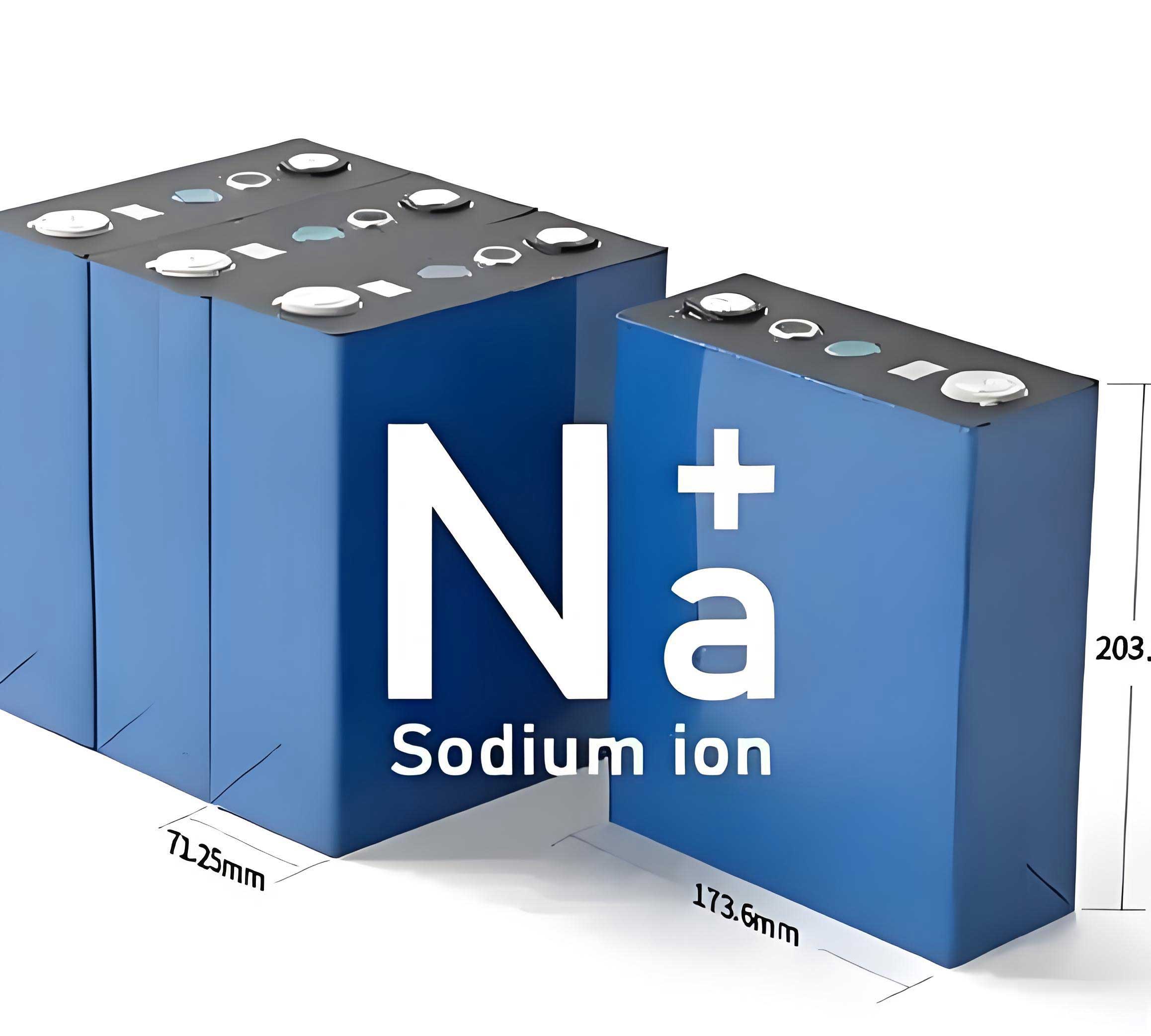
Development Journey and Basic Principles
Research on sodium-ion batteries began in the 1970s. Following the commercialization of lithium-ion batteries in 1991, sodium-ion battery research was largely搁置. However, as the limitations of lithium-ion technology—such as safety concerns and poor low-temperature performance—became increasingly apparent, interest in sodium-ion batteries has been重新兴起. Presently, the primary application domains for sodium-ion batteries include energy storage (grid, base station, and residential storage), as well as emerging fields like low-speed electric vehicles (e-bikes, trikes, heavy-duty vehicles) and passenger electric vehicles.
The fundamental working principle of a sodium-ion battery is analogous to that of a lithium-ion battery, relying on the shuttling of sodium ions between the cathode and anode during charge and discharge. The general electrochemical reaction can be represented as:
$$ \text{Cathode: } Na_xMO_2 \rightleftharpoons Na_{x-\Delta}MO_2 + \Delta Na^+ + \Delta e^- $$
$$ \text{Anode: } C + \Delta Na^+ + \Delta e^- \rightleftharpoons Na_{\Delta}C $$
$$ \text{Overall: } Na_xMO_2 + C \rightleftharpoons Na_{x-\Delta}MO_2 + Na_{\Delta}C $$
Where M represents transition metal(s), and C typically denotes a carbonaceous anode material like hard carbon.
Key Components and Material Systems
Cathode Materials
The performance and cost of a sodium-ion battery are heavily influenced by its cathode material. The main contenders include layered transition metal oxides, polyanionic compounds, and Prussian blue analogues, each with distinct advantages and challenges.
| Type | Typical Formula / Structure | Average Voltage (V vs. Na/Na+) | Key Advantages | Key Challenges |
|---|---|---|---|---|
| Layered Transition Metal Oxides (NMO) | NaxMO2 (M=Mn, Fe, Co, Ni, etc.), layered O3 or P2 structures | 2.8 – 3.5 | High specific capacity, simple synthesis, good rate capability. | Structural instability upon deep cycling, sensitivity to moisture, phase transitions. |
| Polyanionic Compounds | NaMPO4 (olivine), Na3V2(PO4)3 (NASICON) | 3.0 – 3.8 | Excellent structural/thermal stability, long cycle life, high safety. | Lower specific capacity, poor intrinsic electronic conductivity, high cost for some vanadium-based materials. |
| Prussian Blue Analogues (PBA) | NaxMa[Mb(CN)6] (M=Fe, Mn, etc.), open 3D framework | 3.0 – 3.5 | Low cost, facile synthesis, high theoretical capacity. | Presence of crystal water and vacancies leading to poor cycling stability and low Coulombic efficiency. |
The theoretical capacity of a cathode material can be estimated by:
$$ C_{theo} = \frac{nF}{3.6M} $$
where \( C_{theo} \) is the theoretical specific capacity in mAh/g, \( n \) is the number of electrons transferred per formula unit, \( F \) is Faraday’s constant (96485 C/mol), and \( M \) is the molar mass of the active material in g/mol.
Anode Materials
The anode is crucial for accommodating sodium ions. While carbon-based materials are dominant, other systems are under investigation.
| Type | Typical Materials | Mechanism | Key Advantages | Key Challenges |
|---|---|---|---|---|
| Carbon-based | Hard Carbon, Soft Carbon | Adsorption/Intercalation | Moderate capacity, good cycling, relatively low cost, excellent low-temperature kinetics. | Low initial Coulombic efficiency, low tap density. |
| Ti-based Oxides | Na2Ti3O7, Li4Ti5O12 (Na-doped) | Intercalation | Excellent cycling stability, “zero-strain” characteristics, high safety. | Low specific capacity, high operating potential (~0.7V vs. Na/Na+). |
| Alloy-based | Sn, Sb, P | Alloying | Very high theoretical specific capacity. | Huge volume expansion (>300%), severe pulverization, rapid capacity fade. |
| Organic | Disodium rhodizonate dibasic | Redox reactions of carbonyl groups | Sustainable sourcing, tunable structures. | Low electronic conductivity, solubility in electrolytes. |
Electrolytes
The electrolyte facilitates ion transport and significantly impacts safety and temperature performance.
| Type | Composition Examples | Key Advantages | Key Challenges | Suitability for Cold Climate |
|---|---|---|---|---|
| Organic Liquid | NaPF6 or NaClO4 in EC/PC/DEC | Wide electrochemical window, compatible with high-voltage cathodes, mature technology. | Flammability, poor thermal stability, higher cost. | Good with optimized solvents; viscosity increases at low T. |
| Concentrated / Low-Temp Liquid | High-concentration NaFSI in Ethers | Wider liquidus range, stable SEI, improved low-T performance. | High viscosity, high cost, reduced wetting ability. | Excellent. Specially formulated for low-temperature operation. |
| Aqueous | Na2SO4, NaOH in water | Non-flammable, low cost, high ionic conductivity. | Narrow voltage window (<2V), hydrogen evolution. | Poor (freezes at 0°C). |
| Solid-State | Na3PS4, Na3Zr2Si2PO12 | Non-flammable, enables Na metal anode. | Low ionic conductivity at room temperature, poor interfacial contact. | Generally poor due to further reduced ion mobility at low T. |
The ionic conductivity (\( \sigma \)) of an electrolyte follows an Arrhenius-type relationship: $$ \sigma = A \exp\left(-\frac{E_a}{k_B T}\right) $$ where \( E_a \) is the activation energy for ion transport, \( k_B \) is Boltzmann’s constant, and \( T \) is the absolute temperature. A lower \( E_a \) is critical for maintaining conductivity in cold environments, a key advantage of certain sodium-ion battery electrolytes.
Differentiating Characteristics: Why Sodium-ion for the Cold?
Inherent Material and Cost Advantages
The fundamental properties of sodium confer significant advantages over lithium, especially concerning resource availability and low-temperature kinetics.
| Property | Sodium (Na) | Lithium (Li) | Implication for Sodium-ion Battery |
|---|---|---|---|
| Abundance in Earth’s Crust | 2.64% (6th most abundant element) | ~0.006% | Ultimate raw material cost is drastically lower, ensuring long-term supply security. |
| Raw Material Cost (Example) | Na2CO3 (Soda Ash): ~$200/ton | Li2CO3: ~$15,000/ton (volatile) | Direct and significant reduction in bill of materials (BOM) cost. |
| Ionic Radius in Coordination | 1.02 Å (for coordination number 6) | 0.76 Å | Larger radius leads to weaker Lewis acidity, resulting in lower desolvation energy at the electrode interface. This is a key factor for better low-temperature performance. |
| Stokes’ Radius in EC/PC | Smaller than Li+ | Larger | Na+ has higher ionic conductivity in organic solvents, enabling better rate capability. |
The desolvation energy (\( \Delta G_{desolv} \)) is a major barrier for ion transfer at low temperatures. It can be qualitatively related to the charge density of the ion. The charge density (\( \rho \)) is proportional to: $$ \rho \propto \frac{z}{r} $$ where \( z \) is the charge and \( r \) is the ionic radius. For monovalent ions (z=1), sodium’s larger radius results in a lower charge density compared to lithium, leading to weaker interactions with solvent molecules and a lower \( \Delta G_{desolv} \). This facilitates faster charge transfer at the interface in cold conditions for the sodium-ion battery.
Electrochemical Performance in Low Temperature
The most compelling argument for deploying sodium-ion batteries in severe cold regions is their outstanding low-temperature electrochemical performance. While a lithium-ion battery may retain only 60-70% of its room-temperature capacity at -20°C, a sodium-ion battery can retain over 80% under the same conditions. This performance stems from the combined effects of favorable electrode kinetics and electrolyte formulation.
The capacity retention at a given temperature and discharge rate (C-rate) can be modeled. The available capacity \( C(T, I) \) is affected by both thermodynamic and kinetic factors: $$ C(T, I) = C_0 \cdot \eta_{kin}(T, I) \cdot \eta_{thermo}(T) $$ where \( C_0 \) is the nominal capacity at 25°C under a low C-rate, \( \eta_{kin} \) is the kinetic efficiency factor (dependent on temperature T and current I), and \( \eta_{thermo} \) is the thermodynamic factor related to the change in equilibrium potential and accessible capacity with temperature.
For the sodium-ion battery, the \( \eta_{kin} \) factor remains high due to the low charge density of Na+ and the use of electrolytes with low freezing points and low activation energies. Experimental data consistently shows superior rate capability and low-temperature discharge compared to mainstream lithium iron phosphate batteries.
Safety and Longevity
Safety is paramount for communication base station applications. Sodium-ion batteries exhibit inherently better safety characteristics due to several factors: 1) Higher thermal runaway onset temperature compared to lithium-ion systems, 2) Ability to discharge to 0V without permanent damage (simplifying storage and transportation), and 3) The stability of many sodium-based cathode materials (like polyanionics) which release less oxygen upon decomposition.
The cycle life of a sodium-ion battery is competitive. Under typical telecom backup cycling conditions (shallow depth of discharge, DOD), a sodium-ion battery can achieve several thousand cycles. The capacity fade often follows a power-law relationship: $$ Q_n = Q_0 – k \cdot n^\alpha $$ where \( Q_n \) is the capacity at cycle \( n \), \( Q_0 \) is the initial capacity, \( k \) is a rate constant, and \( \alpha \) is an exponent typically around 0.5-0.7 for diffusion-controlled degradation mechanisms. The robust electrode materials in a sodium-ion battery contribute to a low \( k \) value, ensuring long service life.
Application Analysis for Base Stations in Severe Cold Regions
Challenges of Current Solutions
The push for carbon reduction and cost optimization in the telecom sector has led to widespread adoption of simplified site solutions like outdoor cabinets and all-in-one stations, which replace traditional equipment rooms. In northern China (Northeast, Northwest), winter temperatures routinely drop below -20°C. While lead-acid batteries suffer from drastically reduced capacity and potential freezing, lithium-ion batteries, particularly LFP, also experience severe capacity fade and increased internal resistance, failing to provide the required backup time during grid outages. The lack of insulation or active heating in many of these outdoor cabinets exacerbates the problem.
The Sodium-ion Battery Value Proposition
Here, the sodium-ion battery presents a compelling, drop-in solution. Its superior low-temperature performance directly addresses the critical failure mode of lithium-ion batteries in unheated outdoor cabinets. The sodium-ion battery can operate effectively across the wide temperature range encountered in these environments, from summer highs to extreme winter lows, without the need for auxiliary heating systems that consume additional energy.
A quantitative assessment for a typical wireless base station load (P_load) and required backup time (t_backup) determines the needed battery energy capacity (E_batt): $$ E_{batt} = P_{load} \cdot t_{backup} / (\eta_{inv} \cdot DOD_{max}) $$ where \( \eta_{inv} \) is the inverter efficiency and \( DOD_{max} \) is the maximum allowable depth of discharge. For a sodium-ion battery, the effective capacity at the minimum site temperature (\( C_{eff}(T_{min}) \)) is much closer to its rated capacity (\( C_{rated} \)) than that of an LFP battery: $$ \frac{C_{eff}^{SIB}(T_{min})}{C_{rated}^{SIB}} \gg \frac{C_{eff}^{LFP}(T_{min})}{C_{rated}^{LFP}} $$ This means a sodium-ion battery system can be sized smaller for the same low-temperature performance or provide significantly longer backup time for the same installed capacity, offering both capital and operational advantages.
Field Application and Performance Validation
Early deployments in high-altitude, cold regions like Tibet and Qinghai have validated the practical performance of sodium-ion batteries. In these pilot projects, sodium-ion batteries are used in纯 photovoltaic-plus-storage base stations, serving both as backup and daily cycling storage. Enduring minimum temperatures below -30°C without climate control, the sodium-ion battery systems have demonstrated stable capacity retention above 95% after nearly a year of operation at moderate discharge rates (e.g., 0.2C). This real-world data confirms the theoretical advantages of the sodium-ion battery in harsh climates and provides a strong empirical foundation for broader rollout.
The total cost of ownership (TCO) analysis over a 10-year period for a base station backup system highlights the economic case. While the upfront cost per kWh for a sodium-ion battery may be comparable to or slightly higher than LFP currently, the TCO benefits from: 1) Eliminating capex/opex for heating systems, 2) Reduced replacement frequency due to better low-temperature cycling durability, and 3) The anticipated dramatic reduction in raw material costs as supply chains mature.
Comprehensive Comparison: Sodium-ion vs. Lithium-ion vs. Lead-Acid
A holistic comparison underscores the positioning of the sodium-ion battery as a versatile and robust solution, particularly for demanding environments.
| Parameter | Sodium-ion Battery (SIB) | Lithium-ion Battery (LFP典型) | Lead-Acid Battery (VRLA) | Remarks for Cold Climate Application |
|---|---|---|---|---|
| Energy Density (Wh/kg) | 100 – 160 | 120 – 180 | 30 – 50 | SIB sufficient for stationary backup; weight less critical than for EVs. |
| Nominal Voltage (V) | ~3.0 – 3.2 | ~3.2 – 3.3 | ~2.0 | SIB voltage compatible with existing Li-ion system designs. |
| Low-T Performance | Excellent ~80-90% at -20°C |
Poor ~60-70% at -20°C |
Very Poor <50% at -20°C |
Key differentiator. SIB operates reliably without heating. |
| Cycle Life (@80% DOD) | 3,000 – 6,000+ | 3,000 – 7,000+ | 300 – 1,500 | SIB cycle life meets/exceeds telecom requirements. |
| Fast Charge Capability | High (to 80% in ~15min) | Moderate to High | Very Low | SIB allows rapid recharge after outage, beneficial for frequent grid issues. |
| Safety | High (Stable chemistry, can discharge to 0V) |
Medium (Requires stringent BMS protection) |
High (But corrosive electrolyte) |
SIB’s inherent safety reduces risk in unattended remote sites. |
| Resource & Cost Trend | Abundant, Falling Na, Fe, Mn based |
Constrained, Volatile Li, Co, Ni dependent |
Mature, Stable Pb based |
SIB offers long-term cost and supply chain security, a strategic advantage. |
| Environmental Impact | Low to Medium | Medium (mining impact) | High (Pb toxicity) | SIB aligns with green network initiatives. |
The performance matrix clearly shows that for the specific use case of backup power in unheated cabinets in cold regions, the sodium-ion battery offers a superior balance of critical attributes: reliability at low temperature, safety, lifespan, and future economic viability.
Prospects and Concluding Perspective
The current phase of sodium-ion battery development positions it as a high-performance supplement to lithium-ion technology, filling critical gaps in applications where temperature resilience, safety, and cost are paramount. The temporary slowdown in its market penetration, influenced by volatile lithium carbonate prices, does not diminish its long-term strategic value.
The future application landscape for the sodium-ion battery is vast. In the context of通信 networks, it is not only an ideal solution for backup power in cold climates but also holds great promise for distributed energy storage systems integrated with base stations, participating in peak shaving and grid services. Nationally, the development of sodium-ion battery technology aligns perfectly with the “源网荷储” (Generation-Grid-Load-Storage) integration policy, providing a scalable, safe, and cost-effective storage medium to stabilize the grid fed by intermittent renewable sources like wind and solar.
In conclusion, the sodium-ion battery, with its excellent low-temperature performance, inherent safety, and compelling cost trajectory based on abundant materials, presents a transformative solution for ensuring communication network resilience in severe cold regions. It effectively addresses the key bottlenecks of incumbent battery technologies in these demanding environments. As the industry supply chain matures and manufacturing scales, the sodium-ion battery is poised to move from a strategic supplement to a mainstream choice, contributing significantly to the energy transition and the development of robust, sustainable digital infrastructure.