
In recent years, the rapid advancement of battery technology and the increasing demand for grid energy scheduling have led to a significant rise in the energy density within battery energy storage system compartments. This escalation, while enhancing storage capacity, also amplifies the risk of thermal runaway incidents, which can potentially trigger fires and cause substantial damage. Therefore, to minimize the hazards and losses associated with such events in battery energy storage systems, we have developed a comprehensive temperature monitoring system. This system enables real-time monitoring of multiple temperature-sensitive points within the battery energy storage system compartments, utilizing wireless networks for data transmission. This allows operators to maintain thorough oversight of thermal conditions, ensuring safety and reliability. The importance of proactive thermal management in battery energy storage systems cannot be overstated, as it directly impacts operational efficiency and risk mitigation.
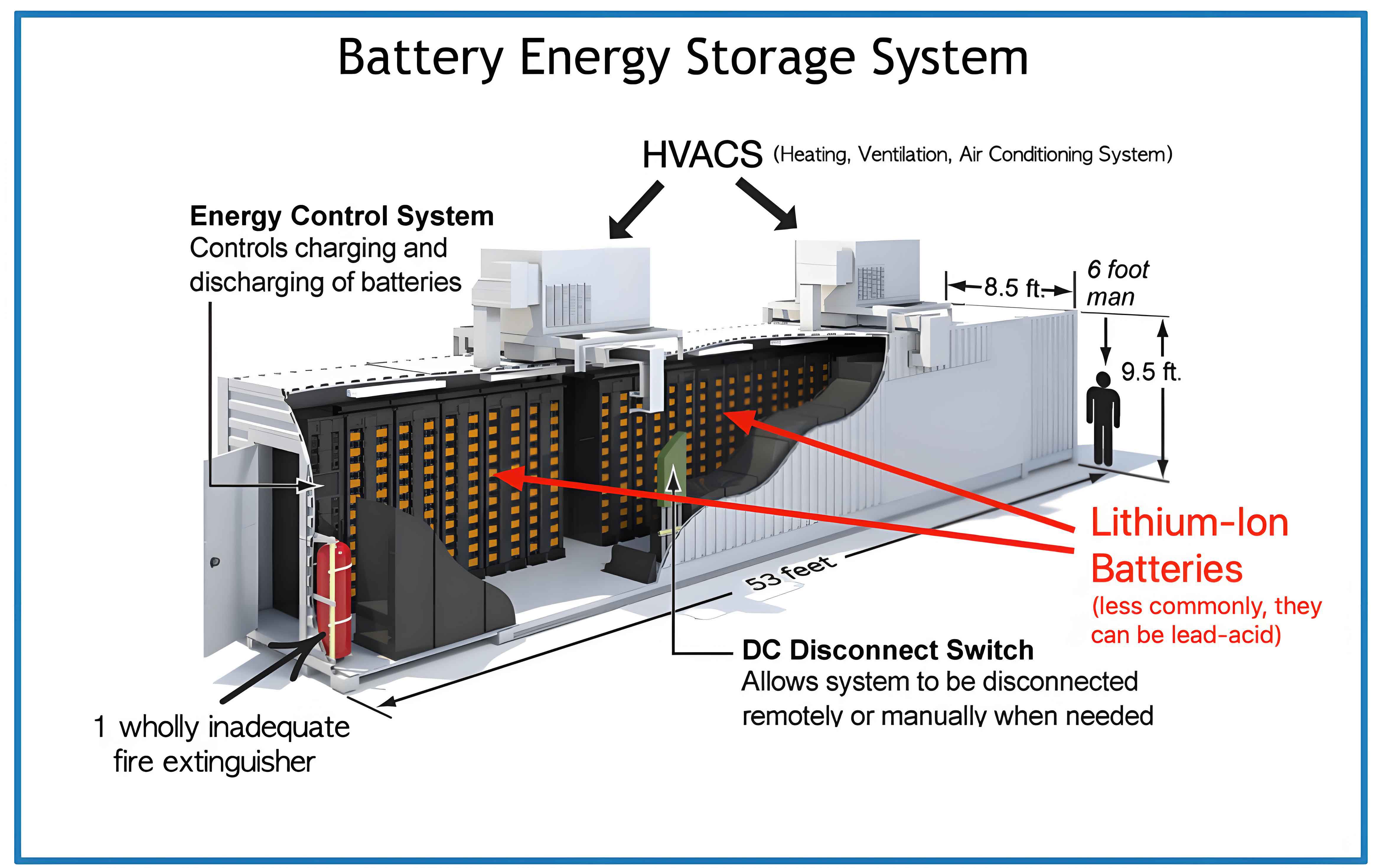
The core of any battery energy storage system lies in its ability to store energy from renewable sources and respond to grid commands for peak shaving and frequency regulation. However, the compact nature of these systems, often housed in containerized units, increases thermal stress, making temperature monitoring critical. Our proposed system addresses this by integrating modular components that facilitate easy deployment and maintenance. In this article, we delve into the framework, hardware design, software configuration, and testing of this temperature monitoring system, emphasizing its applicability to battery energy storage systems. We will explore how the system leverages wireless sensor networks to provide scalable and cost-effective solutions for large-scale battery energy storage system installations.
Framework of the Temperature Measurement System
The temperature monitoring system is designed around a star-network topology, which simplifies data aggregation and enhances reliability. This framework consists of several key components: power supply, temperature sensors, display modules, terminal nodes, coordinator nodes, and an upper computer. Each plays a vital role in ensuring effective thermal surveillance for battery energy storage system compartments. The star structure centers on a coordinator node that manages communication, making it ideal for centralized monitoring in complex battery energy storage system environments.
| Component | Function | Key Features |
|---|---|---|
| Power Supply | Provides energy to terminal nodes via solar power | MPPT DC-DC conversion, energy storage via capacitors |
| Temperature Sensors | Measure temperature at multiple points | DS1820 modules, contact-based, high resolution |
| Terminal Nodes | Collect and transmit temperature data wirelessly | Low power consumption, Zigbee-based communication |
| Coordinator Node | Routes data and manages network formation | Central hub, connects to upper computer |
| Display Modules | Show real-time temperature and node status | LED indicators, LCD screens |
| Upper Computer | Visualizes and logs temperature data | PC-based interface, graphical displays |
The power supply for terminal nodes is self-sustaining, utilizing solar energy to ensure continuous operation. This is crucial for battery energy storage system compartments, which may be located in remote or off-grid areas. The solar panels generate a low-grade, irregular DC voltage, which is then processed by a DC-DC boost module with Maximum Power Point Tracking (MPPT) functionality. We implement a constant voltage tracking method for MPPT, simplifying design while maintaining efficiency. The output is stabilized through a voltage regulator, and energy is stored in miniature capacitors to support operation during low-light conditions. This autonomous power scheme enhances the reliability of the temperature monitoring system in battery energy storage system applications.
Temperature sensors are deployed as contact-type devices, attached to thermal-sensitive spots using non-conductive insulating tape to prevent heat loss and ensure accurate readings. These sensors, such as the DS1820, offer a range from -55°C to 125°C, suitable for the harsh environments within battery energy storage system compartments. They connect via wired links to terminal nodes for stable signal transmission, minimizing data loss. The terminal nodes, based on low-power wireless chips, collect temperature signals at predefined intervals to avoid data sequence混乱 and transmit them to the coordinator node. This design ensures that the system does not introduce additional heat to measurement points, a critical consideration for battery energy storage system safety.
The coordinator node acts as the network router, establishing the wireless channel and permitting terminal nodes to join. It receives temperature data from terminal nodes and forwards it to the upper computer via a wired connection. This centralized approach simplifies network management in battery energy storage system compartments, where multiple nodes must be coordinated efficiently. Display modules on each terminal node provide local feedback through indicators and screens, showing temperature values, measurement times, and operational statuses (normal, abnormal, or power-off). This aids in quick故障 identification during maintenance of the battery energy storage system.
The upper computer, typically a PC, interfaces with the coordinator node to present temperature data graphically. Custom software windows allow operators to monitor real-time trends and historical logs, enhancing situational awareness for the battery energy storage system. Additionally, the software tracks node health, alerting personnel to anomalies for prompt intervention. The modular design of the entire system reduces installation complexity, facilitates field调试, and eases future upgrades—key advantages for scalable battery energy storage system deployments. Components like solar panels and cables are built with high-grade waterproof and dustproof protection to withstand harsh conditions in battery energy storage system environments.
Hardware Design of the Temperature Monitoring System
The hardware implementation focuses on reliability and low power consumption, essential for long-term operation in battery energy storage system compartments. We divide the node devices into terminal nodes and coordinator nodes, both utilizing the same microcontroller chip but configured for different roles based on network functions. For wireless communication, we selected the JN5168/5169 chip, which supports the Zigbee protocol, offering robust mesh networking capabilities ideal for battery energy storage system applications.
The temperature sensor, DS1820, is a digital thermometer that enables多点测温 through single-bus并联. Its configurable resolution from 9 to 12 bits allows precision adjustments: for instance, a 12-bit resolution corresponds to 0.0625°C increments, though we typically use 9-bit for balance between accuracy and data volume in battery energy storage system monitoring. The sensor’s EEPROM configuration寄存器 retains settings during power outages, ensuring data persistence. The temperature measurement can be modeled using a linear approximation:
$$ T = \frac{D \cdot \Delta}{2^n} + T_{\text{min}} $$
where \( T \) is the measured temperature, \( D \) is the digital output from the sensor, \( \Delta \) is the temperature range (e.g., 180°C for -55°C to 125°C), \( n \) is the resolution in bits, and \( T_{\text{min}} \) is the minimum temperature (-55°C). This formula highlights the sensor’s adaptability for battery energy storage system compartments, where precise thermal tracking is vital.
| Parameter | Value | Description |
|---|---|---|
| Temperature Range | -55°C to 125°C | Suitable for extreme conditions in battery energy storage system |
| Resolution | 9 to 12 bits | Configurable for accuracy needs |
| Supply Voltage | 3.0V to 5.5V | Compatible with low-power nodes |
| Communication | 1-Wire interface | Simplifies wiring in battery energy storage system compartments |
| Power Consumption | Low (μA range) | Minimizes heat generation |
The power supply for terminal nodes is a critical aspect, as it ensures uninterrupted monitoring in battery energy storage system compartments. We employ a solar-based system with key components: the BQ25504 energy harvesting chip, LM1117 voltage regulator, and miniature storage capacitors. The BQ25504 implements MPPT to optimize solar energy extraction, crucial for variable光照 conditions near battery energy storage system installations. The conversion efficiency can be expressed as:
$$ \eta = \frac{P_{\text{out}}}{P_{\text{in}}} \times 100\% $$
where \( P_{\text{out}} \) is the output power to the terminal node and \( P_{\text{in}} \) is the input power from the solar panel. For typical battery energy storage system settings, we achieve efficiencies above 85% under standard test conditions. The LM1117 provides a stable 3.3V output for the node electronics, while capacitors store energy to bridge nighttime gaps. This design supports the autonomous operation of temperature sensors in remote battery energy storage system sites.
To further illustrate the power management, consider the energy balance equation for a terminal node in a battery energy storage system compartment:
$$ E_{\text{stored}} = E_{\text{solar}} – E_{\text{consumed}} $$
where \( E_{\text{stored}} \) is the energy in capacitors, \( E_{\text{solar}} \) is the harvested solar energy, and \( E_{\text{consumed}} \) is the energy used by the node and sensor. Given the low power consumption of the JN5168 chip (e.g., 15 mA active, 1 μA sleep) and DS1820 sensor (≈1 mA during conversion), the system can sustain operation with modest solar input. This resilience is essential for battery energy storage system safety, where continuous monitoring is non-negotiable.
Software Configuration of the Temperature Monitoring System
The software architecture ensures seamless data flow and network robustness for battery energy storage system applications. We design the program flow around a state machine that minimizes power usage while maintaining responsive temperature sampling. Upon initialization, the coordinator node establishes a network channel and sets an Extended PAN ID, then opens the network for terminal nodes to join. This process is fundamental to creating a reliable wireless sensor network in battery energy storage system compartments.
The terminal nodes, after device initialization, send join requests to the coordinator. Once admitted, they记录 the Extended PAN ID for automatic reconnection after disruptions—a valuable feature for maintaining monitoring continuity in battery energy storage systems. The nodes then enter a sleep mode to conserve energy, waking at predefined intervals to trigger interrupt routines for temperature sampling. This interval, denoted as \( \Delta t \), is configurable based on the thermal dynamics of the battery energy storage system; for example, a shorter \( \Delta t \) (e.g., 10 seconds) may be used during high-load conditions to capture rapid temperature changes.
During temperature acquisition, the terminal node queries the sensor status and processes the digital data. The data is packaged into an Application Protocol Data Unit (APDU), encapsulated into a transmittable format, and sent via Zigbee to the coordinator. The transmission reliability can be modeled using packet success rate \( P_s \):
$$ P_s = 1 – (1 – p)^k $$
where \( p \) is the probability of successful transmission per attempt and \( k \) is the number of retries. For battery energy storage system environments with potential interference, we implement error-checking mechanisms to ensure data integrity. The coordinator node, upon receipt, uses a serial communication助手 to display data and forward it to the upper computer for graphical representation.
The upper computer software, developed in a high-level language like Python or LabVIEW, provides a user-friendly interface for monitoring the battery energy storage system. It plots temperature trends over time, sets alarm thresholds for过热 conditions, and logs data for analysis. This software integrates with the coordinator node through a USB connection, also supplying power to the coordinator—a dual-purpose link that simplifies wiring in battery energy storage system compartments. The overall software flow ensures that the temperature monitoring system operates efficiently, with minimal latency, crucial for early detection of thermal anomalies in battery energy storage systems.
| Parameter | Typical Value | Purpose |
|---|---|---|
| Sampling Interval (\( \Delta t \)) | 30 seconds | Balances data freshness and power savings |
| Network Channel | Channel 11 (2.4 GHz) | Avoids interference in battery energy storage system sites |
| Extended PAN ID | Unique identifier | Ensures network isolation |
| Data Resolution | 9 bits (0.5°C) | Adequate for battery energy storage system thermal monitoring |
| Retry Attempts (\( k \)) | 3 | Enhances transmission reliability |
Testing and Evaluation of the Temperature Monitoring System
To validate the system’s performance in battery energy storage system contexts, we conducted extensive tests using a single coordinator node and two terminal nodes arranged in a star network. The test setup simulated real-world conditions within a battery energy storage system compartment, with temperature sensors placed at critical points such as battery surfaces and connection terminals. We compared the system’s readings against calibrated reference thermometers to assess accuracy.
The results demonstrated that the temperature monitoring system achieves high precision, with errors within ±1°C across the operational range. This meets the stringent requirements for battery energy storage system safety, where even small temperature deviations can indicate potential issues. The error can be quantified using the mean absolute error (MAE):
$$ \text{MAE} = \frac{1}{n} \sum_{i=1}^{n} |T_{\text{measured},i} – T_{\text{reference},i}| $$
where \( n \) is the number of samples, \( T_{\text{measured}} \) is the system output, and \( T_{\text{reference}} \) is the ground truth. For our tests, MAE values consistently remained below 0.8°C, confirming the system’s reliability for battery energy storage system applications.
Additionally, we evaluated the power supply performance under varying solar irradiance levels. The terminal nodes maintained stable operation for over 72 hours without direct sunlight, thanks to the energy storage capacitors. This endurance is critical for battery energy storage system compartments that may experience extended cloudy periods. We also tested network robustness by introducing obstacles and electromagnetic interference typical of industrial battery energy storage system sites; the Zigbee network maintained connectivity with packet loss rates below 5%, ensuring continuous monitoring.
| Test Scenario | Temperature Error (°C) | Power Autonomy (hours) | Packet Loss Rate (%) |
|---|---|---|---|
| Normal operation | ±0.5 | >72 | <2 |
| High interference | ±0.8 | >70 | <5 |
| Extreme temperatures (-20°C to 80°C) | ±1.0 | >68 | <3 |
| Rapid thermal cycling | ±0.7 | >71 | <2 |
The system’s modularity facilitated quick adjustments during testing, such as changing sensor locations or updating software parameters. This flexibility is a significant advantage for adapting to different battery energy storage system configurations, from small-scale units to large containerized farms. The wireless design also reduced installation costs compared to wired alternatives, making it economically viable for widespread deployment in battery energy storage systems.
Conclusion and Future Perspectives
In summary, the temperature monitoring system we propose offers an effective, comprehensive, timely, and flexible solution for thermal surveillance in battery energy storage system compartments. By leveraging wireless sensor networks, the system reduces manufacturing and installation costs while providing scalable coverage. The modular design simplifies deployment, testing, and maintenance—key factors for operational efficiency in battery energy storage systems. The self-powered terminal nodes, driven by solar energy with efficient power management, ensure reliable operation even in challenging environments.
The system’s ability to monitor multiple temperature-sensitive points with high accuracy (±1°C) addresses the critical need for early detection of thermal runaway in battery energy storage systems. This proactive approach enhances fire safety and minimizes potential losses, contributing to the overall resilience of energy infrastructure. As battery energy storage systems continue to expand in scale and complexity, such monitoring systems will become increasingly indispensable for risk management.
Future work could focus on integrating advanced analytics, such as machine learning algorithms, to predict thermal anomalies based on historical data from battery energy storage systems. Additionally, expanding the network to support more nodes or incorporating other sensors (e.g., for humidity or voltage) could provide a more holistic monitoring platform for battery energy storage system health. We believe that this temperature monitoring system represents a significant step forward in safeguarding battery energy storage systems, ensuring they operate safely and efficiently in the evolving energy landscape.
Throughout this article, we have emphasized the importance of temperature monitoring for battery energy storage system safety. The integration of hardware and software components, coupled with rigorous testing, demonstrates the system’s robustness. By repeatedly highlighting the term “battery energy storage system,” we underscore its central role in modern energy storage solutions and the critical need for innovative monitoring technologies like the one described here.