
In recent years, electrochemical energy storage has gained significant attention due to its flexibility and maturity, with lithium-ion battery energy storage systems (BESS) playing a pivotal role in various applications. Among thermal management techniques, immersion cooling stands out for its superior heat transfer capabilities and ability to maintain battery consistency. This method involves direct contact between batteries and a dielectric fluid, reducing thermal resistance and enhancing heat dissipation. Despite these advantages, comprehensive economic analyses of immersion-cooled BESS remain limited. This study addresses this gap by evaluating the technical and economic feasibility of immersion cooling in BESS, focusing on system configurations, cost structures, and financial metrics. We explore different immersion approaches, such as pack-level and cluster-level immersion, and assess their impact on key economic indicators like payback time, net present value, and internal rate of return. By integrating heat generation models and economic evaluation frameworks, we provide insights into the viability of immersion-cooled BESS under varying conditions, including sensitivity to factors like electricity prices and fluid costs. Our findings aim to guide stakeholders in making informed decisions regarding the adoption of immersion cooling technologies in energy storage systems.
The immersion cooling battery energy storage system (BESS) offers enhanced thermal management compared to traditional methods like air cooling or indirect liquid cooling. In a typical immersion-cooled BESS, batteries are submerged in a dielectric fluid, which facilitates efficient heat removal and minimizes temperature gradients. This direct cooling approach not only improves safety by reducing the risk of thermal runaway but also extends battery lifespan by maintaining optimal operating temperatures. The system components include battery modules, immersion fluid, heat exchangers, pumps, and piping networks. Two primary configurations are considered: pack immersion, where individual battery packs are separately immersed, and cluster immersion, where entire battery clusters are submerged together. Each configuration has distinct implications for cost, maintenance, and system complexity. For instance, pack immersion generally involves higher initial costs due to additional enclosures but offers easier maintenance and lower fluid usage. In contrast, cluster immersion reduces structural costs but requires more fluid and complex sealing arrangements. The choice between these configurations depends on factors such as scale, application, and economic constraints. This study analyzes both approaches in the context of cabinet-scale and container-scale BESS, with capacities of 233 kWh and 5 MWh, respectively, to provide a comprehensive comparison.
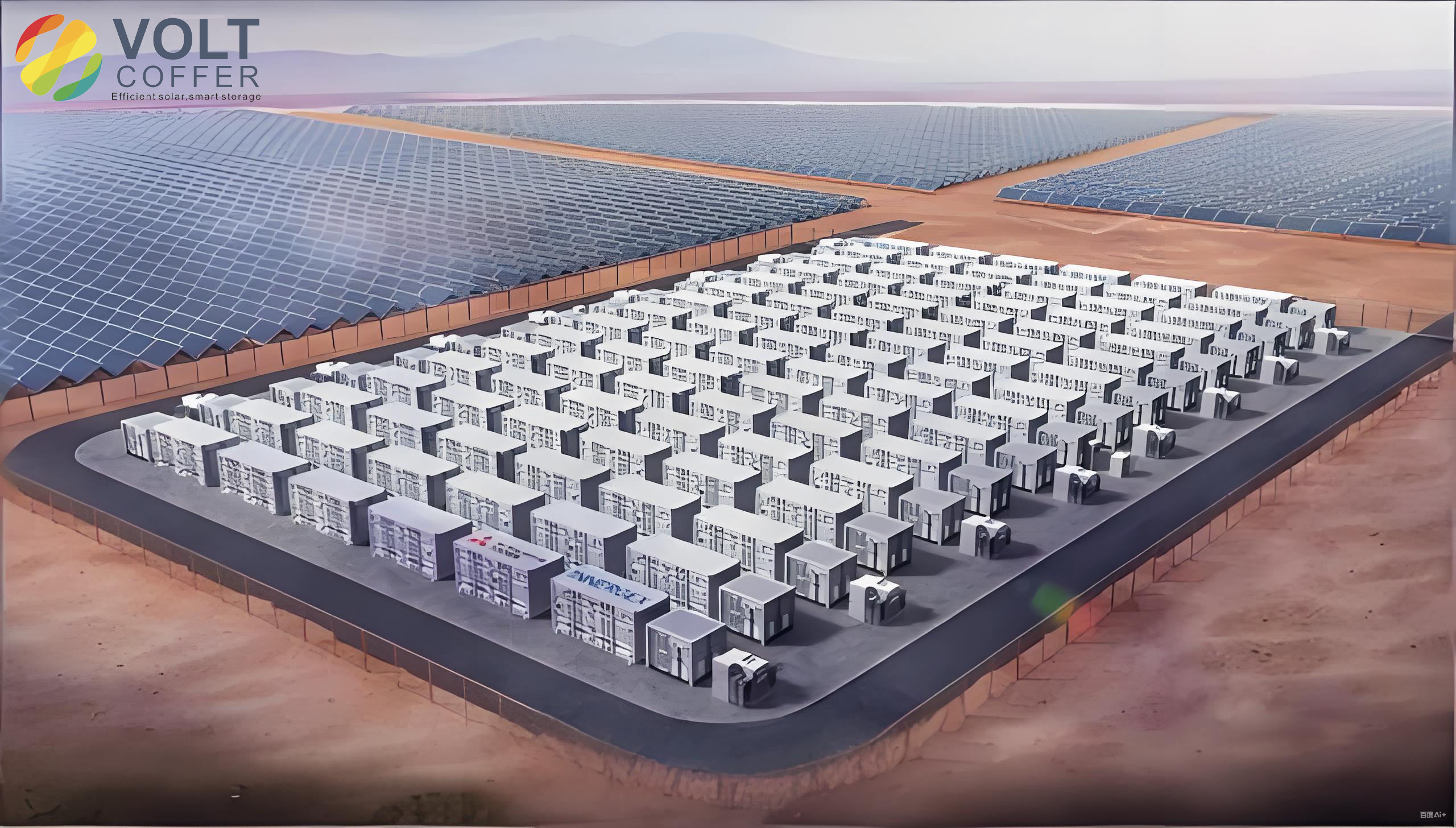
To evaluate the thermal performance of immersion-cooled BESS, we developed a heat generation model that accounts for battery heat production and external heat exchange. The total heat load in a BESS is influenced by factors such as ambient temperature, solar radiation, and operational parameters. The heat generation rate of batteries can be modeled using the formula: $$P_1 = I^2 R$$, where \(P_1\) is the heat generation power, \(I\) is the current, and \(R\) is the internal resistance. The temperature rise in the system is given by: $$Q = c m \Delta t$$, where \(Q\) is the heat energy, \(c\) is the specific heat capacity, \(m\) is the mass, and \(\Delta t\) is the temperature change. The cooling power required to maintain stable temperatures is calculated as: $$P_2 = k (P_1 – Q / t_2)$$, where \(k\) is a safety factor and \(t_2\) is the charge-discharge time. Additionally, external factors like solar radiation contribute to the heat load, with the equivalent sky temperature expressed as: $$t_s = 0.0552 (T_e + 273)^{1.5} – 273$$, where \(T_e\) is the outdoor dry-bulb temperature. The net radiation heat input is: $$P_{\text{net}} = \epsilon K_T S \Delta t_2$$, where \(\epsilon\) is the emissivity, \(K_T\) is the heat transfer coefficient, \(S\) is the surface area, and \(\Delta t_2\) is the temperature difference. The total heat load \(P\) is then: $$P = P_2 + P_{\text{net}}$$. Based on these calculations, appropriate chiller capacities are selected—for example, a 5.7 kW chiller for cabinet systems and a 56 kW chiller for container systems—to ensure effective thermal management in the immersion-cooled BESS.
The economic analysis of immersion-cooled battery energy storage systems (BESS) involves assessing initial investment costs, operational expenses, and revenue streams over the system’s lifecycle. The cost structure of a BESS includes components such as battery modules, power conversion systems (PCS), energy management systems (EMS), transformers, assembly, cables, battery management systems (BMS), immersion fluid, and thermal management loops. The cost per watt-hour (CNY/Wh) is a key metric for comparing different systems. For instance, in a pack-immersed BESS cabinet with a capacity of 233 kWh, the total cost is approximately 215,100 CNY, while a cluster-immersed BESS container with 5 MWh capacity costs around 4,096,400 CNY. The battery modules constitute the largest cost component, accounting for about 60% of the total, followed by PCS (8-10%) and BMS (7-9%). The immersion fluid cost varies significantly depending on the type used—for example, fluorinated fluids are expensive (e.g., 570 CNY/L), while transformer oil is more affordable (15 CNY/L). The table below summarizes the cost distribution for different BESS configurations.
| Component | Pack-Immersed Cabinet (kCNY) | Cluster-Immersed Cabinet (kCNY) | Pack-Immersed Container (kCNY) | Cluster-Immersed Container (kCNY) |
|---|---|---|---|---|
| Battery Modules | 124.9 | 119.9 | 2602.0 | 2415.0 |
| PCS | 18.6 | 17.9 | 388.4 | 360.4 |
| EMS | 3.7 | 3.6 | 77.7 | 72.1 |
| Transformer | 11.2 | 10.7 | 233.0 | 216.3 |
| Assembly | 5.6 | 5.4 | 116.5 | 108.1 |
| Cables | 5.6 | 5.4 | 116.5 | 108.1 |
| BMS | 16.8 | 16.1 | 349.5 | 324.4 |
| Immersion Fluid | 17.5 | 25.0 | 210.0 | 400.0 |
| Thermal Loop | 11.3 | 10.3 | 110.6 | 92.0 |
| Total Cost | 215.1 | 214.2 | 4204.2 | 4096.4 |
The economic viability of an immersion-cooled BESS is evaluated using metrics such as static payback time (SPBT), dynamic payback time (DPBT), net present value (NPV), and internal rate of return (IRR). The SPBT is calculated as: $$\text{SPBT} = Z – 1 + \frac{|F_{Z-1}|}{F_Z}$$, where \(Z\) is the year when cumulative net cash flow turns positive, \(F_{Z-1}\) is the cumulative net cash flow in year \(Z-1\), and \(F_Z\) is the net cash flow in year \(Z\). The DPBT accounts for the time value of money and is given by: $$\text{DPBT} = Z_H – 1 + \frac{|F_{H-1}|}{F_H}$$, where \(Z_H\) is the year when discounted cumulative net cash flow turns positive, and \(F_{H-1}\) and \(F_H\) are the discounted cash flows. The NPV represents the sum of discounted future cash flows minus the initial investment: $$\text{NPV} = \sum_{t=0}^{n} F_{nt} (1 + i)^{-t}$$, where \(n\) is the project lifespan, \(t\) is the year, \(F_{nt}\) is the net cash flow in year \(t\), and \(i\) is the discount rate. The IRR is the discount rate that makes NPV zero: $$\text{NPV} = \sum_{t=0}^{n} F_{nt} (1 + \text{IRR})^{-t} = 0$$. For a pack-immersed BESS container, assuming a discount rate of 6.5%, the SPBT is 4.65 years, DPBT is 5.81 years, NPV is 4,340,900 CNY, and IRR is 18.14%. These values indicate a financially viable project, as the payback periods are within acceptable limits, NPV is positive, and IRR exceeds the discount rate.
Revenue generation in a BESS primarily comes from peak-valley arbitrage, which accounts for about 60% of total income, supplemented by ancillary services like frequency regulation and capacity compensation. The annual revenue \(I_n\) is calculated as: $$I_n = \eta Q_n P_f N$$, where \(\eta\) is the charge-discharge efficiency (90%), \(Q_n\) is the actual discharge capacity in year \(n\), \(P_f\) is the discharge electricity price (1.16 CNY/kWh), and \(N\) is the number of cycles per year (365). The discharge capacity degrades over time due to battery aging, modeled as: $$Q_n = \left[1 – \frac{0.2(n-1)}{10}\right] Q_0$$, where \(Q_0\) is the initial capacity. Additional revenue from frequency regulation \(C_{tp}\) is: $$C_{tp} = \eta Q W N$$, where \(Q\) is the demand response price, and \(W\) is the system power. Peak shaving revenue \(C_{tf}\) is: $$C_{tf} = \eta W N \Delta P$$, where \(\Delta P\) is the peak-valley price difference. Operational expenses include charging costs, depreciation, maintenance, financial costs, and taxes. Depreciation \(C_{zj}\) is: $$C_{zj} = C_{js} \times 0.95 / 25$$, where \(C_{js}\) is the initial investment. Maintenance costs \(C_{yw}\) are estimated as 4% of the initial investment: $$C_{yw} = k C_{js}$$. Financial costs \(C_{cw}\) for a loan (80% of investment) are computed using: $$C_{cw} = \frac{0.8 C_{js} R (1 + R/12)^{12P}}{(1 + R/12)^{12P} – 1}$$, where \(R\) is the interest rate (3.95%) and \(P\) is the loan term (25 years). The annual profit \(J_n\) is: $$J_n = I_n – C_n$$, and net cash flow \(F_n\) is: $$F_n = J_n + C_{zj}$$. These calculations form the basis for evaluating the economic performance of immersion-cooled BESS over a 25-year lifespan.
Sensitivity analysis is crucial for understanding the impact of uncertain factors on the economic metrics of immersion-cooled battery energy storage systems (BESS). Key variables include peak electricity price, valley electricity price, immersion fluid cost, and system structure cost. The sensitivity coefficient \(SAF\) measures the relative change in an economic indicator due to a change in a variable: $$SAF = \frac{\Delta A / A}{\Delta F / F}$$, where \(\Delta A/A\) is the percentage change in the indicator, and \(\Delta F/F\) is the percentage change in the variable. For example, varying the peak price from 1.10 to 1.22 CNY/kWh and the valley price from 0.52 to 0.58 CNY/kWh affects SPBT and IRR significantly. When the peak price increases to 1.22 CNY/kWh and the valley price decreases to 0.52 CNY/kWh, SPBT decreases from 4.65 to 3.90 years, and IRR increases from 18.14% to 22.61%. Similarly, changes in immersion fluid cost—such as using transformer oil (15 CNY/L) instead of hydrocarbon fluid (50 CNY/L)—can improve IRR by 13.4% in cluster-immersed containers. The table below shows the sensitivity of SPBT and IRR to these factors for a pack-immersed BESS container.
| Variable | Change | SPBT (years) | IRR (%) | SAF for SPBT | SAF for IRR |
|---|---|---|---|---|---|
| Peak Price | +5% | 4.09 | 21.30 | -2.39 | 3.54 |
| Valley Price | +5% | 4.93 | 16.77 | 1.10 | -1.39 |
| Fluid Cost | +5% | 4.68 | 17.95 | 0.02 | -0.07 |
| Structure Cost | +5% | 4.72 | 17.45 | 1.23 | -1.59 |
The results indicate that peak electricity price has the highest sensitivity, with SAF magnitudes of 2.39 for SPBT and 3.54 for IRR, meaning it exerts the strongest influence on economic outcomes. This underscores the importance of electricity market conditions in determining the profitability of immersion-cooled BESS. Conversely, immersion fluid cost has a relatively low impact, with SAF values near zero, suggesting that fluid selection is less critical from a purely economic perspective, though technical compatibility remains vital. System structure cost also shows moderate sensitivity, highlighting the economic advantage of cluster immersion over pack immersion due to lower initial investment. For instance, cluster-immersed BESS containers achieve an IRR of 19.04% compared to 18.14% for pack-immersed systems, driven by a 2.6% reduction in cost per watt-hour. These findings emphasize that optimizing system design and leveraging scale economies can enhance the financial attractiveness of immersion-cooled BESS.
Battery lifespan is a critical factor in the economic analysis of immersion-cooled battery energy storage systems (BESS), as temperature management directly affects degradation rates. Studies show that immersion cooling can reduce battery temperature and gradients, thereby extending cycle life compared to air cooling or indirect liquid cooling. For example, under 1C discharge rates, lithium-ion batteries at 25°C may endure 2,750 cycles before capacity drops to 80%, whereas at 50°C, this reduces to 550 cycles. Immersion cooling can mitigate this by maintaining temperatures below 40°C and gradients under 3°C, potentially increasing lifespan by 20-50%. This extension reduces battery replacement frequency—from twice to once over a 25-year period—lowering costs and improving economic metrics. For a pack-immersed BESS container, considering lifespan effects increases NPV by 11.6% to 4,845,000 CNY and IRR to 18.54%. The table below compares economic indicators with and without lifespan enhancements.
| Scenario | SPBT (years) | DPBT (years) | NPV (kCNY) | IRR (%) |
|---|---|---|---|---|
| Without Lifespan Effect | 4.65 | 5.81 | 4340.9 | 18.14 |
| With Lifespan Effect | 4.61 | 5.72 | 4845.0 | 18.54 |
Furthermore, the choice of immersion fluid significantly impacts both technical performance and economics. Fluids like transformer oil, silicone oil, and hydrocarbon-based options offer a balance of cost and thermal properties, whereas fluorinated fluids, though high-performing, are prohibitively expensive. For instance, using transformer oil (15 CNY/L) in a cluster-immersed BESS container yields an IRR of 21.59%, compared to 19.04% with hydrocarbon fluid. The relationship between fluid cost and IRR is inverse; as fluid price increases, IRR decreases. If fluid costs exceed 150 CNY/L, IRR may fall below the discount rate, rendering the project uneconomical. Thus, selecting affordable, compatible fluids is essential for maximizing returns. The following formula illustrates the degradation-adjusted capacity over time: $$Q_n = Q_0 \left[1 – \alpha (n-1)\right]$$, where \(\alpha\) is the degradation rate, influenced by temperature control. By integrating these factors, immersion-cooled BESS can achieve superior economics through extended operational life and reduced maintenance.
In conclusion, immersion cooling presents a promising solution for lithium-ion battery energy storage systems (BESS), offering technical benefits such as improved thermal management and safety, which translate into economic advantages through extended battery life and reduced operational costs. Our analysis demonstrates that immersion-cooled BESS configurations—whether pack or cluster immersion—can achieve favorable financial metrics, with static payback periods under 5 years and internal rates of return exceeding 18% in container-scale systems. Sensitivity analysis highlights the dominant influence of electricity prices on profitability, while immersion fluid costs have a lesser impact. To enhance economic viability, stakeholders should focus on optimizing system structures, selecting cost-effective fluids, and leveraging scale economies. Future work should explore long-term performance under real-world conditions, including fluid degradation and maintenance requirements, to refine these models. Overall, immersion-cooled BESS represents a financially sound investment in the evolving energy storage landscape, supporting the transition to sustainable power systems.