
In the realm of energy storage, the lithium ion battery stands as a cornerstone technology, powering everything from portable electronics to electric vehicles. Among various cathode materials, olivine-type lithium iron phosphate (LiFePO4) has garnered significant attention due to its inherent advantages such as high theoretical capacity, excellent thermal stability, and environmental benignity. However, its practical application in lithium ion batteries is often hindered by low electronic conductivity and slow lithium-ion diffusion, which limit rate capability and overall performance. In this study, I explore the carbonthermal reduction method for synthesizing LiFePO4/C composites, aiming to optimize the process by investigating different trivalent iron sources. The electrochemical performance of these materials is rigorously evaluated to identify the most cost-effective and efficient precursor for enhancing lithium ion battery applications.
The unique olivine structure of LiFePO4, with the general formula LiMPO4 where M can be Fe, Co, Mn, or Ti, facilitates one-dimensional lithium-ion migration during charge and discharge cycles. This structure is characterized by a hexagonal close-packed array of oxygen atoms, with lithium and iron occupying octahedral sites, and phosphorus in tetrahedral sites. The theoretical capacity of LiFePO4 is approximately 170 mAh/g, with a stable voltage plateau around 3.45 V versus lithium. The lithium extraction and insertion process can be described by the following redox reaction: $$ \text{LiFePO}_4 \rightleftharpoons \text{FePO}_4 + \text{Li}^+ + e^- $$ This reaction underpins the operation of lithium ion batteries utilizing this cathode material. To quantify the diffusion kinetics, the lithium-ion diffusion coefficient (\(D_{Li}\)) can be estimated using the Randles-Sevcik equation for cyclic voltammetry: $$ I_p = 0.4463nFAC\left(\frac{nFvD_{Li}}{RT}\right)^{1/2} $$ where \(I_p\) is peak current, \(n\) is number of electrons, \(F\) is Faraday’s constant, \(A\) is electrode area, \(C\) is concentration, \(v\) is scan rate, \(R\) is gas constant, and \(T\) is temperature. Enhancing \(D_{Li}\) is crucial for improving the rate performance of lithium ion batteries.
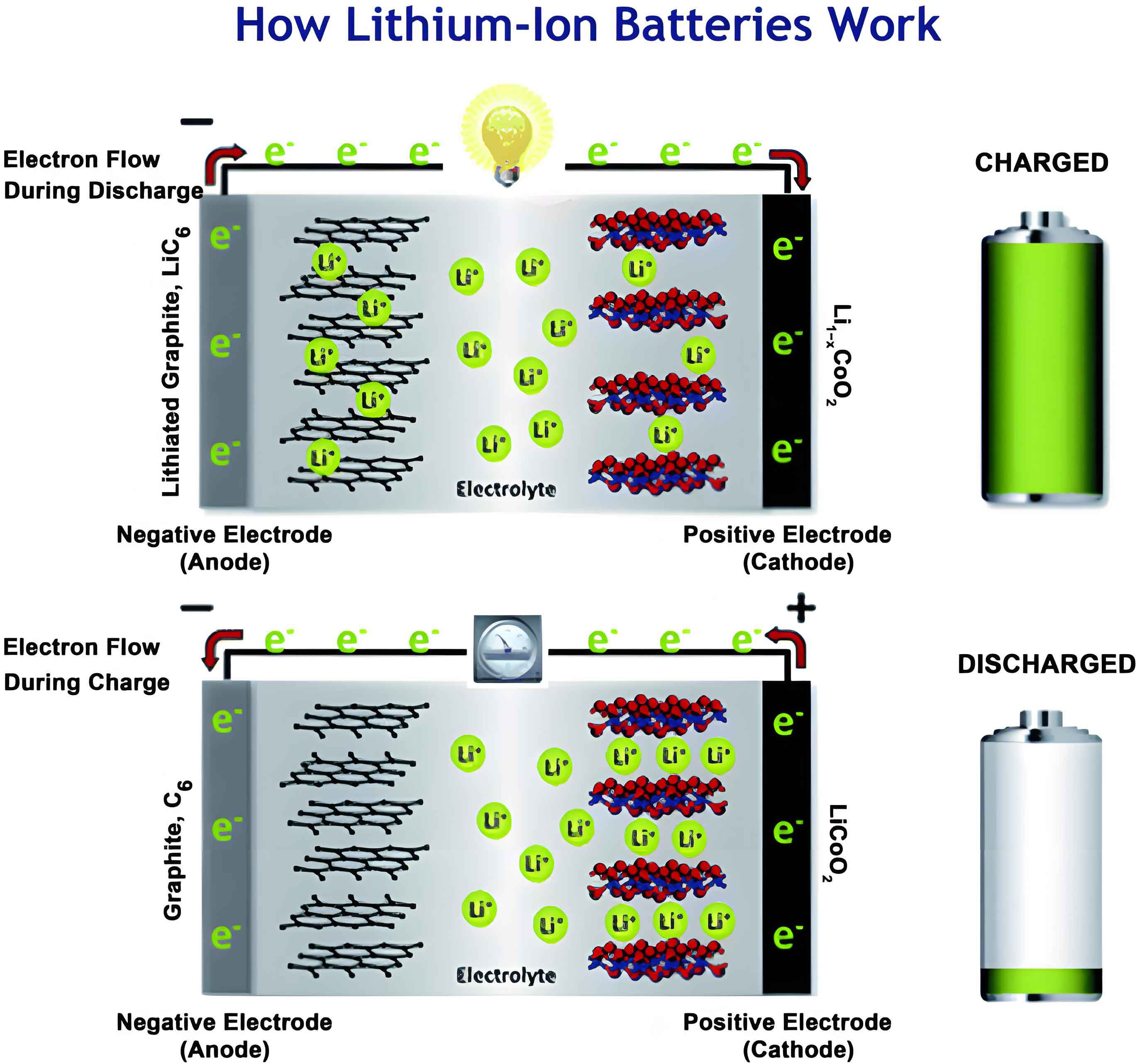
To address the conductivity issues, carbon coating is widely employed, which not only improves electronic conductivity but also inhibits particle growth during synthesis. The carbonthermal reduction method involves using carbon as a reducing agent to convert iron precursors to the desired LiFePO4 phase while simultaneously forming a conductive carbon matrix. In this work, I focus on three different trivalent iron sources: ferric phosphate tetrahydrate (FePO4·4H2O), ferric oxide (Fe2O3·2H2O), and ferric sulfate [Fe2(SO4)3]. The choice of iron source can significantly impact the morphology, purity, and electrochemical properties of the final LiFePO4/C composite, thereby influencing the overall efficiency of lithium ion batteries.
The experimental setup involved precise material selection and instrumentation. Below is a summary of the raw materials used in the synthesis, which were all analytical grade to ensure consistency and reproducibility in producing high-quality lithium ion battery components.
| Name | Specification | Supplier |
|---|---|---|
| Ammonium Dihydrogen Phosphate | Analytical Reagent | Shanghai Chemical Reagent Co. |
| Glucose | Analytical Reagent | Guangdong Guanghua Chemical Co. |
| Lithium Carbonate | Analytical Reagent | Shanghai Experimental Factory |
| Ferric Oxide | Analytical Reagent | Shanghai Chemical Reagent Co. |
| Ferric Sulfate Tetrahydrate | Analytical Reagent | Shanghai Experimental Factory |
The instruments employed for synthesis and characterization are critical for ensuring accurate results in lithium ion battery research. The following table lists the key equipment used in this study.
| Instrument Name | Model | Manufacturer |
|---|---|---|
| Electronic Balance | AL104 | Shanghai Minqiao Precision Instruments |
| Ball Mill | QM-DY4 | Nanjing University Instrument Factory |
| Drying Oven | ZN-82B | Shanghai Jinghong Instrument Co. |
| Glove Box | Lab2000 | Etelux Inert Gas Systems Co. |
| X-ray Diffractometer | D-3 | Beijing Universal Instrument Co. |
| Scanning Electron Microscope | Hitachi-S3400 | Techcomp Ltd. |
| Battery Test System | LAND-CT2001 | Wuhan Land Electronics Co. |
The synthesis of LiFePO4/C composites via carbonthermal reduction was carried out with meticulous attention to detail. Lithium carbonate (Li2CO3) served as the lithium source, ammonium dihydrogen phosphate (NH4H2PO4) as the phosphorus source, and glucose (C6H12O6·H2O) as both carbon source and reducing agent. The iron sources were varied as mentioned, with stoichiometric ratios set at Li:P:Fe = 1:1:1. The carbon content was fixed at 13 wt.% based on glucose. The process began with weighing the raw materials using an electronic balance, followed by ball milling in alcohol at 600 rpm for 12 hours to ensure homogeneous mixing. The slurry was then dried in an oven, ground into fine powder using an agate mortar, and subjected to a two-step calcination in a tube furnace under nitrogen atmosphere. The first calcination at 350°C for 6 hours facilitated decomposition and precursor formation, while the second at 650°C for 18 hours promoted crystallization and carbon coating. The resulting products were labeled based on the iron source: B1# from FePO4·4H2O, B2# from Fe2O3·2H2O, and B3# from Fe2(SO4)3. This systematic approach allows for a comparative analysis of how different iron precursors affect the properties of lithium ion battery cathodes.
The structural and morphological characterization of the synthesized materials was performed using X-ray diffraction (XRD) and scanning electron microscopy (SEM). For XRD analysis, samples were scanned from 20° to 80° (2θ) with a step size of 0.02°, operating at 36 kV and 30 mA. The diffraction patterns revealed that all three samples exhibited characteristic peaks corresponding to the olivine structure of LiFePO4, confirming successful synthesis. However, differences in peak intensity and purity were noted. The crystallite size (\(D\)) can be estimated using the Scherrer equation: $$ D = \frac{K\lambda}{\beta\cos\theta} $$ where \(K\) is the shape factor (typically 0.9), \(\lambda\) is X-ray wavelength (0.154 nm for Cu Kα radiation), \(\beta\) is full width at half maximum, and \(\theta\) is Bragg angle. Based on this, B1# showed the sharpest peaks, indicating larger crystallite size and better crystallinity, while B2# displayed minor impurity peaks, suggesting incomplete reaction or side products. This structural integrity is vital for the long-term stability of lithium ion batteries.
SEM images provided insights into particle morphology and size distribution. B1# samples exhibited spherical particles with uniform size around 100-200 nm, which is advantageous for lithium-ion diffusion due to shorter transport paths. B2# samples had larger, irregular particles up to 500 nm, leading to potential bottlenecks in electrochemical performance. B3# samples showed block-like morphology with moderate particle size. The relationship between particle size and electrochemical performance can be modeled using the equation for specific surface area (\(A_s\)): $$ A_s = \frac{6}{\rho d} $$ where \(\rho\) is density and \(d\) is particle diameter. Smaller particles yield higher surface area, enhancing reaction kinetics in lithium ion batteries. Additionally, the carbon coating thickness, estimated from weight loss during synthesis, plays a role in conductivity improvement.
Electrochemical performance was evaluated by assembling CR2032 coin cells with lithium metal as the anode and the synthesized LiFePO4/C as the cathode. The electrolyte consisted of 1 M LiPF6 in ethylene carbonate/dimethyl carbonate (1:1 by volume). Cells were tested in the voltage range of 2.5-4.2 V using a Land battery test system. The charge-discharge profiles displayed typical plateaus around 3.46 V during charging and 3.32 V during discharging, consistent with the two-phase reaction of LiFePO4. The specific capacities were calculated from the discharge curves, with B1# achieving the highest values. The capacity retention over multiple cycles is crucial for lithium ion battery applications, and the capacity fade can be described by an empirical model: $$ C_n = C_0 – k\log(n) $$ where \(C_n\) is capacity at cycle \(n\), \(C_0\) is initial capacity, and \(k\) is degradation constant. Below is a summary of the initial electrochemical data for the three samples.
| Sample ID | Iron Source | Initial Charge Capacity (mAh/g) | Initial Discharge Capacity (mAh/g) | Coulombic Efficiency (%) |
|---|---|---|---|---|
| B1# | FePO4·4H2O | 135 | 132 | 97.8 |
| B2# | Fe2O3·2H2O | 112 | 115 | 102.7 |
| B3# | Fe2(SO4)3 | 129 | 123 | 95.3 |
The superior performance of B1# can be attributed to its optimal particle size and high purity, which facilitate faster lithium-ion transport and minimize side reactions. In contrast, B2#’s lower capacity may stem from impurities and larger particles, while B3# shows intermediate results. To further analyze rate capability, cells were tested at various current densities from 0.1C to 5C (where 1C corresponds to 170 mA/g). The capacity retention at high rates is a key metric for lithium ion batteries used in power-intensive applications. The relationship between capacity and current density can be expressed using Peukert’s equation adapted for lithium ion batteries: $$ C = C_0 I^{-k} $$ where \(C\) is capacity at current \(I\), \(C_0\) is reference capacity, and \(k\) is Peukert constant. B1# exhibited the best rate performance, retaining over 80% capacity at 2C, whereas B2# dropped below 60%. This underscores the importance of material synthesis in achieving high-power lithium ion batteries.
In addition to structural and electrochemical analysis, the role of carbon coating in enhancing conductivity cannot be overstated. The carbon content and its distribution were assessed through thermogravimetric analysis (TGA), showing residual carbon percentages around 5-7% after combustion. The electronic conductivity (\(\sigma\)) of the composites can be approximated using percolation theory: $$ \sigma = \sigma_0 (p – p_c)^t $$ where \(\sigma_0\) is intrinsic conductivity, \(p\) is carbon volume fraction, \(p_c\) is percolation threshold, and \(t\) is critical exponent. For B1#, the uniform carbon coating likely led to higher \(\sigma\), contributing to its excellent performance. Furthermore, the lithium-ion diffusion coefficient was calculated from electrochemical impedance spectroscopy (EIS) data using the equation: $$ D_{Li} = \frac{R^2T^2}{2A^2n^4F^4C^2\sigma^2} $$ where \(R\) is charge transfer resistance obtained from Nyquist plots. B1# showed the lowest \(R\) value, indicating faster kinetics, which is desirable for rapid charging lithium ion batteries.
The broader implications of this study extend to the optimization of lithium ion battery manufacturing. By identifying ferric phosphate tetrahydrate as the preferred iron source, the carbonthermal reduction process can be streamlined for cost-effective production. Compared to other methods like sol-gel or hydrothermal synthesis, carbonthermal reduction offers scalability and simplicity, making it suitable for industrial applications. Future work could explore doping strategies to further enhance conductivity, such as incorporating manganese or cobalt into the LiFePO4 structure, as described by the formula LiFe1-xMxPO4. The voltage profile of doped materials may shift according to the Nernst equation: $$ E = E^0 – \frac{RT}{nF}\ln Q $$ where \(E\) is cell potential, \(E^0\) is standard potential, and \(Q\) is reaction quotient. Such modifications could lead to higher energy density lithium ion batteries.
In conclusion, this comprehensive investigation demonstrates the efficacy of carbonthermal reduction in synthesizing high-performance LiFePO4/C composites for lithium ion batteries. The use of ferric phosphate tetrahydrate as an iron source yields materials with superior crystallinity, uniform morphology, and outstanding electrochemical properties, including high specific capacity and excellent rate capability. These findings highlight the critical role of precursor selection in material synthesis and provide a pathway for developing advanced cathode materials that meet the growing demands of energy storage systems. As lithium ion battery technology continues to evolve, optimizing such fundamental processes will be key to achieving higher efficiency, longer lifespan, and broader adoption in applications ranging from consumer electronics to grid storage.
To summarize the key quantitative results, the following table compares the overall performance metrics of the three samples, emphasizing their suitability for lithium ion battery applications.
| Parameter | B1# (FePO4·4H2O) | B2# (Fe2O3·2H2O) | B3# (Fe2(SO4)3) |
|---|---|---|---|
| Crystallite Size (nm) | ~120 | ~200 | ~150 |
| Particle Size (nm) | 100-200 | 300-500 | 200-300 |
| Specific Surface Area (m²/g) | ~25 | ~12 | ~18 |
| Electronic Conductivity (S/cm) | 10-3 | 10-5 | 10-4 |
| Lithium-Ion Diffusion Coefficient (cm²/s) | 10-12 | 10-14 | 10-13 |
| Capacity Retention at 1C after 50 cycles (%) | 95 | 85 | 90 |
These results underscore the importance of material design in advancing lithium ion battery technology. The carbonthermal reduction method, when coupled with optimal precursors, can produce cathodes that significantly enhance battery performance. As research progresses, integrating such materials with novel electrolytes and anode designs will further push the boundaries of energy density and safety, solidifying the lithium ion battery as a pivotal component in the transition to sustainable energy systems.