
Lithium-ion batteries are renowned for their high specific energy and are extensively utilized across various applications. However, safety incidents related to thermal runaway remain a significant concern. Thermal runaway represents a rapid release of internal energy, often accompanied by the ejection of high-temperature flames, toxic gases, and smoke, posing substantial risks to both property and personal safety. Traditional methods for triggering thermal runaway in safety tests include nail penetration, overcharging, and external heating. External heating, while common, can influence module structure and thermal management, potentially leading to discrepancies between test results and real-world scenarios in battery packs. This study explores an alternative method: integrating a thin heating film inside a lithium iron phosphate (LiFePO4) battery to simulate an internal short circuit, a condition more representative of manufacturing defects like introduced dust or metallic particles. This internal heating approach minimizes impact on cell dimensions and allows for precise, localized heating of a single cell within a module, offering a more accurate assessment of thermal propagation risks.
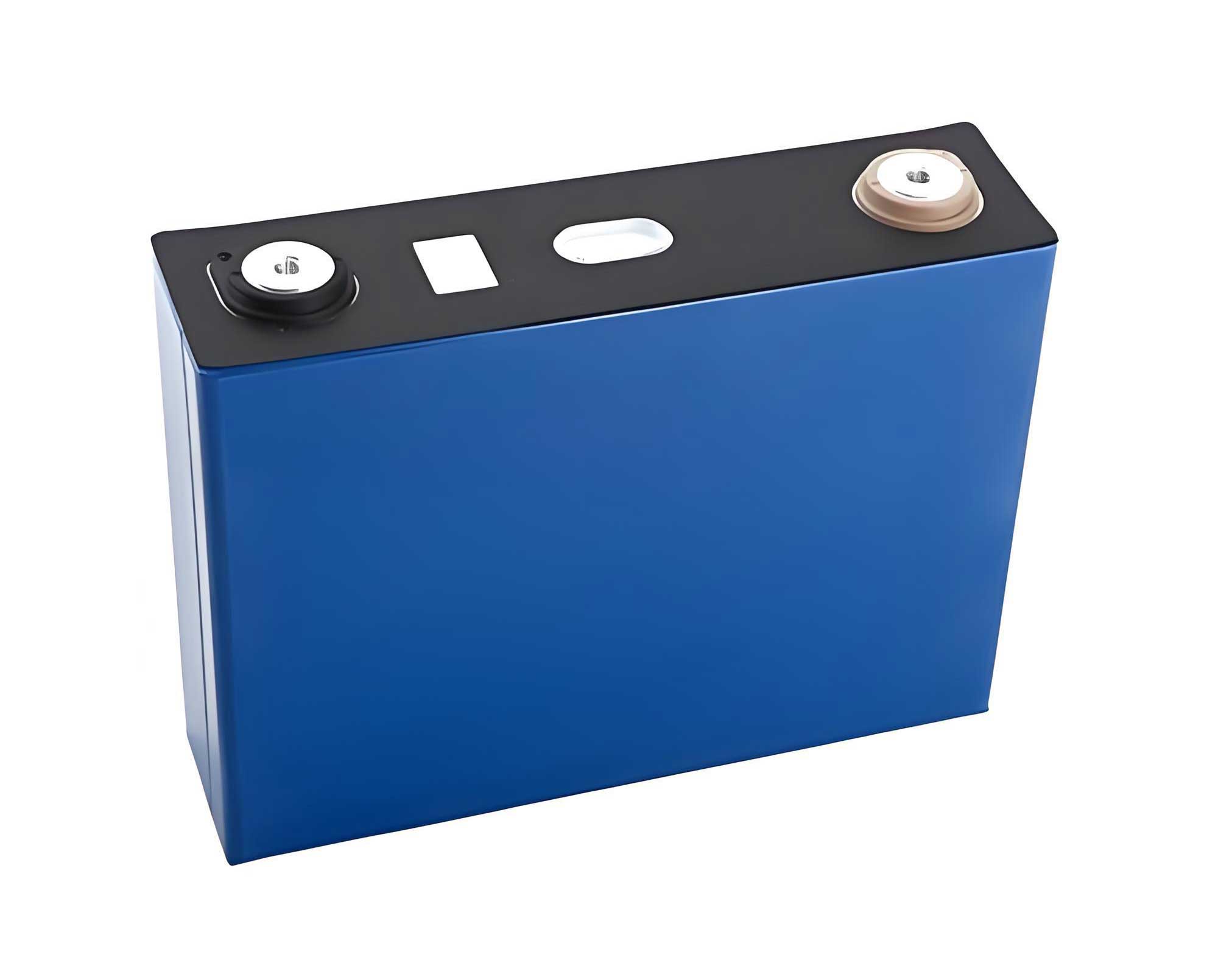
The internal configuration of the LiFePO4 battery is critical to understanding the heating process. The heating film was placed between two jelly-roll electrode assemblies during cell assembly. Precise positioning is essential for consistent and localized heat generation to initiate the short circuit effectively.
Experimental Methodology
Commercial-grade prismatic aluminum-can LiFePO4 battery cells were used. The cathode material was LiFePO4, and the anode was graphite. The nominal capacity was 106 Ah at 1/3 C rate, with a maximum charging voltage of 3.65 V.
Two types of flexible heating films, differing in size, were employed as the internal heat source. Their key specifications are summarized below.
| Heating Film ID | Dimensions (L × W × T, mm) | Rated Parameters |
|---|---|---|
| Film 1 | 50 ± 0.8 × 40 ± 0.8 × 0.3 ± 0.1 | Voltage: 42.43 V, Power: 60 W |
| Film 2 | 100 ± 0.8 × 40 ± 0.8 × 0.3 ± 0.1 | Voltage: 42.43 V, Power: 120 W |
The cell fabrication process was modified to integrate the heating film. After winding the electrode assemblies, the heating film was carefully inserted between them, ensuring its edges were recessed 3-4 mm from the separator edges to prevent direct contact with the can. High-temperature tape secured the film. Two small holes were drilled in the cell cover to allow the heating leads to exit. A high-temperature sealant was applied to ensure hermeticity. Standard processes like cover welding, electrolyte filling, and formation followed after the sealant cured. Prior to testing, all cells were charged to 3.65 V using a constant-current-constant-voltage (CCCV) protocol (0.33 C current, 0.05 C cutoff).
The test setup was designed to approximate adiabatic conditions and monitor thermal response. Three K-type thermocouples were attached to the cell at strategic locations: the center of the large face (T1), the center of the side (T2), and on the cover (T3). The cell was wrapped with 4 mm thick aerogel blankets on the large faces and sides to minimize heat loss to the environment via convection and radiation. The cell was clamped with steel plates, with a 10 mm air gap below to insulate it from the test platform. A programmable DC power supply provided constant power to the heating film until thermal runaway was confirmed by a sharp voltage drop and rapid temperature rise. Voltage and temperature data were logged at 1 Hz. Four distinct heating powers were tested, as detailed in the following experimental matrix.
| Experiment # | Heating Film Used | Applied Voltage (V) | Applied Current (A) | Heating Power (W) |
|---|---|---|---|---|
| 1 | Film 1 | 55 | 1.69 | 93 |
| 2 | Film 2 | 85 | 1.35 | 115 |
| 3 | Film 2 | 100 | 1.60 | 160 |
| 4 | Film 2 | 120 | 1.92 | 230 |
Results and Analysis
The key results from the four thermal runaway tests are consolidated in the table below. The data reveals clear trends related to heating power, time to failure, and thermal behavior of the LiFePO4 battery.
| Heating Power (W) | Time to TR (min) | Energy Input (Wh) | Max. Temp., T1 (°C) | Onset Temp. (°C) |
|---|---|---|---|---|
| 93 | 106.0 | 164.3 | 511.1 | 179.0 |
| 115 | 70.0 | 134.2 | 574.9 | 169.0 |
| 160 | 42.0 | 112.0 | 542.4 | 151.5 |
| 230 | 23.4 | 89.6 | 509.3 | 133.9 |
Impact of Heating Power on Failure Time and Energy: As expected, increasing the heating power significantly reduced the time to trigger thermal runaway in the LiFePO4 battery. The relationship is non-linear. For the same Film 2, doubling the power from 115 W to 230 W reduced the time by a factor of approximately 3, not 2. This non-linearity suggests complex interactions between heat generation, internal thermal diffusion, and the kinetics of the exothermic reactions leading to runaway. The total energy input required to initiate thermal runaway decreased with higher power. The 93 W test added 164.3 Wh, while the 230 W test added only 89.6 Wh. This indicates that at lower heating rates, more heat is lost to the surroundings (despite insulation) before critical internal temperatures are reached, and the battery’s internal state evolves differently under slower heating.
Thermal Runaway Onset Temperature: A critical finding is the influence of heating rate on the onset temperature of thermal runaway for the LiFePO4 battery. The onset was identified as the point where the temperature derivative (dT/dt) began its sharp, exponential increase. This temperature decreased consistently with increasing heating power: from 179 °C at 93 W to 134 °C at 230 W. This can be modeled by considering the competition between heat generation $Q_{gen}$ and heat loss $Q_{loss}$:
$$ \rho C_p \frac{\partial T}{\partial t} = \nabla \cdot (k \nabla T) + \dot{q}_{gen}(T, SOC, \eta) $$
Where $\rho$ is density, $C_p$ is heat capacity, $k$ is thermal conductivity, and $\dot{q}_{gen}$ is the internal heat generation rate, which is a strong, exponential function of temperature (T), state of charge (SOC), and other factors ($\eta$). At a high heating rate, the internal temperature of the LiFePO4 battery rises rapidly, pushing the cell into a high-temperature state before the slower, low-temperature parasitic reactions (like SEI decomposition) can fully proceed and dissipate some energy. Consequently, the main exothermic chain reaction (e.g., electrolyte reaction with positive electrode) is triggered at a lower bulk temperature reading.
Post-Thermal Runaway Maximum Temperature: The maximum recorded temperature (T1) did not follow a monotonic trend with power. The highest peak temperature (574.9 °C) occurred at 115 W. This peak temperature results from the sum of the battery’s inherent chemical energy and the externally added heating energy. At very high heating rates (230 W), thermal runaway is triggered so quickly that the heater adds less total energy, and the violent reaction may eject material or gases more rapidly, potentially limiting the peak temperature measured at the casing. The relationship can be conceptualized as:
$$ T_{max} \approx f(E_{chem} + E_{input} – E_{loss}) $$
where $E_{chem}$ is the convertible chemical energy of the LiFePO4 battery, $E_{input}$ is the heater energy input, and $E_{loss}$ represents energy losses through ejection, gas enthalpy, and casing heating. At lower powers, $E_{input}$ is larger and $E_{loss}$ during the long heating phase is also significant, making $T_{max}$ dependent on the net balance.
Safety Vent Behavior and Post-Mortem Analysis: In all four experiments, the standard current interrupt device (CID) and safety vent did not activate. Instead, gas release occurred through the seal around the heating film leads. The sealant material had a melting point around 90-100 °C. During heating, this seal failed before internal pressure could build up sufficiently to burst the vent, providing an alternative gas release path. This highlights a crucial design consideration for internally modified LiFePO4 battery cells: any penetrating seals must have a higher temperature resistance than the cell’s critical internal temperatures to ensure the primary safety vent functions as intended. Computed Tomography (CT) scans of cells from the 160 W and 230 W tests showed the internal structure. The heating wire remained in place. The electrode windings were largely intact but showed fracture points at the winding bends due to thermal stress. Melted aluminum from the positive current collector was observed at the bottom.
Numerical Simulation and Validation
A finite element thermal model was developed to simulate the heating phase of the LiFePO4 battery. The model aimed to verify the experimentally derived thermal properties. The cell was modeled as a anisotropic solid with the following properties:
$$ C_p = 986 \quad \text{J/(kg·K)} $$
$$ k_{x,y} = 25.6 \quad \text{W/(m·K)} \quad \text{(in-plane)} $$
$$ k_z = 1.6 \quad \text{W/(m·K)} \quad \text{(through-plane)} $$
Boundary conditions included natural convection: $h_{sides} = 8.0 \quad \text{W/(m²·K)}$ and $h_{bottom} = 5.0 \quad \text{W/(m²·K)}$. A volumetric heat source corresponding to 115 W was applied to the region representing the heating film for 600 seconds.
The simulation predicted a maximum internal temperature of 123.3 °C and a maximum external casing temperature of 39.9 °C after 600 s of heating. The simulated temperature rise curve at the casing center point was compared with the experimental T1 data from the 115 W test during the pre-runaway heating phase. The curves showed good agreement, validating the selected thermal parameters for the LiFePO4 battery model. This confirmed that the model can reasonably predict the thermal response of the cell to internal heating, providing a useful tool for estimating conditions under different power levels without exhaustive testing.
Conclusion
This study demonstrates that internal heating films are an effective method for triggering thermal runaway in LiFePO4 battery cells, simulating an internal short circuit scenario. The heating power profoundly influences the failure characteristics:
1. Higher heating power drastically shortens the time to thermal runaway, but the relationship is non-linear for a given film size.
2. The onset temperature for thermal runaway in a LiFePO4 battery decreases with increasing heating rate, dropping from ~179 °C at 93 W to ~134 °C at 230 W.
3. The peak temperature after runaway depends on the net energy balance between the battery’s chemical energy, the heater’s input, and various loss mechanisms.
4. A critical engineering finding is that the sealing method for heater leads must withstand temperatures exceeding the sealant’s melting point (~100 °C) to ensure the primary safety vent activates. Otherwise, venting occurs prematurely through the lead seals.
5. The thermal model developed with properties $C_p=986$ J/(kg·K), $k_{in-plane}=25.6$ W/(m·K), and $k_{through-plane}=1.6$ W/(m·K) accurately predicted the initial heating profile, validating its use for further analysis of LiFePO4 battery safety design.
Internal heating provides a more module-relevant trigger method for evaluating single-cell thermal runaway and its propagation within a pack, as it minimizes interference with neighboring cells compared to external heaters. Future work should focus on optimizing the sealant technology and exploring the impact of state of charge (SOC) and aging on the thermal runaway behavior of LiFePO4 battery cells triggered via this internal method.