
Energy storage lithium batteries, particularly those based on lithium iron phosphate (LiFePO4) chemistry, have gained significant attention due to their excellent structural stability, safety, and cost-effectiveness. These attributes make them ideal for large-scale energy storage systems. However, the lengthy testing cycles required to evaluate their long-term performance often hinder rapid product development and market entry. Accelerated aging tests, using temperature as a key factor, are commonly employed to compress testing timelines. This study investigates the capacity fading mechanisms of graphite||LiFePO4 soft-pack batteries cycled at various temperatures, ranging from 25°C to 80°C, to understand how elevated temperatures influence degradation pathways and to establish reliable life prediction models for energy storage lithium batteries.
The Arrhenius equation is widely used to model the acceleration of aging processes in energy storage lithium batteries. It relates the reaction rate to temperature, expressed as:
$$ \theta = A e^{\frac{E_a}{k_B T}} $$
where \(\theta\) represents the characteristic life, \(A\) is the pre-exponential factor, \(E_a\) is the activation energy, \(k_B\) is the Boltzmann constant (8.617 × 10⁻⁵ eV/K), and \(T\) is the absolute temperature in Kelvin. By cycling batteries at elevated temperatures, we can accelerate degradation and extrapolate results to standard conditions, provided the degradation mechanisms remain consistent. However, beyond a certain temperature threshold, the degradation pathways may shift, leading to inaccurate predictions. This work aims to identify that critical temperature for graphite||LiFePO4 energy storage lithium batteries and elucidate the underlying causes of accelerated capacity fade.
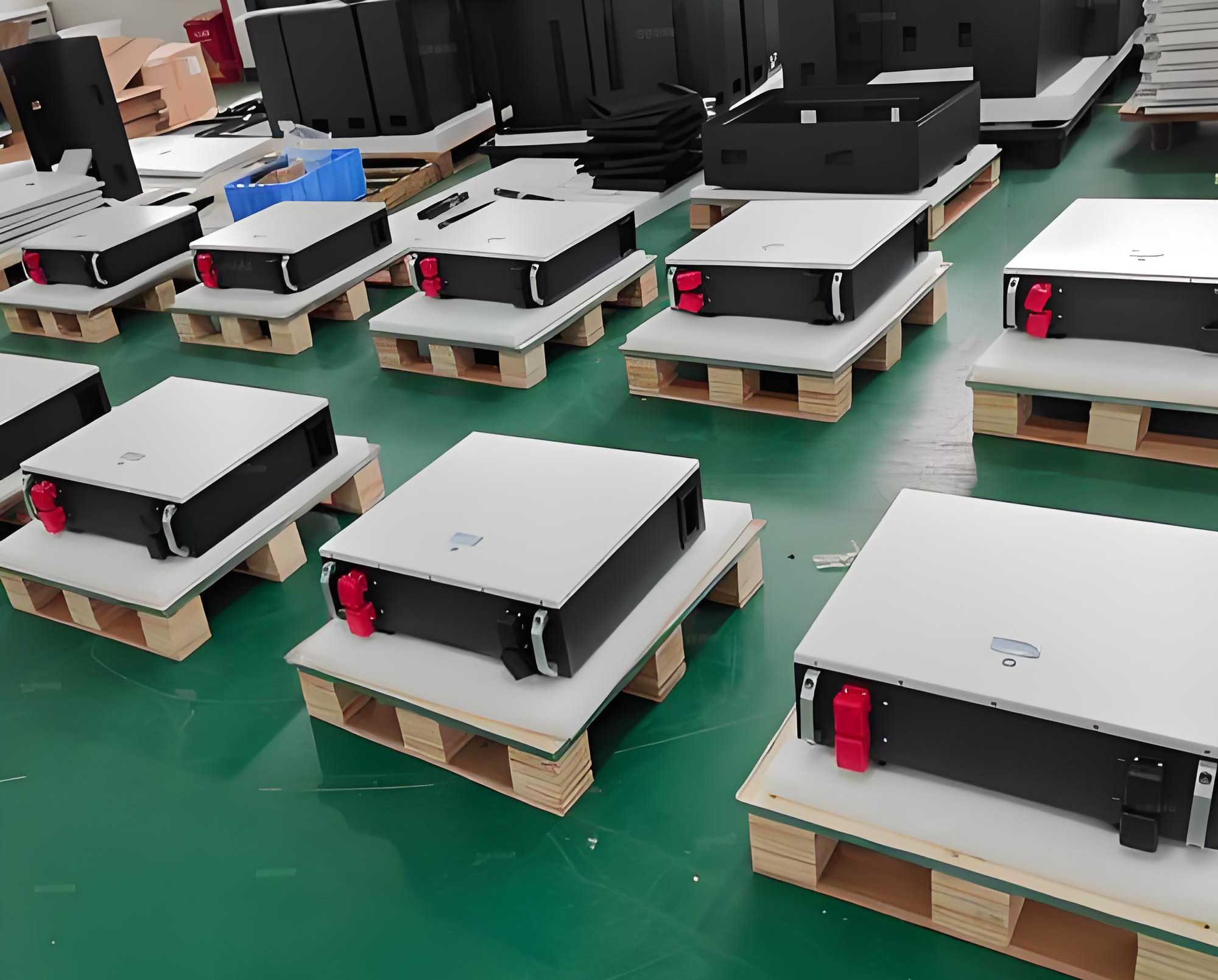
In this study, we fabricated 2.5 Ah soft-pack graphite||LiFePO4 batteries using a winding process. The positive electrode consisted of carbon-coated LiFePO4, while the negative electrode was made of artificial graphite. A polypropylene (PP) separator and a carbonate-based electrolyte with 1 M LiPF6 and 2% vinylene carbonate (VC) additive were used, with solvents including ethylene carbonate (EC), ethyl methyl carbonate (EMC), and dimethyl carbonate (DMC). The batteries were cycled at temperatures of 25°C, 45°C, 60°C, 70°C, and 80°C in constant temperature chambers. Capacity tests were performed using a constant current-constant voltage (CC-CV) charge protocol at 1 C rate (2.5 A) to 3.65 V, followed by a constant voltage step until the current dropped to 0.05 C, and a constant current discharge to 2.5 V. Cycling tests followed the same protocol, with capacity measured every cycle to track degradation.
To analyze degradation mechanisms, we employed differential capacity (dQ/dV) curves, which help identify losses in active lithium inventory (LLI) and active material (LAM). Post-cycling, batteries were disassembled in an argon-filled glovebox, and electrodes were characterized using scanning electron microscopy (SEM), inductively coupled plasma optical emission spectroscopy (ICP-OES), and X-ray diffraction (XRD). Cross-sections of electrodes were prepared using a cross-section polisher for detailed microstructural analysis.
The cycling performance of the energy storage lithium batteries at different temperatures is summarized in Table 1. As temperature increased, the capacity retention after 1,200 cycles decreased significantly. At 25°C, the battery retained 95% of its initial capacity, while at 80°C, it dropped to 75%. The initial capacity was higher at elevated temperatures due to reduced polarization and enhanced lithium-ion diffusion, but accelerated degradation overshadowed this benefit over cycles.
| Temperature (°C) | Capacity Retention (%) |
|---|---|
| 25 | 95 |
| 45 | 90 |
| 60 | 85 |
| 70 | 80 |
| 80 | 75 |
To quantify the degradation rate, we used the Arrhenius-based model for capacity loss:
$$ Q_{\text{loss}}(T, N) = A e^{-\frac{E_a}{RT}} N^z $$
where \(Q_{\text{loss}}\) is the percentage of capacity loss, \(N\) is the number of cycles, \(R\) is the gas constant, and \(z\) is the power factor. The equivalent cycle number \(N_{\text{eq}}\) was calculated as:
$$ N_{\text{eq}} = \frac{C}{2C_0} $$
with \(C\) being the cumulative charge-discharge capacity and \(C_0\) the rated capacity (2.5 Ah). Plotting \(\ln(Q_{\text{loss}})\) against \(\ln(N_{\text{eq}})\) for the linear degradation region allowed us to determine the intercept \(\ln(Q_0)\):
$$ \ln(Q_{\text{loss}}) = \ln(A) – \frac{E_a}{RT} + z \ln(N_{\text{eq}}) $$
and
$$ \ln(Q_0) = \ln(A) – \frac{E_a}{RT} $$
The relationship between \(\ln(Q_0)\) and \(-1/T\) is shown in Table 2. For temperatures up to 60°C, the data followed a linear trend, indicating a constant activation energy and consistent degradation mechanisms. However, at 70°C and 80°C, deviations occurred, suggesting a change in activation energy and degradation pathways. This transition point around 60°C is critical for accelerated testing of energy storage lithium batteries.
| Temperature (°C) | \(-1/T\) (K−1) | \(\ln(Q_0)\) |
|---|---|---|
| 25 | -0.003356 | -5.21 |
| 45 | -0.003145 | -4.88 |
| 60 | -0.003003 | -4.65 |
| 70 | -0.002915 | -4.32 |
| 80 | -0.002832 | -4.10 |
Differential capacity (dQ/dV) analysis provided insights into the capacity loss mechanisms. Peaks in the dQ/dV curves correspond to phase transitions in the electrodes. Peak I is associated with lithium intercalation/deintercalation in graphite, and its area reduction indicates LLI. Peak II relates to the LiFePO4/FePO4 transition, and its area reduction signifies LAM. At higher temperatures, the area under Peak I decreased more significantly, pointing to accelerated LLI due to enhanced SEI growth and electrolyte decomposition. The contributions of LLI and LAM to total capacity loss are quantified in Table 3 for batteries cycled to 90% state of health (SOH). As temperature rose, LLI became the dominant factor, accounting for over 70% of capacity loss at 80°C.
| Temperature (°C) | LLI Contribution (%) | LAM Contribution (%) |
|---|---|---|
| 25 | 65 | 35 |
| 45 | 68 | 32 |
| 60 | 72 | 28 |
| 70 | 75 | 25 |
| 80 | 78 | 22 |
SEM analysis revealed significant morphological changes in the electrodes. Graphite negative electrodes cycled at 25°C and 45°C showed surface deposits but minimal cracking. In contrast, at 70°C and 80°C, severe surface deposition and internal cracking were observed, indicating accelerated SEI growth and mechanical stress. The positive LiFePO4 electrodes maintained structural integrity up to 60°C, but at higher temperatures, particle cracking and fragmentation occurred, likely due to repeated lattice expansion/contraction and corrosive electrolyte interactions. These observations align with the accelerated degradation in energy storage lithium batteries above 60°C.
ICP-OES analysis of cycled graphite electrodes detected increasing phosphorus (P) and iron (Fe) content with temperature, as shown in Table 4. The rise in P suggests electrolyte decomposition and SEI formation, while Fe indicates dissolution from the positive electrode and deposition on the negative. At 80°C, Fe content reached 802.4 ppm, and at 80% SOH, it surged to 2,287.79 ppm. This Fe deposition catalyzes SEI growth, exacerbating LLI. The reactions involved include:
$$ \text{LiPF}_6 \rightleftharpoons \text{LiF} + \text{PF}_5 $$
$$ \text{PF}_5 + \text{H}_2\text{O} \rightarrow \text{POF}_3 + 2\text{HF} $$
$$ 2\text{H}^+ + \text{LiFePO}_4 \rightarrow \text{Fe}^{2+} + \text{LiH}_2\text{PO}_4 $$
These side reactions are accelerated at high temperatures, leading to rapid capacity fade in energy storage lithium batteries.
| Cycling Condition | P Content (ppm) | Fe Content (ppm) |
|---|---|---|
| 25°C – 95% SOH | 1,599.82 | 98.57 |
| 45°C – 90% SOH | 2,610.12 | 137.06 |
| 60°C – 90% SOH | 3,251.66 | 459.57 |
| 70°C – 90% SOH | 3,736.96 | 682.08 |
| 80°C – 90% SOH | 5,670.21 | 802.40 |
| 80°C – 80% SOH | 8,237.20 | 2,287.79 |
XRD results confirmed the structural changes. Graphite electrodes showed stable (002) peak positions across temperatures, but the full width at half maximum (FWHM) increased with temperature, indicating reduced crystallite size due to microcracking. For LiFePO4 positive electrodes, the ratio of LiFePO4 to FePO4 in the discharged state decreased at higher temperatures, as summarized in Table 5. This reflects increased lithium loss, consistent with dQ/dV analysis. The structural degradation above 60°C underscores the shift in degradation mechanisms for energy storage lithium batteries.
| Cycling Condition | LiFePO4 Content (%) | FePO4 Content (%) |
|---|---|---|
| 25°C – 95% SOH | 87.33 | 12.67 |
| 45°C – 90% SOH | 85.05 | 14.95 |
| 60°C – 90% SOH | 83.42 | 16.58 |
| 70°C – 90% SOH | 81.11 | 18.89 |
In conclusion, this study demonstrates that temperature plays a critical role in the cycling degradation of energy storage lithium batteries. Below 60°C, capacity fade is primarily driven by SEI growth and active lithium loss, with minimal changes in electrode structure. Above 60°C, degradation accelerates due to combined effects of SEI accumulation, particle cracking, transition metal dissolution, and electrolyte decomposition. The Arrhenius model reveals a change in activation energy beyond this threshold, highlighting the importance of using temperatures below 60°C for accelerated life testing of energy storage lithium batteries. These findings provide valuable insights for designing reliable energy storage systems and developing accurate life prediction models, ensuring the longevity and safety of energy storage lithium batteries in real-world applications.
Future work should focus on optimizing electrode materials and electrolytes to enhance the high-temperature stability of energy storage lithium batteries. Additionally, integrating machine learning with accelerated testing data could improve life prediction accuracy. By addressing these challenges, we can advance the development of durable and efficient energy storage lithium batteries for sustainable energy solutions.