
In the current era of energy transition and carbon reduction, safe, efficient, and reliable energy storage technologies are crucial for sustainable economic development. Owing to their high safety, long cycle stability, and low cost, lithium iron phosphate (LiFePO4) batteries have gradually replaced ternary lithium batteries as the preferred electrochemical energy storage device for energy storage stations. The production of LiFePO4 batteries for energy storage and the installed capacity of electrochemical energy storage have been increasing for several consecutive years. With the growing market demand for integrated wind-solar-storage systems, industrial energy storage, and household energy storage, the potential of electrochemical energy storage will be further unleashed in the future. For large-scale energy storage stations, safety and reliability are key factors equally important as cost. Under actual complex environmental conditions and long-term operation, LiFePO4 batteries may experience various electrochemical performance anomalies during cycling and storage, while potential thermal safety hazards cannot be ignored. Clarifying the evolution of storage failure and thermal runaway characteristics of LiFePO4 batteries is essential for the safe operation of energy storage stations.
In practical application scenarios, energy storage station equipment may remain in a charged static storage state for extended periods and may face extreme environmental temperatures. Factors such as state of charge (SOC) and ambient temperature directly affect the electrochemical performance and safety of batteries. Due to insufficient or faulty battery management system protection functions, with increasing calendar time, LiFePO4 batteries can also experience performance failures during storage, affecting normal equipment operation and, in severe cases, leading to thermal runaway and fires. In recent years, researchers have conducted studies on the performance failure mechanisms and safety characteristics of LiFePO4 batteries. However, understanding of the storage failure mechanisms and thermal safety changes under storage conditions remains to be deepened. This study focuses on key influencing factors such as ambient temperature and SOC, conducting multi-factor coupled condition simulation storage experiments, electrochemical analysis, and thermal safety research on LiFePO4 batteries for energy storage. From an engineering application perspective, we investigate the impact of different storage conditions on battery performance and thermal safety, deeply explore the electrochemical performance evolution of LiFePO4 batteries during storage, reveal the underlying mechanisms of performance failure, construct a semi-empirical prediction model for battery capacity decay using the incremental capacity technique, and systematically evaluate the thermal safety of aged batteries. We hope this study provides scientific basis and technical support for reducing operation and maintenance costs, extending service life, and enhancing the safety of LiFePO4 batteries in electrochemical energy storage stations, promoting safer and broader application of LiFePO4 batteries in the new energy industry.
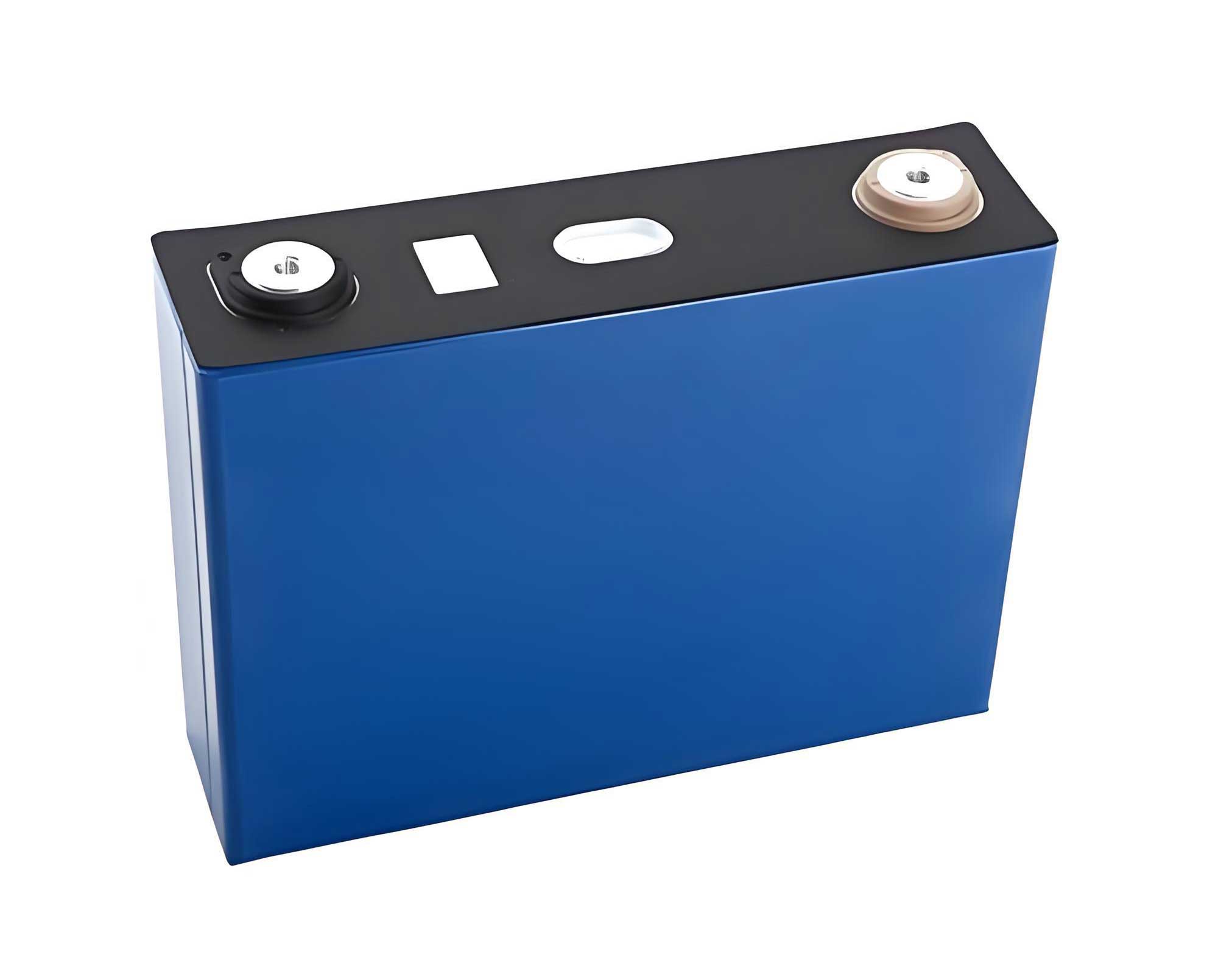
In this work, we use commercial cylindrical LiFePO4 batteries as typical energy storage subjects. Through storage simulation experiments, employing various non-destructive analysis techniques and an adiabatic accelerating rate calorimeter, we explore the electrochemical performance and thermal safety evolution patterns and deep-seated mechanisms of LiFePO4 batteries under different ambient temperatures (from room temperature to 72 °C) and various states of charge (SOC = 0–100%). The experimental results show that the state of health (SOH) and thermal runaway characteristics of LiFePO4 batteries during storage are significantly affected by ambient temperature and SOC. At 72 °C and 100% SOC, the capacity decay rate of the LiFePO4 battery is 22.1 times that at room temperature and 5.6 times that at 0 SOC. Higher temperatures or higher SOC levels lead to more severe battery capacity decay, mainly due to internal loss of active lithium (LLI) and loss of active material on the negative electrode (LAMne). However, after storage, the thermal safety of LiFePO4 batteries improves, possibly related to the decrease in system energy within the battery due to loss of active materials. Additionally, using the incremental capacity technique, we construct a semi-empirical prediction model for battery capacity decay based on the characteristic peak intensity of IC curves. This study provides technical guidance for the operation, maintenance, and safety protection of LiFePO4 batteries in future large-scale energy storage applications.
Materials and Methods
The experimental objects in this work are LiFePO4 single cells, with a cylindrical 18650 form factor, rated capacity of 1.15 Ah, nominal voltage of 3.2 V, designed upper charging voltage limit of 3.65 V, and discharge cutoff voltage of 2.5 V. The positive electrode active material is lithium iron phosphate, and the negative electrode active material is graphite. The experimental control variables are key factors affecting the electrochemical performance of lithium-ion batteries: ambient temperature and state of charge (SOC). The experimental conditions and corresponding number of battery samples are set as shown in Table 1.
| SOC (%) | Temperature (°C) | Number of Samples |
|---|---|---|
| 100 | RT | 2 |
| 100 | 40 | 3 |
| 100 | 60 | 3 |
| 100 | 72 | 3 |
| 50 | RT | 2 |
| 50 | 72 | 3 |
| 0 | RT | 2 |
| 0 | 72 | 3 |
The sample naming convention is LFP-X/YSOC, where X (°C) is the ambient temperature and Y (%) is the state of charge. For example, LFP-72/100SOC represents a LiFePO4 battery stored at 72 °C with 100% SOC.
Electrochemical Performance Testing
Reference Performance Test: We use a Maccor Series 4000 battery tester for charge-discharge testing. The purpose of the reference performance test is to measure the electrochemical performance of batteries under the same baseline conditions after certain periods of storage aging experiments, facilitating comparison of the effects of various factors on battery performance. Specifically, at room temperature, discharge at 1/3 C current to the cutoff voltage of 2.5 V (constant current mode); then charge at 1/3 C to the upper charging voltage limit of 3.65 V (constant current mode), until the charging current decreases to 0.01 C to end charging (constant voltage mode); repeat this procedure three times, and take the average of two complete discharge capacities as the current available capacity of the battery. For new batteries, we select multiple batteries with available capacity deviations not exceeding 2% as the same group of experimental subjects.
After standing for 30 minutes, continue to discharge at 1/3 C constant current to 50% SOC, then switch to 4 C pulse discharge for a duration of 10 seconds, thereby calculating the pulse internal resistance value at 50% SOC.
Storage Aging Simulation Test: After completing the reference performance test, adjust the battery state of charge to the experimental value (100% SOC, 50% SOC, 0 SOC). In this experiment, we use an ESPEC GPH 30 high-temperature test chamber for ambient temperature control, with temperature set points of 40 °C, 60 °C, and 72 °C. The high-temperature storage experiment phase period is 5 days (or integer multiples thereof), with a reference performance test conducted after each cycle; the room temperature (RT) control group storage experiment phase period is 30 days.
Thermal Safety Testing
This experiment uses an accelerating rate calorimeter EV+ (ARC) produced by THT Company to conduct thermal safety tests on batteries, exploring the changes in thermal runaway behavior of LiFePO4 batteries before and after experiencing various storage conditions. The equipment temperature sensitivity is 0.02 °C/min, and the experiment end temperature is set to 250 °C.
Results and Discussion
Electrochemical Performance Analysis
The LiFePO4 battery undergoes storage experiments under different ambient temperatures and state of charge conditions, and the evolution of electrochemical performance during the process is shown in Figure 1. The results show that when the state of charge is the same at 100% SOC, the higher the ambient temperature, the faster the maximum available capacity of the battery decays. Specifically, at room temperature, the battery health state shows a slow decline trend. After 150 days of storage, SOH drops to 95.7%, after which performance changes become slower, with SOH decreasing by only about 0.1% within one month, with an average decay rate of approximately 0.29‰/day. When the storage temperature is raised to 40 °C, the battery health state shows a clear linear decline trend. After 140 days of storage, SOH drops to 87.3%, with an average decay rate of approximately 0.91‰/day, which is 3.1 times higher than that at room temperature. Continuing to adjust the storage temperature to 60 °C, the battery capacity decay rate increases by 9.3 times; when the ambient temperature is 72 °C, the capacity decay rate increases to 22.1 times that at room temperature. Figure 1(b) intuitively shows the relationship between the SOH of the LiFePO4 battery and ambient temperature. Within the same experimental period, the higher the ambient temperature, the faster the battery capacity decays, with the decay curve at high temperatures showing a super-linear pattern.
In contrast, the impact pattern of state of charge (SOC) on the performance of LiFePO4 batteries during storage is different. As shown in Figure 1(c), under high temperature (72 °C) and empty state (0 SOC), the maximum available capacity of the battery first shows a slight increase, then gradually decreases. After 140 days of storage, SOH drops to 84.1%, with an average decay rate of approximately 1.14‰/day, which is less than one-fifth of that at the same temperature (72 °C) and full state (100% SOC), indicating a significantly slower battery maximum available capacity decay rate. When adjusting the state of charge to 50% SOC, during the initial experimental period (0–20 days), the battery performance degradation behavior is basically the same as that at full state, after which the battery capacity decay rate slows to some extent, with an average decay rate of 64% of that at full state. This indicates that appropriately adjusting the battery state of charge to a lower value is beneficial to delaying battery performance degradation during storage to a certain extent. Under room temperature conditions, batteries at low states of charge (0 SOC and 50% SOC in Figure 1(c)) show a slight increase in SOH, in sharp contrast to the rapid decay at high temperatures; Figure 1(d) also intuitively shows the variation pattern of battery SOH with state of charge, i.e., the higher the state of charge, the faster the battery capacity decays, with the decay curve showing a sub-linear pattern. In summary, the coupling of high temperature and high state of charge factors has a very significant adverse impact on the electrochemical performance of LiFePO4 batteries during storage, causing rapid degradation of their electrochemical performance. However, the mechanisms of influence of ambient temperature and state of charge on battery performance are different.
Internal resistance is an intuitive reflection of the resistance in the lithium-ion migration kinetic process inside lithium-ion batteries and an important parameter reflecting changes in lithium-ion battery performance. In this study, although the capacity of LiFePO4 batteries shows obvious degradation after storage, the 4 C pulse internal resistance of this type of battery at 50% SOC is relatively stable. As shown in Figure 2, during the entire experimental period, the internal resistance of most LFP battery samples shows a slight fluctuating increase trend, with only the LFP-72/50SOC battery sample showing a significant increase in internal resistance.
Study on Storage Performance Degradation Mechanisms
We have analyzed the kinetic behavior of the capacity decay process of LiFePO4 batteries under different storage conditions by fitting. The capacity loss experience formula under different temperature conditions is as follows:
$$Q_{\text{loss}}(T,t) = 1 – \frac{Q}{Q_0} = A \exp\left(-\frac{E_a}{RT}\right) \left(\frac{t}{t_0}\right)^z$$
where \(Q_{\text{loss}}\) represents the battery capacity loss; \(Q_0\) is the initial capacity; \(E_a\) is the apparent activation energy of the capacity loss kinetic process; \(A\) is the pre-exponential factor; \(t\) is the storage time; \(t_0\) is the test start time; \(z\) is the time-related exponent term. Different values of \(z\) generally indicate different kinetic modes of battery capacity decay. Referring to this empirical formula, we performed fitting analysis on the kinetic behavior of the capacity decay process of LiFePO4 batteries under different storage conditions.
The fitting results are shown in Figure 3. Except for the sample stored at room temperature and full charge (LFP-RT/100SOC), the linear fitting curves of other LiFePO4 battery samples are approximately parallel, meaning the slope \(z\) values are nearly the same. The fitting results in Table 2 show that the \(z\) value of the LFP-RT/100SOC battery sample is 0.46 (\(z \approx 0.5\)), indicating that under room temperature conditions, the performance degradation of fully charged LFP batteries during storage may mainly originate from the natural growth process of the SEI film, i.e., the side reaction between lithium intercalation in the graphite anode and the electrolyte. Under other working conditions, the \(z\) values are significantly greater than 0.5 (\(0.67 \leq z \leq 0.84\)), indicating that the battery performance degradation mechanisms under these conditions may be more complex.
| Sample | z | R² |
|---|---|---|
| LFP-RT/100SOC | 0.46 | 0.9812 |
| LFP-40/100SOC | 0.78 | 0.9969 |
| LFP-60/100SOC | 0.84 | 0.9905 |
| LFP-72/100SOC | 0.74 | 0.9964 |
| LFP-72/50SOC | 0.67 | 0.9832 |
| LFP-72/0SOC | 0.78 | 0.9942 |
Using the differential voltage (DV) technique, we further analyzed the reasons for the capacity decay of LiFePO4 batteries. As shown in Figure 4(a)-(b), the DV curve of the LiFePO4 battery has two characteristic peaks, Q1 and Q2, at 0.32 Ah and 0.95 Ah, respectively. The shift of the characteristic peak position towards the lower capacity direction indicates the occurrence of loss of active lithium (LLI), and the decrease in the peak spacing between characteristic peaks indicates the existence of loss of active materials on the negative electrode (LAMne). From Figure 4(a), it can be seen that the DV curve of the LFP-RT/100SOC battery sample only shifts slightly, with a Q2 peak displacement of 0.04 Ah and a peak spacing change of 0.002 Ah, indicating very little loss of negative electrode active material. In contrast, if the ambient temperature is raised to 72 °C, the DV curve of the LFP-72/100SOC battery sample shifts significantly with increasing storage time (Figure 4(b)). Its Q2 peak shifts from 0.95 Ah to 0.63 Ah in the lower capacity direction, with a displacement of 0.32 Ah, which is about 8 times that of the room temperature control group sample LFP-RT/100SOC. The peak spacing change is 0.194 Ah, which is about 97 times that of the room temperature control group sample, again indicating that high temperature has a serious negative impact on the storage performance of LiFePO4 batteries, accelerating side reactions such as loss of active lithium and loss of negative electrode active material.
Figure 4(c) shows the contributions of side reactions such as loss of active lithium and loss of negative electrode active material inside LFP batteries during storage under the coupling of different ambient temperatures and state of charge factors. At the same state of charge (100% SOC, gray dashed box), as the ambient temperature increases, both LLI and LAMne side reaction processes occur simultaneously, with the amount of active lithium loss (orange bars) increasing linearly; while the degree of negative electrode active material loss (green bars) first increases, reaching a maximum at 60 °C, and then shows no significant change with further temperature increase (72 °C). At the same ambient temperature (72 °C, blue dashed box), both side reaction processes also exist simultaneously, and as the state of charge increases, the degree of negative electrode active material loss gradually increases; in contrast, the loss of active lithium shows no significant change after the ambient temperature reaches above 60 °C. In summary, the mechanisms and degrees of influence of ambient temperature and state of charge on the internal side reactions of LFP batteries are not exactly the same. Ambient temperature has a more obvious effect on loss of active lithium (LLI), while state of charge has a more significant effect on loss of negative electrode active material (LAMne). However, under the storage conditions set in this experiment, loss of active lithium dominates the impact on electrochemical performance. For the loss of negative electrode active material, we speculate that this side reaction process has an upper threshold limit, and its contribution to capacity loss will not continue to increase.
Thermal Safety Study
We further studied the thermal safety of LiFePO4 battery cells, triggering spontaneous heating and ultimately thermal runaway of the battery through equipment heating in an adiabatic environment. The results are shown in Figure 5. The fresh battery sample LFP-New shows the most severe thermal runaway reaction, with the highest thermal runaway maximum temperature \(T_{\text{MAX}}\) reaching 302.6 °C and the highest thermal runaway maximum temperature rise rate \((dT/dt)_{\text{MAX}}\) reaching 79 °C/min. However, after storage under different conditions, the thermal safety of this type of LiFePO4 battery has improved to varying degrees, reflected in the decrease of its main thermal runaway characteristic parameters \(T_{\text{MAX}}\) and \((dT/dt)_{\text{MAX}}\). Figure 5(b) shows that the temperature rise rate process of LiFePO4 battery thermal runaway exhibits obvious stage characteristics. In this work, we divide battery thermal runaway into five stages: Stage I is the “heat-wait-seek” stage, during which the temperature in the instrument chamber rises stepwise, providing heat to the battery; Stage II is the battery self-heating stage (from self-heating to vent opening); Stage III is the battery rapid self-heating stage; Stage IV is the battery thermal runaway stage; Stage V is the post-thermal runaway cooling stage.
To gain a deeper understanding of the correlation between battery performance degradation and thermal safety, we plotted the relationship between the state of health (SOH) of LiFePO4 batteries and thermal runaway characteristic parameters (Figure 6). From the figure, it can be seen that there is a certain correlation between battery thermal runaway characteristic parameters {maximum temperature \(T_{\text{MAX}}\) [Figure 6(a)] and maximum temperature rise rate \((dT/dt)_{\text{MAX}}\) [Figure 6(b)]} and battery SOH. When SOH is in the range of 100%–85%, the thermal safety of the battery shows an upward trend with decreasing health state; with continuous degradation of health state (SOH = 85%–70%), the overall thermal safety of the battery shows stable fluctuation changes, indicating less influence by health state. In summary, fresh LiFePO4 batteries have the lowest thermal safety. As the storage aging degree of the battery deepens, the loss of active substances (mainly active lithium) inside the battery intensifies, leading to a decrease in reactant content in the thermal runaway chain reaction, resulting in a reduced thermal runaway reaction degree and improved battery thermal safety, consistent with conclusions in related literature. When the concentration of internal active reactants decreases to a certain level, it is no longer the determining factor for the thermal runaway reaction, reflected in the stabilization of battery thermal safety parameter indicators [\(T_{\text{MAX}}\) and \((dT/dt)_{\text{MAX}}\)].
The self-heating (Stages II and III) and thermal runaway (Stage IV) stages of batteries are important objects for studying the kinetic processes of battery thermal runaway reactions. The kinetic behaviors of the self-heating process (Stages II and III) of different LiFePO4 battery samples, i.e., the thermal runaway gestation process, are relatively similar. The apparent activation energy of the Stage II self-heating process is around 30 kJ/mol [Figure 7(a)], and the apparent activation energy of the Stage III self-heating process is around 110 kJ/mol [Figure 7(b)]. However, the kinetic behavior of batteries in Stage IV thermal runaway after experiencing different storage conditions shows obvious storage aging path dependence [Figure 7(c)]. Figure 7(d) results intuitively show the influence of external conditions on the apparent activation energy of the thermal runaway process. As ambient temperature or state of charge increases, the thermal runaway apparent activation energy \(E_{a}^{\text{IV}}\) gradually decreases, significantly dropping from a maximum of 114.9 kJ/mol to 22.4 kJ/mol. The \(E_{a}^{\text{IV}}\) of the LFP-72/100SOC battery stored at high temperature of 72 °C is only about one-fifth of that of the fresh battery LFP-New. In summary, although LiFePO4 batteries with higher storage aging degrees have lower overall thermal safety risks [lower \(T_{\text{MAX}}\) and \((dT/dt)_{\text{MAX}}\)], their thermal runaway reaction process (Stage IV) is more easily triggered due to lower apparent activation energy. Therefore, it is necessary to comprehensively characterize and evaluate the thermal safety of LiFePO4 batteries with different storage histories or at different lifecycle stages.
| Sample | \(E_a\) (kJ/mol) Stage II | \(E_a\) (kJ/mol) Stage III | \(E_a\) (kJ/mol) Stage IV |
|---|---|---|---|
| LFP-New | 32.3 | 111.2 | 114.9 |
| LFP-RT/100SOC | 32.9 | 116.4 | 99.0 |
| LFP-40/100SOC | 31.3 | 108.2 | 81.0 |
| LFP-60/100SOC | 30.9 | 105.3 | 43.9 |
| LFP-72/100SOC | 29.3 | 116.4 | 22.4 |
| LFP-72/50SOC | 29.7 | 101.5 | 60.5 |
| LFP-72/0SOC | 30.1 | 106.0 | 98.8 |
Capacity Decay Prediction Analysis
From the above research, it can be seen that the capacity decay of LiFePO4 batteries during storage has a significant impact on their thermal safety and electrochemical performance. Therefore, constructing a battery capacity prediction model is of great significance for battery safety assurance and performance maintenance. However, battery discharge capacity or health state SOH cannot be quickly and directly measured; often, they need to be obtained indirectly through other characteristic parameters. Figure 8(a) shows the incremental capacity (IC) curves of the LFP-72/100SOC battery sample at different storage periods. The IC curve of LiFePO4 batteries generally has five characteristic peaks, among which the P1 peak, P2 peak, and P5 peak located at 3.39 V, 3.35 V, and 3.27 V, respectively, are more obvious. Experimental results of battery samples show that with increasing storage cycles, the characteristic peak intensity \(I_{P1}\) in the IC curve of this type of LiFePO4 battery gradually weakens, similar to the trend of battery health state SOH changes.
To clarify the correlation between the P1 characteristic peak intensity and battery SOH, we analyzed the correlation between them using the Pearson coefficient. The results are shown in Table 4. The Pearson coefficient between SOH and P1 peak intensity for experimental battery samples is greater than 0.95, indicating a strong correlation between the two. Selecting the IC curve characteristic peak intensity \(I_{P1}\) to indicate SOH changes is feasible. Figure 8(b) shows the corresponding relationship between SOH and \(I_{P1}\) for different LFP battery samples. The fitting results are listed in Table 4, and the linear fitting effect is good (except for the LFP-40/100SOC sample, all others have R² > 0.97). The slope range of the fitting curve is 0.3254–0.4707, and the intercept range is 52.91–65.22. All data are within the 95% prediction interval range, indicating that under different storage conditions, there is a strong correlation between battery health state SOH and IC curve characteristic peak intensity \(I_{P1}\). The characteristic peak P1 can be used to effectively predict the change trend of LiFePO4 battery health state during storage.
| Sample | Pearson Coefficient | Slope | Intercept | R² |
|---|---|---|---|---|
| LFP-40/100SOC | 0.9566 | 0.4020 | 57.04 | 0.9151 |
| LFP-60/100SOC | 0.9949 | 0.3254 | 65.22 | 0.9898 |
| LFP-72/100SOC | 0.9972 | 0.3677 | 62.57 | 0.9944 |
| LFP-72/0SOC | 0.9867 | 0.4707 | 52.91 | 0.9735 |
| LFP-72/50SOC | 0.9852 | 0.4118 | 60.41 | 0.9706 |
| All | 0.9810 | 0.3479 | 63.16 | 0.9624 |
Conclusion
In this work, we conduct an in-depth study on the electrochemical performance degradation and thermal safety of LiFePO4 batteries for energy storage under typical storage conditions at different lifecycle stages. Using various non-destructive analysis techniques, we analyze the capacity decay mechanism of LiFePO4 batteries under storage conditions. Based on systematic experiments and data analysis, we draw the following conclusions:
(1) During storage, higher ambient temperatures and higher states of charge lead to more severe capacity decay in LiFePO4 batteries. Through DV technology analysis, we find that this is mainly due to side reactions inside the battery consuming active lithium ions and some active graphite materials, causing the battery to lose reversible lithium intercalation/deintercalation capability. For the LFP-72/100SOC sample, the contributions of LLI and LAMne to capacity loss are 28.7% and 16.9%, respectively, with LLI being the main reason. Additionally, the impact patterns of ambient temperature and state of charge on internal side reactions of the battery are not exactly the same; the former has a more obvious effect on LLI, while the latter has a more significant effect on LAMne.
(2) As the storage aging degree of LiFePO4 batteries deepens, the loss of active materials inside the battery intensifies, and the thermal safety of the battery actually improves. This is mainly due to the loss of internal active materials, reducing the reactants for thermal runaway reactions. Further analysis shows that there is an intrinsic relationship between the severity of thermal runaway and the health state of LiFePO4 batteries. As the health state decreases, the overall thermal safety of the battery shows an upward trend. When SOH decays to a certain level (below 85% SOH), the thermal safety of the battery no longer changes significantly.
(3) In different storage condition simulation experiments, there is a strong correlation between battery health state SOH and the peak intensity \(I_{P1}\) of characteristic peak P1 in the incremental capacity IC curve. The characteristic peak P1 can be used to predict the change trend of LiFePO4 battery health state under storage conditions.
This study provides technical guidance for the operation, maintenance, and safety protection of LiFePO4 batteries in future large-scale energy storage applications. We hope that the findings will contribute to safer and more efficient use of LiFePO4 battery technology in the energy storage sector. Future work could focus on extending the prediction models to real-time monitoring systems and exploring mitigation strategies for performance degradation under extreme storage conditions.