
As a researcher in the field of green energy storage, I have long been fascinated by the potential of lithium-ion batteries, particularly the LiFePO4 battery, due to its inherent safety advantages. The LiFePO4 battery has garnered significant attention from electric vehicle manufacturers, as its stability and longevity make it an ideal candidate for large-scale battery packs. However, a critical challenge in deploying these batteries in series-parallel configurations within battery packs is voltage inconsistency among individual cells. This inconsistency can lead to reduced effective capacity, premature protection triggers during charging or discharging, and ultimately, diminished driving range and performance. In this study, we explore methods to enhance the voltage consistency of LiFePO4 batteries, focusing on two key factors: ambient temperature during formation and grading, and optimized grading protocols involving low-current discharge or micro-charging. Our goal is to provide practical insights that can improve the overall performance and reliability of LiFePO4 battery systems.
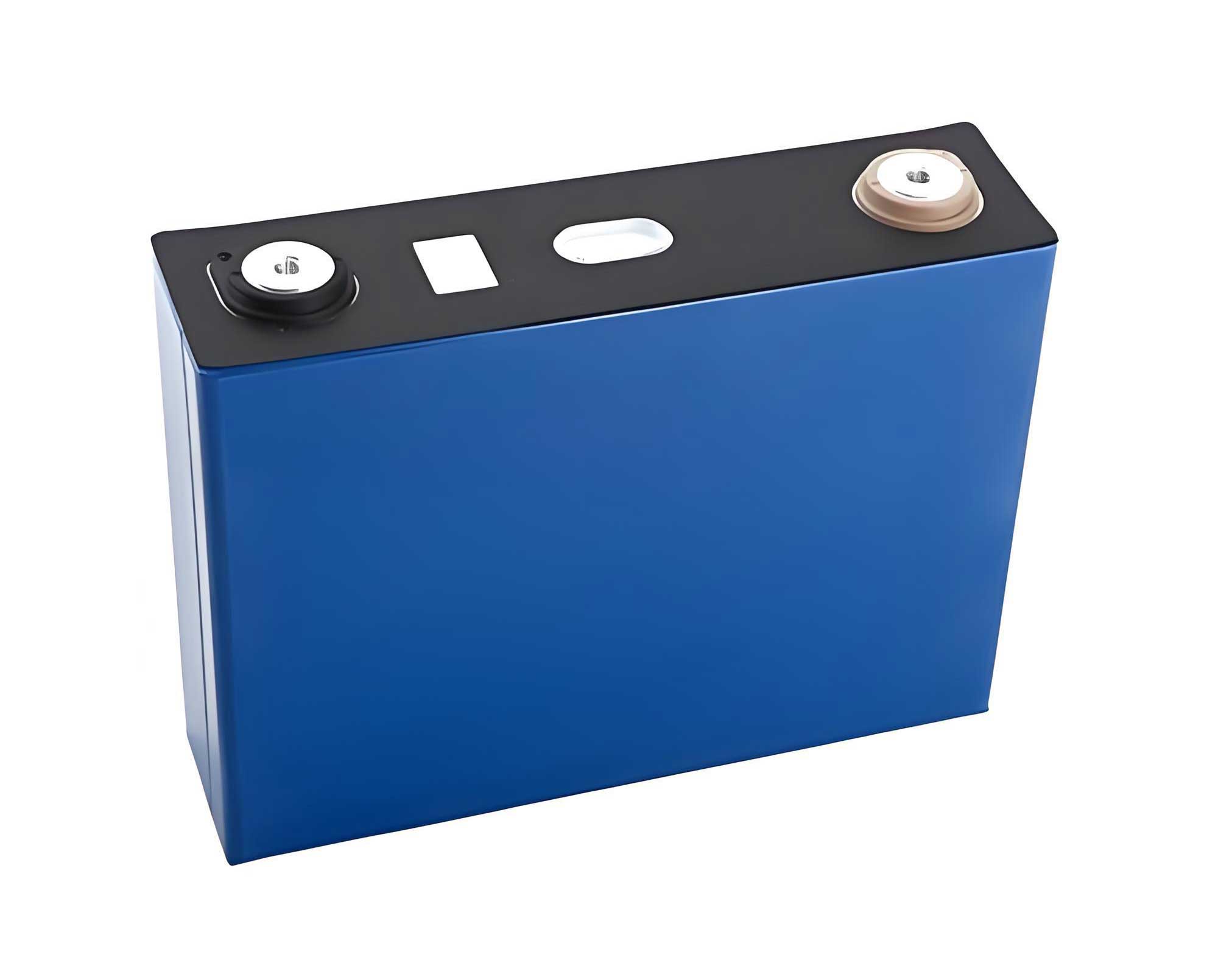
The LiFePO4 battery operates on the principle of lithium-ion intercalation and de-intercalation in a phosphate-based cathode material. The voltage profile of a LiFePO4 battery is relatively flat, which poses unique challenges for voltage monitoring and consistency management. When multiple LiFePO4 battery cells are connected in series, even small voltage deviations can accumulate, leading to significant imbalances. This imbalance is often quantified by the voltage difference, ΔV, defined as:
$$ \Delta V = V_{\text{max}} – V_{\text{min}} $$
where \( V_{\text{max}} \) and \( V_{\text{min}} \) are the maximum and minimum voltages in a battery pack, respectively. Reducing ΔV is crucial for maximizing the usable capacity and cycle life of LiFePO4 battery packs. In our experiments, we hypothesize that controlling ambient temperature and employing post-grading low-current treatments can mitigate polarization effects and residual capacity variations, thereby improving voltage consistency. This article details our methodology, results, and conclusions, supported by tables and mathematical models to elucidate the underlying mechanisms.
We began by fabricating cylindrical LiFePO4 battery cells using standard industrial processes. The cathode slurry consisted of LiFePO4 active material, graphene conductive additive, PVDF binder, and NMP solvent, coated onto a 12 μm aluminum foil. The anode slurry comprised graphite, conductive agent, SBR binder, CMC thickener, and deionized water, coated onto a 6 μm copper foil. After drying, the electrodes were calendared to achieve densities of 2.36 g/cm³ for the cathode and 1.61 g/cm³ for the anode. The electrodes were then slit to desired dimensions, wound with a ceramic separator into a jelly-roll design with full tabs at both ends, ultrasonically welded, and assembled into aluminum casings. Electrolyte from Tianjin Jinniu was injected, and the cells were sealed. All LiFePO4 battery cells underwent formation cycling before grading to stabilize their electrochemical performance.
To investigate the impact of ambient temperature on voltage consistency, we selected six graded LiFePO4 battery cells from the same capacity bin. Each cell was fully charged at 0.5 C constant current-constant voltage (CC-CV) to 3.65 V with a 0.05 C cutoff at room temperature. Then, each cell was discharged at 0.3 C to 2.0 V after a 4-hour rest at temperatures of 5°C, 15°C, 25°C, 35°C, 45°C, and 55°C, respectively. We recorded the discharge capacity and the open-circuit voltage after grading. The results are summarized in Table 1 and analyzed below.
| Temperature (°C) | Discharge Capacity (mAh) | Post-Grading Voltage (V) |
|---|---|---|
| 5 | 2950 | 3.12 |
| 15 | 3050 | 3.05 |
| 25 | 3150 | 2.92 |
| 35 | 3200 | 2.80 |
| 45 | 3190 | 2.77 |
| 55 | 3170 | 2.75 |
The data indicates that discharge capacity increases with temperature up to around 35°C, after which it plateaus and slightly decreases at 55°C. This behavior can be modeled using an Arrhenius-like relationship for ionic conductivity:
$$ \kappa(T) = \kappa_0 \exp\left(-\frac{E_a}{kT}\right) $$
where \( \kappa(T) \) is the temperature-dependent ionic conductivity, \( \kappa_0 \) is a pre-exponential factor, \( E_a \) is the activation energy, \( k \) is Boltzmann’s constant, and \( T \) is the absolute temperature. At lower temperatures, reduced ionic conductivity leads to higher polarization, resulting in incomplete capacity utilization and higher residual voltage. For the LiFePO4 battery, the flat voltage plateau exacerbates this effect, as small changes in state-of-charge correspond to large voltage shifts. The post-grading voltage decreases significantly from 3.12 V at 5°C to 2.80 V at 35°C, with minimal changes beyond 35°C. The voltage difference between 5°C and 35°C is approximately 0.32 V, while between 35°C and 55°C, it is only 0.05 V. This suggests that operating at 35°C minimizes polarization-induced voltage scatter, enhancing consistency for LiFePO4 battery cells.
To quantify voltage consistency, we define a consistency index \( C_v \) as the coefficient of variation of voltages within a batch:
$$ C_v = \frac{\sigma_V}{\bar{V}} \times 100\% $$
where \( \sigma_V \) is the standard deviation of post-grading voltages, and \( \bar{V} \) is the mean voltage. For the temperature study, \( C_v \) decreases from 5.2% at 5°C to 1.1% at 35°C, confirming that elevated temperatures improve uniformity. However, excessive temperatures above 45°C may cause electrolyte decomposition and irreversible capacity loss, as indicated by the slight capacity drop at 55°C. Thus, we recommend an ambient temperature range of 25–45°C, with 35°C being optimal for grading LiFePO4 battery cells.
Next, we examined grading optimization methods. After standard grading (0.5 C CC-CV charge to 3.65 V with 0.05 C cutoff, followed by 0.5 C discharge to 2.5 V), we applied two low-current treatments: sustaining discharge and micro-charging. For the sustaining discharge experiment, we took 864 qualified LiFePO4 battery cells and divided them into two groups. Group A underwent standard grading only. Group B, after standard grading and a 30-minute rest, was subjected to an additional discharge at 0.01 C to 2.5 V. The voltage distributions are compared in Table 2.
| Group | Mean Voltage (V) | Voltage Range (V) | ΔV (V) | C_v (%) |
|---|---|---|---|---|
| A (Standard) | 2.65 | 2.50–2.80 | 0.30 | 4.5 |
| B (0.01 C Sustain) | 2.50 | 2.48–2.52 | 0.04 | 0.8 |
The sustaining discharge dramatically narrows the voltage range from 0.30 V to 0.04 V, reducing \( C_v \) from 4.5% to 0.8%. This improvement stems from the removal of residual capacity due to polarization. During high-rate discharge, kinetic limitations cause some lithium ions to remain trapped in electrodes, leading to voltage rebound. A low-current discharge allows these ions to be extracted more completely, homogenizing the state-of-charge across cells. We can model the discharge process using a simplified equivalent circuit for a LiFePO4 battery:
$$ V(t) = OCV(SOC) – I R_i – I R_p \left(1 – e^{-t/\tau}\right) $$
where \( V(t) \) is the terminal voltage, \( OCV(SOC) \) is the open-circuit voltage as a function of state-of-charge, \( I \) is the current, \( R_i \) is the internal resistance, \( R_p \) is the polarization resistance, and \( \tau \) is the time constant. At low currents, the polarization term \( I R_p \) becomes negligible, allowing \( V(t) \) to approach \( OCV(SOC) \) more closely. Since the OCV-SOC curve for LiFePO4 battery is flat, small SOC differences translate to small voltage differences after low-current treatment.
For the micro-charging experiment, we took 200 qualified LiFePO4 battery cells and split them into two groups. Group X underwent standard grading. Group Y, after standard grading and a 30-minute rest, received a micro-charge at 0.05 C to 3.1 V. The results are in Table 3.
| Group | Mean Voltage (V) | Voltage Range (V) | ΔV (V) | C_v (%) |
|---|---|---|---|---|
| X (Standard) | 2.65 | 2.50–2.80 | 0.30 | 4.5 |
| Y (0.05 C Micro-Charge) | 3.10 | 3.08–3.12 | 0.04 | 0.6 |
Micro-charging also improves consistency, reducing ΔV to 0.04 V and \( C_v \) to 0.6%. By gently charging cells to a moderate voltage, we equalize their residual capacities, compensating for polarization losses. This approach is particularly useful for LiFePO4 battery packs where cells need to be stored at a partial state-of-charge. The micro-charging current should be low enough to avoid inducing new polarization. We can express the charging process as:
$$ SOC_{\text{final}} = SOC_{\text{initial}} + \frac{I t}{Q} $$
where \( SOC_{\text{initial}} \) is the state-of-charge after grading, \( I \) is the micro-charging current, \( t \) is the time, and \( Q \) is the cell capacity. By controlling \( I \) and \( t \), we can bring all cells to a similar \( SOC_{\text{final}} \), hence similar voltage.
Finally, we combined optimal ambient temperature with sustaining discharge in a production-scale trial. Two batches of LiFePO4 battery cells were graded. Batch 1 used standard conditions: uncontrolled ambient temperature (typically 20–25°C) and standard grading. Batch 2 used controlled temperature at 35°C and standard grading followed by 0.01 C sustaining discharge to 2.5 V after a 30-minute rest. Qualified cells from both batches were assembled into battery packs with identical series-parallel configurations. The packs underwent capacity tests, and we measured voltage differences during charging and discharging. Results are in Table 4.
| Batch | Charging ΔV (mV) | Discharging ΔV (mV) | Discharge Capacity (mAh) | Capacity Improvement |
|---|---|---|---|---|
| 1 (Standard) | 444 | 549 | 52,041 | Baseline |
| 2 (Optimized) | 90 | 161 | 53,134 | +2.1% |
The optimized batch shows a drastic reduction in charging ΔV (from 444 mV to 90 mV, an 80% decrease) and discharging ΔV (from 549 mV to 161 mV, a 71% decrease). Moreover, discharge capacity increased by 2.1%, equivalent to about 1,100 mAh. This enhancement is critical for electric vehicle applications, where every ampere-hour translates to extended range. The voltage profiles during charging and discharging, plotted per series string, demonstrate much tighter clustering for Batch 2, indicating superior consistency. This validates our hypothesis that temperature control and low-current post-grading treatments synergistically improve voltage uniformity in LiFePO4 battery systems.
To delve deeper, we can model the overall consistency improvement using a statistical approach. Assume the voltage of a LiFePO4 battery cell after grading follows a normal distribution with mean \( \mu \) and variance \( \sigma^2 \). The grading process affects both parameters. Temperature control reduces \( \sigma^2 \) by minimizing polarization variability, while low-current treatments shift \( \mu \) to a more uniform level. The combined effect can be described as:
$$ \sigma^2_{\text{total}} = \sigma^2_{\text{temp}} + \sigma^2_{\text{grading}} $$
where \( \sigma^2_{\text{temp}} \) is the variance due to temperature fluctuations, and \( \sigma^2_{\text{grading}} \) is the variance due to grading imperfections. By fixing temperature at 35°C, we minimize \( \sigma^2_{\text{temp}} \). By adding sustaining discharge, we reduce \( \sigma^2_{\text{grading}} \) by eliminating tail-end SOC variations. For a battery pack with \( n \) cells in series, the total voltage variation scales with \( \sqrt{n} \sigma \). Thus, reducing σ directly benefits pack-level performance.
In conclusion, our study demonstrates that voltage consistency in LiFePO4 battery cells can be significantly enhanced by optimizing ambient temperature during grading and implementing low-current post-grading treatments. We recommend maintaining ambient temperature at 35°C for grading operations, as it balances capacity utilization and minimal irreversible loss. Additionally, after standard grading, a sustaining discharge at 0.01 C or a micro-charge at 0.05 C to a moderate voltage effectively homogenizes cell voltages, narrowing the distribution window. These measures are straightforward to implement in production and yield substantial benefits for LiFePO4 battery pack performance, including reduced voltage differences, increased usable capacity, and improved reliability. Future work could explore dynamic temperature profiles or adaptive current algorithms to further refine consistency for LiFePO4 battery applications in demanding environments.
The implications of this research extend beyond manufacturing. For battery management systems (BMS) in electric vehicles, consistent cell voltages simplify state-of-charge estimation and balancing algorithms. By reducing the initial voltage spread, the BMS can operate more efficiently, prolonging pack life and safety. Moreover, as the demand for LiFePO4 battery technology grows in energy storage systems, our findings offer a pathway to enhance grid-scale battery performance and economics. We encourage industry adopters to integrate these practices into their quality control protocols for LiFePO4 battery production.
In summary, the LiFePO4 battery remains a cornerstone of modern energy storage, and its voltage consistency is paramount for system integration. Through careful control of environmental factors and grading techniques, we can unlock the full potential of this robust technology, paving the way for a greener and more sustainable future.