
With the rapid advancement of electric vehicles and clean energy systems, the demand for high-performance energy storage solutions has intensified. Lithium ion batteries, due to their high energy density, long cycle life, and low self-discharge, have become the cornerstone of modern portable electronics and electric mobility. However, to meet the ever-increasing requirements for higher capacity, faster charging, and enhanced safety, continuous improvements in electrode materials are essential. In this study, we explore the modification of both cathode and anode materials for li ion batteries using an aluminum sol impregnation-coating method. This approach offers a scalable, environmentally friendly, and cost-effective alternative to traditional coating techniques, such as nitrate impregnation or atomic layer deposition, which often involve toxic by-products or high costs. By focusing on the surface engineering of electrodes with alumina coatings, we aim to enhance the electrochemical performance, including cycle stability and rate capability, which are critical for the next generation of li ion batteries.
The cathode material investigated here is LiNi0.8Co0.1Mn0.1O2 (NCM811), a nickel-rich layered oxide that offers high specific capacity but suffers from structural degradation and interfacial side reactions during cycling. The anode material is a graphite-silicon oxide composite (G/SiO), which combines the stability of graphite with the high capacity of silicon, yet faces challenges like volume expansion and poor conductivity. Surface modification with metal oxides, particularly alumina (Al2O3), has been shown to mitigate these issues by forming protective layers that reduce electrolyte decomposition and suppress transition metal dissolution. In this work, we utilize a hydrothermally derived aluminum sol—a colloidal dispersion of boehmite (AlOOH) nanoparticles—as the coating precursor. This method minimizes harmful emissions, avoids by-products, and ensures uniform coverage compared to dry mixing or precipitation routes. Through comprehensive characterization and electrochemical testing, we demonstrate that optimized alumina coatings significantly improve the performance of both electrodes in li ion batteries.
The aluminum sol was synthesized by hydrothermally treating pseudo-boehmite (SB powder) in deionized water with a small amount of nitric acid as a peptizing agent. The reaction can be described as follows: the acid facilitates the dispersion of AlOOH particles, leading to a stable sol with an average particle size of approximately 84.8 nm, as determined by dynamic light scattering. The sol composition is crucial for achieving thin, conformal coatings on electrode materials. For cathode modification, the NCM811 powder was immersed in the aluminum sol diluted with ethanol, followed by drying and calcination at 500°C to convert the boehmite to alumina. For anode modification, the G/SiO composite was treated similarly with the sol diluted in water, then annealed at 600°C under an argon atmosphere. The coating amounts varied from 0.1% to 1.5% by weight for the cathode and 0.1% to 0.9% for the anode, allowing us to identify optimal loading levels for enhanced performance in li ion batteries.
Structural and morphological analyses were conducted using X-ray diffraction (XRD), scanning electron microscopy (SEM), transmission electron microscopy (TEM), and energy-dispersive spectroscopy (EDS). The XRD patterns confirmed that the alumina coating did not alter the crystalline structure of the NCM811 cathode, which retained its layered α-NaFeO2 type structure with the R-3m space group. Key parameters, such as the c/a ratio and peak intensity ratios, were calculated to assess structural integrity. For instance, the c/a ratio for all samples exceeded 4.9, indicating a well-ordered layered framework, as summarized in Table 1. Similarly, the anode materials showed no phase change, with graphite peaks remaining dominant. SEM and TEM images revealed that the alumina formed a uniform, nanoscale layer on the electrode surfaces, with thicknesses around 50 nm for the anode coating. EDS mapping confirmed the homogeneous distribution of aluminum across the particles, supporting the effectiveness of the sol-based coating method for li ion battery electrodes.
| Sample | a (Å) | c (Å) | c/a | I(003)/I(104) | I(006+102)/I(101) |
|---|---|---|---|---|---|
| Pristine NCM811 | 2.872 | 14.194 | 4.942 | 1.786 | 0.417 |
| 0.1% Al2O3-NCM811 | 2.871 | 14.195 | 4.944 | 1.812 | 0.426 |
| 0.3% Al2O3-NCM811 | 2.872 | 14.200 | 4.944 | 1.846 | 0.415 |
| 0.5% Al2O3-NCM811 | 2.872 | 14.204 | 4.946 | 1.907 | 0.404 |
| 1.0% Al2O3-NCM811 | 2.872 | 14.203 | 4.945 | 1.814 | 0.413 |
| 1.5% Al2O3-NCM811 | 2.872 | 14.202 | 4.945 | 1.709 | 0.442 |
Electrochemical performance was evaluated by assembling coin cells with lithium metal as the counter electrode. The cycling stability and rate capability tests were conducted under various current densities, from 0.1C to 5C, where C represents the charge-discharge rate. For the cathode, the optimal alumina coating was found to be 0.3% by weight. At 1C rate, the modified NCM811 delivered a discharge capacity of 151.02 mAh/g after 100 cycles, compared to 123.55 mAh/g for the pristine material, corresponding to a capacity retention improvement from 75.61% to 82.45%. This enhancement is attributed to the alumina layer acting as a barrier against electrolyte corrosion, which reduces parasitic reactions and maintains structural integrity. The rate performance also showed significant gains, with higher capacities retained at elevated currents, as detailed in Table 2. For the anode, the best results were achieved with 0.7% alumina coating. At 0.1C rate, the modified G/SiO exhibited a capacity of 385.06 mAh/g after 45 cycles, versus 360.57 mAh/g for the uncoated sample, boosting retention from 87.22% to 93.45%. These findings underscore the role of alumina in improving both cathode and anode materials for advanced li ion batteries.
| Electrode Type | Sample | Initial Discharge Capacity (mAh/g) | Capacity after Cycling (mAh/g) | Capacity Retention (%) | Cycling Conditions |
|---|---|---|---|---|---|
| Cathode (NCM811) | Pristine | 163.41 | 123.55 (after 100 cycles) | 75.61 | 1C charge-discharge |
| 0.3% Al2O3-coated | 183.16 | 151.02 (after 100 cycles) | 82.45 | ||
| Anode (G/SiO) | Pristine | 413.42 | 360.57 (after 45 cycles) | 87.22 | 0.1C charge-discharge |
| 0.7% Al2O3-coated | 412.04 | 385.06 (after 45 cycles) | 93.45 |
To further understand the electrochemical behavior, we performed electrochemical impedance spectroscopy (EIS) and cyclic voltammetry (CV). The EIS data were fitted using an equivalent circuit model comprising solution resistance (Rs), surface film resistance (Rsf), charge transfer resistance (Rct), and Warburg impedance (Zw). For the cathode, the 0.3% alumina-coated sample showed the lowest Rct value of 107.3 Ω after 10 cycles, indicating facilitated lithium-ion diffusion and reduced interfacial resistance. In contrast, excessive coating increased impedance due to insulating effects. The CV curves revealed redox peaks corresponding to Ni3+/Ni4+ and Co3+/Co4+ transitions, with peak potential separations slightly higher for coated samples, suggesting minor polarization but overall improved reversibility. For the anode, the alumina coating reduced both Rsf and Rct, as shown by EIS fitting results where Rsf decreased from 3.22 Ω to 2.01 Ω and Rct from 21.35 Ω to 18.24 Ω for the 0.7% coated sample. The CV profiles indicated stable solid electrolyte interphase (SEI) formation, with reduced irreversible capacity loss in the first cycle. These analyses confirm that alumina modifications enhance interfacial kinetics and stability in li ion batteries.
The mechanisms behind the performance improvements can be explained through several key aspects. First, the alumina coating provides chemical resistance against hydrofluoric acid (HF) generated from electrolyte decomposition. LiPF6-based electrolytes, common in li ion batteries, are prone to hydrolysis, producing HF that attacks electrode materials. The alumina layer reacts with HF to form aluminum fluoride (AlF3), a benign compound that passivates the surface. The reaction sequence is as follows:
$$ \text{LiPF}_6 \rightarrow \text{LiF} + \text{PF}_5 $$
$$ \text{PF}_5 + \text{H}_2\text{O} \rightarrow \text{POF}_3 + 2\text{HF} $$
$$ 6\text{HF} + \text{Al}_2\text{O}_3 \rightarrow 2\text{AlF}_3 + 3\text{H}_2\text{O} $$
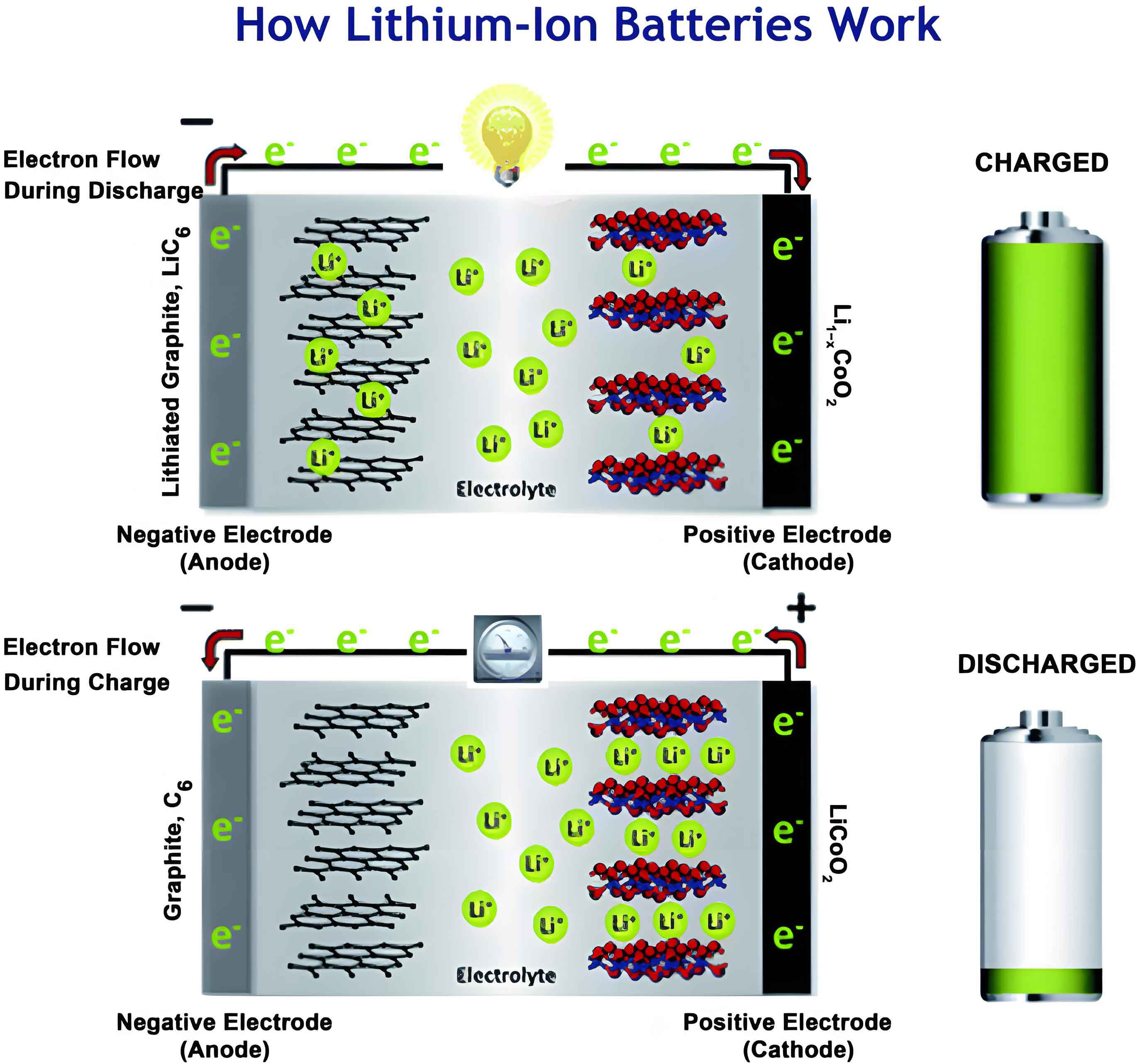
Second, the mechanical robustness of alumina helps stabilize the electrode structure. For the cathode, it inhibits transition metal dissolution and reduces lattice strain during lithium insertion/extraction. For the anode, it mitigates volume expansion in silicon components, preventing particle cracking and maintaining electrical contact. Third, the coating acts as an artificial SEI layer, promoting uniform lithium-ion flux and suppressing dendritic growth, which is critical for safety and longevity in li ion batteries. The alumina sol method ensures a thin, conformal layer that optimizes these protective functions without compromising ionic conductivity.
In terms of scalability and environmental impact, the aluminum sol impregnation-coating method offers distinct advantages over conventional techniques. Compared to nitrate-based impregnation, which releases nitrogen oxides during calcination, our approach reduces such emissions by over 99%. Unlike precipitation methods, it generates no slurry waste or by-products, simplifying post-processing. While organic aluminum salts are costly and require careful handling, the hydrothermally derived sol is inexpensive and water-based, aligning with green chemistry principles. Furthermore, the uniformity surpasses that of dry mixing, where coatings tend to be uneven, leading to inconsistent performance in li ion batteries. The process is easily adaptable to industrial roll-to-roll manufacturing, making it a viable candidate for large-scale production of high-energy-density batteries.
To quantify the rate capability enhancements, we can model the lithium-ion diffusion kinetics using Fick’s laws. The apparent diffusion coefficient (DLi) can be estimated from EIS data via the Warburg region, using the formula:
$$ D_{\text{Li}} = \frac{R^2 T^2}{2 A^2 n^4 F^4 C^2 \sigma^2} $$
where R is the gas constant, T is temperature, A is electrode area, n is number of electrons, F is Faraday’s constant, C is lithium-ion concentration, and σ is the Warburg coefficient derived from the impedance plot. For alumina-coated electrodes, DLi values were higher, indicating faster ion transport. Additionally, the capacity retention at high rates can be correlated with coating thickness (δ) using an empirical relation:
$$ \text{Retention} = \alpha \cdot \exp(-\beta \delta) + \gamma $$
where α, β, and γ are constants dependent on material properties. Our data suggest an optimal δ around 50 nm, balancing protection and conductivity. These mathematical insights help rationalize the electrochemical outcomes and guide future optimizations for li ion batteries.
Beyond the specific materials studied, the aluminum sol coating strategy holds promise for other electrode systems in li ion batteries. For instance, it could be applied to lithium-rich manganese-based cathodes or silicon-carbon anodes to address similar challenges of instability and capacity fade. The versatility of the sol allows for doping with other elements, such as titanium or zirconium, to create mixed oxide coatings with tailored properties. Moreover, the method can be integrated with emerging battery technologies, like solid-state or lithium-sulfur systems, where interfacial engineering is paramount. As the demand for high-performance energy storage grows, such scalable surface modification techniques will play a pivotal role in advancing li ion batteries towards higher energy densities, longer cycle lives, and improved safety profiles.
In conclusion, our investigation demonstrates that aluminum sol impregnation-coating effectively modifies both cathode and anode materials for li ion batteries, leading to significant enhancements in electrochemical performance. For the NCM811 cathode, a 0.3% alumina coating optimized cycle stability and rate capability, with capacity retention increasing to 82.45% after 100 cycles at 1C. For the G/SiO anode, a 0.7% coating boosted retention to 93.45% after 45 cycles at 0.1C. The improvements are attributed to HF scavenging, structural stabilization, and artificial SEI formation facilitated by the uniform alumina layer. This method is environmentally benign, cost-effective, and suitable for industrial scale-up, offering a practical pathway to better li ion batteries. Future work will focus on fine-tuning coating parameters and exploring hybrid coatings for further gains, ultimately contributing to the development of reliable energy storage solutions for a sustainable future.
The success of this study underscores the importance of surface engineering in overcoming the limitations of electrode materials. As li ion batteries continue to evolve, innovations in coating technologies will be crucial for meeting the stringent requirements of applications ranging from consumer electronics to grid storage. By leveraging colloidal approaches like aluminum sol modification, we can pave the way for next-generation batteries with superior performance and durability, driving the transition to clean energy systems worldwide.