
The rapid global transition towards sustainable transportation has placed new energy vehicles (NEVs) at the forefront of automotive innovation. As a core component, the battery pack’s performance, safety, and longevity are paramount. Among various chemistries, the lithium iron phosphate (LiFePO4) battery has gained significant traction due to its inherent safety, long cycle life, and cost-effectiveness. However, to meet the escalating demands for higher energy density, extended range, and uncompromised safety, a holistic structural optimization of the LiFePO4 battery pack is imperative. In this analysis, I will delve into the optimization strategies from the perspectives of cell design, pack layout, thermal management, and electrical interconnection, employing theoretical frameworks and practical considerations to outline a path for enhanced NEV competitiveness.
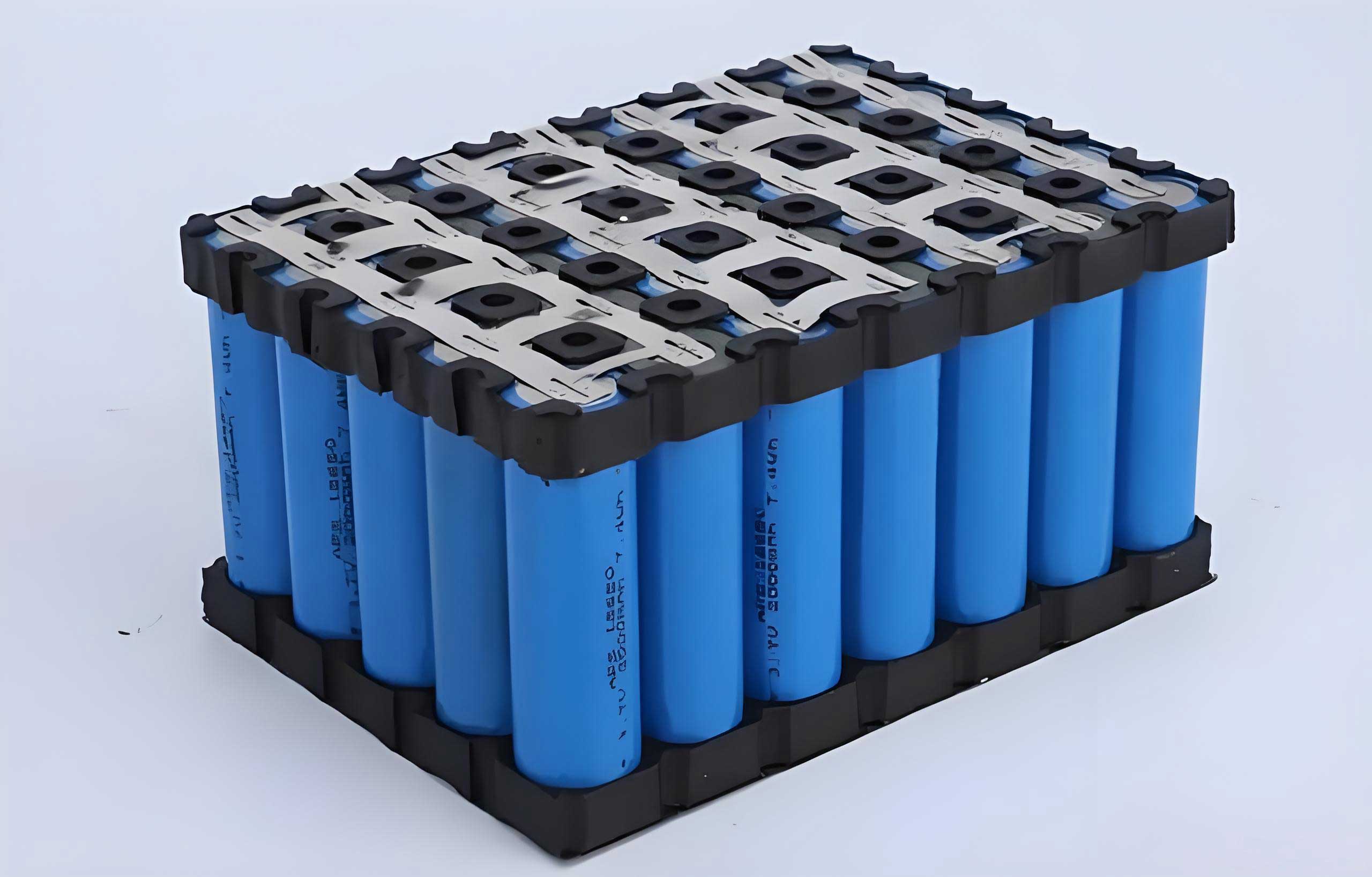
Fundamentals and Characteristics of LiFePO4 Batteries
The operational principle of a LiFePO4 battery is based on the reversible intercalation and de-intercalation of lithium ions between the cathode and anode. During charging, Li+ ions are extracted from the LiFePO4 cathode, migrate through the electrolyte, and are inserted into the graphite anode. The process reverses during discharge. This “rocking-chair” mechanism can be conceptually summarized for a single cell as:
$$ \text{Cathode: } \text{LiFePO}_4 \rightleftharpoons \text{FePO}_4 + \text{Li}^+ + e^- $$
$$ \text{Anode: } \text{C}_6 + \text{Li}^+ + e^- \rightleftharpoons \text{LiC}_6 $$
$$ \text{Overall: } \text{LiFePO}_4 + \text{C}_6 \rightleftharpoons \text{FePO}_4 + \text{LiC}_6 $$
The defining characteristics of the LiFePO4 battery that make it suitable for automotive applications are:
| Characteristic | Description | Impact on NEV Application |
|---|---|---|
| High Safety | Stable olivine structure resists oxygen release, minimizing thermal runaway risk during overcharge, short circuit, or mechanical abuse. | Reduces catastrophic failure probability, enhancing vehicle safety. |
| Long Cycle Life | Minimal lattice strain during Li+ insertion/extraction allows for >2000 cycles to 80% capacity. | Lowers total cost of ownership and extends vehicle usable life. |
| Cost-Effectiveness | Abundant iron and phosphate resources lead to lower raw material costs compared to Ni/Co-based cathodes. | Makes NEVs more affordable, accelerating market adoption. |
| Good High-Temperature Performance | Maintains structural and electrochemical stability at elevated temperatures. | Ensures reliable operation in diverse climatic conditions. |
| Moderate Energy Density | Theoretical gravimetric energy density ~170 Wh/kg, lower than NMC variants. A key area for optimization. | Drives the need for efficient pack-level design to maximize overall system energy. |
Structural Analysis and Optimization Pathways
1. Cell-Level Design Optimization
The performance of the entire LiFePO4 battery pack is fundamentally constrained by the properties of its constituent cells. Optimization at this level focuses on material science and micro-structural engineering.
Cathode Material Enhancement: The primary goal is to improve the ionic and electronic conductivity of the LiFePO4 cathode. Nanosizing active particles reduces the diffusion path length for Li+ ions, significantly boosting rate capability. Surface coating with conductive carbon (e.g., graphene, carbon nanotubes) creates a percolating network for electrons. Doping with supervalent cations (e.g., Mg2+, Zr4+) at the Li-site or Fe-site can increase intrinsic electronic conductivity. The capacity of a cathode can be expressed as:
$$ C = \frac{nF}{3.6M} $$
where \(C\) is the theoretical specific capacity (mAh/g), \(n\) is the number of electrons transferred per formula unit (1 for LiFePO4), \(F\) is Faraday’s constant, and \(M\) is the molar mass of the active material. For LiFePO4 (\(M=157.76\) g/mol), \(C \approx 170\) mAh/g. Practical optimization aims to approach this limit.
Anode Material Innovation: While graphite remains dominant, its capacity is limited. Silicon-based anodes offer a dramatic increase (theoretical capacity of Si: ~4200 mAh/g). However, the massive volume expansion (~300%) during lithiation poses a severe challenge. Optimization strategies include using nano-Si or SiOx composites, designing yolk-shell structures to accommodate expansion, and employing robust binders. A hybrid approach using Si/C composites is promising for next-generation LiFePO4 battery systems seeking higher energy density.
Electrolyte and Separator Advancement: The move towards solid-state electrolytes (SSEs) represents a paradigm shift. Replacing flammable liquid electrolytes with SSEs can drastically improve the safety of the LiFePO4 battery. Furthermore, SSEs may enable the use of lithium metal anodes, creating a high-energy LiFePO4||Li metal cell. For conventional systems, optimizing lithium salt concentration (e.g., using high-concentration electrolytes) and additive packages can improve stability and cycle life. Separator development focuses on improving thermal shutdown properties and mechanical strength.
| Material | Theoretical Capacity (mAh/g) | Advantages | Challenges | Optimization Focus |
|---|---|---|---|---|
| Graphite | 372 | Stable, excellent cycle life, low cost. | Limited capacity. | Surface modification, particle morphology. |
| Silicon (Si) | ~4200 | Extremely high capacity. | Huge volume expansion, poor cycle life. | Nanostructuring, composite design, novel binders. |
| Lithium Titanate (LTO) | 175 | Exceptional cycle life, fast charging, high safety. | Low capacity and energy density. | Application in specific high-power LiFePO4 battery variants. |
| Lithium Metal | 3860 | Highest theoretical capacity. | Dendrite growth, safety hazards. | Requires solid-state or advanced liquid electrolytes. |
2. Pack Layout and Mechanical Integration
The arrangement of hundreds or thousands of LiFePO4 cells into a functional pack critically impacts energy density, safety, and vehicle dynamics.
Electrical Configuration: Cells are connected in series (S) to increase voltage and in parallel (P) to increase capacity and current capability. A common configuration is denoted as \(x\text{S}y\text{P}\), meaning \(y\) cells in parallel form a module, and \(x\) such modules are connected in series. The total pack voltage \(V_{pack}\) and capacity \(C_{pack}\) are:
$$ V_{pack} = x \cdot V_{cell} $$
$$ C_{pack} = y \cdot C_{cell} $$
$$ \text{Total Energy} = V_{pack} \cdot C_{pack} = x \cdot y \cdot V_{cell} \cdot C_{cell} $$
The choice of configuration is a trade-off between system voltage, current handling, and redundancy.
| Topology | Configuration | Key Parameters | Advantages | Disadvantages |
|---|---|---|---|---|
| Series | Cells connected end-to-end. | High Voltage, Same Capacity. | Meets high-voltage powertrain requirements. | Failure of one cell can disable the entire string. |
| Parallel | All cell positives connected, all negatives connected. | Same Voltage, High Capacity/Current. | Increased capacity, current sharing, inherent redundancy. | Requires careful management to avoid circulating currents. |
| Series-Parallel (Mixed) | Combination of series and parallel strings. | Balanced Voltage and Capacity. | Optimizes for both voltage and capacity requirements; most common in LiFePO4 battery packs. | Complex Battery Management System (BMS) requirements. |
Mechanical and Spatial Optimization: The goal is to maximize the volume and mass efficiency of the LiFePO4 battery pack within the vehicle’s chassis. This involves:
1. Module-to-Pack (MTP) and Cell-to-Pack (CTP) Designs: Reducing or eliminating intermediate module structures (CTP) increases the volume utilization ratio by up to 20%, directly boosting pack-level energy density. This requires advanced cell-to-busbar integration and sophisticated thermal management directly at the cell level.
2. Weight Distribution: The heavy LiFePO4 battery pack must be placed to optimize the vehicle’s center of gravity and moment of inertia. A low, central placement (e.g., in a skateboard chassis) enhances handling and stability. The mass \(m_{pack}\) significantly affects vehicle dynamics.
3. Structural Integration: The pack casing can be designed as a structural member of the vehicle’s body-in-white, increasing overall chassis stiffness while saving weight—a concept known as Cell-to-Chassis (CTC).
3. Thermal Management System (TMS) Optimization
Temperature is the most critical external factor affecting the performance, lifespan, and safety of a LiFePO4 battery. An optimal TMS must maintain the pack within a narrow temperature window (e.g., 15°C – 35°C) and ensure minimal temperature gradients between cells (<5°C).
Heat Generation and Fundamentals: The total heat generation rate \(Q_{total}\) within a LiFePO4 battery cell during operation comprises irreversible Joule heating (\(Q_{irr}\)) and reversible entropic heat (\(Q_{rev}\)):
$$ Q_{total} = Q_{irr} + Q_{rev} = I(E_{ocv} – V) + I T \frac{dE_{ocv}}{dT} $$
where \(I\) is current, \(E_{ocv}\) is open-circuit voltage, \(V\) is terminal voltage, and \(T\) is temperature. For a pack with \(N\) cells, the total heat load is substantial, especially during fast charging or high-power discharge.
Cooling Strategy Optimization:
| Method | Principle | Advantages | Disadvantages | Suitability for LiFePO4 |
|---|---|---|---|---|
| Air Cooling | Forced air convection over cells/modules. | Simple, low cost, lightweight. | Low cooling power, poor temperature uniformity, bulky ducts. | Low-power, low-cost applications. |
| Liquid Cooling (Cold Plate) | Coolant flows through plates/channels in contact with cells. | High heat transfer coefficient, excellent temperature uniformity, compact. | More complex, heavier, risk of leakage. | Industry standard for mainstream passenger EVs. Highly effective. |
| Direct Liquid Cooling (Immersion) | Dielectric coolant directly immerses cells. | Superior uniformity, very high cooling/heating rates, inherent fire suppression. | Very complex, heavy, costly coolant, maintenance challenges. | Emerging technology for high-performance or safety-critical LiFePO4 packs. |
| Phase Change Material (PCM) | Material absorbs heat by melting at a set temperature. | Passive, isothermal operation, reduces peak loads on active systems. | Low thermal conductivity, adds mass/volume, limited heat capacity per cycle. | Often used as a supplement to active systems for peak shaving. |
Heating Strategy for Low Temperatures: LiFePO4 battery performance degrades sharply below 0°C. Preconditioning is essential. Methods include:
• Resistive Heating: Using PTC elements or the cells’ own internal resistance (\(Q_{irr}\)) via low-frequency AC pulses.
• Fluid-based Heating: Using the same liquid loop with a heater (e.g., PTC water heater).
• Heat Pump Integration: Utilizing the vehicle’s HVAC heat pump, which offers high efficiency (Coefficient of Performance >1).
Intelligent Control: An optimal TMS is governed by a model-predictive controller that uses real-time data (temperature, current, State of Charge) and thermal models to proactively manage cooling/heating, minimizing energy consumption while ensuring safety and longevity of the LiFePO4 battery.
4. Electrical Interconnection and Busbar Optimization
Reliable, low-resistance connections are vital for efficiency, current sharing, and safety. Parasitic resistance \(R_{parasitic}\) in busbars and connections leads to energy loss (\(I^2R\) loss) and localized heating.
$$ P_{loss} = \sum I_n^2 R_n $$
where \(I_n\) and \(R_n\) are the current and resistance of the \(n\)-th interconnection.
Optimization Strategies:
- Material Selection: Using high-conductivity materials like copper (C1100) or aluminum (6061/1050) with appropriate plating (e.g., tin, nickel) for corrosion resistance and weldability. The choice involves a trade-off between conductivity, density, and cost.
$$ R = \rho \frac{L}{A} $$
where \(\rho\) is resistivity, \(L\) is length, and \(A\) is cross-sectional area. - Structural Design: Designing busbars with optimal cross-sectional geometry to carry current uniformly, reduce AC impedance (skin effect at high frequencies), and integrate sensing points (e.g., for voltage taps).
- Connection Technology: Moving from manual bolting to automated laser welding or ultrasonic welding provides lower, more consistent contact resistance and higher mechanical strength, crucial for the longevity of a LiFePO4 battery pack subjected to vibration.
- Fusing Integration: Designing busbars with engineered weak points that act as fuses under extreme short-circuit conditions, providing an additional safety layer for the LiFePO4 battery.
Conclusion and Future Perspectives
The structural optimization of the lithium iron phosphate battery pack is a multi-disciplinary endeavor encompassing electrochemistry, thermal science, mechanical engineering, and electrical design. Through synergistic improvements at the cell level (novel materials, solid-state electrolytes), pack level (CTP/CTC integration), system level (intelligent liquid-based TMS), and component level (advanced welded busbars), the performance ceiling of the LiFePO4 battery can be continually raised. These optimizations directly translate into NEVs with longer range, faster charging, enhanced safety, and lower total cost. The future of the LiFePO4 battery in automotive applications is bright, driven by relentless innovation in its structural design, promising to solidify its role as a cornerstone of sustainable electrified transportation.