
As a researcher deeply involved in the characterization and standardization of energy materials, I have observed how the rapid expansion of the lithium ion battery industry has made the quality and consistency of cathode materials a central concern. The cathode material is one of the most critical components of a lithium ion battery because it directly determines energy density, power density, operating voltage, cycling stability, thermal safety, and overall cost. Every commercial lithium ion battery relies on a carefully engineered cathode material, and every improvement in cathode chemistry must be accompanied by reliable analytical methods to verify composition, physical properties, and electrochemical behavior. In this article, I review the current state of standardization for composition analysis and performance testing of cathode materials for lithium ion batteries. I discuss the main families of cathode materials, including lithium cobalt oxide, lithium nickel cobalt manganese oxide, lithium nickel manganese oxide, lithium nickel cobalt aluminum oxide, and lithium iron phosphate. I also examine general test methods for moisture, pH, residual alkali, and magnetic impurities. I then summarize physical performance testing, electrochemical performance testing, existing problems, and future recommendations. Throughout this review, I emphasize that standardization is not a bureaucratic exercise but a technical foundation for the healthy and sustainable development of the lithium ion battery industry.
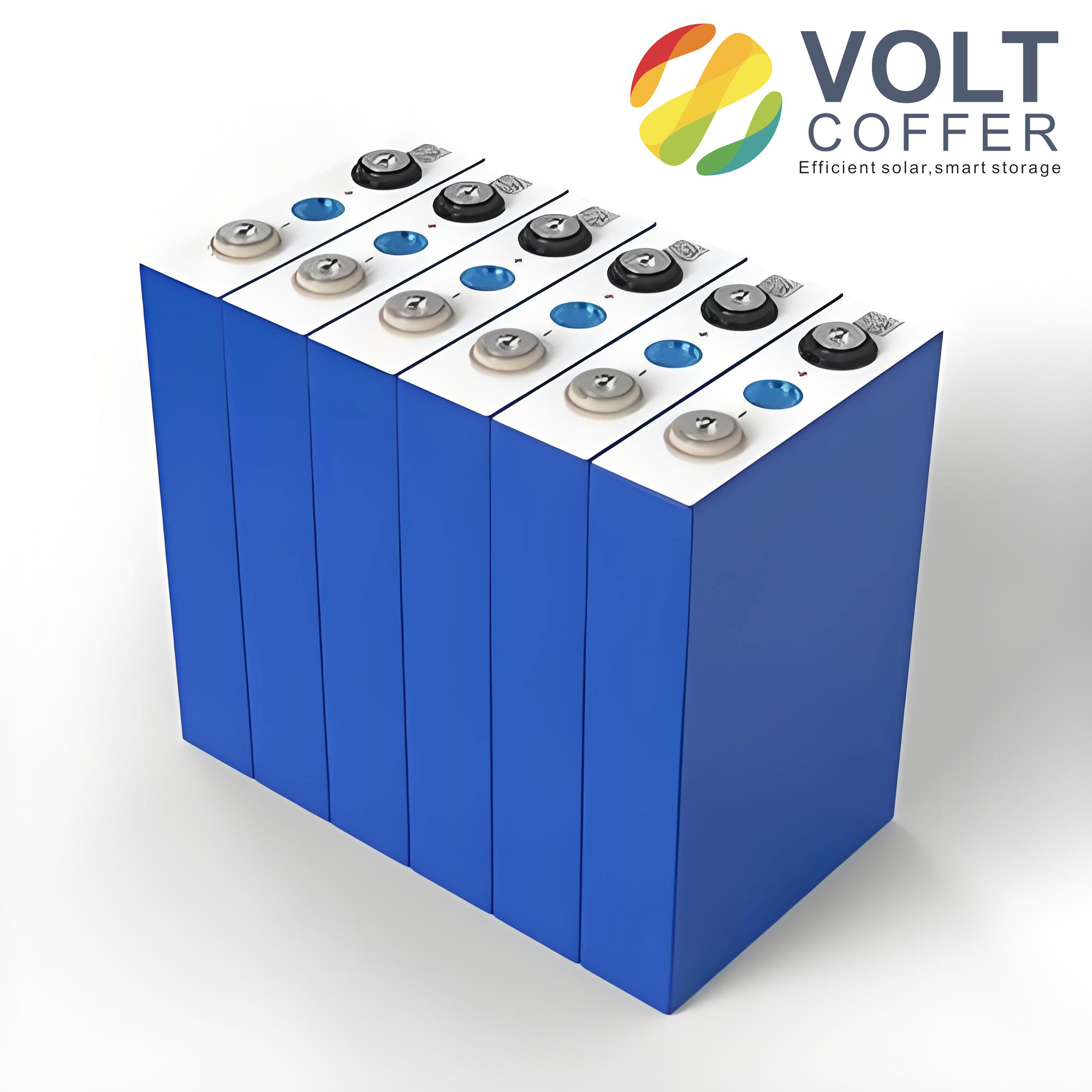
The global lithium ion battery market has grown explosively because lithium ion batteries offer low mass, small volume, high operating voltage, low self-discharge, long cycle life, and environmental compatibility. They are now used in portable electronics, smart wearables, power tools, drones, electric vehicles, and stationary energy storage. Among all cell components, the cathode material has the greatest influence on the energy density and cost of a lithium ion battery. For this reason, the standardization of cathode material testing methods is essential for ensuring product consistency, facilitating trade, enabling fair competition, and protecting end users. I have found that a mature standardization system allows manufacturers to compare materials across batches, helps cell makers select appropriate cathode materials, and supports regulators in verifying safety and performance claims. Without such standards, the lithium ion battery supply chain would face higher uncertainty, more disputes, and slower innovation.
Chemical Composition Analysis Standards
Chemical composition is the first pillar of cathode material quality control. The main components and impurity elements in a cathode material influence the electrochemical performance of a lithium ion battery in complex ways. For example, the lithium-to-transition-metal ratio affects reversible capacity and rate capability, while impurity elements such as iron, copper, zinc, and chromium can catalyze side reactions, increase self-discharge, and reduce cycling stability. Sulfate and chloride ions can corrode current collectors and degrade the electrode-electrolyte interface. Magnetic impurities are especially dangerous because they can penetrate the separator and cause internal short circuits, leading to thermal runaway in a lithium ion battery. Residual alkali, usually present as lithium carbonate and lithium hydroxide on the surface of nickel-rich cathode materials, increases slurry viscosity and deteriorates storage performance. Moisture in a cathode material can react with the electrolyte, especially with lithium hexafluorophosphate, producing hydrogen fluoride and damaging the solid electrolyte interphase. Therefore, composition analysis standards must cover both major elements and trace impurities, as well as moisture, pH, residual alkali, and magnetic substances.
The chemical formulas of the major cathode materials for lithium ion batteries can be summarized as follows:
$$ \text{LiCoO}_2 \quad \text{(LCO)} $$
$$ \text{LiNi}_x\text{Co}_y\text{Mn}_{1-x-y}\text{O}_2 \quad \text{(NCM)} $$
$$ \text{LiNi}_{0.5}\text{Mn}_{1.5}\text{O}_4 \quad \text{(LNMO)} $$
$$ \text{LiNi}_x\text{Co}_y\text{Al}_{1-x-y}\text{O}_2 \quad \text{(NCA)} $$
$$ \text{LiFePO}_4 \quad \text{(LFP)} $$
Each of these materials requires dedicated analytical methods because their dissolution behavior, matrix effects, and impurity profiles differ. I have reviewed the published standards for these materials and grouped them into the tables below.
Lithium Cobalt Oxide
Lithium cobalt oxide, with the formula LiCoO2, was the first commercial cathode material for lithium ion batteries. It offers high operating voltage, smooth discharge, high specific energy, and good cycling performance, but it suffers from high cost, limited thermal stability, and moderate cycle life. It remains widely used in consumer electronics. The first product standard for a lithium ion battery cathode material was established for lithium cobalt oxide, and it was later revised. The composition analysis standards for lithium cobalt oxide cover cobalt content and several impurity elements. The cobalt content is determined by EDTA titration, while lithium, nickel, manganese, magnesium, aluminum, iron, sodium, calcium, and copper are determined by inductively coupled plasma optical emission spectrometry. I have summarized these methods in Table 1.
Table 1. Composition analysis standards for lithium cobalt oxide cathode materials.
| Test parameter | Standard number and title | Test method | Notes |
|---|---|---|---|
| Cobalt | GB/T 23367.1-2009, Methods for chemical analysis of lithium cobalt oxide—Part 1: Determination of cobalt content—EDTA titration | EDTA titration | Referenced by GB/T 20252-2014 for lithium cobalt oxide product standard |
| Lithium, nickel, manganese, magnesium, aluminum, iron, sodium, calcium, copper | GB/T 23367.2-2009, Methods for chemical analysis of lithium cobalt oxide—Part 2: Determination of lithium, nickel, manganese, magnesium, aluminum, iron, sodium, calcium and copper content—Inductively coupled plasma atomic emission spectrometry | ICP-OES | Referenced by GB/T 20252-2014 for lithium cobalt oxide product standard |
The titration reaction for cobalt can be represented in a simplified form as:
$$ \text{Co}^{2+} + \text{H}_2\text{Y}^{2-} \rightarrow \text{CoY}^{2-} + 2\text{H}^+ $$
where H2Y2- represents the fully deprotonated form of ethylenediaminetetraacetic acid. The end point is usually detected with a suitable indicator, and the cobalt mass fraction is calculated from the titrant volume, concentration, and sample mass. For ICP-OES, the emission lines are selected to avoid spectral interferences from the matrix. I have noted that lithium cobalt oxide standards are relatively mature, but they still rely on wet chemical methods that require skilled analysts. This creates a need for faster and more automated methods in high-throughput production environments for lithium ion battery materials.
Lithium Nickel Cobalt Manganese Oxide
Lithium nickel cobalt manganese oxide, often called NCM or ternary cathode material, has become a leading cathode chemistry for lithium ion batteries because it replaces most of the cobalt with nickel and manganese, reducing cost while maintaining performance close to lithium cobalt oxide. Its general formula is LiNixCoyMn1-x-yO2. The nickel content provides high capacity, cobalt improves structural stability and rate capability, and manganese lowers cost and improves thermal stability. However, nickel-rich NCM materials are sensitive to moisture and carbon dioxide, forming residual lithium compounds on the surface. Therefore, composition analysis must accurately determine the nickel, cobalt, and manganese ratio, as well as impurity elements. The published standards for NCM composition analysis are listed in Table 2.
Table 2. Composition analysis standards for lithium nickel cobalt manganese oxide cathode materials.
| Test parameter | Standard number and title | Test method |
|---|---|---|
| Total nickel, cobalt, and manganese | YS/T 1006.1-2014, Methods for chemical analysis of lithium nickel cobalt manganese oxide—Part 1: Determination of total nickel, cobalt and manganese content—EDTA titration | EDTA titration |
| Lithium, nickel, cobalt, manganese, sodium, magnesium, aluminum, potassium, copper, calcium, iron, zinc, silicon | YS/T 1006.2-2014, Methods for chemical analysis of lithium nickel cobalt manganese oxide—Part 2: Determination of lithium, nickel, cobalt, manganese, sodium, magnesium, aluminum, potassium, copper, calcium, iron, zinc and silicon content—Inductively coupled plasma atomic emission spectrometry | ICP-OES |
I have observed that the total transition metal content is often used to verify the stoichiometry of the cathode material, while the individual elements are used to confirm the target composition. The nickel-to-cobalt-to-manganese ratio affects the capacity, rate performance, and thermal stability of a lithium ion battery. For example, increasing nickel content raises the reversible capacity but lowers thermal stability. Cobalt substitution improves electronic conductivity and structural ordering. Manganese substitution lowers cost and improves safety. Therefore, accurate composition analysis is not merely a quality check; it is a direct predictor of lithium ion battery performance.
Lithium Nickel Manganese Oxide
Lithium nickel manganese oxide, with the formula LiNi0.5Mn1.5O4, is a high-voltage cathode material for lithium ion batteries. It operates at approximately 4.7 V versus lithium, which enables high energy density. Its advantages include low cost, environmental friendliness, and good rate capability. However, high-voltage operation requires stable electrolytes and careful control of impurity elements. The composition analysis standards for lithium nickel manganese oxide are relatively recent and cover nickel, manganese, lithium, sulfate, chloride, and several metal impurities. I have summarized them in Table 3.
Table 3. Composition analysis standards for lithium nickel manganese oxide cathode materials.
| Test parameter | Standard number and title | Test method |
|---|---|---|
| Nickel | YS/T 1569.1-2022, Methods for chemical analysis of lithium nickel manganese oxide—Part 1: Determination of nickel content—Dimethylglyoxime gravimetric method | Gravimetric method |
| Manganese | YS/T 1569.2-2022, Methods for chemical analysis of lithium nickel manganese oxide—Part 2: Determination of manganese content—Potentiometric titration | Potentiometric titration |
| Lithium | YS/T 1569.3-2022, Methods for chemical analysis of lithium nickel manganese oxide—Part 3: Determination of lithium content—Flame atomic absorption spectrometry | Flame atomic absorption spectrometry |
| Sulfate | YS/T 1569.4-2022, Methods for chemical analysis of lithium nickel manganese oxide—Part 4: Determination of sulfate content—Ion chromatography | Ion chromatography |
| Chloride | YS/T 1569.5-2022, Methods for chemical analysis of lithium nickel manganese oxide—Part 5: Determination of chloride content—Ion selective electrode method | Ion selective electrode |
| Potassium, sodium, calcium, iron, copper, chromium, cadmium | YS/T 1569.6-2022, Methods for chemical analysis of lithium nickel manganese oxide—Part 6: Determination of potassium, sodium, calcium, iron, copper, chromium and cadmium content—Inductively coupled plasma atomic emission spectrometry | ICP-OES |
I find the gravimetric method for nickel to be highly accurate but time-consuming. The dimethylglyoxime precipitate is dried and weighed, and the nickel mass fraction is calculated from the precipitate mass and the gravimetric factor. The potentiometric titration for manganese is suitable for routine control because it avoids subjective indicator endpoints. Ion chromatography and ion selective electrodes are well suited for sulfate and chloride because these anions can significantly affect the interfacial chemistry of a lithium ion battery. Even trace amounts of sulfate can accelerate corrosion of aluminum current collectors at high voltage. Therefore, these standards are important for ensuring long-term reliability.
Lithium Nickel Cobalt Aluminum Oxide
Lithium nickel cobalt aluminum oxide, abbreviated NCA, has the general formula LiNixCoyAl1-x-yO2. It offers high energy density, relatively low production cost, and good environmental compatibility. It is widely used in electric vehicles. The aluminum substitution stabilizes the layered structure, especially at high states of charge, but NCA materials are sensitive to moisture and require strict control of impurity elements. The composition analysis standards for NCA are listed in Table 4.
Table 4. Composition analysis standards for lithium nickel cobalt aluminum oxide cathode materials.
| Test parameter | Standard number and title | Test method |
|---|---|---|
| Nickel | YS/T 1263.1-2018, Methods for chemical analysis of lithium nickel cobalt aluminum oxide—Part 1: Determination of nickel content—Dimethylglyoxime gravimetric method | Gravimetric method |
| Cobalt | YS/T 1263.2-2018, Methods for chemical analysis of lithium nickel cobalt aluminum oxide—Part 2: Determination of cobalt content—Potentiometric titration | Potentiometric titration |
| Lithium | YS/T 1263.3-2018, Methods for chemical analysis of lithium nickel cobalt aluminum oxide—Part 3: Determination of lithium content—Flame atomic absorption spectrometry | Flame atomic absorption spectrometry |
| Aluminum, iron, calcium, magnesium, copper, zinc, silicon, sodium, manganese | YS/T 1263.4-2018, Methods for chemical analysis of lithium nickel cobalt aluminum oxide—Part 4: Determination of aluminum, iron, calcium, magnesium, copper, zinc, silicon, sodium and manganese content—Inductively coupled plasma atomic emission spectrometry | ICP-OES |
The determination of aluminum is particularly important because aluminum modifies the lattice and influences the thermal stability of the lithium ion battery cathode. However, aluminum is also a common contaminant from processing equipment, so the distinction between intentional doping and unintended contamination requires careful sampling and method validation. I have seen that NCA standards place strong emphasis on impurity control because iron, copper, and zinc can induce micro-shorts and increase self-discharge in a lithium ion battery.
Lithium Iron Phosphate
Lithium iron phosphate, LiFePO4, has become one of the most important cathode materials for lithium ion batteries, especially for electric vehicles and energy storage, because of its high safety, long cycle life, and low cost. Unlike layered oxides, LiFePO4 has an olivine structure that provides excellent thermal stability and structural stability during cycling. However, its electronic conductivity is low, so carbon coating is usually applied. The composition analysis of LiFePO4 must therefore determine total iron, ferric iron, lithium, phosphorus, carbon, and impurity elements. Table 5 summarizes the relevant standards.
Table 5. Composition analysis standards for lithium iron phosphate cathode materials.
| Test parameter | Standard number and title | Test method | Notes |
|---|---|---|---|
| Total iron | YS/T 1028.1-2015, Methods for chemical analysis of lithium iron phosphate—Part 1: Determination of total iron content—Titanium trichloride reduction potassium dichromate titration | Redox titration | Also proposed in an appendix of GB/T 30835-2014 for carbon-composite lithium iron phosphate |
| Ferric iron | GB/T 33828-2017, Determination of Fe(III) content in nano lithium iron phosphate | Redox titration | Applicable to nano lithium iron phosphate |
| Lithium | YS/T 1028.2-2015, Methods for chemical analysis of lithium iron phosphate—Part 2: Determination of lithium content—Flame photometry | Flame photometry | An ICP-OES method is also included in GB/T 30835-2014 |
| Phosphorus | YS/T 1028.3-2015, Methods for chemical analysis of lithium iron phosphate—Part 3: Determination of phosphorus content—Quinoline phosphomolybdate gravimetric method | Gravimetric method | A phosphomolybdate ammonium volumetric method is also included in GB/T 30835-2014 |
| Carbon | YS/T 1028.4-2015, Methods for chemical analysis of lithium iron phosphate—Part 4: Determination of carbon content—High-frequency combustion infrared absorption method | High-frequency combustion infrared absorption | Carbon coating is critical for electronic conductivity |
| Calcium, magnesium, zinc, copper, lead, chromium, sodium, aluminum, nickel, cobalt, manganese | YS/T 1028.5-2015, Methods for chemical analysis of lithium iron phosphate—Part 5: Determination of calcium, magnesium, zinc, copper, lead, chromium, sodium, aluminum, nickel, cobalt and manganese content—Inductively coupled plasma atomic emission spectrometry | ICP-OES | Impurity control affects safety and cycling |
The redox titration for total iron can be represented schematically as:
$$ \text{Fe}^{3+} + \text{Ti}^{3+} \rightarrow \text{Fe}^{2+} + \text{Ti}^{4+} $$
and the subsequent titration of excess titanium trichloride with potassium dichromate. The ferric iron content is important because Fe3+ can form impurity phases and reduce the electrochemical activity of LiFePO4. The carbon content is equally important because too little carbon leads to high impedance, while too much carbon reduces the volumetric energy density of a lithium ion battery. I have found that the combination of redox titration, gravimetry, infrared absorption, and ICP-OES provides a comprehensive picture of LiFePO4 quality. However, these methods are often time-consuming, and there is a clear need for faster spectroscopic and combustion methods that can be validated against the existing standards.
Universal Composition Analysis Methods
In addition to the material-specific standards, several general methods are essential for all cathode materials used in lithium ion batteries. Moisture content is usually determined by the Karl Fischer method because it is highly sensitive and suitable for low water contents. The pH of an aqueous suspension is measured with a pH electrode, and this parameter reflects the surface chemistry of the cathode material. Residual alkali content is determined by potentiometric titration and is especially important for nickel-rich cathode materials. Magnetic impurity content is determined by inductively coupled plasma optical emission spectrometry after magnetic separation, or by scanning electron microscopy with energy dispersive X-ray spectroscopy. These general methods are summarized in Table 6.
Table 6. Universal composition analysis methods for lithium ion battery cathode materials.
| Test parameter | Standard number and title | Test method | Applicable materials | Notes |
|---|---|---|---|---|
| Moisture | GB/T 6283-2008, Determination of water content in chemical products—Karl Fischer method (general method) | Karl Fischer titration | Lithium cobalt oxide, lithium nickel oxide, lithium manganese oxide, lithium nickel manganese oxide, lithium nickel cobalt manganese oxide, lithium nickel cobalt aluminum oxide, lithium iron phosphate | Referenced by several product standards for lithium ion battery cathode materials |
| pH | GB/T 5211.6-2020, General methods of test for pigments and extenders—Part 6: Determination of pH value of an aqueous suspension | pH electrode | Same as above | Replaced the older GB 1717-1986 standard in 2021 |
| Residual alkali content | GB/T 41704-2022, Test methods of cathode materials for lithium ion battery—Determination of magnetic impurities content and residual alkali content | Potentiometric titration | Lithium ion battery cathode materials | Provides a unified method for residual alkali |
| Magnetic impurity content | GB/T 24533-2019, Graphite negative electrode materials for lithium ion battery—Appendix K | ICP-OES | Lithium cobalt oxide, lithium nickel oxide, lithium manganese oxide, lithium nickel cobalt aluminum oxide | Referenced by older product standards |
| Magnetic impurity content | GB/T 41704-2022, Test methods of cathode materials for lithium ion battery—Determination of magnetic impurities content and residual alkali content | ICP-OES and SEM-EDS | Lithium ion battery cathode materials | Provides updated and more comprehensive methods |
| Magnetic impurity content | SJ/T 11795-2022, Test method for determining magnetic impurity content in electrode materials for lithium ion batteries | Magnetic separation and ICP-OES | Lithium ion battery electrode materials | Industry standard for magnetic impurities |
The residual alkali titration can be described by the following reactions:
$$ \text{Li}_2\text{CO}_3 + 2\text{HCl} \rightarrow 2\text{LiCl} + \text{H}_2\text{O} + \text{CO}_2 $$
$$ \text{LiOH} + \text{HCl} \rightarrow \text{LiCl} + \text{H}_2\text{O} $$
The residual alkali mass fraction is calculated as:
$$ w_{\text{residual alkali}} = \frac{c V M}{m} \times 100\% $$
where c is the concentration of hydrochloric acid, V is the titration volume, M is the molar mass of the equivalent lithium compound, and m is the sample mass. I have observed that residual alkali control is especially critical for nickel-rich layered oxides because surface lithium compounds react with the electrolyte and increase gas generation in a lithium ion battery. The Karl Fischer method for moisture can be summarized by the following overall reaction:
$$ \text{I}_2 + \text{SO}_2 + \text{H}_2\text{O} + 3\text{C}_5\text{H}_5\text{N} \rightarrow 2\text{C}_5\text{H}_5\text{NHI} + \text{C}_5\text{H}_5\text{NSO}_3 $$
where pyridine acts as a base and methanol is usually present as a solvent. The water content is directly proportional to the iodine consumed, which allows quantification at the microgram level. This is essential because even a few tens of parts per million of moisture can degrade the electrolyte in a lithium ion battery.
Physical Performance Testing Standards
The physical properties of cathode materials strongly influence the electrochemical performance and safety of a lithium ion battery. Particle size distribution affects electrode packing, electrolyte wetting, and lithium ion diffusion pathways. Tap density affects the volumetric energy density of the electrode. Specific surface area affects the contact area between the cathode material and the electrolyte, which in turn influences rate capability and side reactions. Crystal structure determines the lithium ion transport channels and the structural stability during cycling. Appearance quality is a simple but important indicator of agglomeration, contamination, and processing consistency. I have summarized the physical performance testing standards in Table 7.
Table 7. Physical performance testing methods for lithium ion battery cathode materials.
| Test parameter | Standard number and title | Test method | Applicable materials | Notes |
|---|---|---|---|---|
| Particle size distribution | GB/T 19077-2016, Particle size analysis—Laser diffraction methods | Laser diffraction | Lithium cobalt oxide, lithium nickel oxide, lithium manganese oxide, lithium nickel manganese oxide, lithium nickel cobalt manganese oxide, lithium nickel cobalt aluminum oxide, lithium iron phosphate | Replaced the older GB/T 19077.1-2008 standard |
| Tap density | GB/T 5162-2021, Metallic powders—Determination of tap density | Tap density measurement | Same as above | Used to calculate volumetric energy density |
| Specific surface area | GB/T 13390-2008, Metallic powder—Determination of specific surface area—Nitrogen adsorption method | Nitrogen adsorption BET | Same as above | Important for rate capability and side reactions |
| Crystal structure | Product standards usually specify X-ray diffraction | X-ray diffraction | Layered oxides, spinel oxides, olivine phosphates | Used to identify phase purity and lattice parameters |
| Appearance | Product standards usually specify visual inspection | Visual inspection | All cathode materials | Uniform color, no agglomeration, no foreign matter |
The particle size distribution is often expressed as a cumulative distribution. If the volume-based particle size distribution is f(d), then the median diameter d50 is defined by:
$$ \int_{0}^{d_{50}} f(d) \, dd = 0.5 $$
The span of the distribution is calculated as:
$$ \text{span} = \frac{d_{90} – d_{10}}{d_{50}} $$
A narrow span is generally preferred because it improves electrode homogeneity and reduces the risk of local lithium plating in a lithium ion battery. The tap density is calculated from the mass and the tapped volume:
$$ \rho_{\text{tap}} = \frac{m}{V_{\text{tap}}} $$
The specific surface area from the Brunauer-Emmett-Teller method is given by:
$$ S_{\text{BET}} = \frac{V_m N_A \sigma}{22414 \times m} $$
where Vm is the monolayer adsorbed gas volume, NA is Avogadro’s number, sigma is the cross-sectional area of the adsorbate molecule, and m is the sample mass. I have found that a high specific surface area can improve rate performance but often accelerates electrolyte decomposition and reduces calendar life. Therefore, an optimum must be found for each lithium ion battery application.
X-ray diffraction is used to determine the crystal structure and phase purity. For a layered cathode material, the intensity ratio of the (003) and (104) reflections is often used as an indicator of cation mixing. A high degree of cation mixing impedes lithium ion transport and reduces the reversible capacity of a lithium ion battery. The lattice parameters can be refined by the Rietveld method. I have observed that X-ray diffraction is one of the most powerful tools for linking synthesis conditions to cathode performance. However, the method requires careful sample preparation and calibration because preferred orientation and instrumental broadening can distort the results.
Electrochemical Performance Testing Standards
The electrochemical performance of a cathode material determines the practical value of a lithium ion battery. The most important parameters include initial discharge specific capacity, initial charge-discharge efficiency, discharge plateau capacity ratio, rate capability, and cycle life. The initial discharge specific capacity is calculated as:
$$ Q_{\text{dis}} = \frac{I \Delta t}{m} $$
where I is the discharge current, Delta t is the discharge time, and m is the mass of active material. The initial coulombic efficiency is calculated as:
$$ \eta = \frac{Q_{\text{dis}}}{Q_{\text{chg}}} \times 100\% $$
The discharge plateau capacity ratio is defined as the ratio of the capacity delivered above a specified voltage plateau to the total discharge capacity. The cycle life is usually expressed as the capacity retention after a certain number of cycles:
$$ R = \frac{Q_n}{Q_1} \times 100\% $$
where Qn is the discharge capacity at cycle n and Q1 is the initial discharge capacity. The energy density of a lithium ion battery cathode material can be approximated by:
$$ E = Q \times V_{\text{avg}} $$
where Q is the specific capacity and Vavg is the average discharge voltage. I have summarized the electrochemical performance testing standards in Table 8.
Table 8. Electrochemical performance testing standards for lithium ion battery cathode materials.
| Test parameter | Standard number and title | Applicable material | Notes |
|---|---|---|---|
| Initial discharge specific capacity and initial charge-discharge efficiency | GB/T 23365-2009, Electrochemical performance test of lithium cobalt oxide—Test method for specific capacity and charge-discharge efficiency of the first cycle | Lithium cobalt oxide, lithium nickel oxide, lithium manganese oxide, lithium nickel manganese oxide, lithium nickel cobalt manganese oxide, lithium nickel cobalt aluminum oxide, lithium iron phosphate | Referenced by older product standards for several cathode materials |
| Initial discharge specific capacity and initial charge-discharge efficiency | GB/T 37201-2018, Electrochemical performance test of lithium nickel cobalt manganese oxide—Test method for discharge specific capacity and charge-discharge coulombic efficiency of the first cycle | Lithium nickel cobalt manganese oxide | Dedicated method for NCM cathode materials |
| Initial discharge specific capacity and initial charge-discharge efficiency | GB/T 39864-2021, Electrochemical performance test of lithium manganese oxide—Test method for initial specific discharge capacity and initial efficiency | Lithium manganese oxide | Dedicated method for spinel lithium manganese oxide |
| Initial discharge specific capacity and initial charge-discharge efficiency | GB/T 42161-2022, Electrochemical performance test of lithium iron phosphate—Test method for initial discharge specific capacity and initial efficiency | Lithium iron phosphate | Dedicated method for LiFePO4 |
| Discharge plateau capacity ratio and cycle life | GB/T 23366-2009, Electrochemical performance test of lithium cobalt oxide—Test method for discharge plateau capacity ratio and cycle life | Lithium cobalt oxide, lithium nickel oxide, lithium manganese oxide | Widely referenced for layered and spinel oxides |
| Discharge plateau capacity ratio and cycle life | GB/T 37207-2018, Electrochemical performance test of lithium nickel cobalt manganese oxide—Test method for discharge plateau capacity ratio and cycle life | Lithium nickel cobalt manganese oxide | Dedicated method for NCM |
| Discharge plateau capacity ratio and cycle life | GB/T 39861-2021, Electrochemical performance test of lithium manganese oxide—Test method for discharge plateau capacity ratio and cycle life | Lithium manganese oxide | Dedicated method for spinel oxide |
| Cycle life | GB/T 42260-2022, Electrochemical performance test of lithium iron phosphate—Test method for cycle life | Lithium iron phosphate | Dedicated method for LiFePO4 cycle life |
The electrochemical tests require careful assembly of coin cells or pouch cells, precise control of temperature and pressure, and a stable battery cycler. I have observed that the same cathode material can give different results when tested in different laboratories because of variations in electrode formulation, electrolyte composition, separator type, and cell assembly. Therefore, the standardization of cell fabrication and testing protocols is just as important as the standardization of the analytical methods themselves. The rate capability is often expressed as the capacity retention at different current densities:
$$ R_{\text{rate}} = \frac{Q_{nC}}{Q_{0.1C}} \times 100\% $$
where QnC is the capacity at nC rate and Q0.1C is the capacity at 0.1C rate. I believe that future standards should include detailed specifications for electrode loading, electrolyte volume, separator thickness, and formation cycles, because these parameters strongly affect the measured performance of a lithium ion battery.
Problems in Standardization
Although a relatively complete system of standards has been established for the composition analysis and performance testing of cathode materials for lithium ion batteries, I have identified several problems. First, some standards were issued many years ago and have not been updated in time to reflect the latest cathode chemistries and manufacturing technologies. For example, older product standards may reference outdated test methods or may not include newly recognized impurities such as sulfate and chloride. Second, some methods are too complex, time-consuming, and labor-intensive. Wet chemical methods such as gravimetry and titration are accurate but difficult to automate, which limits their use in high-throughput production. Third, different standardization committees manage different parts of the lithium ion battery standard system, and communication between them is not always efficient. This leads to overlapping standards, inconsistent terminology, and gaps in coverage. Fourth, some key test items still lack dedicated standard methods. For example, rate capability testing is often performed according to mutually agreed methods rather than a published standard. Fifth, certified reference materials for cathode materials are still scarce. Most laboratories rely on in-house quality control samples, which makes it difficult to compare results between laboratories and to validate new methods. Sixth, some specialized test methods require instruments that are not yet commercially standardized, which slows down the development and adoption of standards.
I have also noticed that the lithium ion battery industry is global, but the current standards are largely national or regional. International standards for cathode material testing are still lacking. This creates trade barriers, increases testing costs, and slows the international deployment of advanced lithium ion battery technologies. In my view, standardization should not stop at the national level. It should be coordinated internationally to ensure that a test result obtained in one country is accepted in another.
Recommendations
Based on my review, I recommend the following actions to improve the standardization of composition analysis and performance testing for lithium ion battery cathode materials.
First, I recommend further improving the standard system. Existing standards should be reviewed periodically and revised when necessary. Old standards that reference outdated methods should be updated. General test methods should be integrated to avoid duplication, while material-specific methods should be separated and completed. A clear roadmap should be created for each cathode material family, including lithium cobalt oxide, lithium nickel cobalt manganese oxide, lithium nickel manganese oxide, lithium nickel cobalt aluminum oxide, and lithium iron phosphate. The roadmap should identify which methods are mature, which are under development, and which are missing. This will help standard committees prioritize their work and allocate resources efficiently.
Second, I recommend strengthening international standardization. Domestic experts and organizations should participate actively in international standards organizations such as IEC and ISO. Advanced national standards should be proposed as international standards, and international standards should be adopted when they are suitable. This will improve the global competitiveness of the lithium ion battery industry and reduce duplicate testing. International interlaboratory comparisons should be organized regularly to validate methods and build mutual confidence.
Third, I recommend promoting the coordinated development of test methods, reference materials, and standardized instruments. A standard method is only useful if it can be implemented reliably. Certified reference materials are needed for calibration and quality control. Standardized test instruments are needed to ensure that different laboratories can reproduce the same results. I suggest that reference materials be developed for key cathode materials, including certified values for major elements, trace impurities, moisture, residual alkali, and magnetic impurities. I also suggest that instrument manufacturers work with standardization committees to develop instruments that meet the requirements of published methods.
Fourth, I recommend improving method validation and uncertainty evaluation. Every standard method should be validated for accuracy, precision, linearity, limit of detection, limit of quantification, robustness, and ruggedness. The calibration curve can be expressed as:
$$ y = a + b x $$
where y is the instrumental response, x is the concentration, a is the intercept, and b is the slope. The limit of detection and limit of quantification can be estimated as:
$$ \text{LOD} = \frac{3 s_b}{b} $$
$$ \text{LOQ} = \frac{10 s_b}{b} $$
where sb is the standard deviation of the blank. The combined standard uncertainty can be expressed as:
$$ u_c = \sqrt{u_{\text{cal}}^2 + u_{\text{sample}}^2 + u_{\text{prep}}^2 + u_{\text{instrument}}^2} $$
and the expanded uncertainty is:
$$ U = k u_c $$
where k is the coverage factor, usually 2 for approximately 95% confidence. I believe that uncertainty evaluation should be included in standard documents so that users can judge whether a measured value meets a specification.
Fifth, I recommend increasing the use of automation and digitalization. The lithium ion battery industry is moving toward smart manufacturing, and analytical testing should follow. Automated titration, robotic sample preparation, and laboratory information management systems can reduce human error and increase throughput. Digital standards that include machine-readable method parameters can facilitate method transfer between laboratories. I have found that many disputes over cathode material quality arise from inconsistent test procedures rather than true material differences. Automation and digitalization can reduce such disputes.
Sixth, I recommend strengthening collaboration among industry, academia, and standards organizations. Cathode material developers, cell manufacturers, testing laboratories, and instrument vendors should work together to identify gaps and propose new standards. Pre-competitive collaboration can accelerate the development of standards for emerging cathode materials such as high-nickel layered oxides, cobalt-free cathodes, and lithium-rich layered oxides. These materials will be important for the next generation of lithium ion batteries, and their standardization should not be delayed until after commercialization.
Conclusion
I have reviewed the current status of standardization for composition analysis and performance testing of cathode materials for lithium ion batteries. A substantial number of product standards and analytical method standards have been established for lithium cobalt oxide, lithium nickel cobalt manganese oxide, lithium nickel manganese oxide, lithium nickel cobalt aluminum oxide, and lithium iron phosphate. These standards cover major elements, impurity elements, moisture, pH, residual alkali, magnetic impurities, particle size distribution, tap density, specific surface area, crystal structure, initial discharge capacity, initial coulombic efficiency, discharge plateau capacity ratio, and cycle life. They provide a solid foundation for quality control and trade in the lithium ion battery industry. However, I have also identified gaps, overlaps, outdated methods, missing reference materials, and insufficient international coordination. I believe that the future of standardization should focus on updating existing methods, filling gaps, developing certified reference materials, standardizing instruments, validating methods, evaluating uncertainty, and expanding international cooperation. As the lithium ion battery industry continues to grow, the standardization of cathode material testing will become even more important. A strong standardization system will support innovation, improve product consistency, reduce costs, and ensure the safety and reliability of lithium ion batteries for electric vehicles, energy storage, and portable electronics. I am confident that with sustained effort from all stakeholders, the standardization of cathode material analysis and performance testing will continue to advance and will contribute significantly to the healthy and sustainable development of the lithium ion battery industry.