
In recent years, perovskite solar cells have emerged as a transformative technology in the photovoltaic landscape, offering unprecedented advancements in efficiency and cost-effectiveness. As a researcher deeply involved in this field, I have observed the rapid evolution of perovskite-based photovoltaics, which leverage materials with an ABX3 crystal structure, where A represents organic cations like MA+ or FA+, B denotes divalent metal cations such as Pb2+ or Sn2+, and X stands for halide ions like I- or Br-. This unique configuration, often described by the general formula $$ \text{ABX}_3 $$, enables exceptional properties including bipolar carrier transport, long carrier lifetimes, tunable bandgaps, and broad light absorption spectra. These characteristics make perovskite solar cells highly efficient, affordable, and versatile, positioning them as a formidable competitor to traditional silicon-based technologies. Since their inception, the power conversion efficiency (PCE) of perovskite solar cells has skyrocketed from 3.8% to over 25.7% in just over a decade, nearing the 26.1% benchmark of crystalline silicon cells and underscoring their potential to redefine solar energy harvesting.
The global shift towards renewable energy has accelerated the development of perovskite solar cells, with industry and research communities focusing on overcoming challenges such as stability issues, scalable manufacturing, and integration into diverse applications. In my analysis, the perovskite solar cell market is poised for exponential growth, driven by innovations in material science and process engineering. For instance, the dual nature of perovskite materials—combining organic and inorganic elements—facilitates the design of flexible and lightweight modules, which are impractical with conventional silicon cells. This adaptability opens up new avenues for building-integrated photovoltaics (BIPV), portable electronics, and large-scale power generation. However, the commercialization of perovskite solar cells hinges on addressing critical bottlenecks, including degradation under environmental stressors and the development of standardized testing protocols. As I delve into the current state of the industry, it is evident that collaborative efforts in standardization are essential to bridge the gap between laboratory breakthroughs and mass production.
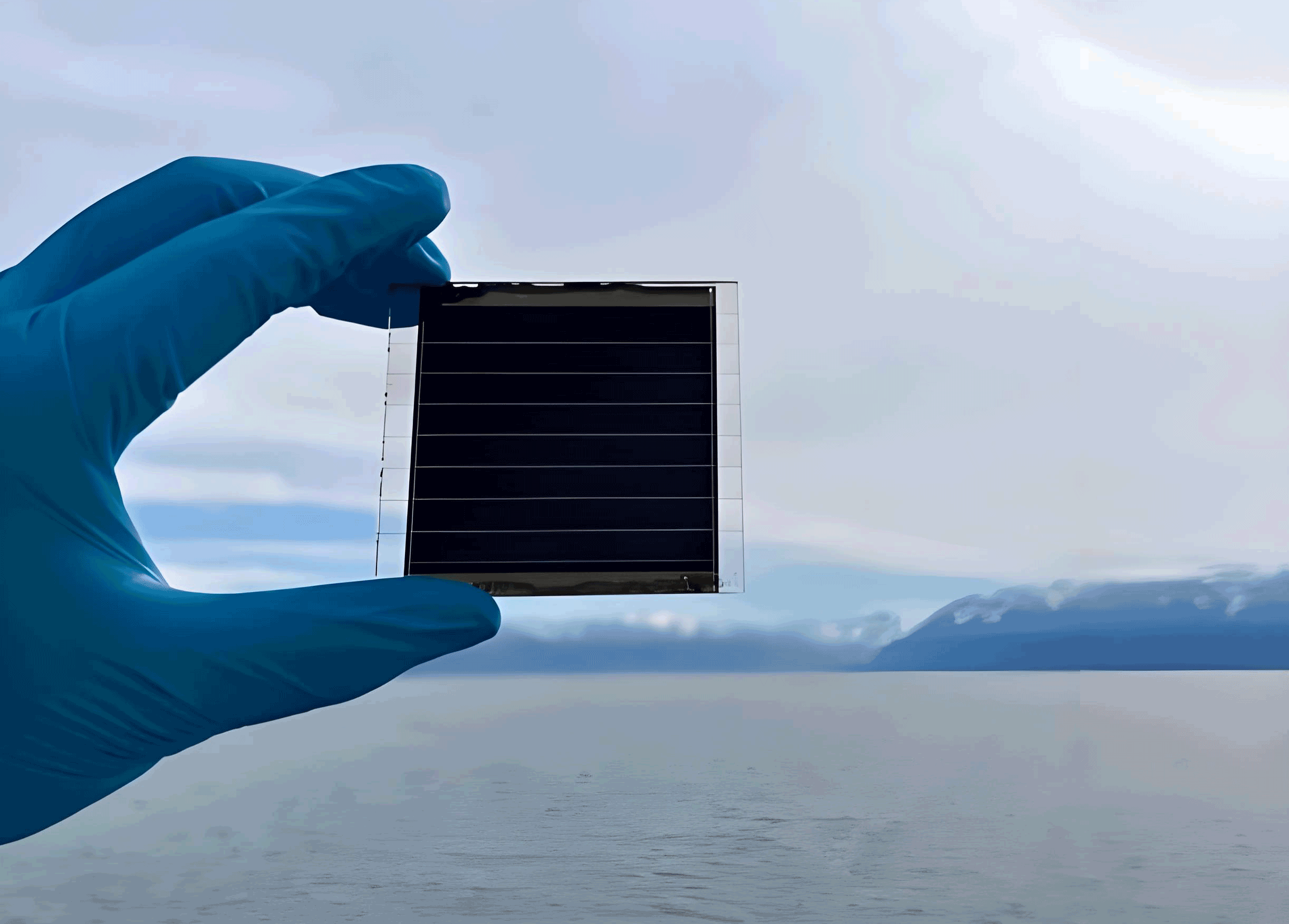
To contextualize the progress of perovskite solar cells, it is useful to compare them with established photovoltaic technologies. Crystalline silicon solar cells currently dominate the market, accounting for over 90% of global production due to their high efficiency and mature supply chains. However, silicon-based approaches are approaching their theoretical limits in terms of cost reduction and performance enhancement. In contrast, perovskite solar cells offer a disruptive alternative, with the potential for lower manufacturing costs through solution-based processes like spin-coating or printing, and the ability to achieve high efficiencies even in thin-film forms. The following table summarizes key differences between perovskite and silicon solar cells, highlighting why perovskite solar cells are garnering immense interest.
| Parameter | Perovskite Solar Cells | Crystalline Silicon Solar Cells |
|---|---|---|
| Typical Efficiency Range | Up to 25.7% (lab-scale) | Up to 26.1% (commercial) |
| Material Cost | Low (abundant raw materials) | Moderate to high (energy-intensive processing) |
| Manufacturing Process | Solution-processable, flexible substrates | High-temperature, rigid wafers |
| Bandgap Tunability | High (1.2–2.3 eV adjustable) | Fixed (~1.1 eV) |
| Stability Challenges | Degradation under moisture, heat, light | Relatively stable, but brittle |
| Application Flexibility | High (e.g., flexible, transparent modules) | Limited to rigid formats |
The efficiency of a perovskite solar cell can be modeled using the standard photovoltaic equation for power conversion efficiency (PCE): $$ \text{PCE} = \frac{J_{\text{sc}} \times V_{\text{oc}} \times \text{FF}}{P_{\text{in}}} \times 100\% $$ where \( J_{\text{sc}} \) is the short-circuit current density, \( V_{\text{oc}} \) is the open-circuit voltage, FF is the fill factor, and \( P_{\text{in}} \) is the incident light power density. For perovskite solar cells, these parameters are highly influenced by the material composition and device architecture. For example, tuning the halide component in the ABX3 structure can shift the bandgap, optimizing \( J_{\text{sc}} \) and \( V_{\text{oc}} \) for specific spectral conditions. This tunability is a key advantage, allowing perovskite solar cells to be customized for various environments, but it also introduces complexity in standardization, as performance metrics must account for compositional variations.
In terms of global industry trends, the adoption of perovskite solar cells is accelerating, with major investments in research and pilot production lines. Countries like China, the United States, and members of the European Union are leading efforts to commercialize this technology, driven by policies supporting renewable energy and technological innovation. The perovskite solar cell sector is witnessing a surge in startups and collaborations between academia and industry, aiming to solve core issues such as long-term stability and large-area module fabrication. For instance, encapsulation techniques and advanced charge transport layers are being developed to enhance the durability of perovskite solar cells, which typically degrade when exposed to humidity, oxygen, or elevated temperatures. As I evaluate the trajectory, it is clear that the success of perovskite solar cells will depend not only on technical advancements but also on the establishment of robust standards that ensure reliability and interoperability across the supply chain.
Turning to the standardization landscape, the current framework for photovoltaic devices is largely built around silicon-based technologies, with international bodies like the International Electrotechnical Commission (IEC) and organizations such as SEMI and ASTM providing foundational standards. However, these existing protocols often fall short when applied to perovskite solar cells due to their unique material properties and dynamic behavior. For example, the IEC 61215 series and GB/T 9535 standards, which govern silicon module testing, may not adequately address the performance instability and nonlinear response to light that characterize perovskite solar cells. This misalignment has prompted the development of specialized documents, such as IEC TR 63228:2019, which offers measurement guidelines for organic, dye-sensitized, and perovskite-based devices. Yet, as a technical report, it lacks the normative force of a full standard, highlighting the urgent need for dedicated standardization efforts tailored to perovskite solar cells.
In my assessment, the international standardization scene for perovskite solar cells is still in its infancy, with limited specific standards available. The IEC TR 63228 report outlines provisional protocols for I-V characterization, spectral response, and stability testing, but it acknowledges the challenges in achieving consensus on methods. For instance, the slow spectral response and hysteresis effects in perovskite solar cells complicate accurate efficiency measurements, necessitating approaches like the “ten-point quasi-steady-state measurement” advocated in some emerging standards. Similarly, stability testing remains a contentious area, as accelerated aging tests designed for silicon may not correlate well with the real-world degradation mechanisms of perovskite solar cells. The table below provides an overview of key international standards and reports relevant to perovskite solar cells, illustrating the current gaps and ongoing initiatives.
| Standard/Report | Organization | Focus Area | Status |
|---|---|---|---|
| IEC TR 63228:2019 | IEC | Measurement protocols for organic, dye-sensitized, and perovskite materials | Technical Report (non-normative) |
| IEC 61215 Series | IEC | Terrestrial photovoltaic module design qualification and type approval | Primarily for silicon, under adaptation |
| SEMI Standards | SEMI | Materials, equipment, and safety for photovoltaics | Includes some perovskite-related guidelines |
| ASTM E1021 | ASTM | Spectral responsivity measurements | Under review for perovskite applicability |
Domestically, China has taken proactive steps in standardizing perovskite solar cells, leveraging its growing industry and research capabilities. The China Photovoltaic Industry Association (CPIA) has released T/CPIA 0032—2022, which specifies the current-voltage (I-V) measurement methods for perovskite solar cells and modules. This standard introduces innovative techniques, such as the ten-point quasi-steady-state method, to address hysteresis and ensure reproducible results. Additionally, several other standards are under development, covering aspects like module fabrication, solar simulator requirements, spectral response testing, and light-thermal degradation assessment. These efforts are coordinated through dedicated working groups, such as the Perovskite Standardization Task Force under CPIA, which brings together stakeholders from academia, industry, and testing institutions to foster collaboration and drive the adoption of best practices. As I participate in these initiatives, it is encouraging to see the momentum building towards a comprehensive standard ecosystem for perovskite solar cells.
The formulation of standards for perovskite solar cells must consider the intricate material science behind these devices. The general formula for perovskite materials, $$ \text{ABX}_3 $$, can be expanded to include specific ions, such as $$ \text{CH}_3\text{NH}_3\text{PbI}_3 $$ for methylammonium lead iodide, a common composition in perovskite solar cells. The bandgap energy \( E_g \) of these materials is critical for performance and can be approximated using the Tauc relation for direct bandgap semiconductors: $$ (\alpha h\nu)^2 = A(h\nu – E_g) $$ where \( \alpha \) is the absorption coefficient, \( h\nu \) is the photon energy, and \( A \) is a constant. This tunability allows for the optimization of perovskite solar cells for different applications, but it also necessitates standardized methods to characterize and compare materials consistently. For example, variations in the A-site cation (e.g., replacing MA+ with FA+) can influence stability and efficiency, underscoring the need for material-specific standards.
Looking ahead, I propose a phased approach to standardization for perovskite solar cells, aligning with industry maturation. In the short term, the focus should be on establishing foundational standards for key materials, performance testing, and initial reliability assessments. This includes defining specifications for precursor materials like lead iodide (PbI2) and encapsulation films, as well as refining I-V measurement protocols to account for the dynamic behavior of perovskite solar cells. Stability testing methods should be developed to simulate real-world conditions, incorporating factors like humidity, temperature cycling, and light soaking. The following table outlines a roadmap for standardization, categorized into short-term, medium-term, and long-term goals, with specific emphasis on perovskite solar cells.
| Timeframe | Key Focus Areas | Examples of Standard Topics |
|---|---|---|
| Short-Term (0–2 years) | Materials, basic performance, and stability testing | Specifications for perovskite precursors; I-V measurement methods; initial damp heat and light stability tests |
| Medium-Term (2–5 years) | Manufacturing processes, application-specific requirements, and international alignment | Equipment standards for deposition techniques; BIPV integration guidelines; conversion of group standards to national/international levels |
| Long-Term (5+ years) | Advanced reliability, green manufacturing, and global leadership | Lifetime prediction models; recycling and sustainability standards; leadership in IEC and ISO working groups |
In the medium term, standardization should expand to encompass manufacturing equipment and process controls, ensuring reproducibility and quality in large-scale production of perovskite solar cells. This includes standards for slot-die coating, vapor deposition, and other fabrication techniques that are pivotal for achieving uniform, high-performance modules. Additionally, application-specific standards for uses like BIPV and utility-scale power plants will be crucial, addressing factors such as mechanical durability, fire resistance, and energy yield in diverse climates. As perovskite solar cells evolve, tandem configurations combining perovskite with silicon or other materials will require standardized testing methods to evaluate their synergistic performance. The efficiency of a tandem perovskite solar cell can be described by extending the PCE equation to account for subcell contributions: $$ \text{PCE}_{\text{tandem}} = \frac{\sum (J_{\text{sc},i} \times V_{\text{oc},i} \times \text{FF}_i)}{P_{\text{in}}} $$ where i denotes each subcell, highlighting the complexity that standards must address.
Long-term standardization goals should prioritize sustainability and circular economy principles, given the environmental concerns associated with lead-based perovskite solar cells. Standards for green manufacturing, such as reducing solvent usage and implementing recycling protocols for end-of-life modules, will be essential to minimize the ecological footprint. Furthermore, as the technology matures, international collaboration will become increasingly important; I advocate for active participation in IEC Technical Committee 82 and other global forums to harmonize standards and facilitate the widespread adoption of perovskite solar cells. By pursuing this structured approach, we can build a robust standard framework that supports innovation while ensuring safety, reliability, and market confidence.
In conclusion, the journey of perovskite solar cells from lab curiosities to commercial products is well underway, but its full potential hinges on the development of comprehensive standards. As I reflect on the current status, it is evident that while progress has been made—particularly in China with the issuance of group standards—significant work remains to address the unique challenges of perovskite-based devices. The dynamic nature of perovskite solar cells, characterized by their tunable optoelectronic properties and sensitivity to environmental factors, demands tailored standardization efforts that evolve alongside technological advancements. By focusing on short-term material and testing standards, medium-term process and application guidelines, and long-term sustainability and international integration, we can create an ecosystem that accelerates the commercialization of perovskite solar cells. Ultimately, a cohesive standard strategy will not only enhance the performance and durability of perovskite solar cells but also solidify their role in the global transition to clean energy, driving innovations that benefit society as a whole.