
As I delve into the world of energy storage, I am struck by the fierce competition unfolding around solid-state batteries. This technology is not just an incremental improvement; it represents a paradigm shift that could redefine electric mobility and grid storage. From my perspective, the global landscape is marked by over 60 entities across key regions—Asia, Europe, and North America—vying for dominance. In this article, I will explore the advancements, challenges, and future prospects of solid-state batteries, drawing on technical insights and market trends. The stakes are high: whoever masters this technology may well dictate the future of energy.
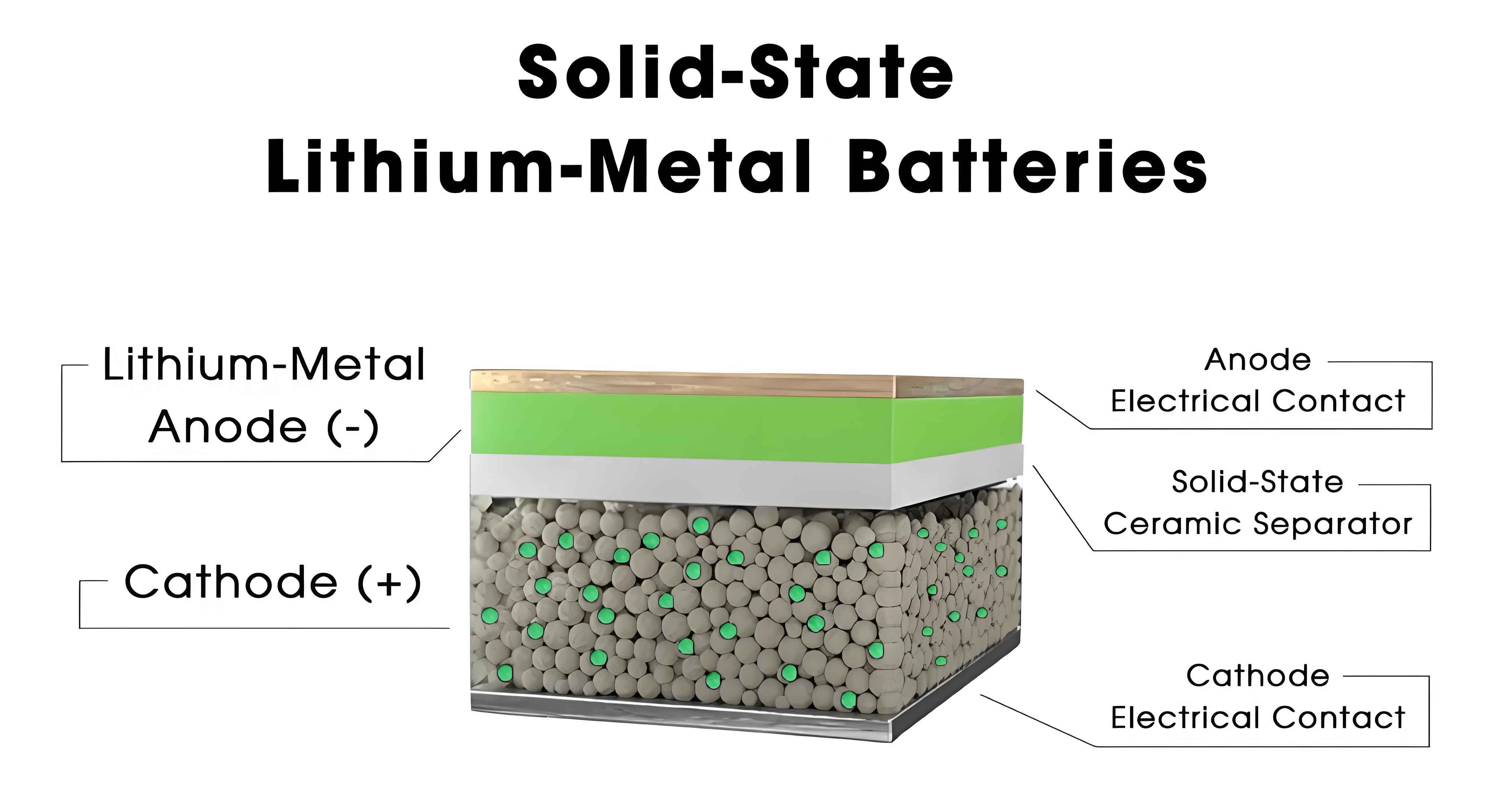
Let me begin by outlining the fundamental appeal of solid-state batteries. Unlike conventional lithium-ion batteries that use liquid electrolytes, solid-state batteries employ solid electrolytes. This shift offers numerous advantages: higher energy density, enhanced safety due to reduced flammability, faster charging times, and longer cycle life. The core equation governing energy density can be expressed as:
$$ E = \frac{1}{2} C V^2 $$
where \( E \) is energy, \( C \) is capacitance, and \( V \) is voltage. Solid-state batteries can achieve higher \( V \) and \( C \) through advanced materials, leading to superior performance. However, the path to commercialization is fraught with technical hurdles, which I will dissect later.
From my analysis, the international push for solid-state battery development is accelerating. In Japan, concerted efforts have been underway for years, with major automakers and research institutions collaborating on prototypes. For instance, a prominent Japanese consortium has reported breakthroughs, such as a solid-state battery capable of 1500 km range on a 10-minute charge. Similarly, a Korean-German partnership aims for mass production by 2026, focusing on sulfide-based electrolytes. In the United States, federal funding has spurred innovation, with universities unveiling novel architectures like solid-state sodium batteries that promise 100% rate capability at room temperature. European car manufacturers are investing heavily in startups to fast-track applications, targeting milestones like 500,000 km of testing with minimal degradation. To summarize these international efforts, I have compiled a table highlighting key achievements:
| Region | Key Focus | Reported Performance | Timeline Goal |
|---|---|---|---|
| Japan | Sulfide electrolytes | 1500 km range, 10 min charge | 2030 for full-scale production |
| South Korea | High-energy cathodes | 10,000 cycles, 3 min charge | 2026 for pilot lines |
| United States | Solid-state sodium systems | Room-temperature operation, high stability | 2027 for commercialization |
| Europe | Polymer and oxide routes | <5% degradation over 500,000 km | 2028 for vehicle integration |
In my view, these advancements underscore the global consensus that solid-state batteries are critical for next-generation energy storage. The competition is intense, with each region leveraging its strengths in materials science and engineering. For example, Japanese researchers emphasize sulfide electrolytes for high ionic conductivity, albeit with challenges in air stability. The ionic conductivity \( \sigma \) can be modeled as:
$$ \sigma = \sigma_0 \exp\left(-\frac{E_a}{kT}\right) $$
where \( \sigma_0 \) is a pre-exponential factor, \( E_a \) is activation energy, \( k \) is Boltzmann’s constant, and \( T \) is temperature. Optimizing \( E_a \) for solid electrolytes is a key research frontier.
Turning to China, I have observed remarkable strides in solid-state battery development. Chinese enterprises are aggressively pursuing oxide-based pathways, with several announcing pilot production lines and vehicle integrations. A leading Chinese battery producer has reduced costs significantly, with reports of lithium iron phosphate cells priced below $0.04 per Wh, driving down overall battery pack expenses. This cost reduction is pivotal for scaling solid-state batteries, as the total cost \( C_{total} \) can be expressed as:
$$ C_{total} = C_{materials} + C_{manufacturing} + C_{R&D} $$
where \( C_{materials} \) dominates for solid-state batteries due to expensive electrolytes. Chinese efforts focus on cutting \( C_{materials} \) through innovative sourcing and economies of scale. Additionally, joint ventures between automakers and battery specialists have yielded semi-solid-state batteries already deployed in electric vehicles, offering over 1000 km range and rapid charging. Below is a table summarizing Chinese progress:
| Development Area | Achievement | Energy Density | Commercial Target |
|---|---|---|---|
| Oxide electrolyte cells | 10 Ah prototype, 320 Wh/kg | 320-500 Wh/kg | 2024 for pilot production |
| Semi-solid-state packs | 1000 km range, 10 min charge for 400 km | 250-300 Wh/kg | 2025 for mass adoption |
| Cost reduction initiatives | 50% price drop in lithium iron phosphate cells | N/A | Ongoing |
| Joint R&D projects | Multiple automaker-battery alliances | Varies by partnership | 2028 for full solid-state models |
From my perspective, China’s approach combines vertical integration with rapid iteration, enabling quick transitions from lab to market. However, I must note that challenges remain, such as scaling oxide electrolytes without compromising interface stability. The interfacial resistance \( R_{int} \) is a critical parameter:
$$ R_{int} = \frac{\delta}{\sigma_{eff}} $$
where \( \delta \) is interface thickness and \( \sigma_{eff} \) effective conductivity. Minimizing \( R_{int} \) through material engineering is a focus for Chinese researchers.
As I explore further, the technical challenges of solid-state batteries become apparent. Three primary electrolyte routes exist: sulfide, polymer, and oxide. Each has trade-offs. Sulfide electrolytes, favored in Japan and Korea, offer high ionic conductivity but suffer from air sensitivity and toxicity risks. Polymer electrolytes, pursued in Europe, provide flexibility yet require elevated temperatures for optimal operation, limiting practicality. Oxide electrolytes, dominant in China, boast wide electrochemical windows but face issues with brittleness and lithium dendrite growth. The dendrite growth rate \( v_d \) can be approximated as:
$$ v_d = \frac{J}{zF\rho} $$
where \( J \) is current density, \( z \) charge number, \( F \) Faraday’s constant, and \( \rho \) density. Suppressing \( v_d \) is essential for longevity. Additionally, cost remains a formidable barrier. Current estimates suggest solid-state battery manufacturing costs are orders of magnitude higher than liquid counterparts, primarily due to expensive raw materials and complex processes. The cost per kWh \( C_{kWh} \) for solid-state batteries is roughly:
$$ C_{kWh} \approx \frac{C_{cell}}{\eta \times E_{cell}} $$
where \( C_{cell} \) is cell cost, \( \eta \) packing efficiency, and \( E_{cell} \) cell energy. Driving down \( C_{cell} \) through scalable production is crucial. Furthermore, compatibility with existing automotive standards poses integration hurdles, necessitating redesigns of thermal management and charging infrastructure.
In my assessment, the future of solid-state batteries hinges on overcoming these obstacles. Global initiatives are fostering collaboration, yet competition is intense. The “dual-carbon” goals worldwide are accelerating innovation, with solid-state batteries at the forefront. I believe that breakthroughs in material science—such as hybrid electrolytes or nanocomposites—could unlock cost-effective solutions. The potential energy density \( E_{dens} \) of advanced solid-state batteries may reach:
$$ E_{dens} = \frac{nFV}{M} $$
where \( n \) is number of electrons transferred, \( V \) voltage, \( F \) Faraday’s constant, and \( M \) molar mass. Values exceeding 500 Wh/kg seem achievable. Moreover, recycling and sustainability aspects are gaining attention, as solid-state batteries could reduce reliance on scarce resources like cobalt.
To encapsulate the global landscape, I have compiled a comparative table of technical routes and their status:
| Electrolyte Type | Advantages | Disadvantages | Current Focus Regions | Readiness Level |
|---|---|---|---|---|
| Sulfide | High ionic conductivity, good interface | Toxic, air-sensitive, high cost | Japan, South Korea | Pilot scale |
| Polymer | Flexible, easy processing | Low room-temperature conductivity, thermal needs | Europe, North America | Research phase |
| Oxide | Stable, wide voltage window | Brittle, interface resistance, dendrite issues | China | Prototype deployment |
From my vantage point, the race for solid-state battery supremacy is far from decided. Each region brings unique strengths: Japan’s expertise in materials synthesis, America’s innovation in novel architectures, Europe’s automotive integration prowess, and China’s manufacturing scale and cost control. The synergy of these efforts could accelerate global adoption. However, I caution that overestimating near-term milestones may lead to disillusionment. Solid-state batteries require sustained investment and interdisciplinary collaboration.
In conclusion, as I reflect on the journey of solid-state batteries, I am optimistic about their transformative potential. The technology promises safer, longer-lasting, and more efficient energy storage, pivotal for electric vehicles and renewable grids. While challenges in cost, production, and compatibility persist, ongoing R&D worldwide is steadily addressing them. The solid-state battery landscape is dynamic, with breakthroughs emerging regularly. I urge stakeholders to foster open innovation while protecting intellectual property, ensuring a healthy ecosystem. Ultimately, the winner of this race will not only capture market share but also drive the global transition to sustainable energy. The era of solid-state batteries is dawning, and I eagerly await the innovations ahead.
To further illustrate the performance metrics, consider the following formula for cycle life \( N_{cycle} \):
$$ N_{cycle} = \frac{E_{initial} – E_{threshold}}{E_{degradation per cycle}} $$
where \( E_{initial} \) is initial energy, \( E_{threshold} \) is usable threshold, and \( E_{degradation per cycle} \) is energy loss per cycle. Solid-state batteries aim for \( N_{cycle} > 10,000 \), far surpassing current lithium-ion batteries. Additionally, charging speed \( t_{charge} \) can be modeled as:
$$ t_{charge} = \frac{Q}{I} $$
with \( Q \) capacity and \( I \) current. High \( I \) enabled by solid electrolytes reduces \( t_{charge} \) dramatically. As I finalize this analysis, I emphasize that the solid-state battery revolution will be iterative, with semi-solid variants bridging the gap. The global community must prioritize standardization and safety protocols to ensure seamless adoption. The future of energy storage is solid, and I am confident that solid-state batteries will play a starring role.