
As an innovator in the field of embedded energy solutions, I have witnessed firsthand the transformative potential of rechargeable solid-state battery technology. The shift from traditional liquid electrolytes to solid electrolytes is not merely an incremental improvement; it represents a fundamental leap forward in power source design. This article delves into the core principles, advantages, applications, and market dynamics of solid-state batteries, particularly focusing on their pivotal role in accelerating the Internet of Things (IoT) and other cutting-edge domains. Throughout this discussion, the term “solid-state battery” will be central, as it encapsulates the key to safer, more efficient, and more integrated energy storage.
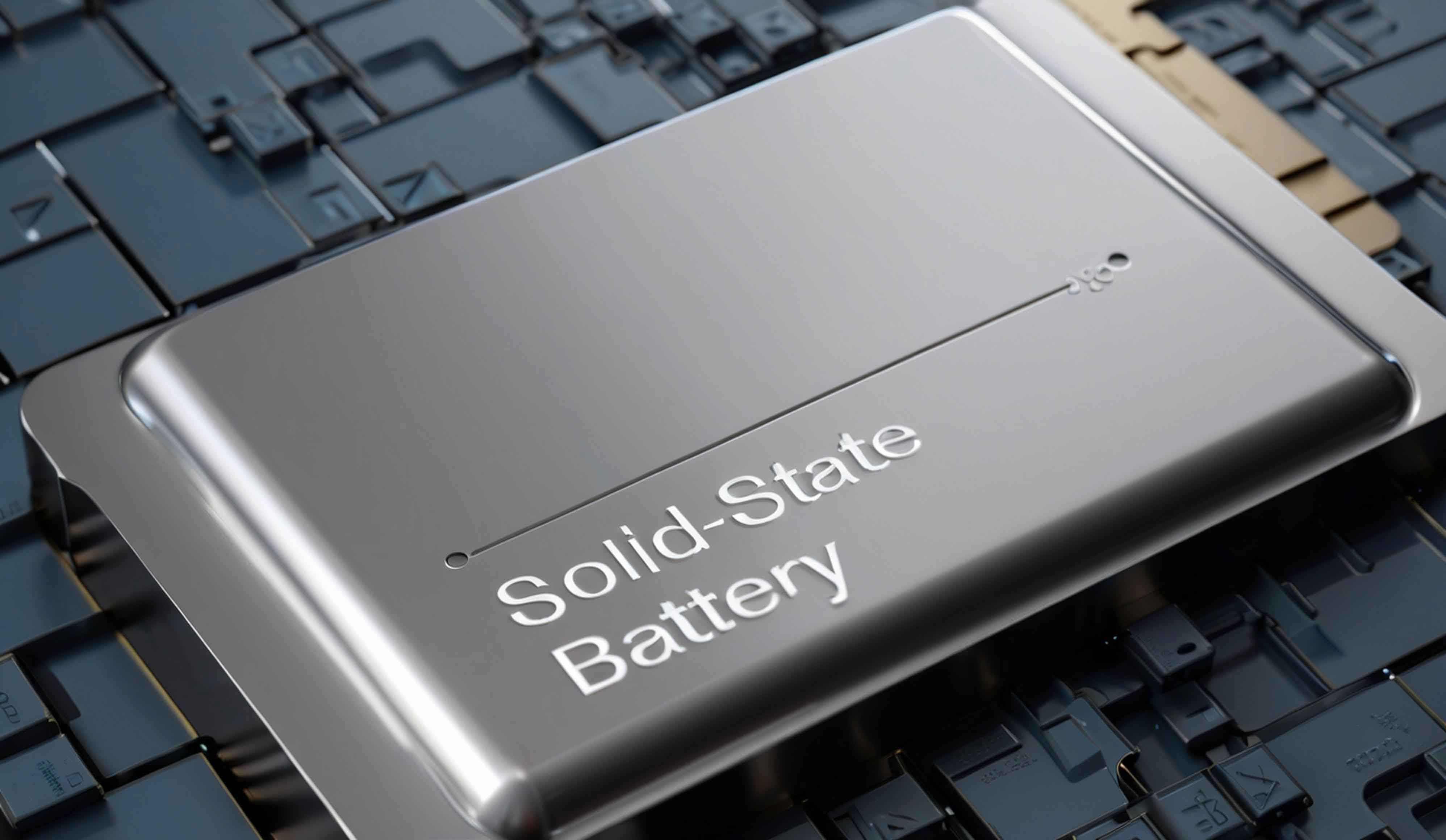
The fundamental principle of a solid-state battery is the replacement of the conventional, flammable organic electrolyte with a solid-state electrolyte. This singular change unlocks a cascade of benefits. From my perspective, working on integrating these power sources into microsystems, the advantages are undeniable. Let’s first establish a technical comparison to frame the discussion.
| Feature | Solid-State Battery | Traditional Li-ion (Liquid Electrolyte) |
|---|---|---|
| Electrolyte State | Solid (Ceramic, Polymer, etc.) | Liquid Organic Solvent |
| Safety | High (No leakage, minimal thermal runaway) | Moderate (Risk of leakage, fire, explosion) |
| Energy Density (Potential) | Very High (500+ Wh/kg theoretical) | High (250-300 Wh/kg practical) |
| Cycle Life | >10,000 cycles | 500-1,500 cycles |
| Operating Voltage Window | Wider (enables new chemistries) | Limited by electrolyte stability |
| Form Factor | Extremely flexible, thin-film possible | Rigid, requires bulky safety housing |
| Self-Discharge Rate | Very Low | Low to Moderate |
| Environmental Impact | No toxic liquids, easier to recycle | Contains hazardous materials |
The safety argument for the solid-state battery is paramount. The elimination of liquid electrolytes directly addresses the risks of overheating, combustion, and explosion. This is quantified by the drastic reduction in the hazard function $\lambda(t)$. For a traditional battery, the failure rate due to thermal events can be modeled. In contrast, a solid-state battery’s reliability improves significantly, making it indispensable for sensitive applications.
From an engineering standpoint, the solid electrolyte enables revolutionary miniaturization and integration. The internal resistance of a cell, a critical parameter, benefits from the properties of solid-state materials. While ionic conductivity $\sigma_i$ in solids was historically a challenge, advancements have led to composites with conductivities rivaling liquids:
$$
\sigma_i = \frac{n q \mu}{A}
$$
where $n$ is the charge carrier density, $q$ is the charge, $\mu$ is the mobility, and $A$ is the area. Modern solid-state electrolytes achieve high $\sigma_i$, which translates to lower internal resistance $R_{internal}$ and higher power capability. This allows us to create chip-scale solid-state battery solutions that can be surface-mounted directly onto printed circuit boards (PCBs), eliminating the need for bulky battery holders or compartments.
The operational voltage of a solid-state battery cell can also be higher. The cell voltage $V_{cell}$ is determined by the Gibbs free energy change of the electrochemical reaction:
$$
V_{cell} = -\frac{\Delta G}{nF}
$$
where $\Delta G$ is the Gibbs free energy change, $n$ is the number of electrons transferred, and $F$ is Faraday’s constant. The stability of the solid-state interface allows the use of high-voltage cathode materials, pushing $V_{cell}$ upward, which in turn increases the energy density $E_d$ for a given mass or volume:
$$
E_d = \frac{Q \times V_{cell}}{m}
$$
where $Q$ is the charge capacity and $m$ is the mass. This fundamental advantage makes the solid-state battery a compelling candidate not just for IoT, but for electric vehicles where energy density is king.
However, my focus and our company’s pioneering work lie in the domain of micro-scale, low-voltage solid-state battery systems. While much media attention is on large-format cells, the market for miniature power sources is vast and underserved. We have developed a fully integrated solution that combines a rechargeable solid-state battery with power management, clock management, and energy harvesting interfaces on a single chip. This monolithic approach is key for the IoT revolution.
| Market Segment | Key Requirements | How Solid-State Battery Meets the Need |
|---|---|---|
| IoT & Wireless Sensor Nodes | Energy autonomy, miniaturization, maintenance-free operation, wide temperature range. | Enables energy harvesting systems by providing a reliable, long-life storage buffer. Chip-scale SMD form factor allows embedding into tiny devices. |
| System Backup Power (RTC, SRAM) | Very low self-discharge, stable voltage, long calendar life (>10 years), high reliability. | Self-discharge rate is an order of magnitude lower than supercapacitors. Voltage remains flat throughout discharge, unlike decaying supercapacitor voltage. |
| Embedded & Wearable Electronics | Safety (non-toxic, non-flammable), thin/flexible form factor, biocompatibility for implantables. | Contains no harmful chemicals; is non-cytotoxic. Can be fabricated in thin-film formats suitable for wearables and even implantable medical devices. |
| Smart Cards, Industrial Tags, Locks | High cycle life for frequent transactions, operation in harsh environments, security. | Can endure hundreds of thousands of charge/discharge cycles. Hermetically sealed solid structure resists moisture, dust, and physical stress. |
The lifecycle of a solid-state battery is a major differentiator. The cycle life $N_{cycles}$ is often governed by degradation mechanisms at the electrode-electrolyte interface. For a solid-state battery, the stable interface slows degradation. A simplified model for capacity fade per cycle can be expressed as:
$$
\frac{dQ}{dN} = -k Q^{\alpha}
$$
where $k$ is a degradation rate constant and $\alpha$ is an exponent. For our solid-state battery cells, $k$ is exceptionally small, leading to a functional life that can exceed the product it powers. This makes the concept of a “lifetime battery” a reality for many electronic systems, eliminating the environmental and logistical burden of battery replacement.
Let’s analyze the market opportunity quantitatively. The incumbent technologies for small backup and embedded power are coin cells (primary lithium) and supercapacitors. The annual global market size is staggering.
| Component Type | Annual Unit Sales | Primary Application | Key Limitation |
|---|---|---|---|
| Coin Cell (Primary) | ~5 Billion | RTC Backup, Memory Backup | Single-use, contains toxic materials, requires holder, limited temperature range. |
| Supercapacitor (EDLC) | ~2 Billion | Power Backup, Energy Buffer | High self-discharge (days/weeks), linear voltage decay, larger size for same energy. |
| Rechargeable Solid-State Battery (Target) | Growing from niche | All of the above + Energy Harvesting | Current higher cost, but falling with scale. Superior technical profile. |
Our vision is to displace a significant portion of these traditional components. The value proposition of the solid-state battery is clear when you compute the total cost of ownership. For a device with a 10-year lifespan, a single rechargeable solid-state battery eliminates multiple coin cell replacements, associated service costs, and environmental fees. The ROI equation becomes compelling.
The synergy between the solid-state battery and energy harvesting is perhaps the most exciting frontier for IoT. Energy harvesters (solar, thermal, RF, piezoelectric) produce intermittent, low-power energy. A storage element is essential. The ideal storage device needs high coulombic efficiency $\eta_C$ and low leakage current $I_{leak}$. Our integrated power management chip, paired with the solid-state battery, achieves this. The system efficiency $\eta_{sys}$ from harvested energy to usable stored energy is critical:
$$
\eta_{sys} = \eta_{MPPT} \times \eta_{Converter} \times \eta_{Charge} \times (1 – \frac{I_{leak} \cdot t}{Q_{stored}})
$$
where $\eta_{MPPT}$ is maximum power point tracking efficiency, $\eta_{Converter}$ is DC-DC conversion efficiency, and $\eta_{Charge}$ is the battery’s charge acceptance efficiency. The solid-state battery’s near-zero $I_{leak}$ maximizes the last term, making perpetual operation feasible.
We offer a portfolio of products based on this technology. They range from standalone solid-state battery cells to fully integrated “energy management units.” For developer accessibility, we provide evaluation kits that allow rapid prototyping for applications like smart agricultural sensors, industrial condition monitors, and advanced medical devices. A concrete conceptual application is a smart contact lens with embedded diagnostics. Such a lens would integrate a micro solid-state battery, an ultra-low-power display driver, biosensors, and a wireless communication block—all powered by a tiny integrated photovoltaic cell harvesting ambient light. The solid-state battery is the only safe, reliable, and miniaturizable power core capable of enabling such a device.
Looking forward, the growth trajectory for the solid-state battery is steep. Analyst projections for the energy harvesting powered device market exceed 100 million units annually within a few years, with the majority requiring a robust storage element like our solid-state battery. In electric vehicles, while challenges remain for mass production of large cells, the technology roadmap is clear. The solid-state battery represents the next definitive step in energy storage evolution, offering a combination of safety, performance, and design freedom that liquid electrolytes cannot match.
In conclusion, as we continue to innovate, the solid-state battery stands at the heart of a more connected, autonomous, and sustainable electronic world. From milliwatt-level IoT nodes to kilowatt-hour electric vehicle packs, the principles remain the same: solid is stable, solid is safe, and solid is the future. Our mission is to deliver this future, one chip-scale solid-state battery at a time, empowering designers to break free from the constraints of traditional power sources and imagine what’s truly possible.