
A battery stores energy by moving ions between two electrodes through an electrolyte. For more than three decades, the dominant commercial design has used a liquid electrolyte and a porous separator. A solid-state battery replaces that liquid with a solid ion conductor. The change sounds simple, but it alters almost every part of cell design: the electrode–electrolyte interface, the mechanical stack, the failure modes, and the manufacturing process.
That is why solid-state batteries have long been described as the next generation of energy storage while remaining difficult to produce at scale. By late 2024, the technology had moved beyond purely laboratory demonstrations. Small cells were already used in watches and medical implants, and several companies had announced pilot plants, manufacturing partnerships, and vehicle targets. The transition is real, but it is uneven: small-format cells are closer to market than electric-vehicle packs, and grid-scale deployment remains further away.
Why a Solid Electrolyte Changes the Cell
In a conventional lithium-ion cell, lithium ions shuttle between a negative electrode, the anode, and a positive electrode, the cathode. The liquid electrolyte conducts ions but also poses a fire risk if the cell overheats or is damaged. The separator prevents direct contact between the electrodes while allowing ions to pass. A solid electrolyte can perform the ion-conducting role and, in some designs, also serve as the separator. Because it is not a flammable liquid, it can reduce one of the main pathways to thermal runaway.
The bigger prize is energy density. A solid electrolyte may make it possible to use a lithium-metal anode instead of graphite. Lithium metal has a much higher theoretical capacity per unit mass, so a cell could store more energy in the same volume or weight. Solid-state designs can also require less packaging and fewer inactive components. These are the reasons the technology is attractive for electric vehicles, where range and weight matter, and for compact devices, where volume is scarce.
The engineering difficulty is equally fundamental. A liquid electrolyte can wet rough electrode surfaces and accommodate volume changes during charge and discharge. A solid electrolyte must maintain contact with both electrodes as they expand and contract. Poor contact raises interfacial resistance and reduces power. Mechanical stress can create cracks, and lithium metal can grow needle-like dendrites at defects or grain boundaries, potentially short-circuiting the cell. A solid-state battery is therefore not automatically safer or better performing; its advantage depends on controlling interfaces, stack pressure, and defects over thousands of cycles.
A Long Materials History, a Short Manufacturing History
The basic battery architecture has changed remarkably little since Alessandro Volta built his pile in 1799. Volta’s device stored chemical energy and delivered electrical current through an electrolyte between two electrodes. In 1859, Gaston Planté produced the first practical rechargeable battery, a lead–acid design with lead and lead dioxide electrodes in dilute sulfuric acid. In 1887, Carl Gassner combined plaster and ammonium chloride to create a paste electrolyte, producing a dry cell that was less prone to leakage and could be oriented in any direction. By the mid-twentieth century, batteries based on lead, nickel, cadmium, zinc, iron, and carbon served a widening range of applications.
In 1958, Lewis Urry of Eveready developed a long-life alkaline battery using a zinc powder anode, a manganese dioxide cathode, and an alkaline electrolyte. The 1970s brought early attempts to use solid electrolytes, motivated by stability and lifetime advantages, but the materials were costly and difficult to manufacture. In 1976, Michael S. Whittingham, then at Exxon, demonstrated a rechargeable lithium-based cell with lithium in both the anode and the electrolyte. It offered high energy density but suffered from cost, processing complexity, and fire risk. In 1980, John B. Goodenough developed a lithium cobalt oxide cathode, raising cell voltage and paving the way for the lithium-ion battery. Sony commercialized the first lithium-ion battery in 1991, using a carbon anode developed by Akira Yoshino. That design became the basis of the modern portable-electronics and electric-vehicle battery industry.
Solid-state cells represent a departure from that line because they remove the liquid electrolyte rather than merely changing its chemistry. The research community has explored oxide, ceramic, polymer, and mineral-derived solid electrolytes. Each material family offers a different balance of ionic conductivity, electrochemical stability, mechanical strength, and processability. No single solid electrolyte has yet solved all requirements at once for every application.
Small-Format Cells Move First
The first commercial solid-state batteries are small. Some are already used in watches and medical implants, where high reliability and long life matter more than cost per kilowatt-hour. In June 2024, TDK announced a new version of its CeraCharge solid-state battery with an energy density of 1,000 Wh/L, about 100 times that of the existing CeraCharge product. The cell uses a lithium-alloy anode and an oxide-based solid electrolyte. TDK described the design as extremely safe and positioned it as a rechargeable alternative to coin cells, which are widely used in hearing aids, watches, and other compact devices but are typically disposable.
TDK’s initial targets include wireless earbuds, hearing aids, and smartwatches. Replacing large numbers of primary coin cells with rechargeable solid-state cells could reduce waste and improve device lifetime. The manufacturing challenge is scale. Hiroshi Sato of TDK’s energy unit development division noted that as battery area increases, it becomes harder to form a uniform, high-density structure; cracks and deformation can appear. TDK’s plan is to gain production experience with small cells before attempting larger formats. That sequencing is a useful indicator for the wider industry: solid-state batteries are likely to enter markets where small size, safety, and long life justify a cost premium before they compete directly with lithium-ion in mass-market vehicles.
Electric Vehicles: Announcements Meet Manufacturing
Electric vehicles are the most visible target for solid-state batteries, and also the hardest test. As of 2024, no production electric vehicle had been equipped with a solid-state battery. The obstacle is not only materials performance but also yield, cycle life, pack integration, and cost. Automakers have responded with partnerships and production timelines rather than immediate product launches.
In 2023, Toyota announced a collaboration with Idemitsu Kosan to begin manufacturing solid-state batteries for electric vehicles in 2027–2028, with mass production to follow. Toyota president and CEO Koji Sato said the companies had developed a high-performance, crack-resistant material through repeated trials and combined materials technology. The wording is significant: crack resistance is a mechanical requirement, not merely a chemical one. A solid electrolyte must survive the pressure and volume changes of a working cell.
Mercedes-Benz has set a target of using solid-state batteries in production vehicles by 2030 and believes the technology could double the range of a lithium-ion pack. In 2022, the company partnered with ProLogium on solid-state batteries for electric vehicles. In January 2024, ProLogium opened a solid-state battery plant and said mass production would begin in 2027. At full capacity, the plant would produce enough batteries for 26,000 electric vehicles per year. ProLogium founder and CEO Vincent Yang described the plant as the result of 17 years of development.
Volkswagen’s battery subsidiary PowerCo reached an agreement with QuantumScape to use part of its solid-state lithium-metal technology, with capacity for up to one million electric vehicles per year. QuantumScape’s design uses a ceramic separator, with a solid electrolyte on one side and a liquid electrolyte on the other. This hybrid architecture is intended to prevent dendrites while improving range. QuantumScape has said the approach could raise vehicle range from 560 km to 800 km. PowerCo CEO Frank Blome said the companies had been testing prototypes for years and were preparing the technology for mass production.
These projects point to a common strategy: introduce solid-state or hybrid cells in limited vehicle programs, learn from manufacturing yields, and expand capacity only after the cells prove durable in real-world packs. The first vehicles are unlikely to use the highest-risk, highest-energy version of the technology. They may use semi-solid or hybrid designs that retain a small amount of liquid electrolyte to manage interfaces.
The Cost Gap and the Incumbent
Solid-state batteries must compete with an incumbent that has benefited from three decades of cost reduction. Lithium-ion battery prices fell by about 97% between 1991 and 2018 after adjusting for inflation, from roughly $7,523 per kilowatt-hour to $271 per kilowatt-hour. That decline came from scale, manufacturing learning, and material improvements. A new solid-state cell must not only perform better; it must also approach the incumbent’s cost per kilowatt-hour at comparable volume.
| Year | Price (2018 US$ per kWh) |
|---|---|
| 1991 | 7,523 |
| 1995 | 5,485 |
| 2000 | 4,804 |
| 2005 | 2,198 |
| 2010 | 655 |
| 2015 | 450 |
| 2018 | 271 |
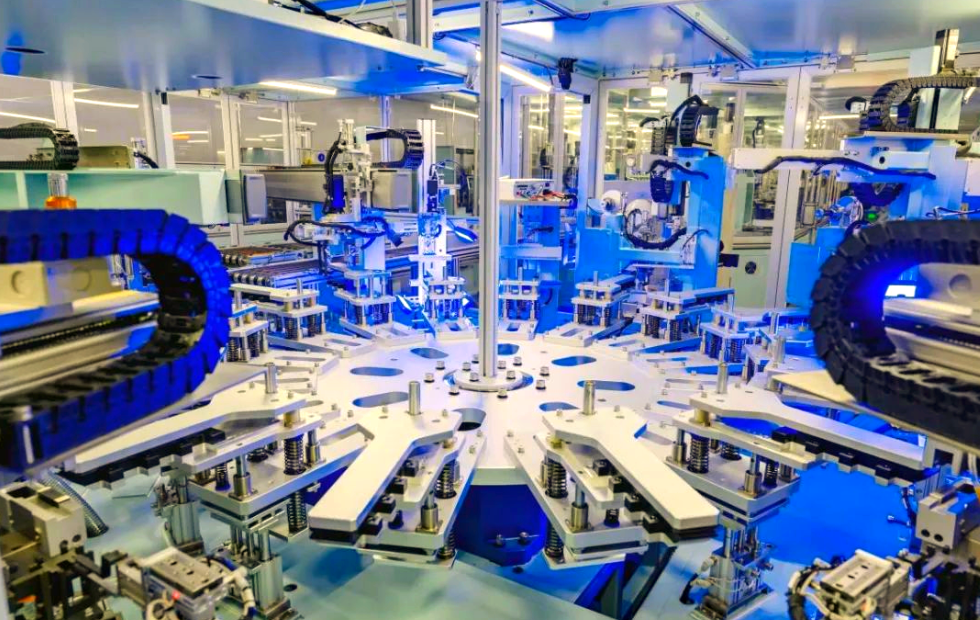
The table explains why solid-state commercialization is a manufacturing problem as much as a materials problem. A solid electrolyte may eliminate a flammable liquid, but it can also require new coating, sintering, stacking, and drying processes. Some designs need high stack pressure to maintain contact. Others require expensive ceramic processing or atmospherically controlled production. TDK’s caution about cracks and deformation in larger cells is a reminder that scaling is not simply a matter of making the same cell bigger.
Grid Storage and Alternative Chemistries
Electricity grids have a different set of requirements. Solar and wind power are cheap and abundant but variable. Battery energy storage systems (BESS) store excess generation and discharge it when sunlight or wind is insufficient. Lithium-ion batteries are the standard choice, but solid-state batteries could offer higher safety, longer service life, and greater energy density. The barriers are cost and manufacturing complexity at large scale.
Dragonfly Energy is one company targeting this problem. In 2023, it obtained a patent for a manufacturing technique intended to overcome the challenges of producing solid-state batteries for grid storage. The company said the process eliminates the need for large dry rooms and replaces methods that require long processing times and expensive heavy equipment. That could allow production to scale in a smaller footprint, at lower cost, and in less time.
In April 2024, Maryland-based Ion Storage Systems opened a factory to produce solid-state batteries for grid storage, electric vehicles, and other applications. Its cells use a ceramic electrolyte and a lithium-metal anode. The company aims to expand capacity to 500 MWh by 2028. CEO Ricky Hanna described the factory as one of the largest of its kind and as a step toward combining power, reliability, safety, and manufacturability.
Alternative chemistries are also emerging. In January 2024, Harvard University researchers announced a solid-state battery with a silicon anode that could charge in 10 minutes. In July 2024, researchers at the Technical University of Denmark announced a lithium-free solid-state battery made from minerals found in rock. Mohamad Khoshkalam of DTU said the team had shown that a solid electrolyte material could be cheap, efficient, environmentally friendly, scalable, and even better performing than lithium-based solid electrolytes. These are laboratory results rather than commercial products, but they broaden the design space beyond lithium-metal and oxide ceramics.
What Commercialization Will Require
The evidence from 2024 points to a staged transition rather than a sudden replacement of lithium-ion batteries. Small solid-state cells are already commercial in niche applications. Electric-vehicle cells are moving into pilot manufacturing, with production targets concentrated between 2027 and 2030. Grid-scale solid-state storage is at an earlier stage, where cost and process scale remain decisive.
For solid-state batteries to succeed, several conditions must be met at the same time: high areal capacity without cracking, stable interfaces over thousands of cycles, tolerance of mechanical abuse, low defect rates in large-format cells, and a cost trajectory that can compete with mature lithium-ion production. The first commercial solid-state batteries will not be the final version of the technology. They will be the first generation that proves the manufacturing path—and that is the step that has been missing for decades.