
The pursuit of higher energy density, enhanced safety, and faster charging capabilities has long been the central challenge in battery technology. For decades, lithium-ion batteries with liquid electrolytes have dominated the landscape, powering everything from portable electronics to electric vehicles. However, their inherent limitations—flammability of the organic electrolyte, limited energy density capped by graphite anodes, and the persistent threat of lithium dendrite growth—are becoming critical bottlenecks for the next generation of applications. In this context, the emergence and rapid development of the solid-state battery represent not merely an incremental improvement but a fundamental architectural revolution. As a researcher deeply invested in this field, I observe a transition from liquid-based electrochemistry to solid-state systems as the most promising path forward. The core of this revolution lies in replacing the flammable, liquid organic electrolyte with a solid ion-conducting medium. This single change cascades into a multitude of potential benefits: dramatically improved safety by eliminating fire risk, the ability to utilize high-capacity lithium metal anodes, and the potential for superior power density and longevity.
The fundamental operational principle of a solid-state battery mirrors that of its liquid counterpart, defined by the movement of lithium ions between cathode and anode during charge and discharge cycles. The defining difference is the physical state of the electrolyte. This solid electrolyte must fulfill a demanding set of criteria: high ionic conductivity (approaching or exceeding that of liquid electrolytes), negligible electronic conductivity, excellent electrochemical stability against both electrodes, and robust mechanical properties. The general discharge reaction for a cell with a lithium metal anode can be represented as:
$$ \text{Anode: Li} \rightarrow \text{Li}^+ + e^- $$
$$ \text{Cathode: } \text{Li}^+ + e^- + \text{MO}_2 \rightarrow \text{LiMO}_2 $$
$$ \text{Overall: Li} + \text{MO}_2 \rightarrow \text{LiMO}_2 $$
Where MO2 represents a transition metal oxide cathode material. The kinetic overpotentials ($\eta$) at the electrode-electrolyte interfaces, however, become far more significant in a solid-state battery due to the lack of intimate, fluid contact. The cell voltage under load can be expressed as:
$$ V = V_0 – \eta_{\text{anode}} – \eta_{\text{cathode}} – I R_{\text{bulk}} $$
Here, $V_0$ is the open-circuit voltage, $\eta$ are the interfacial overpotentials, $I$ is the current, and $R_{\text{bulk}}$ is the bulk resistance of the solid electrolyte. Minimizing these interfacial losses is a primary focus of research.
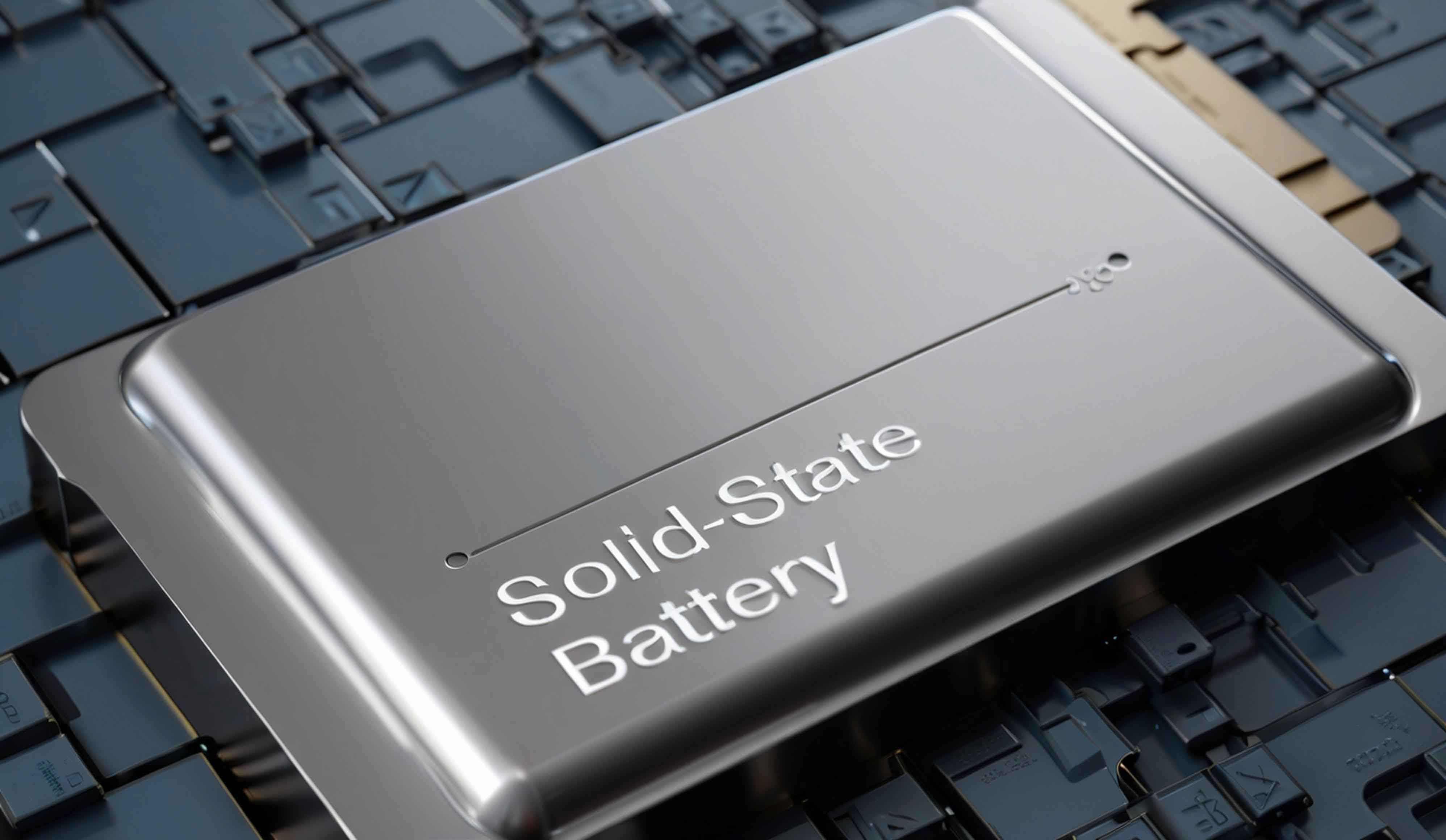
The primary categories of solid electrolytes are oxides, sulfides, and polymers, each with distinct advantages and challenges, as summarized below:
| Electrolyte Type | Exemplary Materials | Ionic Conductivity (S/cm, RT) | Key Advantages | Major Challenges |
|---|---|---|---|---|
| Oxide | LLZO (Garnet), LATP, LLTO | 10-4 – 10-3 | High stability, wide electrochemical window, good mechanical strength. | High rigidity, poor interfacial contact, often require high sintering temperatures. |
| Sulfide | LPS (Li3PS4), LGPS | 10-4 – 10-2 | Very high ionic conductivity, good ductility enabling cold-pressing. | Poor stability in air (release of H2S), narrow electrochemical stability window. |
| Polymer | PEO-LiTFSI | 10-5 – 10-4 | Flexible, lightweight, good interfacial contact, easy processing. | Low conductivity at room temperature, limited electrochemical stability. |
The Dendrite Challenge and Innovative Mitigation Strategies
The promise of the lithium metal anode in a solid-state battery is counterbalanced by the formidable challenge of dendrite growth. Even in a solid matrix, under high current density or during prolonged cycling, lithium can nucleate and propagate in filamentary forms. This growth is driven by local heterogeneities in current density, interfacial contact, and mechanical stress. The critical current density ($J_{\text{crit}}$) before dendrite initiation is a key parameter, described by models considering mechanical properties:
$$ J_{\text{crit}} = \frac{2 \sigma \Omega}{L k_B T} \cdot \frac{\delta}{r} $$
Alternatively, from a electrochemical perspective:
$$ J_{\text{crit}} \propto \frac{E \cdot \Gamma}{L \cdot F} $$
Where $\sigma$ is the yield stress of Li, $\Omega$ is the atomic volume, $L$ is the Li electrode thickness, $E$ is the electrolyte’s Young’s modulus, $\Gamma$ is the fracture toughness, and $F$ is Faraday’s constant. Recent groundbreaking work has introduced a novel paradigm for suppressing dendrites not by creating an impenetrable barrier, but by fundamentally redesigning the anode interface. Instead of using a bare lithium metal foil, researchers have engineered an anode structure using micron-sized silicon particles. During the initial lithiation (charging), lithium ions react with the silicon in a confined, surface-limited manner:
$$ \text{Si} + x\text{Li}^+ + x e^- \rightarrow \text{Li}_x\text{Si} \quad (\text{limited to shallow surface}) $$
This lithiated silicon shell then acts as a substrate for the subsequent, highly uniform plating of metallic lithium:
$$ \text{Li}^+ + e^- \rightarrow \text{Li}^0 \quad (\text{plating on the uniform Li}_x\text{Si surface}) $$
This dynamic process results in a composite anode where lithium metal coats the silicon particles, creating a smooth, homogeneous ion flux that eliminates the “hot spots” where dendrites typically nucleate. This architecture has enabled the creation of a practical solid-state battery capable of extremely fast charging (under 10 minutes) and exceptional cycling stability, with over 6,000 cycles demonstrated in a practical pouch cell format while retaining 80% capacity.
Thermal Management and Reliability Engineering for Solid-State Systems
The reliability of any electronic component or system, including a solid-state battery, is intrinsically linked to its operating environment. While the removal of flammable liquid mitigates thermal runaway risk, effective thermal management remains critical. Heat generation ($\dot{Q}$) within a cell during operation arises from irreversible losses (Joule heating, overpotentials) and reversible entropic changes:
$$ \dot{Q} = I(V_0 – V) + I T \frac{\partial V_0}{\partial T} = I \cdot \eta_{\text{total}} + I T \frac{\partial V_0}{\partial T} $$
In a solid-state battery, the interfacial overpotentials ($\eta_{\text{total}}$) can be significant, especially at high rates, leading to substantial Joule heating at the electrode-electrolyte boundaries. This localized heating can cause differential thermal expansion, inducing mechanical stress ($\sigma_{\text{therm}}$) at critical interfaces:
$$ \sigma_{\text{therm}} = E \cdot \alpha \cdot \Delta T $$
where $E$ is Young’s modulus, $\alpha$ is the coefficient of thermal expansion (CTE), and $\Delta T$ is the temperature gradient. CTE mismatch between layers is a primary driver of delamination and contact loss during thermal cycling, a standard reliability test. Standardized environmental stress tests, such as those outlined in military standards like GJB 360B and GJB 548B, provide frameworks for evaluating this robustness. Key tests for a solid-state battery module would include:
| Test Category | Specific Test | Stress Condition | Failure Mechanisms Probed |
|---|---|---|---|
| Thermal | Temperature Cycling | -40°C to +85°C, 100+ cycles | Interfacial delamination, contact loss, electrolyte cracking. |
| Thermal | High-Temperature Storage | +85°C or +105°C for 500-1000h | Chemical interdiffusion at interfaces, phase instability of materials. |
| Mechanical | Vibration | Random vibration, 10-2000Hz | Fracture of brittle ceramic components, connection failure. |
| Electrical | Power Cycling | High C-rate charge/discharge cycles | Dendrite initiation, interfacial degradation, localized heating. |
The failure analysis of a solid-state battery after such tests involves sophisticated techniques to isolate the root cause, whether it is a chemical, structural, or electrical degradation. The “bathtub curve” model of reliability remains relevant, where infant mortality (from manufacturing defects), random failures, and wear-out (like gradual interfacial resistance growth) phases must all be addressed through design, process control, and rigorous testing.
Manufacturing and Scalability: Bridging the Lab-to-Fab Gap
The translation of a high-performance laboratory solid-state battery into a commercially viable product presents a formidable set of engineering challenges. Manufacturing revolves around creating thin, dense, and defect-free solid electrolyte layers and achieving atomically intimate, stable interfaces with both electrodes at scale. Key process considerations include:
1. Solid Electrolyte Fabrication: For oxide ceramics, tape casting followed by high-temperature sintering is common but energy-intensive and risks unwanted reactions. For sulfides, cold pressing can achieve high density but requires strict atmospheric control (dry room). Thin-film deposition techniques (sputtering, PLD) offer excellent control but are costly and slow for large-scale production.
2. Interface Engineering: This is perhaps the most critical manufacturing step. Techniques include the in-situ formation of buffer layers, the use of interfacial coatings (e.g., Al2O3 on cathodes), and the application of isostatic pressure during cell assembly to maintain contact. The adhesion strength ($W_{\text{adh}}$) must exceed the stresses incurred during cycling:
$$ W_{\text{adh}} > \sigma_{\text{chem}} + \sigma_{\text{therm}} + \sigma_{\text{mech}} $$
3. Quality Control: Non-destructive evaluation techniques like ultrasonic imaging, X-ray computed tomography (X-CT), and impedance spectroscopy are essential for detecting internal voids, cracks, or delaminations in a finished cell before it leaves the production line.
The economic viability hinges on reducing the cost of raw materials (especially for Ge or Se-containing sulfides), increasing production throughput, and achieving a high yield. A comparison of manufacturing routes highlights the trade-offs:
| Manufacturing Route | Typical Electrolyte | Process Features | Scalability Challenges |
|---|---|---|---|
| Ceramic Sintering | Oxide (LLZO) | High-temp sintering (>1000°C), possible co-sintering with electrodes. | High energy cost, shrinkage management, preventing Li loss. |
| Solution Processing | Polymer, some Oxides | Roll-to-roll compatible, low temperature. | Solvent removal, achieving high density, residual porosity. |
| Vapor Deposition | Thin-film Oxides/Sulfides | Excellent thickness/interface control, high purity. | Very low deposition rate, high capital cost, limited to small areas. |
| Powder Pressing | Sulfide (LPS) | Room temperature process, scalable. | Requires ultra-dry environment, powder handling hazards. |
Future Directions and Concluding Perspective
The trajectory for the solid-state battery is one of convergence—of materials science, electrochemistry, mechanical engineering, and manufacturing innovation. Future research will continue to explore novel solid electrolyte chemistries with higher conductivity and broader stability, such as halide-based conductors. The development of “anode-free” configurations, where lithium is plated directly onto a current collector from a lithium-rich cathode, represents a ultimate goal for maximizing energy density. Furthermore, the integration of the solid-state battery into full systems requires advancements in module and pack design, including embedded sensors for state-of-health monitoring and novel thermal management systems tailored to the specific heat generation profile of solid-state cells.
In conclusion, the transition to the solid-state battery is not a question of “if” but “when and how.” The technological building blocks are rapidly falling into place, from fundamental understanding of interfacial phenomena to innovative architectural solutions like the silicon-stabilized lithium anode. While significant challenges in manufacturing cost, scalability, and long-term reliability under diverse environmental stresses remain, the potential payoff is transformative. A successful solid-state battery technology will unlock new frontiers in electric mobility, grid storage, and portable electronics, delivering a combination of safety, energy, and power that has been the holy grail of battery research for decades. The journey from a laboratory curiosity to a commercial powerhouse is complex, but the path forward is now clearly illuminated by sustained global research and development efforts.