
As a researcher deeply immersed in the field of energy storage, I have witnessed the rapid evolution of lithium-based battery technologies. Among these, the development of solid-state batteries stands out as a pivotal advancement aimed at overcoming the limitations of conventional liquid electrolyte batteries. In this article, I will delve into the current state and future challenges of solid-state battery technology, drawing from extensive research and global trends. The term ‘solid-state battery’ will be frequently emphasized, as it encapsulates the core of this transformative approach. Generally, a solid-state battery refers to a battery system where the electrolyte is solid, encompassing categories such as quasi-solid, solid, and all-solid-state batteries. The primary motivation for developing solid-state batteries is to enhance energy density, safety, cycle life, calendar life, and environmental adaptability beyond what is achievable with liquid electrolytes.
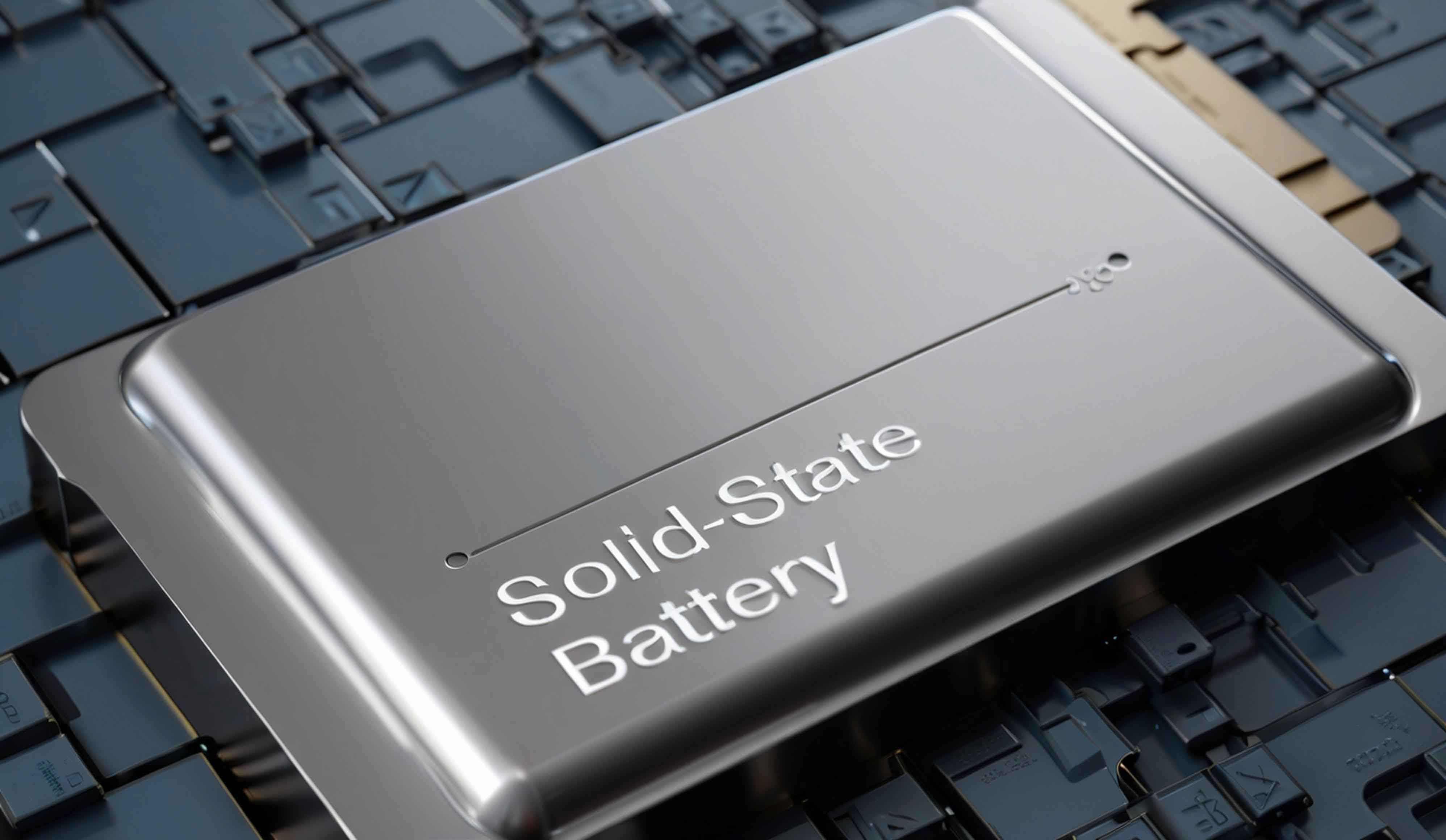
Based on electrolyte composition, lithium battery technologies can be classified into three broad categories: liquid electrolyte batteries, hybrid solid-liquid electrolyte batteries, and all-solid electrolyte batteries. Liquid electrolyte batteries contain only liquid electrolytes, such as organic electrolytes, aqueous electrolytes, or gel electrolytes. Hybrid solid-liquid electrolyte batteries incorporate both solid and liquid electrolytes, including semi-solid, quasi-solid, and solid electrolyte batteries. All-solid electrolyte batteries exclusively use solid electrolytes, which can be further divided into oxide-based, sulfide-based, polymer-based, and composite electrolyte solid-state batteries. This classification underscores the diversity in solid-state battery architectures, each with unique material and interface challenges.
The heart of any solid-state battery is the solid electrolyte, which must exhibit high ionic conductivity to facilitate efficient ion transport. Solid electrolytes are broadly categorized into oxides, sulfides, and polymers. Oxide solid electrolytes include perovskite-type, NASICON-type, LiSICON-type, garnet-type, and amorphous oxides like LIPON. For instance, Li1+xAlxTi2-x(PO4)3 (LATP) and Li1+xAlxGe2-x(PO4)3 (LAGP) have been extensively studied. LATP can achieve a room-temperature ionic conductivity of up to 7 × 10⁻⁴ S/cm, while garnet-type Li7La3Zr2O12 (LLZO) doped with Ta can reach around 10−3 S/cm. The ionic conductivity $\sigma$ of these materials is often described by the Arrhenius equation: $$\sigma = \sigma_0 \exp\left(-\frac{E_a}{kT}\right)$$ where $\sigma_0$ is the pre-exponential factor, $E_a$ is the activation energy, $k$ is Boltzmann’s constant, and $T$ is temperature. This relationship highlights the temperature dependence critical for solid-state battery performance.
| Electrolyte Type | Example Material | Room-Temperature Ionic Conductivity (S/cm) | Key Characteristics |
|---|---|---|---|
| Oxide | LATP (Li1.3Al0.3Ti1.7(PO4)3) | ~7 × 10⁻⁴ | High stability, moderate conductivity |
| Oxide | LLZO (Li7La3Zr2O12) | ~3 × 10⁻⁴ | Garnet structure, wide electrochemical window |
| Sulfide | LGPS (Li10GeP2S12) | ~1.2 × 10⁻² | Very high conductivity, moisture-sensitive |
| Sulfide | Li9.54Si1.74P1.44S11.7Cl0.3 | ~2.5 × 10⁻² | Highest reported conductivity |
| Polymer | PEO-LiTFSI | ~1 × 10⁻³ at 60°C | Flexible, low oxidation stability |
| Composite | Polymer-inorganic blends | Varies (e.g., ~0.22 × 10⁻³) | Improved mechanical and ionic properties |
Sulfide solid electrolytes are particularly notable for their exceptionally high ionic conductivities, often exceeding 10 mS/cm at room temperature. For example, Li10GeP2S12 (LGPS) shows a conductivity of 1.2 × 10⁻² S/cm at 27°C, while Li9.54Si1.74P1.44S11.7Cl0.3 achieves a remarkable 2.5 × 10⁻² S/cm. However, these materials are highly sensitive to moisture, reacting with water vapor to produce toxic H2S gas, necessitating dry processing environments. The ionic conductivity in sulfides can be modeled using the Nernst-Einstein relation: $$\sigma = \frac{n q^2 D}{kT}$$ where $n$ is the charge carrier density, $q$ is the charge, $D$ is the diffusion coefficient, $k$ is Boltzmann’s constant, and $T$ is temperature. This underscores the importance of optimizing carrier mobility in solid-state battery electrolytes.
Polymer solid electrolytes, such as poly(ethylene oxide) (PEO) and poly(propylene oxide) (PPO), offer advantages like flexibility and ease of processing. Their ionic conductivity typically reaches around 1 mS/cm at elevated temperatures (e.g., 60°C), but they suffer from low oxidation stability (<3.9 V) and poor dendrite suppression. To address these issues, polymer-inorganic composite electrolytes have emerged, combining the benefits of both components. For instance, composite electrolytes can achieve room-temperature conductivities of 0.22 mS/cm while enhancing mechanical strength. The development of such hybrids is crucial for advancing solid-state battery technology toward practical applications.
In a solid-state battery, the choice of electrode materials is equally critical. Research focuses on interfacing various cathode and anode materials with solid electrolytes to understand and mitigate issues like interfacial reactions, structural evolution, and volume changes. Common cathode materials include high-nickel NMC, LiCoO2, and Li-rich manganese-based oxides, while anodes range from metallic lithium to silicon-based materials (e.g., nano-silicon or micro-silicon composites). The interaction at the solid-solid interface poses significant challenges, such as poor physical contact, formation of resistive interphases, and space-charge effects that impede ion transport. The interfacial resistance $R_{\text{int}}$ can be expressed as: $$R_{\text{int}} = \frac{\delta}{\sigma_{\text{eff}}}$$ where $\delta$ is the interfacial layer thickness and $\sigma_{\text{eff}}$ is the effective conductivity. Minimizing $R_{\text{int}}$ is essential for high-performance solid-state batteries.
All-solid-state batteries represent the ultimate goal, where no liquid electrolyte is present. They can be categorized based on the electrolyte type: polymer, oxide, or sulfide-based. Polymer all-solid-state batteries, using PEO-based electrolytes, have been commercialized in niche applications but are limited by low oxidation stability and dendrite growth at temperatures above 60°C. Oxide all-solid-state batteries, such as those with LiPON thin films, are produced in small formats but face scalability issues due to brittle ceramic membranes and high processing costs. Sulfide all-solid-state batteries have demonstrated promising results, with prototypes achieving energy densities up to 400 Wh/kg and over 800 cycles under pressure. However, challenges remain in cycling under low pressure, safety, and expansion control. The overall performance of a solid-state battery can be evaluated using metrics like energy density $E$, given by: $$E = \frac{1}{2} C V^2$$ where $C$ is the capacitance and $V$ is the cell voltage, though in practice, it depends on specific capacity and operational voltage.
| Battery Type | Typical Energy Density (Wh/kg) | Cycle Life (Cycles) | Key Challenges |
|---|---|---|---|
| Polymer All-Solid-State | ~150-200 | ~500-1000 | Low voltage stability, dendrite growth |
| Oxide All-Solid-State | ~250-300 | ~300-500 | Brittleness, high interface resistance |
| Sulfide All-Solid-State | ~350-400 | ~800-1000 | Moisture sensitivity, pressure requirements |
| Hybrid Solid-Liquid | ~300-360 | ~800+ | Optimizing solid-liquid ratio |
Hybrid solid-liquid electrolyte batteries, which contain both solid and liquid components, offer a pragmatic intermediate solution. These include semi-solid, quasi-solid, and solid electrolyte batteries, with liquid content typically between 1 wt% and 10 wt%. They can be fabricated by coating electrode particles with solid electrolytes, adding solid electrolyte powders to separators, or converting liquid electrolytes in situ via chemical or electrochemical reactions. For example, the “in-situ solidification” technique involves injecting liquid electrolyte into a cell and then transforming it partially or fully into solid electrolyte, addressing interface contact and dendrite issues. Such hybrid solid-state batteries have achieved energy densities of 360 Wh/kg, cycle lives exceeding 800 cycles, and passed safety tests like nail penetration. This approach leverages existing manufacturing infrastructure, making it a near-term commercial pathway for solid-state battery adoption.
From a global research perspective, the solid-state battery field has seen exponential growth over the past decade. Between 2010 and 2019, the number of Web of Science (WoS) publications surged, with a particular emphasis on contributions from various regions. The table below summarizes the top countries in terms of output and impact, reflecting the intense competition and collaboration in solid-state battery research. It is clear that research on solid-state batteries is a worldwide endeavor, with significant investments in Europe, Japan, the United States, and South Korea through initiatives like Battery2030+, RISING(III), and Battery 500.
| Country/Region | WoS Papers (2010-2014) | WoS Papers (2015-2019) | Citations (2010-2014) | Citations (2015-2019) | High-Cited Papers (2010-2014) | High-Cited Papers (2015-2019) |
|---|---|---|---|---|---|---|
| World Total | 2,475 | 26,370 | 37,544 | 90,118 | 41 | 91 |
| China | 794 | 3,369 | 11,840 | 44,561 | 5 | 52 |
| United States | 538 | 2,026 | 13,836 | 42,675 | 15 | 42 |
| Japan | 321 | 832 | 8,753 | 27,657 | 4 | 12 |
| Germany | 232 | 807 | 4,226 | 19,270 | 3 | 18 |
| South Korea | 187 | 769 | 3,189 | 22,473 | 4 | 13 |
Looking ahead, the future of solid-state battery technology hinges on overcoming several scientific and engineering hurdles. Key research directions include the discovery of new electrolyte materials with enhanced ionic conductivity and stability, innovative interface engineering strategies to reduce impedance, and advanced electrode designs to accommodate volume changes. Computational methods, such as first-principles calculations and high-throughput screening, will play a vital role in accelerating material discovery. For instance, the search for new solid electrolytes can be guided by parameters like the activation energy $E_a$ and ionic radius, often optimized using machine learning algorithms. The equation for ionic conductivity in disordered systems might involve the Vogel-Fulcher-Tammann relation: $$\sigma = \sigma_0 \exp\left(-\frac{B}{T – T_0}\right)$$ where $B$ and $T_0$ are constants, particularly relevant for polymer-based solid-state batteries.
Moreover, the integration of advanced characterization techniques—such as synchrotron X-ray diffraction, neutron scattering, cryo-electron microscopy, and in situ spectroscopy—will provide deeper insights into interfacial dynamics and degradation mechanisms in solid-state batteries. Safety remains a paramount concern, requiring systematic studies on thermal runaway behavior, gas evolution, and mechanical integrity. The heat generation $Q$ in a solid-state battery during operation can be modeled using: $$Q = I^2 R + I T \frac{\partial E}{\partial T}$$ where $I$ is the current, $R$ is the internal resistance, $T$ is temperature, and $E$ is the cell potential, highlighting the need for thermal management.
In terms of commercialization, hybrid solid-liquid electrolyte solid-state batteries are poised to enter the market within the next 2-3 years, offering improved energy density and safety over conventional lithium-ion batteries. All-solid-state batteries are expected to follow in 6-8 years, pending breakthroughs in material compatibility and scalable fabrication. The development pipeline includes high-nickel cathodes, silicon-carbon anodes, lithium-carbon composite anodes, and novel binders or additives tailored for solid-state systems. Each component must be optimized to meet the stringent demands of electric vehicles and grid storage applications.
To sustain progress, coordinated efforts at national and international levels are essential. Establishing innovation centers or consortia focused on solid-state battery research can foster collaboration between academia, industry, and government agencies. Such initiatives should prioritize fundamental science—like understanding ion transport kinetics across interfaces—while also addressing practical manufacturing challenges. The ultimate goal is to realize solid-state batteries that deliver energy densities exceeding 500 Wh/kg, thousands of cycles, and inherent safety, thereby revolutionizing energy storage.
In conclusion, the journey toward advanced solid-state batteries is a complex yet exhilarating endeavor. As I reflect on the strides made in material science, interface engineering, and cell design, it is evident that solid-state batteries hold immense promise for a sustainable energy future. Continued innovation, supported by robust research frameworks and global cooperation, will be crucial in turning this promise into reality. The evolution of solid-state battery technology is not just an academic pursuit but a critical step toward decarbonizing transportation and power systems worldwide.