
In the pursuit of sustainable building design, the integration of solar systems into architectural elements has emerged as a pivotal strategy. As a researcher focused on building energy efficiency, I have long been fascinated by the potential of solar photovoltaic (PV) systems to serve dual purposes: generating renewable electricity and providing passive cooling benefits through shading. This study delves into the cooling and energy-saving effects of a solar system configured as a shaded roof structure, specifically examining how such an integration can mitigate heat gain and reduce air-conditioning loads in buildings located in hot climates. The solar system, in this context, refers to an array of photovoltaic panels installed above a building’s roof, creating a shaded barrier that intercepts solar radiation before it strikes the roof surface. This configuration not only harnesses solar energy but also acts as a thermal buffer, a concept that is central to optimizing building performance.
The significance of this research stems from the critical role that building roofs play in overall energy consumption. Roofs are the external surfaces most exposed to solar irradiation, particularly in regions with intense sunlight. In hot and humid climates, such as those found in southern China, excessive roof heat gain can lead to elevated indoor temperatures, increased cooling demands, and exacerbated urban heat island effects. Traditional insulation methods are effective but often lack the multifunctional benefits offered by modern solar systems. By integrating a solar system into the roof design, we can potentially transform a passive element into an active contributor to energy savings. This approach aligns with the broader goals of green building and carbon reduction initiatives, making the solar system a cornerstone of innovative architectural solutions.
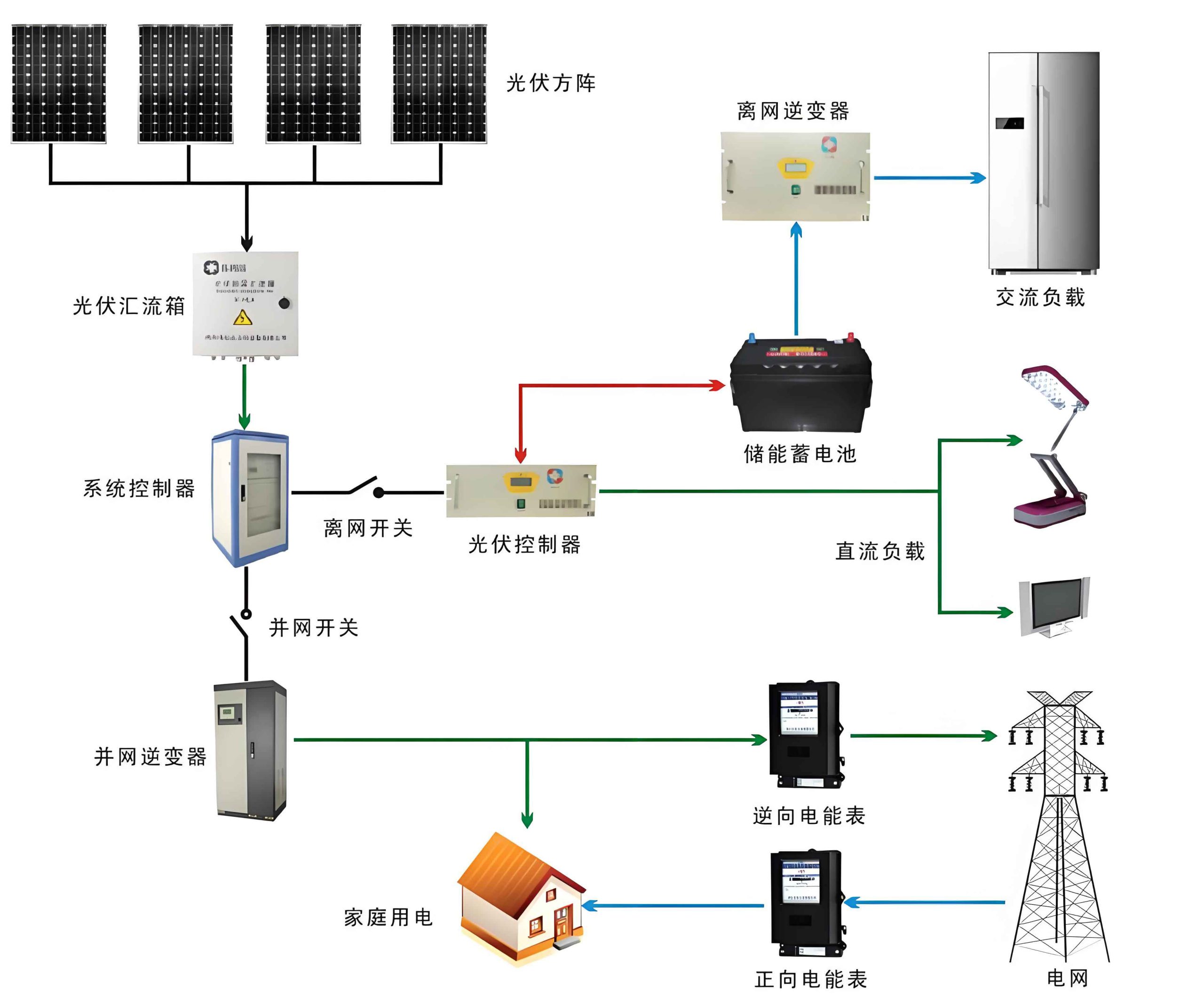
To comprehensively assess the performance of a solar system in this shading role, I combined empirical testing with computational simulation. The experimental phase involved monitoring a real-world office building equipped with a solar photovoltaic shade roof, while the simulation phase utilized a standardized building model to extrapolate findings over an annual cycle. This dual-method approach ensures robustness, allowing us to capture both immediate thermal effects and long-term energy implications. Throughout this investigation, the term “solar system” will be used to denote the integrated photovoltaic shading setup, emphasizing its systemic role in building energy dynamics. The primary metrics of interest include solar radiation attenuation, roof surface temperature reduction, and the consequent decrease in cooling load for top-floor spaces. By quantifying these parameters, we aim to provide actionable insights for architects and engineers seeking to leverage solar systems for enhanced building performance.
Before detailing our methodology, it is essential to review the underlying thermal principles. The heat transfer through a roof can be modeled using fundamental equations. For instance, the solar radiation absorbed by the roof surface is a key driver of heat gain. The net radiation balance can be expressed as:
$$Q_{net} = \alpha \cdot I – \epsilon \cdot \sigma \cdot (T_s^4 – T_{sky}^4)$$
where \(Q_{net}\) is the net radiative heat flux (W/m²), \(\alpha\) is the solar absorptivity of the roof surface, \(I\) is the total solar irradiance incident on the surface (W/m²), \(\epsilon\) is the thermal emissivity, \(\sigma\) is the Stefan-Boltzmann constant (5.67 × 10⁻⁸ W/m²·K⁴), \(T_s\) is the roof surface temperature (K), and \(T_{sky}\) is the effective sky temperature (K). When a solar system is installed as a shade, it intercepts a significant portion of the incident irradiance \(I\), thereby reducing the absorbed energy. The shaded configuration introduces an additional layer that modifies the heat transfer process. The convective and conductive heat transfers also play roles, governed by equations such as:
$$Q_{conv} = h_c \cdot (T_s – T_{air})$$
$$Q_{cond} = U \cdot (T_s – T_{in})$$
Here, \(Q_{conv}\) is convective heat flux (W/m²), \(h_c\) is the convective heat transfer coefficient (W/m²·K), \(T_{air}\) is the ambient air temperature (K), \(Q_{cond}\) is conductive heat flux through the roof (W/m²), \(U\) is the overall heat transfer coefficient of the roof assembly (W/m²·K), and \(T_{in}\) is the indoor temperature (K). The integration of a solar system affects these balances by lowering \(T_s\), which in turn reduces \(Q_{cond}\) and the cooling load required to maintain thermal comfort indoors. This theoretical framework underpins our experimental and simulation work, highlighting how a solar system can disrupt traditional heat flow pathways.
The experimental setup was designed to isolate the effects of the solar system on roof thermal behavior. We selected an office building in a subtropical urban area, characterized by hot summers and mild winters, typical of regions where cooling demands dominate energy use. The building’s roof was partially covered with photovoltaic panels arranged in a tilted array, creating a shaded space beneath them. This solar system was installed at a height of approximately 0.7 meters above the roof surface, allowing for air circulation and enhancing the shading effect. The roof construction consisted of standard layers: a reflective insulation coating, cement mortar, waterproof membranes, and reinforced concrete slab, with details omitted to maintain anonymity as per guidelines. We installed sensors to measure key parameters simultaneously on both shaded and unshaded sections of the roof, ensuring comparable conditions.
Instrumentation included K-type thermocouples for temperature measurement, with an accuracy of ±0.5°C over a range of 0–200°C, and a solar radiometer for measuring total solar irradiance, with an accuracy within 5% up to 2000 W/m². Data were logged at intervals using modular acquisition systems. The test was conducted on a representative summer day, featuring clear skies interspersed with occasional clouds, to capture peak performance conditions. We focused on two primary variables: the solar radiation intensity received at the roof surface and the exterior surface temperature of the roof. By comparing data from the shaded area (beneath the solar system) and an adjacent unshaded area, we could directly quantify the cooling effect attributable to the solar system integration.
In parallel, we developed a computational model to extend our analysis to annual energy savings. Using DesignBuilder software, which interfaces with the EnergyPlus simulation engine, we created a simplified five-story office building model. Each floor had dimensions of 25 m × 20 m × 3.5 m, and we focused on two top-floor rooms, each 5 m × 10 m in area. One room had a roof equipped with a solar system mimic—modeled as a shading device at 0.7 m above the roof—while the other had no shading. The building envelope properties were set according to prevailing energy standards for hot climates, with U-values for walls, roof, and windows optimized for thermal performance. The glazing ratio was set at 0.4, and the building was oriented north-south for minimal solar gain on facades. Internal loads from occupants, lighting, and equipment were scheduled based on typical office patterns, and air-conditioning was modeled with a COP of 3.2, operating during occupied hours to maintain a setpoint temperature. The simulation used typical meteorological year (TMY) data for the region, running 8760 hours to compute cooling loads under varying weather conditions.
The results from our experimental testing are summarized in Table 1, which presents key metrics for the shaded and unshaded roof sections during the test day. The data clearly demonstrate the impact of the solar system on reducing solar exposure and moderating temperature rises.
| Time (Hour) | Solar Radiation – Unshaded (W/m²) | Solar Radiation – Shaded (W/m²) | Radiation Reduction (W/m²) | Roof Temperature – Unshaded (°C) | Roof Temperature – Shaded (°C) | Temperature Reduction (°C) |
|---|---|---|---|---|---|---|
| 09:00 | 650 | 45 | 605 | 35.2 | 31.8 | 3.4 |
| 10:00 | 820 | 58 | 762 | 37.8 | 33.5 | 4.3 |
| 11:00 | 950 | 72 | 878 | 40.5 | 35.9 | 4.6 |
| 12:00 | 1010 | 89 | 921 | 42.7 | 37.6 | 5.1 |
| 13:00 | 1025 | 100 | 925 | 43.8 | 37.7 | 6.1 |
| 14:00 | 980 | 105 | 875 | 43.8 | 38.5 | 5.3 |
| 15:00 | 850 | 113 | 737 | 41.2 | 39.1 | 2.1 |
| 16:00 | 720 | 95 | 625 | 39.5 | 36.4 | 3.1 |
As Table 1 illustrates, the solar system drastically cut the solar radiation reaching the roof surface. At peak insolation around 13:00, the unshaded area received 1025 W/m², while the shaded area received only 100 W/m²—a reduction of 925 W/m², which constitutes approximately 90.2% of the total solar radiation. This attenuation is directly linked to the shading geometry of the solar system, which blocks direct beam radiation and diffuses a portion of the diffuse radiation. Consequently, the roof temperature under the solar system remained significantly lower. The maximum temperature difference occurred at 13:00, with the unshaded roof at 43.8°C and the shaded roof at 37.7°C, a drop of 6.1°C, corresponding to a cooling rate of 14.3%. The temporal shift in peak radiation for the shaded area (15:00 vs. 13:00 for unshaded) is attributed to the tilt orientation of the photovoltaic panels, which alters the angle of incidence during oblique sun angles, slightly enhancing late-afternoon radiation capture but still maintaining substantial shading overall.
To further analyze the thermal performance, we can model the effective heat flux reduction. Using the radiation data, the energy intercepted by the solar system can be estimated as:
$$E_{intercepted} = \int (I_{unshaded} – I_{shaded}) \, dt$$
Over the test day, this integral yields a substantial energy savings, reducing the heat input to the roof. The temperature moderation follows from the reduced net radiation, as per the earlier equation. For instance, applying the net radiation balance to the shaded case, with lower \(I\), results in a lower \(Q_{net}\), which suppresses \(T_s\). This effect is compounded by enhanced convective cooling due to the air gap between the solar system and the roof, which promotes ventilation and heat dissipation. Thus, the solar system acts not just as a radiant barrier but as a holistic thermal management system.
Transitioning to the simulation results, Table 2 presents the monthly cooling loads for the top-floor rooms with and without the solar system shade, as derived from the annual energy simulation. The data underscore the long-term energy-saving potential of integrating a solar system into building roofs.
| Month | Cooling Load – No Shade (kWh) | Cooling Load – With Solar System Shade (kWh) | Load Reduction (kWh) | Reduction per Area (kWh/m²) |
|---|---|---|---|---|
| January | 120.5 | 108.9 | 11.6 | 0.23 |
| February | 185.3 | 167.2 | 18.1 | 0.36 |
| March | 310.7 | 278.4 | 32.3 | 0.65 |
| April | 450.2 | 402.1 | 48.1 | 0.96 |
| May | 620.8 | 555.3 | 65.5 | 1.31 |
| June | 750.1 | 672.9 | 77.2 | 1.54 |
| July | 806.6 | 740.4 | 66.2 | 1.32 |
| August | 780.4 | 715.8 | 64.6 | 1.29 |
| September | 650.9 | 586.5 | 64.4 | 1.29 |
| October | 480.3 | 432.2 | 48.1 | 0.96 |
| November | 280.5 | 252.5 | 28.0 | 0.56 |
| December | 150.2 | 135.3 | 14.9 | 0.30 |
| Annual Total | 5495.9 | 4924.7 | 571.2 | 11.42 |
From Table 2, it is evident that the solar system consistently reduces cooling loads throughout the year, with the most pronounced effects in the summer months. July shows the highest cooling load for both cases, but with the solar system shade, the load drops from 806.6 kWh to 740.4 kWh, a reduction of 66.2 kWh, which translates to 1.32 kWh/m² for the room area. Annually, the total cooling load decreased from 5495.9 kWh to 4924.7 kWh, a savings of 571.2 kWh, representing a 10.48% reduction. This significant energy saving highlights the efficacy of the solar system as a passive cooling measure. The per-area reduction of 11.42 kWh/m² over the year underscores the scalability of this approach for larger buildings or urban districts. Moreover, these savings are achieved solely through the shading effect; when combined with electricity generation from the photovoltaic panels, the overall benefit of the solar system becomes even more compelling, contributing to net-zero energy goals.
To delve deeper into the simulation mechanics, we can express the cooling load reduction analytically. The cooling load for a space is influenced by the heat gain through the roof, which can be approximated as:
$$Q_{cooling} = \frac{U \cdot A \cdot (T_{s,avg} – T_{in})}{\text{COP}} + \text{other gains}$$
where \(Q_{cooling}\) is the cooling energy required (kWh), \(U\) is the roof U-value (W/m²·K), \(A\) is the roof area (m²), \(T_{s,avg}\) is the average exterior roof surface temperature over time (K), \(T_{in}\) is the indoor setpoint temperature (K), and COP is the coefficient of performance of the cooling system. By lowering \(T_{s,avg}\) through shading, the solar system reduces the first term substantially. Our simulation incorporated this via the EnergyPlus engine, which solves detailed heat balance equations hourly. The results validate that even a simple shading device like a solar system can yield double-digit percentage savings, emphasizing the importance of holistic design that considers both active and passive functions.
Discussion of these findings must contextualize them within broader research on solar systems in architecture. Previous studies have often focused on optimizing the tilt and orientation of photovoltaic panels for maximum energy yield, but our work underscores the co-benefit of thermal regulation. For instance, in hot climates, a solar system installed as a roof shade can outperform traditional shading devices by simultaneously generating power and reducing cooling demands. This dual functionality enhances the return on investment for building-integrated photovoltaics (BIPV). Moreover, the cooling effect observed—up to 6.1°C temperature reduction—aligns with studies on green roofs or reflective coatings, but with the added advantage of energy production. The solar system thus represents a multifunctional solution that addresses multiple sustainability criteria: energy efficiency, renewable generation, and urban heat mitigation.
However, the performance of a solar system in this role depends on several factors. The installation height, tilt angle, and spacing of panels affect the shading factor and air circulation. From our data, the 0.7 m height allowed sufficient ventilation, which prevented heat buildup beneath the panels—a critical aspect often overlooked in static shading systems. Additionally, the material properties of the photovoltaic panels, such as their reflectance and emissivity, influence the net radiation exchange. Modern panels with high albedo can further enhance cooling by reflecting more sunlight. Future designs could optimize these parameters using computational fluid dynamics (CFD) simulations to maximize both shading and energy yield. Equation-wise, the shading factor \(SF\) can be defined as:
$$SF = 1 – \frac{I_{shaded}}{I_{unshaded}}$$
which, from our data, approaches 0.9 at peak times. Integrating this into building energy models allows for predictive design, enabling architects to tailor solar system configurations to specific climatic conditions.
The implications for building codes and standards are significant. Current energy standards often prescribe minimum insulation levels or reflectivity requirements, but they rarely account for dynamic shading from renewable energy systems. Our findings suggest that incentives or credits could be awarded for integrating solar systems that provide demonstrable cooling benefits, similar to green building certifications. This could accelerate adoption in regions with high cooling demands, ultimately reducing peak electricity loads and grid strain during hot spells. Furthermore, the cumulative effect of widespread solar system deployment on urban microclimates could be substantial, mitigating heat island effects through reduced waste heat from air conditioning and lower surface temperatures.
In conclusion, this study demonstrates that a solar system, when configured as a shaded roof structure, offers remarkable cooling and energy-saving benefits. Through empirical testing, we observed reductions in solar radiation intake by up to 90.2% and roof temperature drops of up to 6.1°C on a summer day. Simulation results confirmed that these thermal advantages translate to annual cooling load savings of over 10% for top-floor spaces. The solar system thus emerges as a versatile tool in the sustainable architect’s toolkit, capable of addressing energy generation and thermal comfort simultaneously. As we strive for more resilient and efficient buildings, the integration of solar systems into building envelopes will undoubtedly play a pivotal role. Future research could explore hybrid systems combining photovoltaics with phase-change materials or vegetative layers to further enhance performance. Ultimately, the synergy between solar energy harvesting and passive cooling epitomizes the innovative spirit needed to tackle global energy and environmental challenges.
To summarize key quantitative insights, we can present the overall effectiveness metrics in a consolidated formula. The total energy saving attributable to the solar system shading, \(E_{save}\), can be expressed as a function of the shaded area and local climate parameters:
$$E_{save} = A_{roof} \cdot \int_{year} \left( \Delta I(t) \cdot \eta_{shade} + \Delta T(t) \cdot U \right) \, dt$$
where \(A_{roof}\) is the roof area covered by the solar system (m²), \(\Delta I(t)\) is the time-dependent reduction in solar irradiance (W/m²), \(\eta_{shade}\) is an efficiency factor accounting for thermal mass and ventilation effects (dimensionless), \(\Delta T(t)\) is the reduction in roof surface temperature (K), and \(U\) is the roof U-value (W/m²·K). This integrative approach captures both radiant and conductive savings, providing a comprehensive metric for evaluating solar system implementations. As building design evolves, such models will be essential for optimizing the multifunctional potential of solar systems in diverse architectural contexts.