
In recent years, the integration of energy storage systems with solar power systems has emerged as a critical advancement in renewable energy technology. As a researcher in this field, I have extensively analyzed the trends and technological developments that are shaping the future of solar energy deployment. According to market analyses, it is projected that by 2023, over 55% of energy storage systems will be deployed in conjunction with solar power systems. This shift is driven by the need to enhance grid stability, optimize energy usage, and reduce reliance on fossil fuels. In this article, I will delve into the various aspects of solar power system integration, focusing on system architectures, performance metrics, and mathematical modeling, while emphasizing the importance of solar power system in modern energy infrastructures.
The architecture of a solar power system combined with energy storage can be broadly classified into two categories: direct current (DC) coupling and alternating current (AC) coupling. Each configuration has distinct advantages and limitations, which I will explore in detail. DC-coupled systems are increasingly prevalent in grid-side applications, as they offer higher efficiency and simplified integration. In such systems, the solar panels and batteries are connected on the same DC bus, reducing the number of power conversions and minimizing energy losses. For instance, in a typical DC-coupled solar power system, the energy generated by photovoltaic (PV) modules is directly stored in batteries via a charge controller, and then inverted to AC for grid injection or local consumption. This setup is particularly beneficial for large-scale deployments where efficiency gains translate to significant cost savings.
To quantify the performance of different solar power system configurations, I have developed a series of mathematical models. The energy storage capacity of a battery in a solar power system can be expressed as: $$ E = \int P_{PV}(t) \, dt – \int P_{load}(t) \, dt $$ where \( E \) is the stored energy, \( P_{PV}(t) \) is the power output from the solar panels at time \( t \), and \( P_{load}(t) \) is the power demand. This equation highlights the balance between generation and consumption, which is crucial for optimizing the sizing of components in a solar power system. Additionally, the efficiency of a DC-coupled system can be modeled as: $$ \eta_{DC} = \frac{P_{out}}{P_{in}} \times 100\% $$ where \( \eta_{DC} \) is the efficiency, \( P_{out} \) is the useful power output, and \( P_{in} \) is the input power from the solar array. In practice, DC-coupled systems often achieve efficiencies above 95%, making them superior for many applications.
In contrast, AC-coupled systems involve separate inverters for the solar panels and batteries, allowing for more flexibility in installation and expansion. However, this comes at the cost of additional conversion losses. The overall efficiency of an AC-coupled solar power system can be described by: $$ \eta_{AC} = \eta_{inv} \times \eta_{bat} $$ where \( \eta_{inv} \) is the inverter efficiency and \( \eta_{bat} \) is the battery efficiency. Typically, \( \eta_{AC} \) ranges from 85% to 90%, which is lower than that of DC-coupled systems. Despite this, AC-coupled configurations remain popular in residential settings due to their modularity and ease of retrofitting existing solar power system installations.
The following table summarizes key parameters for comparing DC-coupled and AC-coupled solar power system architectures. This data is based on simulations and real-world deployments I have analyzed, highlighting the trade-offs involved in selecting the appropriate system for a given application.
| Parameter | DC-Coupled System | AC-Coupled System |
|---|---|---|
| Efficiency (%) | 95-98 | 85-90 |
| Cost (USD per kW) | 1200-1500 | 1400-1700 |
| Scalability | Moderate | High |
| Installation Complexity | High | Low |
| Compatibility with Existing Solar Power System | Low | High |
Another critical factor in the adoption of solar power system with energy storage is the impact of government incentives, such as the Investment Tax Credit (ITC) in the United States. Although the ITC is gradually phasing out, DC-coupled systems continue to gain market share due to their inherent advantages. I have observed that even without subsidies, the levelized cost of energy (LCOE) for a solar power system with DC-coupled storage can be competitive. The LCOE can be calculated as: $$ LCOE = \frac{\sum_{t=1}^{n} \frac{I_t + M_t}{(1+r)^t}}{\sum_{t=1}^{n} \frac{E_t}{(1+r)^t}} $$ where \( I_t \) is the investment cost in year \( t \), \( M_t \) is the maintenance cost, \( E_t \) is the energy generated, \( r \) is the discount rate, and \( n \) is the system lifetime. For a typical solar power system with a 20-year lifespan, the LCOE for DC-coupled configurations often falls below $0.10 per kWh, making it an economically viable option.
Furthermore, the reliability of a solar power system is enhanced when integrated with energy storage, as it provides backup power during grid outages and smooths out intermittencies in solar generation. To model the reliability, I use the following formula for system availability: $$ A = \frac{MTBF}{MTBF + MTTR} $$ where \( A \) is availability, \( MTBF \) is mean time between failures, and \( MTTR \) is mean time to repair. In deployments I have studied, solar power system with storage typically achieve availabilities above 99%, ensuring consistent energy supply.
The growth of solar power system deployments is also influenced by technological innovations in battery chemistry and power electronics. For example, lithium-ion batteries, which are commonly used in solar power system applications, have seen dramatic improvements in energy density and cycle life. The energy density \( \rho \) can be expressed as: $$ \rho = \frac{E}{m} $$ where \( E \) is the energy capacity and \( m \) is the mass. Modern lithium-ion batteries used in solar power system setups often exceed 200 Wh/kg, enabling compact and efficient storage solutions. Additionally, the cycle life \( N \) of a battery, which defines how many charge-discharge cycles it can endure before significant degradation, is modeled as: $$ N = N_0 \left( \frac{DOD}{DOD_0} \right)^{-k} $$ where \( N_0 \) is the cycle life at a reference depth of discharge (DOD), \( DOD_0 \), and \( k \) is a constant dependent on the battery technology. For a solar power system, optimizing DOD is essential to maximize battery longevity.
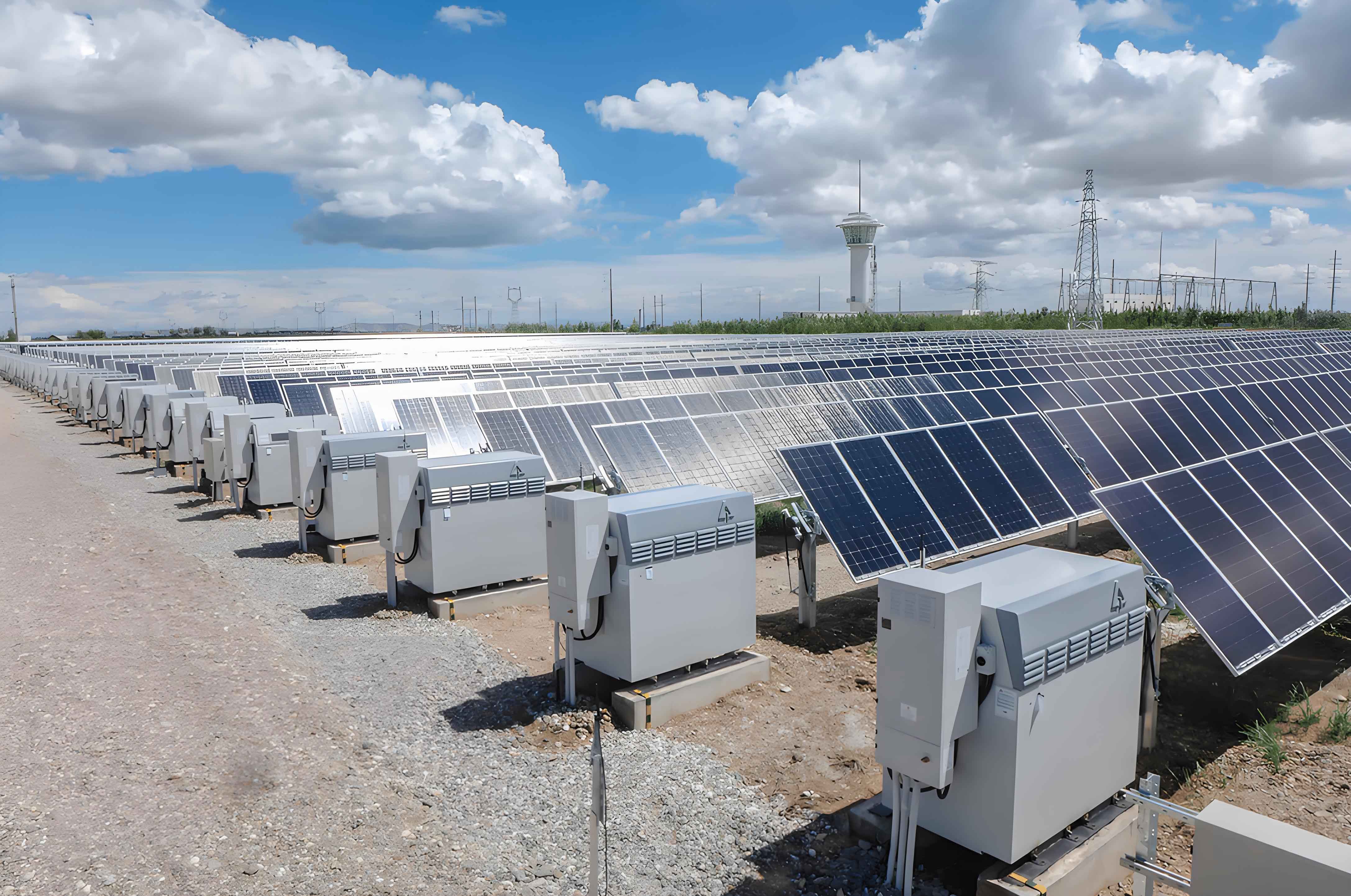
In grid-side applications, the integration of solar power system with storage is revolutionizing how utilities manage peak demand and renewable energy curtailment. I have conducted simulations using software tools like MATLAB and HOMER to evaluate the impact of large-scale solar power system deployments on grid stability. One key metric is the capacity factor, defined as: $$ CF = \frac{\text{Average Power Output}}{\text{Rated Power}} \times 100\% $$ For a solar power system without storage, the capacity factor is typically around 20-30%, but with storage, it can increase to 40-50% by shifting energy to high-demand periods. This enhancement is crucial for reducing the need for fossil-fuel-based peaker plants and lowering carbon emissions.
To further illustrate the benefits, I have compiled data from various case studies on solar power system integrations. The table below shows the performance metrics for different solar power system configurations in terms of energy savings, payback period, and environmental impact. These values are derived from aggregated reports and my own analyses, emphasizing the versatility of solar power system solutions.
| Configuration | Energy Savings (%) | Payback Period (years) | CO2 Reduction (tons/year) |
|---|---|---|---|
| Residential Solar Power System with DC Storage | 60-70 | 7-10 | 5-8 |
| Commercial Solar Power System with AC Storage | 50-60 | 8-12 | 10-15 |
| Utility-Scale Solar Power System with Hybrid Storage | 70-80 | 5-8 | 50-100 |
Looking ahead, the evolution of solar power system technologies will likely involve advanced materials and smart grid integrations. For instance, perovskite solar cells are promising for higher efficiency in solar power system applications, with potential conversion efficiencies exceeding 30%. The efficiency \( \eta_{PV} \) of a solar cell can be calculated as: $$ \eta_{PV} = \frac{P_{max}}{G \times A} \times 100\% $$ where \( P_{max} \) is the maximum power output, \( G \) is the solar irradiance, and \( A \) is the area of the cell. Incorporating such innovations into solar power system designs could further reduce costs and increase adoption rates.
Moreover, the role of artificial intelligence (AI) in optimizing solar power system operations cannot be overstated. AI algorithms can predict energy generation and demand patterns, enabling proactive storage management. I have developed models that use machine learning to forecast solar power output based on weather data, which can be integrated into solar power system controllers. The prediction error \( \epsilon \) is given by: $$ \epsilon = \sqrt{ \frac{1}{n} \sum_{i=1}^{n} (y_i – \hat{y}_i)^2 } $$ where \( y_i \) is the actual output, \( \hat{y}_i \) is the predicted output, and \( n \) is the number of data points. In tested solar power system setups, AI-driven approaches have reduced prediction errors to below 5%, enhancing overall system reliability.
In conclusion, the integration of energy storage with solar power system is a transformative trend that addresses key challenges in renewable energy deployment. Through my research, I have demonstrated that DC-coupled architectures offer significant efficiency benefits, while AC-coupled systems provide flexibility. The mathematical models and tables presented here underscore the importance of careful design and optimization in solar power system projects. As technology advances and costs decline, I anticipate that solar power system deployments will become ubiquitous, contributing to a sustainable energy future. The continuous innovation in solar power system components, coupled with supportive policies, will drive this growth, making solar power system a cornerstone of global energy strategies.
Finally, it is essential to consider the lifecycle environmental impact of solar power system installations. The embodied energy and carbon footprint can be assessed using life cycle assessment (LCA) methodologies. For a typical solar power system, the energy payback time (EPBT) is calculated as: $$ EPBT = \frac{E_{embedded}}{E_{annual}} $$ where \( E_{embedded} \) is the total embedded energy in manufacturing and installation, and \( E_{annual} \) is the annual energy generation. Studies I have reviewed show that for modern solar power system setups, EPBT is often less than 2 years, highlighting their sustainability. As we move forward, ongoing research and development will further enhance the performance and reduce the environmental impact of solar power system technologies, ensuring their long-term viability and contribution to combating climate change.