
In recent years, the rapid advancement of solar power technology has made it essential for both general users and power companies to predict the output of solar power systems to effectively plan and manage electrical grids. The generation capacity of a solar power system is highly dependent on weather conditions, such as solar radiation intensity and ambient temperature, which can cause fluctuations and instability in power supply. This variability poses challenges to grid stability, especially with the increasing integration of renewable energy sources. Therefore, accurate short-term prediction of solar power output is crucial for maintaining supply-demand balance and ensuring reliable operation of the power system. Traditional prediction methods often rely on probabilistic estimates and external factors, leading to suboptimal accuracy. To address this, neural networks, particularly Radial Basis Function Neural Networks (RBFNs), offer a promising approach by leveraging learning capabilities to improve prediction performance. This article explores the use of RBFNs for forecasting the power output of a 20 kW solar power system, focusing on optimizing input parameters to enhance efficiency and accuracy. The proposed method is compared with existing approaches, and results demonstrate significant improvements in prediction precision.
The output power of a solar power system is influenced by various factors, including solar irradiance, ambient temperature, cloud cover, and system-specific parameters. The solar power system’s发电量 can be modeled using the equivalent circuit of a solar cell, which consists of a current source and a diode. The current-voltage (I-V) characteristics are described by the following equations:
$$I = I_g – I_d – I_{rsh}$$
where \(I\) is the output current, \(I_g\) is the photogenerated current, \(I_d\) is the diode current, and \(I_{rsh}\) is the shunt resistor current. The diode current can be expressed as:
$$I_d = I_0 \left[ \exp\left(\frac{q(V + I R_s)}{n k T}\right) – 1 \right]$$
Here, \(I_0\) is the reverse saturation current, \(q\) is the electron charge, \(V\) is the voltage, \(n\) is the ideality factor, \(k\) is Boltzmann’s constant, \(T\) is the temperature, and \(R_s\) is the series resistance. The overall I-V relationship is given by:
$$I = I_g – I_0 \left[ \exp\left(\frac{q(V + I R_s)}{n k T}\right) – 1 \right] – \frac{V + I R_s}{R_{sh}}$$
where \(R_{sh}\) is the shunt resistance. In practical applications, the performance of a solar power system depends on factors like temperature losses, inverter efficiency, and other corrections, such as wiring and surface dirt. The general formula for estimating the energy output \(E_p\) of a solar power system is:
$$E_p = \frac{H K P}{l}$$
where \(H\) is the average solar irradiance on the installation surface in kWh/m², \(K\) is the loss coefficient (accounting for temperature, inverter efficiency, and other factors), \(P\) is the system capacity in kW, and \(l\) is the reference solar irradiance, typically 1 kW/m². The loss coefficient can be decomposed as:
$$K = K_{\text{temp}} \times \eta_{\text{inv}} \times K_{\text{other}}$$
where \(K_{\text{temp}}\) is the temperature loss coefficient, \(\eta_{\text{inv}}\) is the inverter efficiency, and \(K_{\text{other}}\) represents other losses, such as those from wiring and soiling, usually around 95%. For prediction purposes, easily obtainable data like solar irradiance and temperature are used as input parameters, while fixed factors like panel orientation and hardware specifications are not considered primary variables.
To predict the power output of a solar power system, this study employs an RBF Neural Network (RBFN), which is a type of artificial neural network well-suited for nonlinear function approximation. The RBFN consists of three layers: an input layer, a hidden layer with radial basis functions, and an output layer. The activation function for the hidden layer is typically a Gaussian function, defined as:
$$R(\mathbf{x}_p – \mathbf{c}_i) = \exp\left( -\frac{1}{2\sigma^2} \|\mathbf{x}_p – \mathbf{c}_i\|^2 \right)$$
where \(\mathbf{x}_p\) is the input vector for the \(p\)-th sample, \(\mathbf{c}_i\) is the center of the \(i\)-th hidden node, \(\sigma\) is the variance of the Gaussian function, and \(\|\cdot\|\) denotes the Euclidean norm. The output of the RBFN for the \(j\)-th node is computed as:
$$y_j = \sum_{i=1}^{h} w_{ij} \exp\left( -\frac{1}{2\sigma^2} \|\mathbf{x}_p – \mathbf{c}_i\|^2 \right), \quad j = 1, 2, \ldots, n$$
where \(w_{ij}\) is the weight from the hidden layer to the output layer, \(h\) is the number of hidden nodes, and \(n\) is the number of output nodes. The variance \(\sigma\) can be calculated using:
$$\sigma = \frac{1}{P} \sum_{j=1}^{m} (d_j – y_{j})^2$$
where \(d_j\) is the desired output and \(P\) is the number of samples. The RBFN is trained using historical data to learn the mapping between input parameters and the power output of the solar power system. For evaluation, the Mean Absolute Percentage Error (MAPE) is used, defined as:
$$\text{MAPE} = \frac{1}{N} \sum_{i=1}^{N} \left| \frac{I_{i,f} – I_{i,a}}{I_{i,a}} \right| \times 100\%$$
where \(I_{i,f}\) is the forecasted power output, \(I_{i,a}\) is the actual power output, and \(N\) is the number of samples.
The prediction process involves selecting optimal input parameters for the solar power system. In this study, five types of input data combinations were tested to predict the next day’s hourly power output of a 20 kW solar power system installed on a building rooftop. The data included hourly weather information and cloud cover data from 2013 to 2014, with training from January 1, 2013, to December 29, 2014, and testing on December 30 and 31, 2014. The input and output configurations are summarized in Table 1.
| Type | Input Parameters | Output |
|---|---|---|
| Type 1 | Temperature, Solar Irradiance, Morning Peak Time, Afternoon Peak Time | Next Day’s Hourly Power Output |
| Type 2 | Type 1 + Actual Cloud Cover Data | |
| Type 3 | Type 2 + Forecasted Cloud Cover Data | |
| Type 4 | Type 1 + Forecasted Solar Irradiance | |
| Type 5 | Type 1 + Actual Cloud Cover Data + Forecasted Cloud Cover Data + Forecasted Solar Irradiance |
Cloud cover data was obtained from meteorological sources and adjusted to hourly intervals by assuming constant values over 3-hour periods. For example, data from 6:00 to 8:00 used the 6:00 value. Forecasted data, such as solar irradiance and cloud cover, were treated as error-free in simulations to isolate the impact of prediction accuracy. The RBFN was implemented using the Neural Network Toolbox in MATLAB, specifically the newrbe() function for exact RBF networks, which avoids rapid error growth. The simulation environment included Windows 7 OS, an Intel Core i7 processor, 16 GB RAM, and MATLAB R2013a with Neural Network Toolbox Version 8.0.1.
The results of the simulations for each input type are analyzed below. For Type 1, which used basic inputs like temperature and solar irradiance, the MAPE was 14.68%. This indicates that the solar power system prediction was not sufficiently accurate for practical applications, as shown in the forecast curve where deviations from actual output were noticeable, particularly during peak hours. To improve accuracy, additional inputs such as cloud cover data were incorporated in Type 2. However, Type 2 resulted in a MAPE of 16.86%, which was slightly worse than Type 1. This suggests that the inherent errors in cloud cover data might have introduced noise, although the forecast curve showed some approximation improvements. For Type 3, which included forecasted cloud cover data, the MAPE improved to 11.28%, demonstrating that using forecast data can enhance the prediction of the solar power system’s output. Type 4, which utilized forecasted solar irradiance, achieved the best result with a MAPE of 4.37%, indicating a significant improvement due to the critical role of solar irradiance in solar power system generation. Finally, Type 5, with all input data combined, yielded a MAPE of 6.50%, slightly higher than Type 4, likely due to cumulative errors from cloud cover data. The comparison of MAPE values across types is presented in Table 2.
| Input Type | MAPE (%) |
|---|---|
| Type 1 | 14.68 |
| Type 2 | 16.86 |
| Type 3 | 11.28 |
| Type 4 | 4.37 |
| Type 5 | 6.50 |
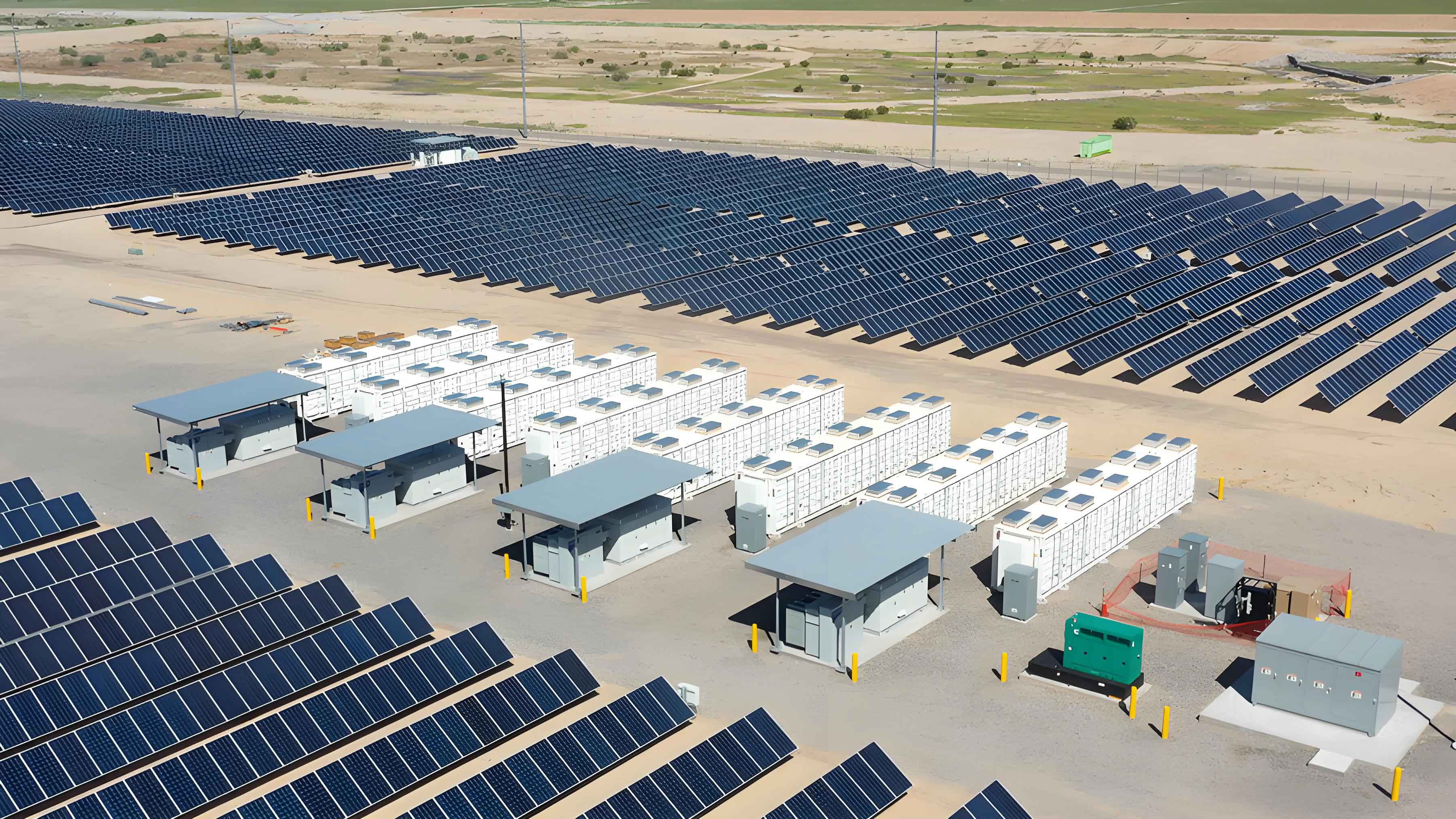
These findings highlight that forecasted solar irradiance is the most influential parameter for predicting the next day’s power output of a solar power system. The use of RBFN allows for effective modeling of the nonlinear relationships in the data, leading to better accuracy. However, the inclusion of peak time inputs did not substantially improve predictions, suggesting that other factors, such as seasonal variations or historical patterns, might need consideration. The solar power system’s performance can be further optimized by integrating energy storage solutions, as illustrated in the following context of solar energy storage integration.
In conclusion, this study demonstrates that RBF Neural Networks can effectively predict the power output of a solar power system by leveraging easily accessible weather data. The best performance was achieved with forecasted solar irradiance inputs, yielding a MAPE of 4.37%. This approach enables practical applications in grid management, where accurate predictions help maintain stability amid the growing adoption of solar power systems. For future work, several directions can be explored. First, the cloud cover data could be processed at finer time resolutions, such as 3-hour intervals, to reduce errors. Second, incorporating fuzzy logic rules could handle uncertainties in weather data, potentially improving prediction accuracy. For instance, fuzzy sets could define cloud cover categories more flexibly, enhancing the RBFN model. Third, other neural network architectures or hybrid models could be tested to capture complex patterns in solar power system data. Additionally, real-time data integration and machine learning techniques like support vector machines might offer further improvements. Ultimately, advancing solar power system prediction methods will support the reliable integration of renewable energy into power grids, contributing to sustainable energy solutions.
The solar power system’s prediction model can be extended to include dynamic factors, such as varying panel efficiency over time or the impact of shading. Moreover, the RBFN approach can be scaled for larger solar power systems or combined with other renewable sources for holistic energy management. As solar power systems become more prevalent, robust prediction tools will be essential for optimizing energy distribution and reducing reliance on fossil fuels. This research underscores the potential of neural networks in enhancing the reliability and efficiency of solar power systems, paving the way for smarter energy infrastructures.