
As we move forward in an era marked by rapid economic growth and increasing environmental concerns, the adoption of renewable energy sources has become paramount. In this context, solar photovoltaic systems stand out as a pivotal technology for sustainable development. From my perspective, understanding the principles behind these systems and recognizing their necessity is crucial for any entity involved in energy production or consumption. This article delves into the intricacies of solar photovoltaic systems, emphasizing their operation, components, applications, and the compelling reasons for their widespread implementation. Throughout, I will use tables and formulas to summarize key points, ensuring a comprehensive exploration of the topic.
The fundamental principle of a solar photovoltaic system is based on the photoelectric effect, where photons from sunlight strike a semiconductor material, typically silicon, and dislodge electrons, generating an electric current. This process can be described by the equation for photon energy: $$E = h\nu$$ where \(E\) is the energy of a photon, \(h\) is Planck’s constant, and \(\nu\) is the frequency of light. In a photovoltaic cell, this energy is harnessed to create a voltage difference across a p-n junction, leading to direct current (DC) output. The overall efficiency of a solar system depends on factors like material properties, sunlight intensity, and temperature. For instance, the maximum power point (MPP) of a photovoltaic module can be expressed as: $$P_{max} = V_{mp} \times I_{mp}$$ where \(V_{mp}\) is the voltage at maximum power and \(I_{mp}\) is the current at maximum power. Modern solar systems incorporate maximum power point tracking (MPPT) algorithms to optimize this output continuously.
To better illustrate the components of a typical solar photovoltaic system, I have summarized them in the table below. A solar system generally consists of several key parts that work together to convert sunlight into usable electricity.
| Component | Function | Typical Specifications |
|---|---|---|
| Photovoltaic Modules | Convert sunlight into DC electricity via the photoelectric effect. | Efficiency: 15-22%, Lifespan: 25+ years, Material: Monocrystalline/Polycrystalline silicon. |
| Grid-Tied Inverter | Convert DC from modules to AC for grid integration, with MPPT control. | Efficiency: >98%, Output: Synchronized with grid voltage/frequency, Features: Anti-islanding protection. |
| Mounting Structure | Support modules at optimal angle for sunlight exposure. | Materials: Aluminum/steel, Tilt angle: Based on latitude, Wind load resistance: As per local codes. |
| Monitoring System | Track performance, energy production, and faults in real-time. | Data logging: Cloud-based, Parameters: Voltage, current, power, energy yield. |
| Electrical Protection | Ensure safety against overcurrent, surges, and grid faults. | Devices: Circuit breakers, surge protectors, grounding systems. |
The heart of any solar system is the photovoltaic module, which comprises multiple solar cells connected in series or parallel. Each cell operates based on the diode equation, which can be modeled as: $$I = I_L – I_0 \left( e^{\frac{V}{nV_T}} – 1 \right)$$ where \(I\) is the output current, \(I_L\) is the light-generated current, \(I_0\) is the reverse saturation current, \(V\) is the voltage, \(n\) is the ideality factor, and \(V_T\) is the thermal voltage. This equation helps in simulating the I-V characteristics of a solar cell, which are crucial for designing efficient solar systems. In practice, manufacturers provide datasheets with parameters like open-circuit voltage (\(V_{oc}\)), short-circuit current (\(I_{sc}\)), and fill factor (FF), defined as: $$FF = \frac{V_{mp} I_{mp}}{V_{oc} I_{sc}}$$ The overall efficiency (\(\eta\)) of a photovoltaic module is given by: $$\eta = \frac{P_{max}}{A \times G} \times 100\%$$ where \(A\) is the area of the module and \(G\) is the solar irradiance in W/m².
When it comes to applications, solar photovoltaic systems exhibit remarkable versatility. They can be deployed in various configurations, such as grid-tied, off-grid, or hybrid systems. A grid-tied solar system, for example, feeds electricity directly into the utility grid, reducing reliance on fossil fuels. The power output from such a system fluctuates with sunlight availability, but advanced inverters ensure synchronization with grid parameters. The AC power injected into the grid can be calculated using: $$P_{AC} = \eta_{inv} \times P_{DC}$$ where \(\eta_{inv}\) is the inverter efficiency and \(P_{DC}\) is the DC power from the photovoltaic array. To highlight the diversity of solar system applications, consider the following table that categorizes common use cases.
| Application Type | Description | Typical Scale |
|---|---|---|
| Residential Rooftop | Installed on house roofs to offset household electricity consumption. | 3-10 kW per system, Net metering common. |
| Commercial and Industrial | Large rooftops or ground-mounted systems for factories, malls, etc. | 50 kW to several MW, High energy savings. |
| Utility-Scale Power Plants | Massive installations in open areas to supply bulk power to the grid. | 10 MW to gigawatt-scale, Often with tracking systems. |
| Remote and Off-Grid | Powering telecommunications, rural electrification, or portable devices. | Small to medium scale, Battery storage integrated. |
| Building-Integrated PV | PV modules incorporated into building materials like windows or facades. | Varies, Aesthetic and functional design. |
The characteristics of a solar system make it an attractive option for many scenarios. For instance, solar systems are silent, have no moving parts, and require minimal maintenance. They produce zero emissions during operation, contributing to cleaner air. Moreover, the modular nature of solar systems allows for easy scalability—additional panels can be added to increase capacity as needed. This flexibility is vital in adapting to growing energy demands. To visualize a typical solar system installation, I find it helpful to reference imagery that showcases real-world implementations. Below is an inserted hyperlink that provides a visual representation of such systems.
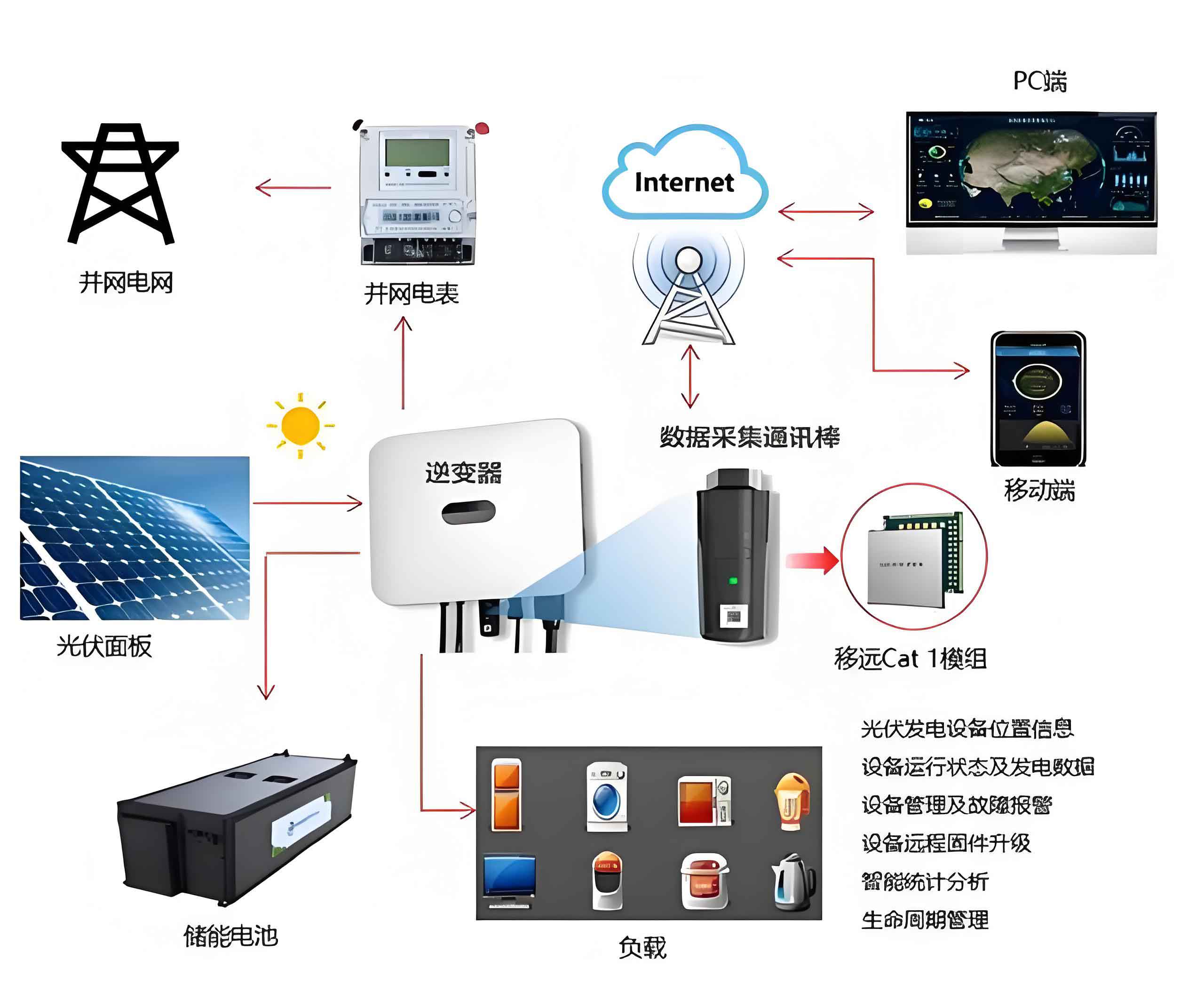
This image illustrates various solar system setups, highlighting how photovoltaic panels can be integrated into different environments. From my experience, seeing these applications reinforces the practicality of solar technology. Beyond visuals, the technical performance of a solar system can be analyzed through energy yield calculations. For a given location, the annual energy production (\(E_{annual}\)) from a solar system can be estimated using: $$E_{annual} = P_{rated} \times H \times PR$$ where \(P_{rated}\) is the rated power of the system in kW, \(H\) is the annual peak sun hours, and \(PR\) is the performance ratio (typically 0.75-0.85). This formula helps in sizing a solar system to meet specific energy needs.
Now, let’s delve into the necessity of implementing solar photovoltaic systems. From my viewpoint, the urgency stems from multiple fronts: energy security, economic factors, and environmental imperatives. Firstly, as global energy demand surges, traditional fossil fuels are becoming increasingly strained. Solar systems offer a decentralized and abundant alternative. For example, the solar energy incident on Earth in one hour is enough to power the world for a year. By harnessing this through distributed solar systems, we can alleviate pressure on the grid and reduce dependency on imported fuels. The table below summarizes key drivers for adopting solar systems.
| Driver | Explanation | Impact |
|---|---|---|
| Energy Independence | Reduces reliance on fossil fuels and enhances local power generation. | Lower vulnerability to price fluctuations and supply disruptions. |
| Environmental Protection | Zero greenhouse gas emissions during operation, mitigating climate change. | Improved air quality and reduced carbon footprint. |
| Economic Benefits | Decreasing costs of PV modules and incentives like tax credits or feed-in tariffs. | Lower electricity bills and job creation in the renewable sector. |
| Technological Advancements | Improvements in efficiency, storage, and smart grid integration. | Higher reliability and better grid stability with solar systems. |
| Policy Support | Government mandates and international agreements promoting renewables. | Accelerated deployment of solar systems worldwide. |
From an environmental perspective, the necessity of solar systems is undeniable. The combustion of fossil fuels for electricity generation releases pollutants such as CO₂, SO₂, and NOx, contributing to global warming and health issues. In contrast, a solar system operates cleanly. The carbon footprint of a solar system is primarily from manufacturing, but this is offset within a few years of operation. The net CO₂ savings over the lifespan of a solar system can be quantified as: $$\text{CO}_2 \text{ savings} = E_{total} \times EF_{grid}$$ where \(E_{total}\) is the total electricity generated and \(EF_{grid}\) is the emission factor of the displaced grid electricity (in kg CO₂/kWh). For instance, if a solar system produces 10,000 kWh annually and displaces coal-based power with an emission factor of 0.8 kg CO₂/kWh, the annual savings are 8,000 kg CO₂. Over 25 years, this amounts to 200,000 kg CO₂ avoided—a significant contribution to climate goals.
Economically, solar systems have become increasingly viable. The levelized cost of electricity (LCOE) for solar photovoltaic systems has dropped dramatically in recent years, making it competitive with conventional sources. The LCOE can be calculated using: $$LCOE = \frac{\sum_{t=1}^{n} \frac{I_t + M_t}{(1+r)^t}}{\sum_{t=1}^{n} \frac{E_t}{(1+r)^t}}$$ where \(I_t\) is the investment cost in year \(t\), \(M_t\) is the maintenance cost, \(E_t\) is the electricity generation, \(r\) is the discount rate, and \(n\) is the system lifetime. As per recent data, the LCOE for utility-scale solar systems is now below $0.05 per kWh in many regions, fostering rapid adoption. Additionally, solar systems create local jobs in installation, maintenance, and manufacturing, boosting economies.
In terms of energy security, solar systems enhance grid resilience. Distributed solar systems reduce transmission losses and can provide backup power during outages when coupled with storage. The intermittency of solar power—due to day-night cycles and weather—is often cited as a challenge, but this can be mitigated through grid management, energy storage, and hybrid systems. For example, the integration of batteries with a solar system allows for energy time-shifting, captured by the equation: $$E_{storage} = \eta_{bat} \times \int_{t_{charge}}^{t_{discharge}} P_{surplus}(t) dt$$ where \(\eta_{bat}\) is battery efficiency and \(P_{surplus}\) is the excess power from the solar system. Advances in battery technology, such as lithium-ion and flow batteries, are making solar systems more reliable.
From a societal perspective, the deployment of solar systems aligns with sustainable development goals. In remote or underserved areas, off-grid solar systems provide access to electricity, improving education, healthcare, and quality of life. I have seen cases where a small solar system powers lights, fans, and medical equipment in rural clinics, transforming communities. Moreover, as urbanization intensifies, building-integrated solar systems can turn structures into power generators, reducing the urban heat island effect and promoting green architecture.
To further emphasize the benefits, let’s consider a comparative analysis between solar systems and conventional energy sources. The table below outlines key metrics, showcasing why solar systems are essential for a low-carbon future.
| Metric | Solar Photovoltaic System | Coal-Fired Power Plant | Natural Gas Plant |
|---|---|---|---|
| Carbon Emissions (g CO₂/kWh) | 20-50 (mostly from manufacturing) | 820-1050 | 350-500 |
| Water Usage (L/MWh) | ~100 (for cleaning panels) | ~1800 | ~700 |
| Fuel Cost Variability | Zero fuel cost; sunlight is free | High, subject to market prices | Moderate to high volatility |
| Land Use (m²/GWh/year) | ~2500-5000 (can be dual-use) | ~3000-4000 | ~1000-2000 |
| Noise Pollution | None | Significant from machinery | Moderate |
This comparison underscores the environmental and economic advantages of solar systems. Notably, the land use for solar systems can be optimized through agrivoltaics—where panels are installed above crops, providing shade and reducing water evaporation. Such innovative applications demonstrate the adaptability of solar technology.
In conclusion, the principles of solar photovoltaic systems revolve around harnessing sunlight through the photoelectric effect, with components like modules and inverters enabling efficient energy conversion. The necessity of deploying solar systems is driven by the urgent need to address energy demand, economic constraints, and environmental degradation. From my standpoint, investing in solar systems is not just an option but a imperative for a sustainable future. As technology advances and costs decline, solar systems will play an increasingly central role in global energy portfolios. By embracing this clean energy source, we can pave the way for a resilient and low-carbon world.
To recap, I have explored the solar system from its basic principles to its broad applications, using formulas and tables to elucidate key concepts. The solar system represents a cornerstone of renewable energy, and its implementation is essential for meeting contemporary challenges. Whether through large-scale plants or rooftop installations, every solar system contributes to a cleaner planet. As we continue to innovate, the integration of solar systems with smart grids and storage will further enhance their viability, ensuring that solar energy remains a linchpin in the transition to sustainable power.