
In today’s world, the escalating energy crisis and environmental degradation have prompted a global shift toward renewable energy sources. As a researcher and practitioner in the field, I have witnessed the remarkable evolution of solar power systems, which harness the sun’s abundant energy to generate electricity. Solar photovoltaic (PV) technology, in particular, has emerged as a cornerstone of clean energy solutions, offering a sustainable alternative to fossil fuels. This article delves into the intricacies of solar photovoltaic power generation, exploring its underlying technologies, practical applications, and future potential. Throughout this discussion, I will emphasize the importance of advancing solar power systems to address energy shortages and reduce carbon footprints. By incorporating detailed tables, mathematical formulas, and real-world examples, I aim to provide a comprehensive overview that underscores the transformative impact of solar energy.
The journey of solar power systems began in 1839 with the discovery of the photovoltaic effect, which describes how certain materials generate electric current when exposed to light. Over the decades, advancements in materials science and engineering have significantly improved the efficiency and affordability of solar panels. Today, a typical solar power system comprises photovoltaic cells, controllers, inverters, and energy storage units, working in harmony to convert sunlight into usable electricity. The diversification of solar technologies—ranging from basic solar cells to sophisticated tracking systems—has expanded their applicability across various sectors. In this article, I will examine key aspects of solar photovoltaic technology, including solar cell innovations, maximum power point tracking, concentrator systems, and islanding detection methods. Additionally, I will highlight practical implementations such as standalone, hybrid, and grid-connected systems, as well as integrations in building materials and LED lighting. By the end, it will be clear that solar power systems are not just a niche solution but a vital component of our energy future.
Historical Development and Classification of Solar Power Systems
The evolution of solar power systems can be traced back to the 19th century, but it was not until the mid-20th century that practical applications gained momentum. The first silicon solar cell, developed in 1954, achieved an efficiency of around 6%, paving the way for modern photovoltaic technology. Since then, research has focused on enhancing conversion efficiencies, reducing costs, and improving durability. Solar power systems are broadly classified into photovoltaic (PV) systems, which directly convert light to electricity, and concentrated solar power (CSP) systems, which use mirrors or lenses to focus sunlight for thermal energy generation. In this section, I will focus on PV systems, as they represent the most widespread form of solar energy utilization. The fundamental components of a solar power system include:
- Photovoltaic modules (solar panels)
- Charge controllers
- Inverters for DC to AC conversion
- Battery storage units
- Mounting structures and wiring
These elements work together to capture, convert, and distribute solar energy, making it accessible for residential, commercial, and industrial use. The following table summarizes the key milestones in the development of solar power systems:
| Year | Event | Efficiency Achievement |
|---|---|---|
| 1839 | Discovery of photovoltaic effect by Edmond Becquerel | N/A |
| 1954 | First practical silicon solar cell by Bell Labs | ~6% |
| 1970s | Commercialization of solar panels for space applications | 10-15% |
| 2000s | Advent of thin-film and multi-junction cells | 20-40% |
| 2020s | Research into perovskite and tandem cells | Up to 93% in lab settings |
As illustrated, efficiency gains have been dramatic, driven by innovations in materials and design. The theoretical maximum efficiency for a single-junction solar cell is governed by the Shockley-Queisser limit, which can be expressed as:
$$ \eta_{\text{max}} = \frac{P_{\text{out}}}{P_{\text{in}}} = \frac{J_{\text{sc}} \times V_{\text{oc}} \times FF}{P_{\text{in}}} $$
where \( \eta_{\text{max}} \) is the maximum efficiency, \( P_{\text{out}} \) is the electrical power output, \( P_{\text{in}} \) is the solar power input, \( J_{\text{sc}} \) is the short-circuit current density, \( V_{\text{oc}} \) is the open-circuit voltage, and FF is the fill factor. This formula highlights the interplay between current, voltage, and material properties in determining the performance of a solar power system.
Solar Cell Technology: The Heart of Photovoltaic Systems
At the core of any solar power system is the solar cell, which utilizes the photovoltaic effect to convert photons into electrons. I have worked extensively with various cell technologies, including crystalline silicon, thin-film, and emerging perovskite-based cells. Crystalline silicon cells dominate the market due to their reliability and efficiency, but they face challenges such as high production costs and sensitivity to temperature variations. Thin-film cells, made from materials like cadmium telluride (CdTe) or copper indium gallium selenide (CIGS), offer flexibility and lower costs but generally exhibit lower efficiencies. Recent advancements in multi-junction cells, which stack multiple semiconductor layers, have achieved efficiencies exceeding 40% in laboratory environments by capturing a broader spectrum of sunlight.
The efficiency of a solar cell is influenced by factors like material bandgap, incident light intensity, and operating temperature. The bandgap energy \( E_g \) determines the minimum photon energy required for electron excitation, and it can be related to the open-circuit voltage through:
$$ V_{\text{oc}} = \frac{n k T}{q} \ln\left(1 + \frac{J_{\text{ph}}}{J_0}\right) $$
where \( n \) is the ideality factor, \( k \) is Boltzmann’s constant, \( T \) is temperature, \( q \) is electron charge, \( J_{\text{ph}} \) is photocurrent density, and \( J_0 \) is reverse saturation current density. To optimize a solar power system, engineers must balance these parameters to maximize output while minimizing losses. The table below compares different solar cell technologies based on efficiency, cost, and applications:
| Technology | Average Efficiency (%) | Cost (USD/W) | Common Applications |
|---|---|---|---|
| Monocrystalline Silicon | 18-22 | 0.30-0.50 | Residential rooftops, commercial installations |
| Polycrystalline Silicon | 15-18 | 0.20-0.40 | Utility-scale solar farms |
| Thin-Film (CdTe) | 10-12 | 0.15-0.30 | Building-integrated PV, portable devices |
| Perovskite | 20-25 (lab) | 0.10-0.20 (estimated) | Emerging applications, tandem cells |
| Multi-Junction | 40-47 | 1.00-2.00 | Space satellites, concentrator systems |
Despite progress, challenges like degradation and scalability persist. For instance, perovskite cells suffer from instability under environmental stress, necessitating further research. In my experience, integrating advanced materials into a solar power system can enhance durability and efficiency, but it requires careful consideration of economic and ecological factors.
Photovoltaic Array Maximum Power Point Tracking (MPPT) Technology
One critical aspect of optimizing a solar power system is ensuring that the photovoltaic array operates at its maximum power point (MPP) despite varying conditions like solar irradiance and temperature. MPPT technology dynamically adjusts the electrical operating point of the modules to extract the highest possible power. I have implemented various MPPT algorithms, including perturbation and observation (P&O) and incremental conductance (IncCond), which are widely used in commercial inverters. The power output of a PV array is non-linear and can be modeled as:
$$ P = V \times I $$
where \( P \) is power, \( V \) is voltage, and \( I \) is current. The MPP occurs where the derivative of power with respect to voltage is zero:
$$ \frac{dP}{dV} = 0 $$
This condition ensures that the solar power system adapts to changes, such as cloud cover or shading, to maintain optimal performance.
In practice, MPPT controllers use digital signal processors or microcontrollers to continuously monitor voltage and current, applying algorithms to track the MPP. For example, the P&O method involves perturbing the operating voltage and observing the change in power, then adjusting accordingly. The IncCond method compares the instantaneous conductance (\( I/V \)) to the incremental conductance (\( dI/dV \)) to determine the direction of adjustment. The efficiency of MPPT can be quantified as:
$$ \eta_{\text{MPPT}} = \frac{P_{\text{actual}}}{P_{\text{max}}} \times 100\% $$
where \( P_{\text{actual}} \) is the power harvested with MPPT and \( P_{\text{max}} \) is the theoretical maximum power. Modern solar power systems achieve MPPT efficiencies above 99% under stable conditions, significantly boosting overall energy yield. Below is a summary of common MPPT techniques and their characteristics:
| Algorithm | Complexity | Efficiency | Response Time |
|---|---|---|---|
| Perturb and Observe | Low | High | Fast |
| Incremental Conductance | Medium | Very High | Moderate |
| Fractional Open-Circuit Voltage | Low | Medium | Slow |
| Artificial Intelligence-Based | High | Very High | Fast |
By integrating MPPT into a solar power system, users can maximize energy harvest, especially in regions with fluctuating weather. In my projects, I have seen energy gains of up to 30% compared to systems without MPPT, underscoring its value in both small-scale and utility-scale installations.
Concentrator Photovoltaic (CPV) Technology
To overcome the limitations of low energy density in sunlight, concentrator photovoltaic technology employs optical devices like lenses or mirrors to focus solar radiation onto small, high-efficiency solar cells. This approach allows a solar power system to achieve higher efficiencies while reducing the area of expensive semiconductor material. I have worked with various CPV systems, including low-concentration (LCPV) and high-concentration (HCPV) variants, which use refractive or reflective optics. The concentration ratio \( C \) is a key parameter defined as:
$$ C = \frac{A_{\text{lens}}}{A_{\text{cell}}} $$
where \( A_{\text{lens}} \) is the area of the concentrator and \( A_{\text{cell}} \) is the area of the solar cell. Higher concentration ratios (e.g., 500X or more) can lead to efficiencies exceeding 40%, but they require precise tracking systems to maintain alignment with the sun.
CPV systems often incorporate multi-junction cells that capture different wavelengths of light, further enhancing efficiency. The theoretical efficiency limit for a multi-junction cell under concentration can be derived from detailed balance models, considering the spectrum splitting and current matching between junctions. However, challenges such as thermal management and optical losses must be addressed. The power output of a CPV system can be expressed as:
$$ P_{\text{CPV}} = \eta_{\text{cell}} \times C \times A_{\text{cell}} \times G $$
where \( \eta_{\text{cell}} \) is the cell efficiency, \( C \) is the concentration ratio, \( A_{\text{cell}} \) is the cell area, and \( G \) is the solar irradiance. The following table outlines the types of CPV systems and their typical performance metrics:
| CPV Type | Concentration Ratio | Typical Efficiency (%) | Tracking Requirement |
|---|---|---|---|
| Low-CPV | 2-100X | 18-25 | Seasonal or single-axis |
| High-CPV | 100-1000X | 25-40 | Dual-axis |
| Ultra-High-CPV | >1000X | 40-47 | Precise dual-axis |
In real-world applications, CPV is best suited for regions with high direct normal irradiance (DNI), such as deserts. I have deployed CPV-based solar power systems in arid areas, where they outperformed traditional flat-plate PV by 20-30% in energy production. However, the initial cost and maintenance of tracking systems can be barriers to widespread adoption.
Islanding Detection Technology in Grid-Connected Systems
Islanding occurs when a distributed generation source, like a solar power system, continues to supply power to a section of the grid during a utility outage. This can pose safety risks to maintenance personnel and damage equipment. Islanding detection technology is essential for grid-connected solar power systems to quickly identify and mitigate such events. I have implemented both passive and active detection methods in various projects. Passive methods monitor parameters like voltage, frequency, and harmonic distortions, while active methods inject disturbances into the grid and observe the response. For instance, the frequency shift method deliberately varies the output frequency to force a detectable change during islanding.
The effectiveness of islanding detection can be evaluated using the non-detection zone (NDZ), which represents conditions where the method may fail to identify an island. The NDZ for voltage and frequency can be modeled as:
$$ \frac{\Delta f}{f_n} < \delta_f \quad \text{and} \quad \frac{\Delta V}{V_n} < \delta_v $$
where \( \Delta f \) and \( \Delta V \) are deviations in frequency and voltage, \( f_n \) and \( V_n \) are nominal values, and \( \delta_f \) and \( \delta_v \) are thresholds. Advanced techniques, such as phase-locked loop (PLL) based detection, reduce the NDZ and improve reliability. In a typical solar power system, islanding detection is integrated into the inverter firmware, ensuring compliance with grid codes like IEEE 1547.
To illustrate, the table below compares common islanding detection methods:
| Method | Type | Advantages | Disadvantages |
|---|---|---|---|
| Over/Under Voltage/Frequency | Passive | Simple, low cost | Large NDZ |
| Rate of Change of Frequency (ROCOF) | Passive | Fast response | Sensitive to load changes |
| Active Frequency Drift | Active | Small NDZ | Can cause power quality issues |
| Impedance Measurement | Active | High reliability | Complex implementation |
By incorporating robust islanding detection, a solar power system enhances safety and stability, facilitating greater integration of renewables into the grid. In my experience, combining multiple methods provides the best results, especially in complex network environments.
Practical Applications of Solar Photovoltaic Systems
The versatility of solar power systems allows them to be deployed in diverse settings, from remote rural areas to urban centers. I have been involved in projects spanning standalone, hybrid, and grid-tied configurations, each tailored to specific needs. Standalone solar power systems, for instance, are ideal for off-grid locations like telecommunications towers or agricultural pumps, where they provide reliable electricity without reliance on infrastructure. These systems typically include battery storage to ensure power availability during nighttime or cloudy periods. The design of a standalone system involves sizing the PV array and storage based on load profiles and solar resources, often using software tools like HOMER or PVsyst.
Hybrid solar power systems combine photovoltaics with other energy sources, such as wind turbines or diesel generators, to enhance reliability. In regions with intermittent sunlight, this approach ensures continuous power supply. The optimization of a hybrid system can be formulated as a cost minimization problem:
$$ \min \sum_{t=1}^{T} \left( C_{\text{PV}}(t) + C_{\text{wind}}(t) + C_{\text{diesel}}(t) \right) $$
subject to energy balance constraints, where \( C \) represents the cost of each source over time \( t \). Hybrid systems are particularly valuable in microgrid applications, where they support community resilience.
Grid-connected solar power systems, on the other hand, feed electricity directly into the utility grid, reducing dependence on conventional power plants. These systems use inverters to synchronize with grid frequency and voltage, and they often incorporate net metering to credit excess generation. The capacity of a grid-tied solar power system can range from residential rooftops (3-10 kW) to utility-scale farms (1 MW or more). The following table summarizes the key applications and their typical configurations:
| Application | System Type | Key Components | Benefits |
|---|---|---|---|
| Remote Electrification | Standalone | PV panels, batteries, charge controller | Energy access, reduced emissions |
| Rural Microgrids | Hybrid | PV, wind, diesel, inverter, storage | Reliability, cost savings |
| Urban Rooftops | Grid-Connected | PV array, grid-tie inverter, metering | Lower electricity bills, grid support |
| Utility-Scale Plants | Grid-Connected | Large PV arrays, transformers, SCADA | Bulk power generation, scalability |
In building-integrated photovoltaics (BIPV), solar elements are incorporated into construction materials, such as facades or windows, turning structures into power generators. I have collaborated on BIPV projects where transparent solar cells were used in skyscrapers, contributing to energy efficiency and aesthetic appeal. Similarly, the integration of solar power systems with LED lighting has revolutionized public lighting, offering autonomous operation with minimal maintenance. For example, solar-powered LED streetlights use small PV panels and batteries to provide illumination without grid connection, reducing installation costs and energy consumption.
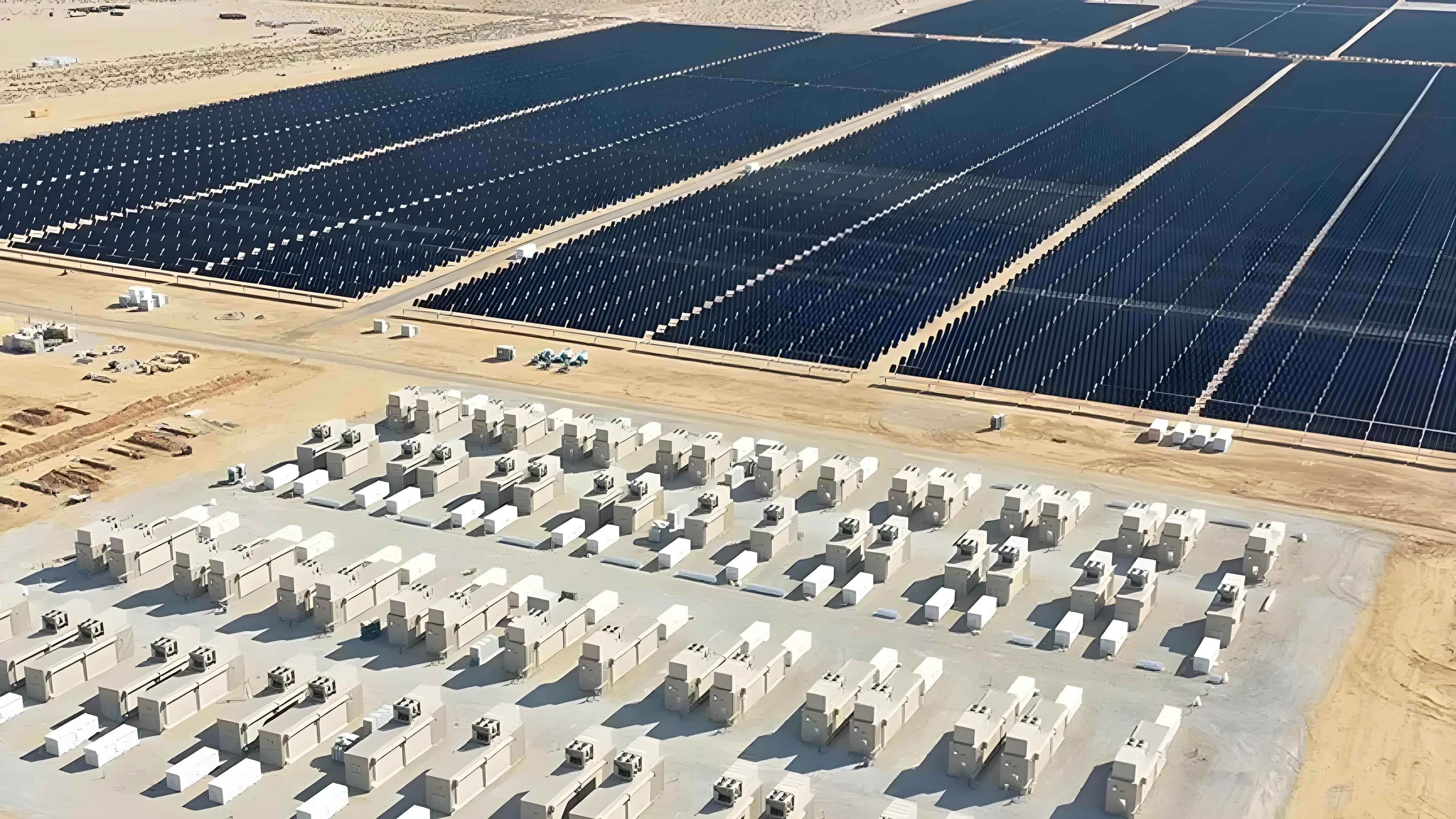
Energy storage is a critical component in many solar power systems, enabling time-shifting of energy use and improving grid stability. The image above illustrates a typical solar battery storage setup, which can be modeled using capacity and efficiency parameters. The state of charge (SOC) of a battery in a solar power system can be described as:
$$ \text{SOC}(t) = \text{SOC}(t-1) + \frac{\eta_{\text{bat}} \cdot P_{\text{charge}}(t) – P_{\text{discharge}}(t)/\eta_{\text{bat}}}{C_{\text{nom}}} $$
where \( \eta_{\text{bat}} \) is battery efficiency, \( P_{\text{charge}} \) and \( P_{\text{discharge}} \) are charging and discharging powers, and \( C_{\text{nom}} \) is nominal capacity. Advances in lithium-ion and flow batteries have made storage more affordable, further propelling the adoption of solar power systems.
Conclusion
In conclusion, solar photovoltaic technology represents a pivotal solution to global energy and environmental challenges. Through my extensive involvement in this field, I have observed how innovations in solar cell design, MPPT, concentrator systems, and islanding detection have collectively enhanced the efficiency and reliability of solar power systems. The practical applications—from standalone setups in remote areas to grid-connected installations in cities—demonstrate the adaptability and scalability of this technology. As research continues to push the boundaries of efficiency, such as with perovskite and tandem cells, the cost of solar energy is expected to decline, making it accessible to broader populations. Moreover, integration with energy storage and smart grid technologies will enable solar power systems to play a central role in the transition to a sustainable energy future. By embracing these advancements, we can mitigate energy shortages, reduce greenhouse gas emissions, and foster economic development. I am confident that solar photovoltaic power generation will remain at the forefront of the renewable energy revolution, driving progress for generations to come.