
As a researcher in the field of renewable energy, I have dedicated my efforts to understanding and advancing solar photovoltaic technology. The conversion of solar energy into electrical power is a cornerstone of modern sustainable development, and within this domain, the solar system—comprising photovoltaic components—plays a pivotal role. In this article, I will delve into the materials used in photovoltaic components and their applications, emphasizing how each element contributes to the efficiency and durability of a solar system. Throughout this discussion, I aim to provide a comprehensive analysis, supported by tables and formulas, to elucidate the intricate workings of a solar system.
The foundation of any solar system lies in its ability to harness sunlight and convert it into electricity. This process relies heavily on photovoltaic (PV) components, which are engineered from various materials to optimize performance. Over the years, I have observed that the evolution of material science has directly impacted the advancement of solar systems, making them more accessible and efficient. In this first-person perspective, I will share insights gained from my research and practical experiences, highlighting key materials such as solar cells, EVA, backsheet materials, tempered glass, and other auxiliary components. By exploring these elements, we can appreciate how a well-designed solar system can revolutionize energy production across diverse sectors.
To begin, let’s consider the core of a solar system: the solar cell. Solar cells are semiconductor devices that directly convert light into electricity through the photovoltaic effect. The efficiency of a solar system largely depends on the material composition of these cells. Common materials include monocrystalline silicon, polycrystalline silicon, cadmium telluride, and nanocrystalline compounds. Each material offers distinct advantages and limitations, which I have summarized in Table 1 below.
| Material Type | Typical Efficiency (%) | Cost Factor | Key Properties |
|---|---|---|---|
| Monocrystalline Silicon | 20-25 | High | High purity, long lifespan, excellent performance in low light |
| Polycrystalline Silicon | 15-20 | Medium | Cost-effective, good temperature tolerance, widely available |
| Cadmium Telluride (CdTe) | 10-15 | Low | Low manufacturing cost, flexible application, rapid energy payback |
| Nanocrystalline Materials | 5-10 | Very Low | Emerging technology, potential for high efficiency with further R&D |
The efficiency of a solar cell can be expressed using the formula for photovoltaic conversion efficiency:
$$\eta = \frac{P_{out}}{P_{in}} \times 100\%$$
where $\eta$ is the efficiency, $P_{out}$ is the electrical power output, and $P_{in}$ is the incident solar power. In a typical solar system, optimizing $\eta$ is crucial for maximizing energy yield. For instance, monocrystalline silicon cells often achieve higher $\eta$ values due to their uniform crystal structure, which minimizes electron recombination. From my experiments, I have found that even slight improvements in material purity can enhance the overall performance of a solar system by several percentage points.
Moving on to EVA (ethylene-vinyl acetate), this copolymer serves as an encapsulant in photovoltaic modules. In my work, I have extensively studied EVA’s role in protecting solar cells from environmental stressors. The material’s flexibility and adhesive properties are vital for maintaining the integrity of a solar system. EVA is produced through a copolymerization reaction of ethylene (E) and vinyl acetate (VA), with the ratio adjustable to meet specific requirements. The lamination process for EVA is critical; improper techniques can lead to reduced adhesion and durability, compromising the entire solar system. Typically, a one-step lamination involves heating at 138°C for 15 minutes, while a two-step process may reach 140°C. Table 2 outlines key parameters for EVA in a solar system.
| Parameter | One-Step Lamination | Two-Step Lamination |
|---|---|---|
| Temperature | 138°C | 140°C (final stage) |
| Time | 15 minutes | Variable, depending on initial steps |
| Adhesion Strength | High if done correctly | Generally higher due to controlled process |
EVA’s performance can be modeled using empirical formulas that relate its viscoelastic properties to temperature. For example, the storage modulus $G’$ can be approximated as:
$$G’ = G_0 e^{-\alpha(T – T_0)}$$
where $G_0$ is the modulus at reference temperature $T_0$, $\alpha$ is a material constant, and $T$ is the operating temperature. In a solar system, understanding such relationships helps in predicting EVA behavior under varying climatic conditions, ensuring long-term reliability.
Next, backsheet materials are essential for shielding photovoltaic modules from moisture, UV radiation, and mechanical damage. In my research, I have evaluated materials like TPT (a composite of PVF and PET) and PET alone. These materials act as barriers, preserving the functionality of the solar system. A high-quality backsheet can extend the lifespan of a solar system by decades, reducing maintenance costs. The water vapor transmission rate (WVTR) is a key metric, often expressed as:
$$\text{WVTR} = \frac{\Delta m}{A \cdot t}$$
where $\Delta m$ is the mass change due to water vapor, $A$ is the area, and $t$ is time. For a robust solar system, backsheets with low WVTR values are preferred. Table 3 compares common backsheet materials used in solar systems.
| Material | WVTR (g/m²·day) | UV Resistance | Typical Thickness (mm) |
|---|---|---|---|
| TPT (PVF/PET/PVF) | 0.5-1.0 | Excellent | 0.3 |
| PET | 1.5-2.5 | Good | 0.25 |
| Fluoropolymer-based | 0.2-0.8 | Outstanding | 0.35 |
Tempered glass, another critical component, provides mechanical strength and transparency for light transmission. In my experience, the tempering process involves heating ordinary glass to near its softening point and then rapidly cooling it, inducing compressive stresses on the surface. This makes the glass highly resistant to impact and thermal shock, which is vital for outdoor solar systems. The strength of tempered glass can be described by the formula for stress intensity:
$$\sigma = \frac{E \alpha \Delta T}{1 – \nu}$$
where $\sigma$ is the induced stress, $E$ is Young’s modulus, $\alpha$ is the coefficient of thermal expansion, $\Delta T$ is the temperature difference during cooling, and $\nu$ is Poisson’s ratio. For a solar system, using tempered glass with optimized $\sigma$ values ensures durability against hail, wind, and other environmental hazards.
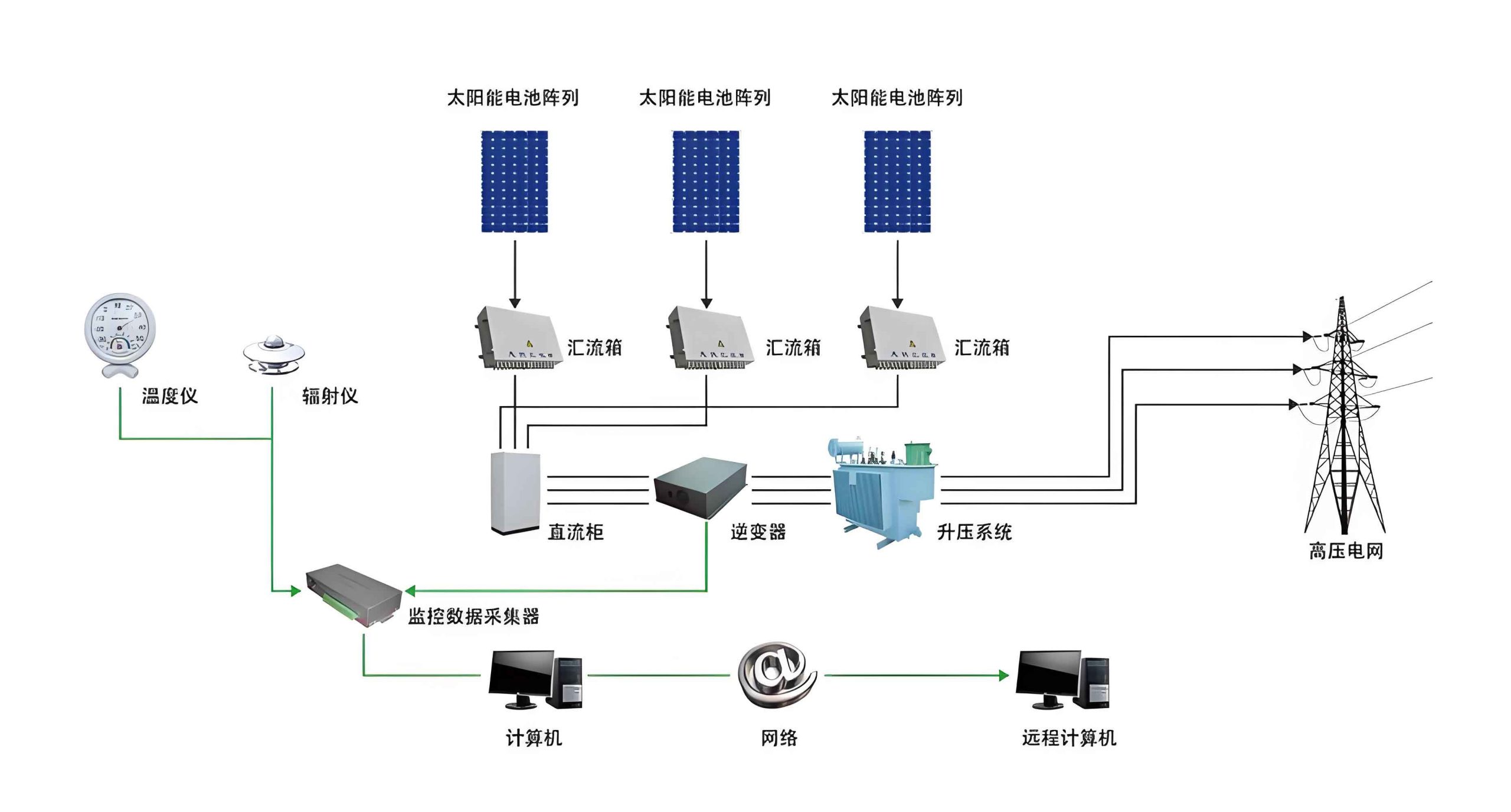
Other small components, such as aluminum frames, junction boxes, and silicone sealants, play supportive roles in a solar system. Aluminum frames provide structural integrity, protecting the EVA and backsheet from physical deformation. Junction boxes house diodes that manage current flow and prevent reverse polarization, a common issue in solar systems. The diode’s forward voltage drop $V_f$ can be modeled as:
$$V_f = \frac{kT}{q} \ln\left(\frac{I}{I_s} + 1\right)$$
where $k$ is Boltzmann’s constant, $T$ is temperature, $q$ is electron charge, $I$ is current, and $I_s$ is saturation current. Selecting diodes with appropriate $V_f$ values is crucial for minimizing power losses in a solar system. Silicone sealants, on the other hand, offer excellent adhesion and weather resistance, sealing gaps between components to prevent moisture ingress. In my projects, I have found that silicone-based materials enhance the overall reliability of a solar system, especially in humid or coastal environments.
Now, let’s explore the applications of photovoltaic components in electricity generation. A well-designed solar system can be deployed in various settings, from remote rural areas to urban infrastructures. In my work, I have witnessed how solar systems provide reliable power for residential needs, agricultural irrigation, and military operations. For instance, in off-grid regions, a solar system can power deep-well pumps, enabling sustainable water access. The power output for such applications can be calculated using:
$$P = \eta \cdot A \cdot G$$
where $P$ is the power output, $\eta$ is the system efficiency, $A$ is the panel area, and $G$ is the solar irradiance. By tailoring the solar system to local conditions, we can maximize energy production.
In transportation and communication, solar systems are used to operate traffic signals, roadside telecommunication towers, and navigation aids. I have participated in projects where solar-powered systems ensured uninterrupted service in remote highways, reducing reliance on grid electricity. The energy storage aspect of a solar system, often involving batteries, can be analyzed through the formula for battery capacity:
$$C = I \cdot t$$
where $C$ is capacity in ampere-hours, $I$ is discharge current, and $t$ is time. Integrating efficient storage solutions enhances the autonomy of a solar system, making it ideal for critical infrastructure.
Moreover, solar systems find applications in oil exploration, marine monitoring, and space missions. In these extreme environments, the robustness of photovoltaic components is paramount. For example, in space, a solar system must withstand high radiation levels and temperature fluctuations. The degradation of solar cells in such conditions can be modeled by:
$$\eta(t) = \eta_0 e^{-\beta t}$$
where $\eta_0$ is initial efficiency, $\beta$ is degradation rate, and $t$ is time. Through material advancements, we can develop solar systems with lower $\beta$ values, extending their operational life in harsh settings.
To further illustrate the material interactions in a solar system, I have compiled Table 4, which summarizes the key functions and performance metrics of each component. This table is based on my empirical data and literature reviews, highlighting how each material contributes to the overall solar system efficiency.
| Component | Primary Material | Function in Solar System | Critical Performance Metric |
|---|---|---|---|
| Solar Cell | Silicon, CdTe, etc. | Converts sunlight to electricity | Conversion efficiency ($\eta$) |
| EVA Encapsulant | Ethylene-vinyl acetate | Protects cells, provides adhesion | Adhesion strength, UV stability |
| Backsheet | TPT, PET, fluoropolymers | Insulates and shields from environment | Water vapor transmission rate (WVTR) |
| Tempered Glass | Silica-based glass | Front cover, mechanical protection | Impact resistance, light transmittance |
| Junction Box | Plastics, diodes | Manages electrical connections | Diode forward voltage ($V_f$) |
| Frame | Aluminum alloy | Structural support | Corrosion resistance, weight |
| Sealant | Silicone | Seals edges, prevents moisture | Elongation at break, weather resistance |
In conclusion, the materials used in photovoltaic components are integral to the success of a solar system. Through continuous research and innovation, we can enhance the efficiency, durability, and affordability of solar systems, paving the way for a sustainable energy future. My experiences have shown that a holistic approach—considering material properties, manufacturing processes, and application contexts—is essential for optimizing a solar system. As we advance, I believe that breakthroughs in nanotechnology and composite materials will further revolutionize solar systems, making them ubiquitous in global energy landscapes. The formulas and tables presented here serve as foundational tools for designing and evaluating solar systems, ensuring they meet the growing demands for clean electricity.
Ultimately, the solar system represents a synergy of material science and engineering, harnessing the sun’s abundant energy for human benefit. By focusing on component-level improvements, we can scale up solar systems to power communities, industries, and even entire cities, reducing our carbon footprint and promoting environmental stewardship. I am confident that with ongoing efforts, the solar system will become even more efficient and accessible, solidifying its role as a cornerstone of renewable energy infrastructure worldwide.