
The proliferation of photovoltaic (PV) systems as a cornerstone of renewable energy generation necessitates advanced monitoring and diagnostic capabilities. Large-scale installations, often comprising hundreds or thousands of solar panels deployed across rooftops or remote fields, present a significant challenge for operation and maintenance (O&M). A critical unsolved problem is the precise, real-time identification of each individual panel’s physical location within the array. When a solar panel underperforms or fails, locating it manually is time-consuming, labor-intensive, and hazardous, especially in vast or difficult-to-access installations. This inefficiency leads to prolonged system downtime, reduced energy yield, and increased O&M costs. Therefore, an automated, cost-effective, and reliable system for solar panel position detection is paramount for ensuring the stability, profitability, and longevity of PV power plants.
Conventional monitoring systems rely on dedicated communication cabling (e.g., RS-485, CAN bus) running from a central inverter to combiner boxes and sometimes to individual solar panels. This approach introduces substantial material costs, complex engineering, and significant installation labor. The added wiring is also susceptible to damage from environmental factors and rodents. To circumvent these drawbacks, this article presents the design and implementation of a novel solar panel geo-location system leveraging Power Line Communication (PLC) technology. The core innovation lies in utilizing the existing DC power cables that connect the solar panels in series as the data communication medium. Each solar panel is equipped with an intelligent node featuring PLC capability, forming a networked mesh. The central inverter, acting as the network coordinator, communicates with all nodes over the power lines, aggregating data on panel voltage, current, and a unique location identifier. This data is then transmitted via 4G LTE to a cloud server, enabling remote monitoring and precise fault localization via a mobile or web application. This system eliminates the need for additional communication wiring, drastically reduces installation complexity and cost, and provides a scalable solution for intelligent PV farm management.
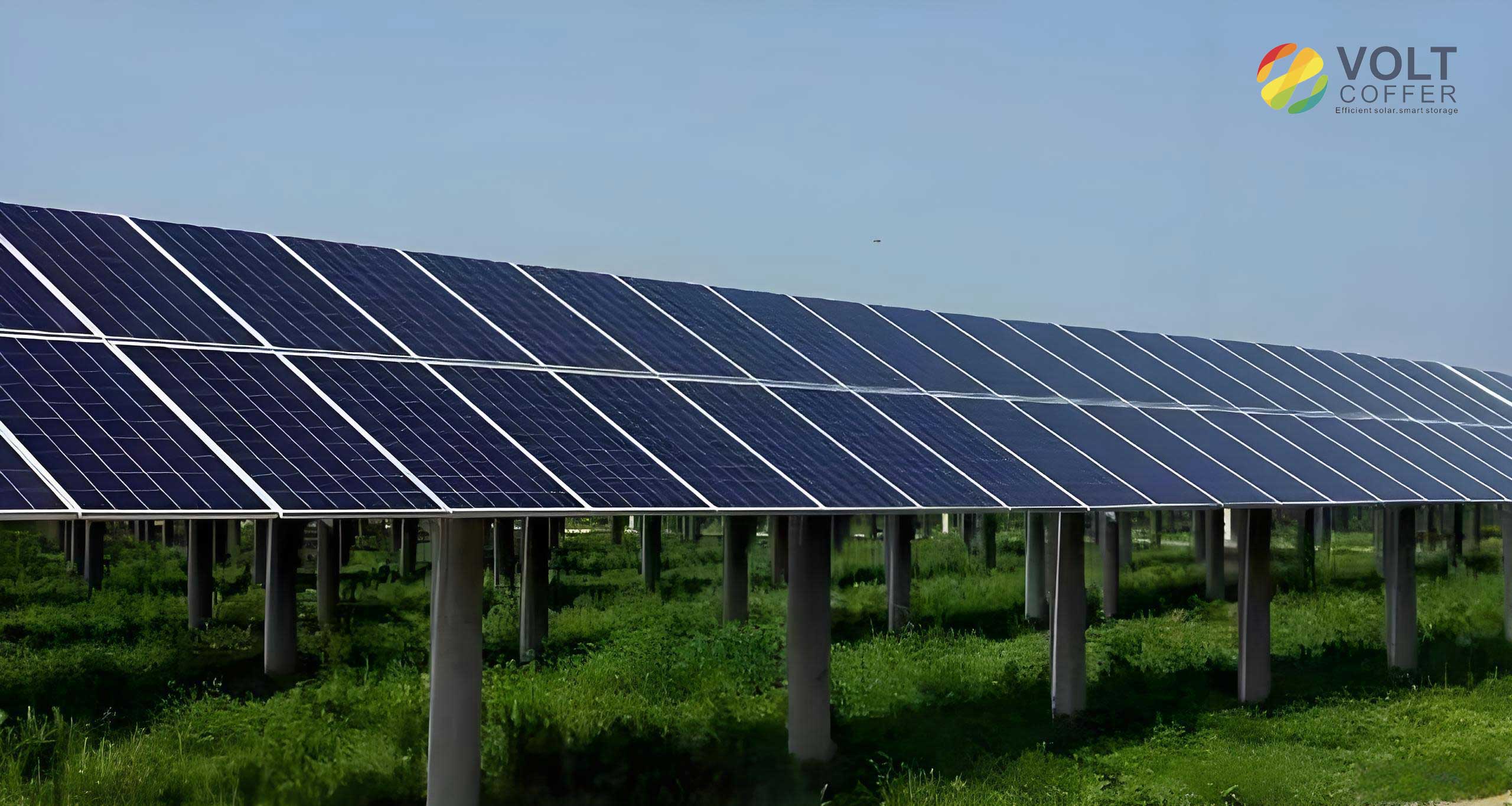
The overall system architecture is hierarchical, designed for robustness and scalability. At the field level, each solar panel (or a small string of panels) is integrated with a Panel Communication Node (PCN). The primary components of a PCN include a DC-DC converter with Maximum Power Point Tracking (MPPT) to optimize energy harvest, and a PLC modem for data communication. Every PCN is programmed with a unique Serial Number (SN) that encodes its physical installation location (e.g., Row, Column, Zone). At the aggregation point, the grid-tie inverter houses the system’s main controller (typically an ARM Cortex-M series microcontroller) and a Central Communication Office (CCO) PLC module. The CCO manages the entire PLC network. Finally, a 4G LTE cellular modem connected to the main controller facilitates bidirectional communication with a remote cloud platform. The data flow is systematic: the CCO polls all PCNs on the DC bus; each PCN responds with its SN and operational telemetry; the inverter’s main controller packages this data and sends it to the cloud via 4G; end-users access a dashboard showing a virtual map of the solar panel array with real-time status and location of each unit.
| System Component | Primary Function | Key Technology |
|---|---|---|
| Panel Communication Node (PCN) | Per-panel MPPT, data acquisition, unique ID | PLC Modem (STA), MCU |
| DC Power Lines | Transmit DC power AND communication signals | Power Line Carrier |
| Inverter CCO Module | Network coordination, data aggregation from all PCNs | PLC Modem (CCO) |
| Inverter Main Controller | System management, data processing, gateway control | STM32F407 (ARM Cortex-M4) |
| 4G LTE Communication Gateway | Long-range data transmission to cloud/server | ME909s-821 Module |
| Cloud Platform & User Interface | Data storage, analytics, visualization, and alerting | Web/Mobile Application |
The theoretical foundation of this system rests on two pillars: Power Line Communication principles and photovoltaic system modeling. PLC operates by modulating high-frequency carrier signals (in the range of tens to hundreds of kHz) with digital data and superimposing them onto the low-frequency (DC or 50/60 Hz AC) power waveform. For a DC system in a solar panel array, the communication signal $s_{PLC}(t)$ can be represented as a sum of orthogonal sub-carriers using Orthogonal Frequency Division Multiplexing (OFDM), a technique robust against frequency-selective attenuation common in power lines:
$$ s_{PLC}(t) = \Re \left\{ \sum_{k=0}^{N-1} X_k \cdot e^{j2\pi f_k t} \right\}, \quad t \in [0, T] $$
where $X_k$ is the complex symbol (using modulation like BPSK or QPSK) for the $k$-th sub-carrier at frequency $f_k$, $N$ is the number of sub-carriers, and $T$ is the symbol period. The signal is then coupled onto the DC line. The channel transfer function $H(f)$ for a power line is highly complex and varies with network topology, cable type, length, and connected loads. A simplified model considers attenuation and noise:
$$ H(f) = G \cdot e^{- \alpha(f) \cdot L} $$
$$ \alpha(f) = a_0 + a_1 \cdot f^{k} $$
Here, $\alpha(f)$ is the frequency-dependent attenuation coefficient, $L$ is the line length, $G$ is a fixed gain, and $a_0$, $a_1$, $k$ are cable-specific parameters. The successful deployment of PLC in a string of solar panels requires careful network design. The system forms a tree topology where the inverter’s CCO is the root, and PCNs are Station (STA) or Proxy Station (PSTA) nodes. PSTAs can relay messages for other STAs, extending network coverage. A key metric is the network’s maximum depth and node count, which the selected PLC protocol must support. For location identification, the system implements a “white-list” polling algorithm. The CCO sequentially queries addresses; each PCN responds with its unique SN. By correlating the response order or address with the installation log, the physical position is mapped. The electrical performance of each solar panel is also monitored. The output power $P_{panel}$ is given by:
$$ P_{panel} = V_{pv} \cdot I_{pv} $$
where $V_{pv}$ and $I_{pv}$ are the panel voltage and current. The PCN’s MPPT algorithm, such as Perturb and Observe (P&O), adjusts the operating point to maximize this power under varying irradiance $G$ and temperature $T_{cell}$:
$$ \frac{dP_{pv}}{dV_{pv}} = 0 \quad \text{at the Maximum Power Point (MPP)} $$
A significant deviation of $V_{pv}$ or $I_{pv}$ from the expected MPP value for a given string current can instantly flag a faulty or shaded solar panel, and its SN provides the exact location for dispatch of maintenance crews.
| Parameter | Symbol | Typical Range/Value in System |
|---|---|---|
| PLC Frequency Band | $f_{PLC}$ | 150 kHz – 500 kHz |
| Modulation Scheme | – | OFDM with BPSK/QPSK |
| Data Rate per Node | $R_b$ | ~1-10 kbps |
| Maximum Network Nodes | $N_{max}$ | > 1000 |
| DC String Voltage | $V_{string}$ | 600V – 1500V |
| Panel Operating Voltage | $V_{mpp}$ | 30V – 45V |
The hardware realization of the PLC communication node is critical for reliable performance in the harsh electrical environment of a PV string. The design centers on a dedicated System-on-Chip (SoC), such as the Hi3921, which integrates a Cortex-M3 processor, PLC analog front-end (AFE), and MAC/PHY layers into a single package. The transmit path begins with the digital signal generated by the SoC. This low-voltage signal must be amplified to overcome line attenuation. A high-voltage differential line driver, like the STLD1, is employed. Its amplification gain is configurable via external resistors to match the required signal level on the power line. If $V_{in}$ is the differential input from the SoC and $A_v$ is the gain of the driver stage, the output to the coupling circuit is:
$$ V_{out\_drive} = A_v \cdot V_{in} $$
This amplified signal is then passed through a coupling circuit, typically involving capacitors and transformers, which blocks the high DC voltage of the solar panel string while allowing the high-frequency PLC signal to pass onto the power lines. On the receive path, the process is reversed. The composite signal from the power line is first coupled back to the low-voltage side. It then passes through a band-pass filter (BPF) to reject out-of-band noise—primarily the DC component and high-frequency interference above the PLC band. A simple passive LC filter can be designed with a center frequency $f_0$ and bandwidth $BW$:
$$ f_0 = \frac{1}{2\pi\sqrt{L_1 C_{12}}} $$
$$ BW \approx \frac{1}{2\pi} \left( \frac{1}{R_{10}C_{12}} + \frac{R_{10}}{L_1} \right) \quad \text{(for a specific topology)} $$
The filtered signal is then fed into the receive pin of the Hi3921’s AFE for demodulation and digital processing. The 4G transmission module (e.g., ME909s-821) interfaces with the inverter’s main MCU via a UART serial interface. It handles all higher-layer network protocols (PPP, TCP/IP), allowing the MCU to send data packets as simple serial messages. The module’s built-in MQTT or HTTP client capability can directly publish panel data to the cloud, offloading processing from the main controller.
The software ecosystem orchestrates the hardware components to achieve seamless communication and control. The firmware in the inverter’s main controller follows a structured state machine. After initialization, it commands the CCO to establish the PLC network. The CCO broadcasts beacons, and PCNs (STAs) associate with it, forming a logical tree. Once the network is stable (indicated by a confirmatory message from the CCO), the controller initiates periodic data collection cycles. It sends a formatted query packet via the CCO. This packet is routed through the PLC network to all PCNs. Each PCN, upon receiving a query addressed to it or as a broadcast, measures its local parameters ($V_{pv}$, $I_{pv}$, temperature) and prepares a response packet containing its SN and this telemetry. The response is sent back through the PLC mesh to the CCO and then to the main controller. The controller aggregates data from all solar panels, performs basic validation, and formats it into a JSON or Protobuf packet for the 4G module. A critical software function is the location mapping algorithm, which converts the unique SN from each PCN into a human-readable and system-understandable coordinate (e.g., “Array_1, String_3, Panel_12”). This mapping is stored in a non-volatile lookup table programmed during installation. The cloud software provides the user interface, displaying a graphical map of the solar panel farm. It applies algorithms to analyze trends, detect anomalies (e.g., a sudden 30% drop in a single panel’s output compared to its neighbors), and generates automated work orders for maintenance, pinpointing the exact physical panel requiring service.
| Field | Size (Bytes) | Description |
|---|---|---|
| Preamble/Sync | 2-4 | Synchronization sequence |
| Frame Control | 2 | Packet type (Query/Response), routing info |
| Destination Address | 2 | Network address of target PCN (or broadcast) |
| Source Address | 2 | Network address of sender (CCO or PCN) |
| Sequence Number | 1 | For matching queries and responses |
| Payload Length | 1 | Length of data field |
| Payload Data | N | Commands or Sensor Data (SN, Voltage, Current) |
| CRC Checksum | 2 | Cyclic Redundancy Check for error detection |
To validate the system’s performance, a comprehensive test was conducted on a prototype installation simulating a small rooftop array. The setup consisted of 24 solar panels configured as two parallel strings of 12 panels each, connected to a central inverter prototype housing the CCO and 4G gateway. The PLC network formation time, defined as the duration from power-on until all 24 PCNs were registered with the CCO, was measured to be under 30 seconds. Subsequent polling cycles for the entire array took approximately 2-3 seconds, which is fully acceptable for monitoring purposes. The communication reliability was tested by intentionally introducing faults, such as disconnecting a single solar panel from the string. The system consistently reported the loss of communication with the specific PCN associated with that panel’s unique SN, and the cloud dashboard immediately updated the panel’s status to “Faulted” and highlighted its position on the virtual map. This demonstrates the core functionality of fault location. Signal integrity was also verified using an oscilloscope with a high-voltage differential probe. The PLC signal superimposed on the DC bus was clearly observable, with a signal-to-noise ratio (SNR) sufficient for robust decoding. The system’s ability to locate panels was tested by physically swapping two solar panels in the array. The cloud interface correctly identified the new physical locations based on the immutable SN of each PCN, confirming that the location mapping is tied to the communication module, not the physical panel’s port.
$$ \text{Communication Reliability} = \left(1 – \frac{N_{failed\_responses}}{N_{total\_queries}} \right) \times 100\% \approx 99.8\% $$
The economic and practical advantages of this PLC-based monitoring system are substantial when compared to traditional wired solutions. The most significant saving is the complete elimination of dedicated data cabling, including the cable itself, conduit, connectors, and the extensive labor required to install and terminate hundreds of meters of wire across a PV farm. This can reduce the balance-of-system (BOS) costs for monitoring by an estimated 40-60%. Furthermore, the system simplifies installation and scaling. Adding more solar panels to an existing string automatically integrates them into the PLC network without new wiring runs. The operational benefits are equally compelling. Rapid fault localization reduces mean time to repair (MTTR) from hours or days to minutes. Maintenance crews can be dispatched directly to the faulty panel with precise coordinates, rather than searching entire strings. Continuous performance monitoring allows for the detection of underperforming solar panels due to soiling, degradation, or partial shading, enabling proactive cleaning or replacement, thereby maximizing the overall energy yield of the installation. This contributes directly to a higher return on investment (ROI) for the PV asset owner.
| Feature/Cost Factor | Traditional Wired Monitoring | PLC-Based Monitoring System |
|---|---|---|
| Communication Cabling | Required (RS-485/CAN). High material & labor cost. | Not required. Uses existing DC power lines. |
| Installation Complexity | High. Separate cable trays, routing, terminations. | Low. Only electrical connections needed. |
| Scalability | Difficult. Adding panels may require new cable runs. | Easy. New panels join the existing PLC network automatically. |
| Fault Location Precision | Often to string level only. | To individual solar panel level. |
| Maintenance Diagnostic Speed | Slow. Manual string checking required. | Instant. Remote, precise fault identification. |
| System Resilience | Vulnerable to communication wire damage. | More robust; communication path is the robust power cable. |
In conclusion, the integration of Power Line Communication technology into photovoltaic array monitoring presents a transformative solution to the critical challenge of solar panel position detection and diagnostic management. This system successfully demonstrates that the DC power lines interconnecting solar panels can serve a dual purpose: transmitting harvested energy and facilitating a robust data communication network. By embedding intelligence at the panel level and leveraging a centralized inverter-based coordinator with wide-area 4G connectivity, the system achieves real-time, per-panel visibility without the prohibitive cost and complexity of auxiliary wiring. The experimental results confirm high reliability in communication, accurate geo-location mapping, and rapid fault reporting. The economic and operational benefits—including drastically reduced installation costs, minimized system downtime, and optimized energy yield—make this approach highly compelling for both new installations and retrofits. As the global fleet of solar panels continues to expand into the gigawatt scale, such smart, cost-effective, and scalable monitoring technologies will be indispensable for ensuring the efficient, reliable, and profitable operation of solar energy assets, thereby accelerating the transition to a sustainable energy future.