
As a professional in the solar energy sector, I have observed the rapid growth and challenges facing photovoltaic (PV) enterprises. The global shift toward renewable energy has positioned solar power as a cornerstone of sustainable development, yet companies in this field must navigate intense competition, evolving policies, and technological advancements. In this article, I will delve into the business competition strategies essential for PV enterprises to thrive, emphasizing how to become the best solar panel company through strategic planning and implementation. Drawing from industry insights, I will incorporate tables and formulas to illustrate key concepts, ensuring a comprehensive understanding of how to achieve leadership in this dynamic market.
The current landscape of the solar industry is shaped by both opportunities and obstacles. Governments worldwide are promoting clean energy initiatives, which drive demand for solar solutions. However, economic fluctuations and market saturation pose significant risks. For instance, many PV enterprises struggle with internal inefficiencies and external pressures, necessitating robust strategic frameworks. Research indicates that a well-defined competition strategy can enhance a company’s resilience and market position. As I explore this topic, I will repeatedly highlight the importance of aiming to be the best solar panel company, as this goal aligns with superior performance and innovation. Below, I outline the core aspects of strategic planning, starting with an analysis of the industry’s research status.
In recent years, academic and practical studies have focused on the strategic needs of PV enterprises. Scholars emphasize that technological innovation is crucial for overcoming policy bottlenecks and market volatility. For example, companies that invest in R&D tend to outperform competitors, as innovation leads to cost reductions and product enhancements. A key metric for evaluating technological progress is the efficiency formula for solar panels: $$ \eta = \frac{P_{\text{out}}}{P_{\text{in}}} \times 100\% $$ where \( \eta \) represents efficiency, \( P_{\text{out}} \) is the output power, and \( P_{\text{in}} \) is the input solar power. Improving this efficiency is fundamental for any aspiring best solar panel company, as it directly impacts customer satisfaction and market share. Moreover, policy support, such as subsidies and tax incentives, plays a vital role in fostering a conducive environment. The following table summarizes the current research trends and their implications for strategic planning:
| Research Focus | Key Findings | Strategic Implications |
|---|---|---|
| Technological Innovation | Enhances product efficiency and reduces costs | Invest in R&D to achieve competitive advantage |
| Policy Adaptation | Government incentives boost market entry | Align strategies with regulatory frameworks |
| Market Dynamics | Global demand is rising but volatile | Diversify markets to mitigate risks |
Understanding the fundamental concepts of business competition strategy is essential for PV enterprises. From a multi-dimensional perspective, strategy involves aligning internal capabilities with external opportunities. In my experience, a holistic approach that integrates resource-based and capability-based views can drive sustained growth. For instance, the best solar panel company often leverages its unique resources, such as proprietary technology or skilled workforce, to create value. This can be expressed through a resource allocation formula: $$ V = R \times C $$ where \( V \) is the value created, \( R \) represents resources, and \( C \) denotes capabilities. By optimizing this equation, companies can enhance their competitive edge. Additionally, strategic planning must address market demands for high-quality services and products. Below, I detail the core components of strategy formulation, emphasizing how it supports the goal of becoming the best solar panel company.
Implementing effective competition strategies requires a structured approach. I will break this down into four key areas: positioning, direction setting, plan formulation, and strategy selection. Each of these elements contributes to building a resilient and forward-thinking enterprise. For example, in positioning, a company must define its long-term scope and customer base to ensure steady revenue growth. This involves analyzing market segments and setting realistic targets, such as annual growth rates. A useful formula for assessing financial health is the return on investment (ROI): $$ \text{ROI} = \frac{\text{Net Profit}}{\text{Total Investment}} \times 100\% $$ Monitoring ROI helps in making informed decisions about resource allocation. As I proceed, I will integrate tables to compare different strategic options and formulas to quantify outcomes, all while reinforcing the vision of excelling as the best solar panel company.
First, in strategic positioning, PV enterprises must clarify their market boundaries and leverage customer insights. This includes setting five- or ten-year goals for profit and market share. For instance, a company aiming to be the best solar panel company might focus on high-growth regions or niche markets. A critical aspect is risk management, particularly in avoiding bad debts and optimizing毛利率 (gross margin). The gross margin formula is: $$ \text{Gross Margin} = \frac{\text{Revenue} – \text{Cost of Goods Sold}}{\text{Revenue}} \times 100\% $$ By maintaining a healthy gross margin, companies can sustain operations and invest in innovation. The table below outlines key positioning factors:
| Positioning Element | Description | Impact on Strategy |
|---|---|---|
| Market Scope | Defining target customers and regions | Enables focused resource use |
| Profit Targets | Setting long-term financial goals | Guides investment and expansion |
| Risk Mitigation | Managing operational and financial risks | Ensures stability and growth |
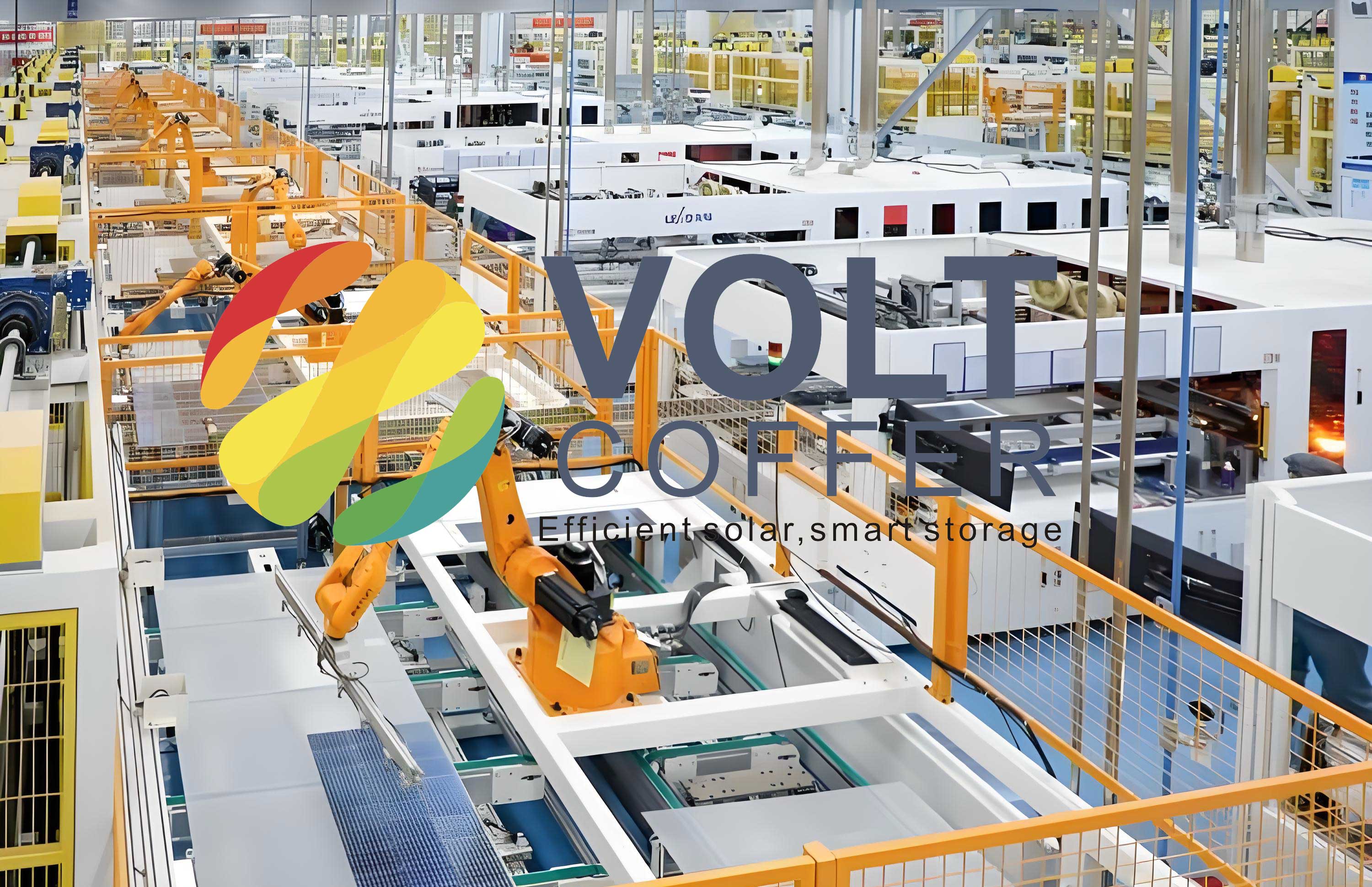
Second, determining the strategic direction involves clustering industrial chains and adapting to market trends. In my view, PV enterprises should foster collaborations across the value chain, from raw material suppliers to end-users. This cluster-based approach enhances efficiency and innovation. For example, establishing production bases in resource-rich areas can reduce costs and improve supply chain resilience. The concept of economies of scale can be modeled with the formula: $$ \text{Average Cost} = \frac{\text{Total Cost}}{\text{Quantity Produced}} $$ As production volume increases, average costs often decrease, allowing a company to compete more effectively. Additionally, talent management is crucial; building a skilled team supports innovation and operational excellence. The best solar panel company typically invests in continuous training and development. Here, I include a visual element to illustrate strategic alignment in cluster development:
Third, formulating strategic plans requires redefining market objectives and embracing transformation. PV enterprises must assess their competitive position and leverage external policies, such as subsidies, to drive growth. For instance, aligning with national energy goals can open up new opportunities. A useful tool for strategic analysis is the SWOT framework (Strengths, Weaknesses, Opportunities, Threats), which can be quantified using a scoring system: $$ S = \sum (\text{Strength Scores}) – \sum (\text{Weakness Scores}) $$ This helps in prioritizing actions. Moreover, companies should focus on product diversification and quality improvements to meet evolving customer needs. The table below compares different plan formulation approaches:
| Plan Type | Key Features | Suitability for PV Enterprises |
|---|---|---|
| Market Expansion | Focuses on entering new regions | High for growth-oriented companies |
| Product Innovation | Emphasizes R&D and new offerings | Essential for long-term competitiveness |
| Policy Integration | Leverages government incentives | Critical in regulated markets |
Fourth, selecting the appropriate business competition strategy is pivotal. I will explore three main types: concentration, differentiation, and cost leadership. Each has distinct applications and benefits for PV enterprises striving to be the best solar panel company.
Starting with the concentration strategy, this involves focusing on niche markets or specific customer segments. For example, a company might specialize in high-efficiency panels for residential use. The key is to achieve cost advantages through targeted efforts. The formula for cost savings in concentration can be: $$ C_s = C_b – C_c $$ where \( C_s \) is cost savings, \( C_b \) is the baseline cost, and \( C_c \) is the concentrated cost. By streamlining operations, companies can offer competitive prices while maintaining quality. Additionally, building strong supplier relationships and investing in advanced technology are vital. The best solar panel company often uses concentration to dominate a segment before expanding.
Next, the differentiation strategy centers on creating unique products that stand out in the market. This could involve superior aesthetics, longer warranties, or integrated smart features. Differentiation helps in building brand loyalty and allowing premium pricing. The value of differentiation can be expressed as: $$ V_d = P_d – P_c $$ where \( V_d \) is the differentiation value, \( P_d \) is the price of differentiated products, and \( P_c \) is the price of commodity products. To succeed, companies must invest in R&D and market research. For instance, developing bifacial panels or flexible modules can cater to diverse applications. The best solar panel company typically excels in differentiation by continuously innovating and responding to customer feedback.
Lastly, the cost leadership strategy aims to become the lowest-cost producer in the industry. This involves optimizing supply chains, scaling production, and minimizing waste. A fundamental formula for cost leadership is the learning curve effect: $$ C_q = C_1 \times Q^{-b} $$ where \( C_q \) is the cost at quantity \( Q \), \( C_1 \) is the initial cost, and \( b \) is the learning rate. By reducing costs, companies can offer attractive prices and gain market share. However, this must not compromise quality; the best solar panel company balances cost efficiency with reliability. Strategies include bulk purchasing, automation, and energy-efficient manufacturing. The table below summarizes the three strategies:
| Strategy | Core Objective | Key Metrics | Risks |
|---|---|---|---|
| Concentration | Dominate a niche market | Market share in segment, customer satisfaction | Limited growth potential |
| Differentiation | Offer unique products | Brand loyalty, price premium | Higher R&D costs |
| Cost Leadership | Achieve lowest costs | Production cost per unit, economies of scale | Price wars, margin pressure |
In implementing these strategies, PV enterprises must also consider integrated approaches. For example, combining differentiation with cost elements can create a hybrid strategy that appeals to broad markets. The best solar panel company often adapts its strategy based on market feedback and performance metrics. A useful performance indicator is the balanced scorecard, which can be quantified as: $$ \text{Performance Score} = w_1 \times \text{Financial} + w_2 \times \text{Customer} + w_3 \times \text{Internal Process} + w_4 \times \text{Learning} $$ where \( w \) represents weights for each perspective. Regular monitoring ensures that strategies remain aligned with goals.
In conclusion, crafting and executing business competition strategies is essential for PV enterprises to achieve sustainable growth. By focusing on strategic positioning, direction setting, plan formulation, and tailored strategy selection, companies can navigate challenges and seize opportunities. Emphasizing the goal of becoming the best solar panel company drives innovation and excellence, leading to enhanced competitiveness and market leadership. Through the use of analytical tools like tables and formulas, enterprises can make data-driven decisions that foster long-term success. As the solar industry evolves, continuous adaptation and strategic refinement will be key to thriving in this vibrant sector.