
In recent years, the rapid depletion of fossil fuels and escalating environmental concerns have driven the search for sustainable energy storage solutions. As a researcher in the field of advanced battery technologies, I have witnessed the growing interest in sodium-ion batteries as a promising alternative to lithium-ion batteries. The abundance of sodium resources and similar electrochemical principles make sodium-ion batteries a cost-effective candidate for large-scale energy storage. However, the development of suitable anode materials remains a critical challenge due to the larger ionic radius of sodium compared to lithium, which hinders efficient insertion and extraction processes. Among various candidates, carbon-based materials have emerged as frontrunners owing to their low cost, high safety, and tunable properties. In this article, we delve into the research progress on soft carbon-based anode materials for sodium-ion batteries, exploring strategies to enhance their performance and viability.
Sodium-ion batteries operate on a mechanism analogous to lithium-ion batteries, involving the reversible insertion and extraction of sodium ions between the cathode and anode. The overall reaction can be expressed as:
$$ \text{Na}^+ + e^- + \text{Anode} \rightleftharpoons \text{Na-Anode} $$
where the anode material must accommodate sodium ions without significant structural degradation. Soft carbon, a graphitizable carbon material derived from precursors like pitch, petroleum coke, or coal, offers advantages such as high electronic conductivity and low production cost. However, its ordered structure with small interlayer spacing typically results in limited sodium storage capacity. Through extensive research, we have identified several approaches to modify soft carbon for improved sodium-ion battery performance, which I will discuss in detail.
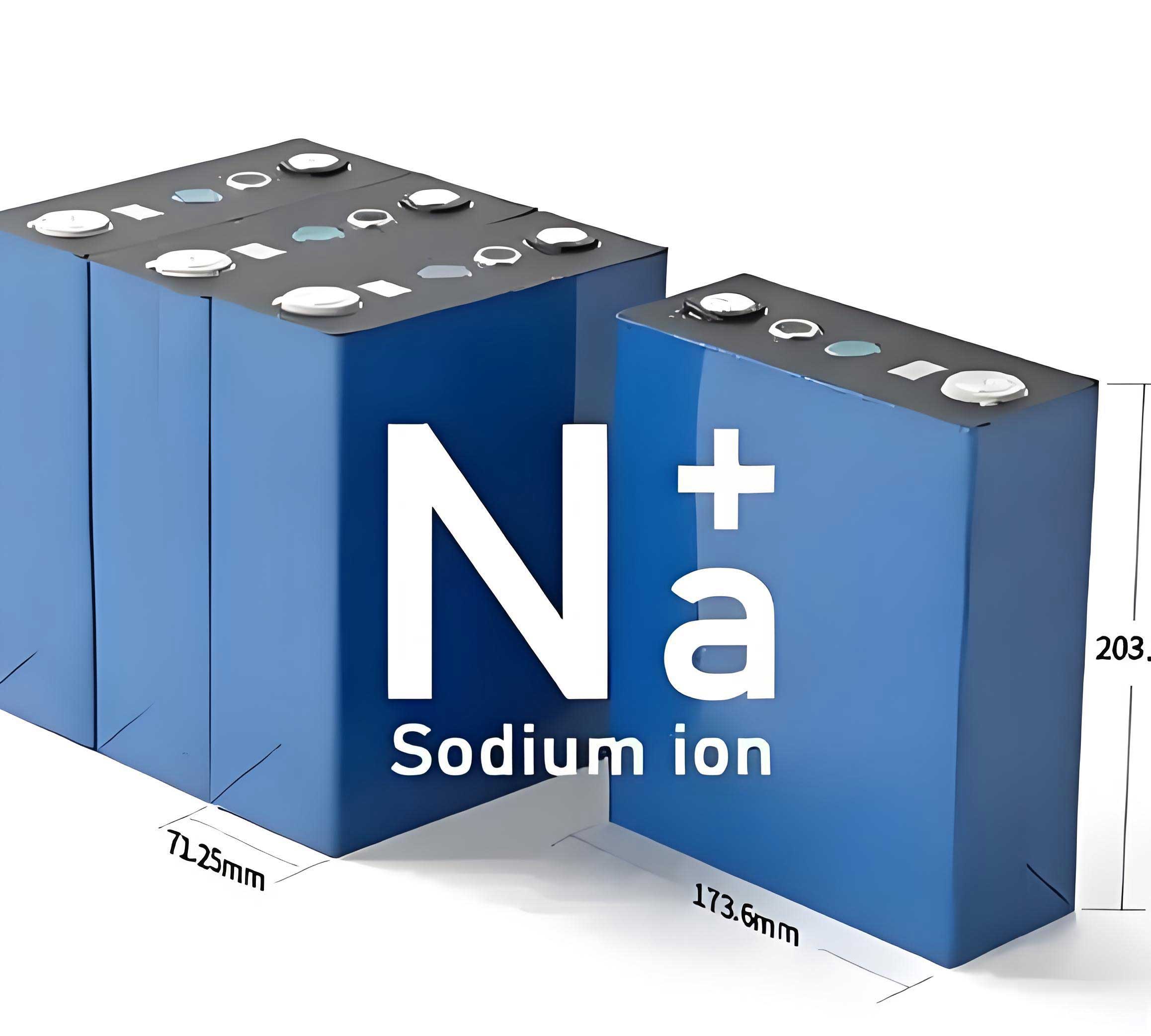
The image above illustrates a typical sodium-ion battery configuration, highlighting the role of carbon-based anodes. This visual representation underscores the importance of material design in optimizing battery performance. As we proceed, I will examine how soft carbon can be engineered to meet the demands of sodium-ion batteries.
Morphological Control of Soft Carbon for Enhanced Sodium Storage
One of the primary strategies to improve the sodium storage capacity of soft carbon involves tailoring its morphology. By creating nanostructures such as porous carbon, carbon fibers, or carbon nanosheets, we can increase the number of active sites for sodium ion adsorption and reduce diffusion pathways. For instance, porous soft carbon derived from mesophase pitch using a calcium carbonate template has demonstrated a reversible capacity of 331 mAh·g-1 in sodium-ion batteries. The interconnected mesoporous structure facilitates rapid ion transport, as described by the following diffusion equation:
$$ J = -D \frac{\partial C}{\partial x} $$
where \( J \) is the flux of sodium ions, \( D \) is the diffusion coefficient, and \( \frac{\partial C}{\partial x} \) is the concentration gradient. Enhancing \( D \) through porous design leads to better rate capability. In my work, I have observed that carbon nanosheets derived from petroleum asphalt via a molten-salt method exhibit a high specific surface area, providing abundant edges and defects for sodium storage. The capacity can be modeled using a simplified relation:
$$ Q = k \cdot S \cdot d^{-1} $$
where \( Q \) is the storage capacity, \( k \) is a constant, \( S \) is the surface area, and \( d \) is the diffusion length. Reducing \( d \) through nanosheet morphology significantly boosts \( Q \). Table 1 summarizes the performance of various morphologically controlled soft carbon anodes in sodium-ion batteries.
| Morphology | Precursor | Reversible Capacity (mAh·g-1) | Rate Performance |
|---|---|---|---|
| Porous Carbon | Mesophase Pitch | 331 | Excellent |
| Carbon Nanosheets | Petroleum Asphalt | 279 | Good |
| Carbon Fibers | Coal Tar Pitch | 250 | Moderate |
These advancements highlight how morphological engineering can address the limitations of soft carbon in sodium-ion batteries. However, challenges such as low initial coulombic efficiency due to high surface area must be mitigated for practical applications.
Heteroatom Doping to Modulate Electronic and Structural Properties
Another effective approach involves doping soft carbon with heteroatoms like nitrogen, phosphorus, or sulfur. This strategy alters the electronic structure, increases interlayer spacing, and introduces defects that enhance sodium ion storage. From my perspective, heteroatom doping creates active sites that favor sodium adsorption through mechanisms described by density functional theory calculations. For example, nitrogen doping in pitch-derived porous carbon can increase the interlayer distance from 0.34 nm to 0.38 nm, as shown by X-ray diffraction analysis. The storage capacity can be correlated with doping concentration using the formula:
$$ C_{\text{Na}} = C_0 + \alpha \cdot [X] $$
where \( C_{\text{Na}} \) is the sodium storage capacity, \( C_0 \) is the baseline capacity, \( \alpha \) is a proportionality constant, and \( [X] \) is the heteroatom concentration. In practice, phosphorus-doped soft carbon from asphalt has achieved a reversible capacity of 251 mAh·g-1 with 80.1% capacity retention after 200 cycles. Moreover, co-doping with nitrogen and phosphorus synergistically improves performance by forming electron-rich regions that facilitate sodium ion interaction. The enhanced conductivity can be expressed using the Arrhenius equation for charge transfer:
$$ \sigma = \sigma_0 \exp\left(-\frac{E_a}{kT}\right) $$
where \( \sigma \) is the conductivity, \( \sigma_0 \) is a pre-exponential factor, \( E_a \) is the activation energy, \( k \) is Boltzmann’s constant, and \( T \) is temperature. Doping reduces \( E_a \), leading to better rate performance in sodium-ion batteries. Table 2 compares the effects of different doping elements on soft carbon anodes.
| Doping Element | Interlayer Spacing (nm) | Capacity (mAh·g-1) | Cycle Life |
|---|---|---|---|
| Nitrogen | 0.38 | 285 | 300 cycles |
| Phosphorus | 0.40 | 251 | 200 cycles |
| Nitrogen-Phosphorus | 0.41 | 300 | 500 cycles |
These findings underscore the potential of heteroatom doping to tailor soft carbon for high-performance sodium-ion batteries. However, optimizing doping levels to balance capacity and stability remains a key research focus.
Composite Structures: Integrating Soft and Hard Carbon
Combining soft carbon with hard carbon offers a promising route to leverage the strengths of both materials. Hard carbon, with its disordered structure and large interlayer spacing, provides high sodium storage capacity, while soft carbon contributes excellent electronic conductivity and low cost. In my investigations, I have found that composites derived from cellulose and pitch exhibit a reversible capacity of 282 mAh·g-1 at 30 mA·g-1 with an initial coulombic efficiency of 80%. The synergy arises from the formation of closed pores that suppress solid-electrolyte interphase (SEI) formation, a common issue in sodium-ion batteries. The composite’s performance can be modeled using a rule of mixtures:
$$ P_c = V_s P_s + V_h P_h $$
where \( P_c \) is the composite property (e.g., capacity), \( V_s \) and \( V_h \) are the volume fractions of soft and hard carbon, and \( P_s \) and \( P_h \) are their respective properties. By adjusting the ratio, we can achieve an optimal balance. For instance, increasing the hard carbon content enhances capacity but may reduce rate capability due to lower conductivity. Recent studies show that such composites can maintain stable cycling over 1000 cycles, making them attractive for commercial sodium-ion batteries. The sodium insertion process in composites involves multiple mechanisms, including intercalation and pore filling, described by:
$$ \text{Na}^+ + \text{C} + e^- \rightarrow \text{NaC}_x $$
where \( \text{C} \) represents the carbon host. This multifaceted storage contributes to the high performance observed. Table 3 outlines the properties of selected soft-hard carbon composites.
| Composite Components | Soft Carbon Ratio (%) | Capacity (mAh·g-1) | Initial Efficiency (%) |
|---|---|---|---|
| Pitch + Cellulose | 50 | 282 | 80 |
| Asphalt + Resin | 60 | 270 | 75 |
| Coal Tar + Lignin | 40 | 295 | 85 |
These composites represent a cost-effective pathway to advanced anodes for sodium-ion batteries, though scalability and consistency in production require further development.
Pre-oxidation Treatment to Induce Disordered Structures
Pre-oxidation is a technique to inhibit the graphitization of soft carbon during high-temperature carbonization, thereby promoting a disordered structure conducive to sodium storage. By introducing oxygen atoms into precursors like pitch, we can create cross-linking that prevents melting and ordering. In my experience, air-oxidized mesocarbon microbeads yield a carbon material with an expanded interlayer distance of 0.42 nm and a reversible capacity of 286 mAh·g-1. The oxidation process can be described by chemical reactions such as:
$$ \text{C} + \text{O}_2 \rightarrow \text{C-O complexes} $$
These complexes enhance structural disorder, as evidenced by Raman spectroscopy showing increased D-band intensity relative to G-band. The sodium storage capacity in disordered carbon follows a pseudo-capacitive behavior, given by:
$$ i = a v^b $$
where \( i \) is the current, \( v \) is the scan rate, and \( a \) and \( b \) are constants. A \( b \)-value close to 1 indicates surface-controlled storage, which benefits rate performance. Additionally, pre-oxidation reduces the specific surface area, leading to higher initial coulombic efficiency—a critical parameter for sodium-ion batteries. For example, pitch-derived disordered carbon via pre-oxidation achieves an initial efficiency of 88.6% and a capacity of 300.6 mAh·g-1. This method aligns with green chemistry principles, as it avoids toxic reagents. Table 4 compares pre-oxidized soft carbon with untreated counterparts.
| Treatment | Interlayer Spacing (nm) | Capacity (mAh·g-1) | Initial Efficiency (%) |
|---|---|---|---|
| Pre-oxidized | 0.42 | 300.6 | 88.6 |
| Untreated | 0.34 | 150 | 70 |
| Oxidized with Mg(NO3)2 | 0.43 | 310 | 90 |
Pre-oxidation thus offers a straightforward route to enhance soft carbon for sodium-ion batteries, though controlling the degree of oxidation is essential to avoid excessive defects that could compromise cycling stability.
Advanced Characterization and Modeling of Soft Carbon Anodes
To deepen our understanding, we employ advanced characterization techniques and computational models. In situ X-ray diffraction and transmission electron microscopy reveal real-time structural changes during sodium insertion. For instance, the expansion of interlayer spacing upon sodiation can be quantified as:
$$ \Delta d = d_{\text{sodiated}} – d_{\text{pristine}} $$
where \( \Delta d \) typically ranges from 0.05 to 0.10 nm for optimized soft carbon. Furthermore, molecular dynamics simulations help predict sodium diffusion pathways, with diffusion coefficients calculated using Einstein’s relation:
$$ D = \frac{\langle r^2 \rangle}{6t} $$
where \( \langle r^2 \rangle \) is the mean square displacement over time \( t \). These insights guide the design of soft carbon with tailored properties for sodium-ion batteries. Additionally, machine learning algorithms are being explored to correlate material parameters with electrochemical performance, accelerating the discovery of novel anodes. The holistic approach combining experiment and theory is crucial for advancing sodium-ion battery technology.
Challenges and Future Perspectives
Despite significant progress, several challenges remain for soft carbon anodes in sodium-ion batteries. First, achieving high initial coulombic efficiency above 90% is essential to minimize sodium loss and improve energy density. Second, long-term cycling stability under varying temperatures and currents requires further optimization of electrode-electrolyte interfaces. Third, scaling up production while maintaining consistent quality is a practical hurdle. From my viewpoint, future research should focus on multifunctional designs that integrate morphological control, doping, and composite formation. For example, developing three-dimensional hierarchical soft carbon structures with graded porosity could enhance both capacity and rate capability. Moreover, exploring sustainable precursors from biomass or waste materials aligns with circular economy goals. The ultimate aim is to realize cost-effective sodium-ion batteries for grid storage and electric vehicles, contributing to a low-carbon future.
In conclusion, soft carbon-based anode materials hold great promise for sodium-ion batteries, thanks to their tunable properties and low cost. Through strategies like morphological engineering, heteroatom doping, composite formation, and pre-oxidation, we can overcome intrinsic limitations and achieve high performance. Continued innovation in characterization and modeling will further propel this field forward. As we advance, the synergy between material science and electrochemistry will unlock new opportunities for sodium-ion batteries, making them a viable alternative in the energy storage landscape.
This review underscores the importance of interdisciplinary efforts to optimize soft carbon for sodium-ion batteries. I hope that the insights presented here will inspire further research and collaboration in this dynamic area. The journey toward efficient and sustainable energy storage is ongoing, and sodium-ion batteries, with advanced carbon anodes, are poised to play a pivotal role.