
As a researcher in the field of energy storage, I have been closely following the advancements in sodium-ion battery technology, which has emerged as a promising alternative to lithium-ion batteries due to its cost-effectiveness and abundance of raw materials. The sodium-ion battery is particularly attractive for large-scale energy storage applications, where energy density is less critical than cost and sustainability. In this context, phosphate-based polyanion cathode materials have gained significant attention for sodium-ion battery systems because of their excellent thermal stability and high operating voltage. However, the inherent limitations of these materials, such as poor electronic conductivity and side reactions at high voltages, pose challenges to their widespread adoption. Surface coating modification techniques have proven to be a pivotal strategy to overcome these hurdles, enhancing the electrochemical performance of sodium-ion battery cathodes. In this article, I will delve into the progress of surface coating technologies for phosphate-based polyanion cathodes in sodium-ion battery applications, discussing material selection, mechanisms, optimizations, and future directions, with an emphasis on using tables and formulas to summarize key points.
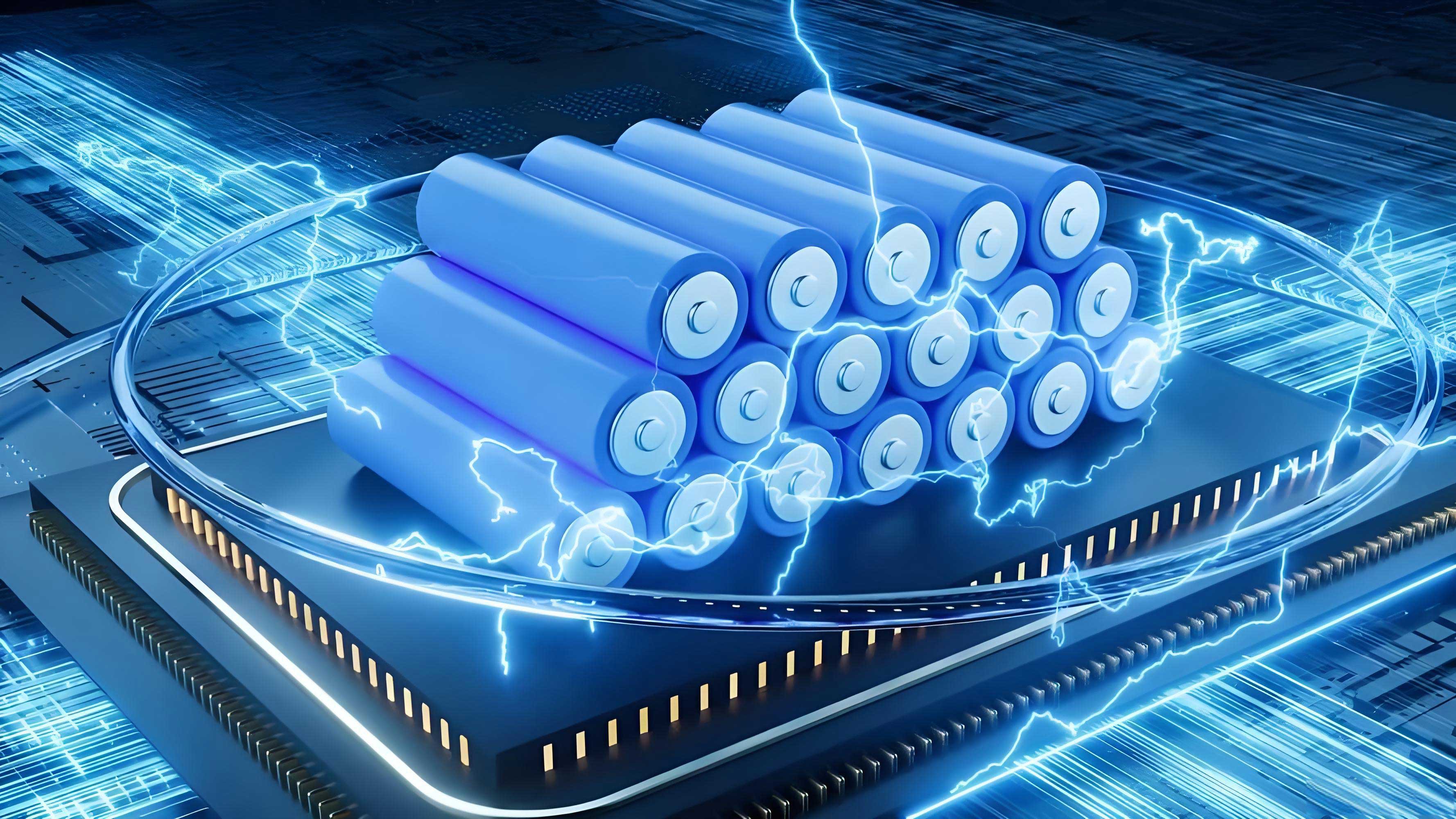
The sodium-ion battery operates on principles similar to the lithium-ion battery, but with sodium ions as charge carriers. The advantages of the sodium-ion battery include the natural abundance of sodium, which reduces material costs and geopolitical risks associated with lithium resources. For instance, sodium reserves are estimated to be over 1000 times more abundant than lithium, making the sodium-ion battery a sustainable choice for grid-scale energy storage. The working voltage of a typical sodium-ion battery ranges from 2.0 V to 4.0 V, depending on the cathode material, and its energy density, while lower than that of lithium-ion batteries, is sufficient for many stationary applications. The general reaction in a sodium-ion battery can be represented as:
$$ \text{Cathode: } Na_xMO_2 \leftrightarrow Na_{x-y}MO_2 + yNa^+ + ye^- $$
$$ \text{Anode: } C + yNa^+ + ye^- \leftrightarrow Na_yC $$
Where M represents transition metals. For phosphate-based polyanion cathodes, such as Na$_3$V$_2$(PO$_4$)$_3$, the structure consists of a three-dimensional open framework that facilitates rapid sodium ion diffusion. The ionic diffusion coefficient for sodium ions in these materials is typically in the range of:
$$ D_{Na^+} = 10^{-13} \text{ to } 10^{-12} \text{ cm}^2/\text{s} $$
This is higher than that of many layered cathode materials, enabling faster charge and discharge rates in sodium-ion battery systems. However, the electronic conductivity of phosphate-based materials is often low, around:
$$ \sigma = 10^{-6} \text{ S/cm} $$
Which is two orders of magnitude lower than that of common cathodes like LiCoO$_2$. This limitation necessitates modifications to improve performance, and surface coating has emerged as a key solution.
Surface coating modifies the cathode surface by depositing a thin layer of material that enhances electronic conductivity, stabilizes the electrode/electrolyte interface, and suppresses side reactions. The effectiveness of a coating depends on factors such as thickness, uniformity, and chemical compatibility. In the context of sodium-ion battery development, coatings can be categorized into carbon-based, metal oxide, and phosphate-based types, each with distinct properties. The following table summarizes the characteristics of these coating materials for sodium-ion battery cathodes:
| Coating Type | Examples | Key Properties | Impact on Sodium-Ion Battery Performance |
|---|---|---|---|
| Carbon-Based | Carbon nanotubes (CNTs), graphene, amorphous carbon | High electronic conductivity, flexibility, chemical inertness | Improves rate capability and cycle life; reduces interfacial resistance |
| Metal Oxide | AlPO$_4$, Mg$_3$(PO$_4$)$_2$, TiO$_2$ | Chemical stability, corrosion resistance, high-voltage tolerance | Enhances structural stability and suppresses transition metal dissolution |
| Phosphate-Based | NaPO$_3$, Li$_3$PO$_4$ | Ionic conductivity, compatibility with cathode structure | Optimizes sodium ion transport and reduces side reactions |
The mechanism of surface coating in a sodium-ion battery involves multiple aspects. First, the coating layer acts as a physical barrier, preventing direct contact between the cathode and electrolyte. This minimizes electrolyte decomposition and parasitic reactions, which are common at high voltages in sodium-ion battery operation. For example, the decomposition voltage of common electrolytes like NaPF$_6$ in organic solvents is around 4.5 V, but phosphate-based cathodes can operate at voltages up to 4.0 V, where side reactions may occur. A coating layer can raise the effective decomposition threshold, as described by:
$$ E_{\text{eff}} = E_0 + \Delta E_{\text{coating}} $$
Where $E_0$ is the intrinsic decomposition voltage and $\Delta E_{\text{coating}}$ is the stabilization provided by the coating. Second, the coating improves electronic conductivity by forming a percolation network on the cathode surface. The enhanced conductivity can be modeled using effective medium theory:
$$ \sigma_{\text{eff}} = \sigma_c \phi_c + \sigma_m (1 – \phi_c) $$
Here, $\sigma_{\text{eff}}$ is the effective conductivity, $\sigma_c$ and $\sigma_m$ are the conductivities of the coating and cathode material, respectively, and $\phi_c$ is the volume fraction of the coating. For carbon-based coatings, $\sigma_c$ can be as high as $10^4$ S/cm, significantly boosting $\sigma_{\text{eff}}$. Third, coatings can facilitate sodium ion diffusion by providing alternative pathways or reducing activation energy. The Arrhenius equation for ion diffusion is:
$$ D = D_0 \exp\left(-\frac{E_a}{kT}\right) $$
Where $D_0$ is the pre-exponential factor, $E_a$ is the activation energy, $k$ is Boltzmann’s constant, and $T$ is temperature. A well-designed coating can lower $E_a$, thereby increasing $D$ for sodium ions in the sodium-ion battery cathode.
In practical applications, the choice of coating material depends on the specific cathode composition and operating conditions of the sodium-ion battery. For instance, Na$_3$V$_2$(PO$_4$)$_3$ is a popular cathode material due to its high theoretical capacity of 117.6 mAh/g and stable structure. However, its poor conductivity limits rate performance. Coating it with carbon nanomaterials has shown remarkable improvements. In one study, a carbon-coated Na$_3$V$_2$(PO$_4$)$_3$ cathode exhibited a capacity retention of over 90% after 1000 cycles at 1C rate, compared to less than 80% for uncoated samples. The enhancement can be quantified by the capacity fade rate $\alpha$, defined as:
$$ \alpha = \frac{C_0 – C_n}{C_0 \cdot n} $$
Where $C_0$ is the initial capacity, $C_n$ is the capacity after $n$ cycles, and $n$ is the cycle number. For carbon-coated cathodes, $\alpha$ can be reduced by up to 50%, demonstrating the efficacy of coatings in sodium-ion battery systems.
Metal oxide coatings, such as AlPO$_4$, are particularly effective for high-voltage sodium-ion battery cathodes like NaNi$_{0.5}$Mn$_{0.5}$O$_2$. These coatings inhibit oxidative decomposition of electrolytes and stabilize the cathode structure. The stabilization mechanism involves the formation of a passivation layer that prevents transition metal ion dissolution. The dissolution rate $r_d$ can be expressed as:
$$ r_d = k_d \exp\left(-\frac{\Delta G}{RT}\right) $$
Where $k_d$ is a rate constant, $\Delta G$ is the Gibbs free energy change, $R$ is the gas constant, and $T$ is temperature. Coating reduces $k_d$ by blocking reactive sites. Experimental data show that AlPO$_4$-coated NaNi$_{0.5}$Mn$_{0.5}$O$_2$ retains 94% capacity after 100 cycles at 5V, versus 78% for uncoated cathodes, highlighting the role of coatings in extending sodium-ion battery life.
Phosphate-based coatings, like NaPO$_3$, offer dual benefits of ionic conductivity and chemical compatibility. They integrate seamlessly with the cathode structure, reducing interfacial resistance. The ionic conductivity $\sigma_i$ of such coatings can be measured using impedance spectroscopy, and values up to $10^{-4}$ S/cm have been reported at room temperature. This enhances the overall kinetics of the sodium-ion battery. The table below compares the electrochemical performance of coated and uncoated phosphate-based cathodes in sodium-ion battery tests:
| Cathode Material | Coating Type | Initial Capacity (mAh/g) | Capacity Retention after 100 Cycles | Rate Performance at 10C |
|---|---|---|---|---|
| Na$_3$V$_2$(PO$_4$)$_3$ | None | 110 | 75% | 60 mAh/g |
| Na$_3$V$_2$(PO$_4$)$_3$ | Carbon | 115 | 93% | 145 mAh/g |
| NaNi$_{0.5}$Mn$_{0.5}$O$_2$ | None | 162 | 78% | 80 mAh/g |
| NaNi$_{0.5}$Mn$_{0.5}$O$_2$ | AlPO$_4$ | 160 | 94% | 103 mAh/g |
| NaFePO$_4$ | NaPO$_3$ | 151 | 90% | 120 mAh/g |
The optimization of coating parameters is crucial for maximizing the benefits in sodium-ion battery cathodes. Coating thickness and uniformity directly influence performance. Too thick a coating can increase internal resistance, while too thin may not provide adequate protection. The optimal thickness $d_{\text{opt}}$ can be estimated based on the trade-off between conductivity enhancement and ionic diffusion limitation:
$$ d_{\text{opt}} = \sqrt{\frac{2D\tau}{\phi}} $$
Where $D$ is the ion diffusion coefficient, $\tau$ is the characteristic time for charge transfer, and $\phi$ is the porosity of the coating. For typical sodium-ion battery cathodes, $d_{\text{opt}}$ ranges from 10 to 50 nm. Advanced deposition techniques like atomic layer deposition (ALD) enable precise control at the nanometer scale. ALD allows for uniform coatings with thickness variations of less than 5%, which is ideal for sodium-ion battery applications. The growth per cycle $GPC$ in ALD is given by:
$$ GPC = \frac{\Delta m}{A \cdot \rho \cdot N} $$
Where $\Delta m$ is the mass change, $A$ is the surface area, $\rho$ is the density, and $N$ is the number of cycles. By adjusting $N$, coatings can be tailored to specific needs for sodium-ion battery cathodes.
Composite coatings represent a promising direction for sodium-ion battery cathode modification. By combining multiple materials, synergistic effects can be achieved. For example, a carbon-AlPO$_4$ composite coating can provide both electronic conductivity and chemical stability. The performance enhancement from composite coatings can be modeled using a rule of mixtures for properties like conductivity and toughness. For a two-component composite, the effective property $P_{\text{eff}}$ is:
$$ P_{\text{eff}} = v_1 P_1 + v_2 P_2 + \chi v_1 v_2 $$
Where $v_1$ and $v_2$ are volume fractions, $P_1$ and $P_2$ are properties of the components, and $\chi$ is an interaction parameter. In sodium-ion battery cathodes, composite coatings have shown capacity retention improvements of over 95% after 500 cycles, compared to single-material coatings.
Looking ahead, the development of novel functional coatings is key to advancing sodium-ion battery technology. Smart coatings with self-healing properties could autonomously repair cracks or defects during cycling, further extending battery life. The self-healing efficiency $\eta_{\text{sh}}$ can be defined as:
$$ \eta_{\text{sh}} = \frac{C_{\text{repaired}}}{C_{\text{initial}}} \times 100\% $$
Where $C_{\text{repaired}}$ is the capacity after healing and $C_{\text{initial}}$ is the initial capacity. Preliminary studies on polymer-based self-healing coatings for sodium-ion battery cathodes have reported $\eta_{\text{sh}}$ values above 80%. Additionally, nanostructured coatings, such as those using graphene oxide or metal-organic frameworks, offer high surface area and tunable porosity, enhancing ion accessibility. The specific surface area $S_{\text{BET}}$ of these coatings can exceed 500 m$^2$/g, facilitating rapid sodium ion transport in sodium-ion battery systems.
In conclusion, surface coating modification is a transformative strategy for improving phosphate-based polyanion cathodes in sodium-ion battery applications. Through carbon-based, metal oxide, and phosphate-based coatings, the electronic conductivity, structural stability, and interfacial compatibility of cathodes are significantly enhanced. The sodium-ion battery benefits from these modifications through extended cycle life, higher rate capability, and improved safety. Future research should focus on optimizing coating processes, developing composite and functional materials, and scaling up production for commercial sodium-ion battery deployment. As the demand for cost-effective energy storage grows, the sodium-ion battery, with advanced cathode coatings, is poised to play a pivotal role in the global transition to renewable energy.