
As the demand for efficient energy storage escalates alongside renewable energy adoption, the pursuit of advanced battery technologies has intensified. Lithium-ion batteries, while mature, face constraints due to the scarcity and uneven geographical distribution of lithium resources, leading to cost volatility. In this context, sodium-ion battery technology has emerged as a highly promising alternative, leveraging the abundant and ubiquitous nature of sodium. The working principle of a sodium-ion battery is analogous to its lithium counterpart, involving the shuttling of sodium ions between a cathode and an anode during charge and discharge cycles. However, the larger ionic radius of Na⁺ compared to Li⁺ ($r_{Na^+} \approx 1.02$ Å vs. $r_{Li^+} \approx 0.76$ Å) often results in slower diffusion kinetics, structural instability during cycling, and consequently, inferior rate capability and cycle life. These intrinsic challenges have directed significant research focus toward developing and optimizing electrode materials to unlock the full potential of sodium-ion battery systems.
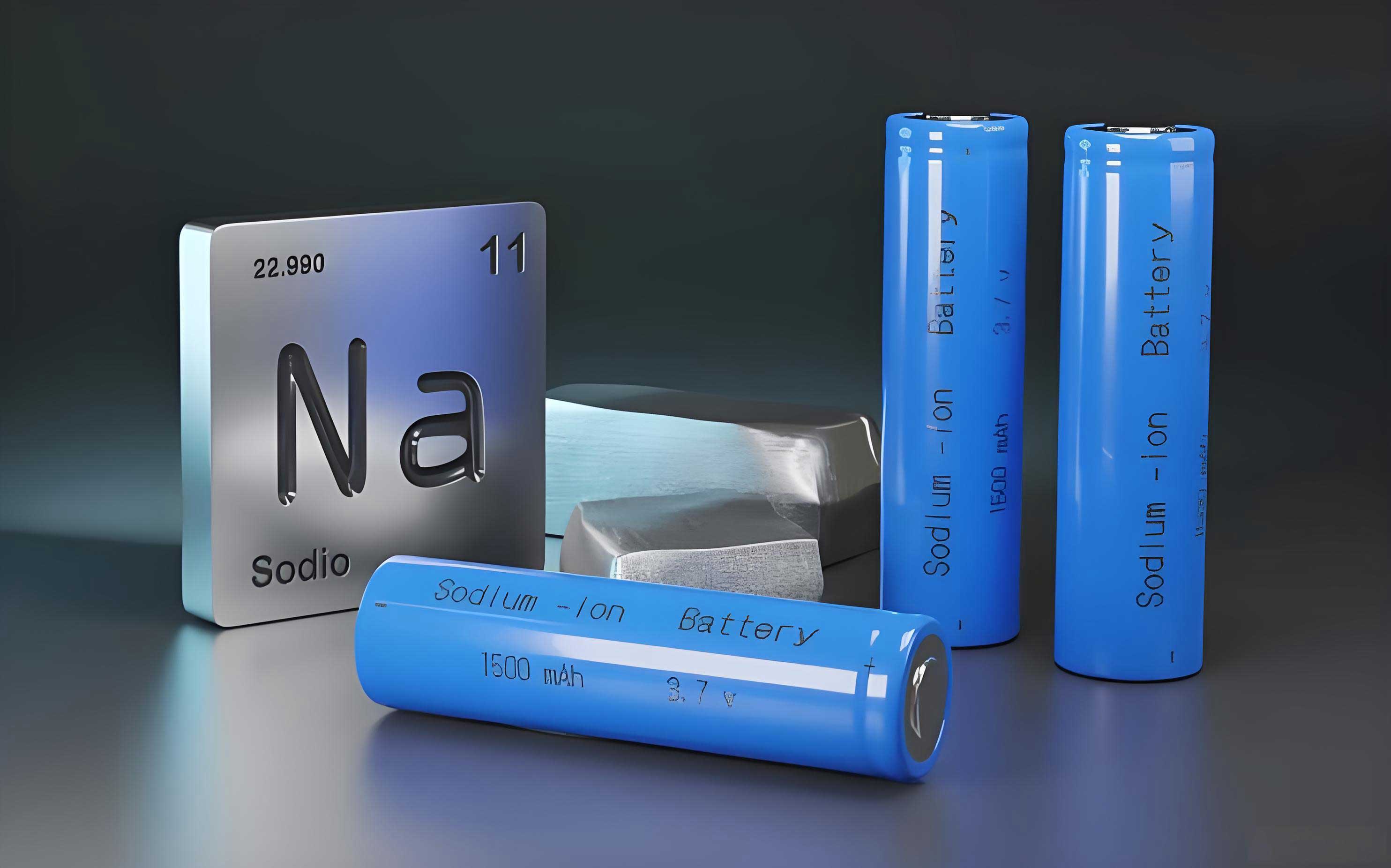
The performance of a sodium-ion battery is fundamentally governed by the electrochemical properties of its constituent materials. This article provides a comprehensive review of the key cathode and anode materials for sodium-ion battery applications, followed by a systematic analysis of strategies to enhance their most critical parameter: long-term cycle stability.
Cathode Materials for Sodium-ion Batteries
The cathode is a pivotal component that determines the energy density and voltage of a sodium-ion battery. Ideal cathode materials must provide stable frameworks for reversible sodium (de)intercalation, high operating potential, and good electronic/ionic conductivity.
Layered Transition Metal Oxides (NaxTMO2)
Layered oxides, with the general formula NaxTMO2 (where TM = transition metals like Mn, Ni, Co, Fe, Cu, etc.), are leading cathode candidates due to their high theoretical capacity and relatively simple synthesis. They are primarily categorized into P2 and O3 types based on the sodium ion coordination environment and stacking sequence. The number denotes the number of unique TM layers in the stacking unit cell, while the letter indicates the sodium site (P for prismatic, O for octahedral).
P2-type phases typically offer superior rate capability because sodium ions diffuse through facesharing trigonal-prismatic sites with low energy barriers. However, they often suffer from limited initial sodium content and complex phase transitions upon deep desodiation. The voltage for P2-type materials is often stabilized within a 2.0–4.0 V vs. Na⁺/Na window to mitigate structural degradation. In contrast, O3-type phases generally possess higher initial sodium content, leading to higher energy density, but exhibit slower ionic diffusion due to the longer, octahedral-site-mediated migration paths. Their operational stability is also typically maintained within 2.0–4.0 V.
Structural degradation, such as irreversible phase transitions, transition metal dissolution, and lattice oxygen loss, remains a major hurdle. Advanced doping strategies have proven effective. For instance, Al-doping in tunnel-type manganese oxides strengthens the metal-oxygen bonding (Al–O bond energy > Mn–O), suppressing lattice strain and manganese dissolution, thereby enhancing cycle life. Similarly, the incorporation of Cu, with its strong covalent interaction with oxygen ($\text{Cu-(O-O)}$ bonding), can effectively suppress oxygen redox activity and irreversible cation migration, leading to excellent rate performance. Nb-doping is another powerful strategy, which can lower the electronic band gap and reduce the activation energy for ion diffusion ($E_a$), significantly improving high-rate and low-temperature performance. The capacity fade per cycle ($\frac{\Delta Q}{Q_0 \cdot N}$) for such optimized materials can be as low as 0.013%.
| Type | Composition (Example) | Reversible Capacity (mAh/g) | Cycle Life Performance | Key Feature/Stabilization Mechanism |
|---|---|---|---|---|
| P2-Type | Na0.8Cu0.22Li0.08Mn0.67O2 | 134.1 (0.1C) 63.2 (100C) |
Excellent rate capability | Strong Cu-(O-O) bond inhibits oxygen oxidation. |
| P2-Type | Na0.78Ni0.31Mn0.67Nb0.02O2 | ~ (50C rate capability) | 76% capacity retention after 1800 cycles at -40°C | Nb-doping reduces band gap and diffusion barrier. |
| O3-Type | NaNi0.4Mn0.4Cu0.1Ti0.1O2 | 103 (0.2C) | 84% retention after 100 cycles | Multi-element doping stabilizes structure. |
Polyanionic Compounds
Polyanionic frameworks, characterized by strongly bonded (XO4)n– units (X = P, S, Si, etc.), offer high structural and thermal stability due to the inductive effect. This effect modulates the redox potential of the transition metal ($E_{TM^{z+}/TM^{(z-1)+}}$) according to the electronegativity of the polyanion, often described by:
$$ E \approx E_0 – \frac{\Delta \chi}{e} $$
where $\Delta \chi$ is the change in electronegativity between the metal and the polyanion, and $E_0$ is a constant.
NaFePO4 with an olivine structure is a well-known candidate, though its sodium form is challenging to synthesize directly. More prominent are the NASICON (Na Super Ionic Conductor)-type materials with the general formula Na3M2(PO4)3 (M = V, Ti, Fe, etc.). Their robust 3D open framework enables fast sodium-ion conduction, with ionic conductivity ($\sigma_{Na^+}$) reaching high values. A key strategy involves activating multi-electron redox couples to boost capacity. For example, V4+/V3+/V2+ and Ti4+/Ti3+ couples can be leveraged in a single material, with Al3+ substitution helping to activate the V4+/V5+ couple. Iron-based pyrophosphates (e.g., Na2FeP2O7) also show promise, where optimizing the Na/Fe ratio significantly improves capacity and voltage retention. The design of heterostructures, such as coupling Na4Fe3(PO4)2(P2O7) with Na2VTi(PO4)3, synergistically combines high stability with multi-electron reaction capability, yielding remarkable long-cycle performance.
| Compound Type | Composition | Capacity (mAh/g) | Capacity Retention / Cycle Number | Notable Feature |
|---|---|---|---|---|
| NASICON | Na2.5VTi0.5Al0.5(PO4)3 | 147 | – | Three-electron reaction enabled. |
| Pyrophosphate | Na1.4Fe1.3P2O7 | – | 84% / 650 cycles (1C) | Superior to Na2FeP2O7 (12% retention). |
| NASICON Composite | Na3.05V1.03Fe0.97(PO4)3@C | 84.9 (full cell) | 0.016% fade/cycle (2C) | Ketjen Black enhances conductivity. |
| Heterostructure | Na4Fe3(PO4)2(P2O7)/Na2VTi(PO4)3 | 155.3 (20 mA/g) | 82.9% / 2500 cycles (1 A/g) | Combines stability and multi-electron redox. |
Prussian Blue Analogues (PBAs)
Prussian Blue Analogues, with the general formula AxM[M'(CN)6]1-y·□y·nH2O (A = alkali metal, M/M’ = transition metals, □ = [M'(CN)6] vacancy), possess an open face-centered cubic framework with large interstitial sites. This structure is highly tolerant to the insertion/extraction of large ions like Na⁺. However, the presence of vacancies and coordinated water molecules can severely degrade the cycle stability of a sodium-ion battery by causing structural collapse and facilitating parasitic reactions.
Advanced synthesis techniques aim to minimize these defects. Controlled co-precipitation at high precursor concentrations or using sodium oxalate/ citrate assists in obtaining stoichiometric, low-defect PBAs. For instance, a Mn/Ni-based PBA synthesized under such conditions exhibited excellent rate capability and long-term cycling. Epitaxial nucleation methods can produce monoclinic PBAs with exceptionally low vacancy content (e.g., 0.08 per formula unit), leading to superior lattice regularity and unprecedented rate performance (96.8 mAh g⁻¹ at 9 A/g). High-entropy design, incorporating five or more transition metals (Mn, Fe, Co, Ni, Cu) into the PBA framework, creates a highly stable configuration with minimal lattice distortion during cycling, resulting in an ultra-slow capacity decay rate of ~0.0005% per cycle over thousands of cycles.
Anode Materials for Sodium-ion Batteries
Hard Carbon (HC)
Hard carbon is the most commercially viable anode material for the sodium-ion battery. Unlike graphite, which offers negligible capacity for sodium due to its small interlayer spacing, hard carbon features a disordered microstructure consisting of randomly oriented graphitic domains, nanopores, and large interlayer distances ($d_{002} > 0.37$ nm). The sodium storage mechanism is described by a “adsorption-intercalation-filling” model:
- Slope Region (High Voltage, ~0.1-1.2 V): Sodium ions are adsorbed onto defect sites, functional groups, and pore surfaces.
- Plateau Region (Low Voltage, ~0.01-0.1 V): Sodium ions intercalate into the expanded graphitic layers.
- Filling: Sodium clusters may form in nanopores.
The plateau capacity contributes significantly to the total capacity but is often associated with sodium plating risks and low initial Coulombic efficiency (ICE). ICE is defined as:
$$ ICE (\%) = \frac{Q_{\text{discharge, 1st}}}{Q_{\text{charge, 1st}}} \times 100 $$
Optimization involves precursor selection and heteroatom doping. Using phenolic or epoxy resins allows for tuning the carbonization process, achieving capacities over 480 mAh/g. Biomass-derived hard carbons (e.g., from paulownia wood) benefit from natural porous structures and self-doping. Heteroatom doping, particularly with N and O, is crucial. N/O co-doping introduces more active sites and enhances surface adsorption capability, improving reversible capacity. Furthermore, it can modify the electronic structure and increase the interlayer spacing, facilitating ion transport and improving ICE by reducing irreversible reactions.
| Precursor / Method | Key Modification | Reversible Capacity (mAh/g) | Cycle Stability | Initial Coulombic Efficiency (ICE) |
|---|---|---|---|---|
| Epoxy Novolac Resin | Carbonization at 1800°C | 480.3 (50 mA/g) | Stable for 1000 cycles at 500 mA/g | 84.6% |
| Phenolic Resin + Melamine | N/O Co-doping (N/O-HC-1200) | 319.7 | 253.9 mAh/g retained after 1000 cycles at 1C | – |
| Paulownia Wood | Carbonization at 1400°C (HC-1400) | 313 (0.1C) | 92% capacity retention after 500 cycles (1C/5C) | 85.9% |
| Peanut Shell | Slow pyrolysis at 1300°C (0.5°C/min) | – | – | Optimized defect & porosity control |
Titanium-Based Compounds
Ti-based anodes operate at a higher, safer potential (~0.3-1.0 V vs. Na⁺/Na) compared to hard carbon, minimizing sodium plating and electrolyte decomposition. Their small volume change during sodiation/desodiation guarantees outstanding structural stability and cycle life. Li4Ti5O12 (LTO), a zero-strain material in lithium-ion systems, also demonstrates good performance in sodium-ion battery anodes, with sodium storage involving Ti4+/Ti3+ redox. Nanostructuring, such as creating porous nanosheets, reduces the ion diffusion path and increases surface area, enhancing rate capability. Phosphate-based polyanionic titanium compounds like (TiO)2P2O7 with 3D macroporous spherical morphology offer high capacity and exceptional long-term cycling stability due to their robust framework and efficient ionic/electronic pathways.
Strategies for Enhancing Cycle Stability in Sodium-ion Batteries
Cycle stability, often measured as capacity retention ($R_N$) after N cycles, is paramount for the commercialization of any sodium-ion battery.
$$ R_N (\%) = \frac{C_N}{C_1} \times 100 $$
where $C_1$ and $C_N$ are the discharge capacities at the 1st and Nth cycle, respectively.
| Strategy | Target Issue | Method/Example | Impact on Stability |
|---|---|---|---|
| Reducing Crystal Water | Parasitic reactions, structural collapse. | “Water-in-salt” synthesis; Spray drying; Sol-gel with chelating agents. | Improves crystallinity, reduces side reactions, enhances capacity retention. |
| Elemental Doping | Poor kinetics, structural instability. | Cationic: Al, Nb, Cu, Ti, High-Entropy design. Anionic: N, S, O co-doping. |
Strengthens structure, lowers diffusion barrier ($E_a$), tunes electronic structure, introduces active sites. |
| Optimizing Carbonization Temperature | Low ICE, excessive defects, poor graphitization. | Precise temperature control (e.g., 1300-1400°C for HC); Slow heating rates. | Balances defect density, porosity, and graphitic order, maximizing capacity and ICE. |
| Surface Coating/Compositing | Electrolyte decomposition, active material dissolution. | Conductive polymer coating (PPy, PEDOT); Carbon coating (in-situ C); Graphene compositing. | Creates protective layer, improves electronic conductivity, buffers volume change. |
1. Mitigation of Crystal Water and Defects
In materials like PBAs, coordinated water is detrimental. Synthesis innovations like the “water-in-salt” method confine aqueous reactions, yielding high-quality, low-water-content crystals. Spray drying ensures rapid solvent removal. For oxides and polyanions, sol-gel methods using citric acid or other chelates promote homogeneous mixing and lower crystallization temperatures, yielding materials with good phase purity and reduced defects, directly translating to better capacity retention in the resulting sodium-ion battery.
2. Elemental Doping and Compositional Tuning
Doping is a versatile tool. Cationic dopants like Al³⁺, Nb⁵⁺, or Ti⁴⁺ stabilize crystal structures by strengthening metal-oxygen bonds or pinning the lattice. High-entropy doping creates configurational entropy-stabilized structures with exceptional cyclability. Anionic doping (N, S) in hard carbon alters the local electronic environment, increases interlayer spacing, and enhances sodium-ion adsorption energy ($E_{ads}$), which can be approximated by density functional theory (DFT) calculations. This stronger interaction improves reversible capacity and cycle life.
3. Optimization of Thermal Treatment
For carbonaceous and many oxide materials, the pyrolysis/calcination temperature profile is critical. For hard carbon, increasing temperature generally increases graphitization and reduces defects, improving ICE but potentially sacrificing pore storage capacity. An optimal temperature (e.g., 1200-1400°C) must be identified for each precursor. Similarly, for layered oxides, controlled calcination ensures proper crystallinity and sodium content, which are vital for achieving both high capacity and stable cycling in a sodium-ion battery.
4. Surface Engineering and Conductive Composites
Coating active material particles with a conductive layer addresses surface instability and low intrinsic conductivity. In-situ carbon coating on NaFePO4 significantly improves its electronic conductivity and cycling performance. Conductive polymers like polypyrrole (PPy) form a uniform, elastic coating on PBAs or polyoxometalate composites, physically suppressing dissolution and accommodating strain. Compositing with graphene or carbon nanotubes builds robust conductive networks, ensuring efficient charge transfer throughout long-term cycling of the sodium-ion battery electrode.
Conclusion and Perspective
The development of sodium-ion battery technology hinges on the continuous advancement of its electrode materials. Significant progress has been made in understanding and tailoring layered oxides, polyanionic compounds, Prussian blue analogues, hard carbon, and titanium-based anodes. Each material class presents unique advantages and challenges concerning capacity, voltage, rate, and cycle life. The overarching goal for practical sodium-ion battery deployment is to achieve an optimal balance between high energy density and long-term cycle stability at a competitive cost.
The optimization strategies discussed—ranging from atomic-scale doping and defect control to morphological engineering and surface protection—provide a comprehensive toolkit to address the intrinsic limitations of these materials. The interplay between material design, synthesis precision, and electrolyte matching is complex. Future research will likely focus on further elucidating degradation mechanisms via in-situ/operando techniques, developing novel high-capacity/high-voltage cathode systems, and engineering artificial interphases to achieve ultra-stable cycling. Through integrated and innovative approaches across the entire battery production chain, the sodium-ion battery is poised to become a cornerstone technology for sustainable and large-scale energy storage systems.