
As the global energy landscape evolves, the demand for efficient, cost-effective, and safe energy storage solutions in power systems has become paramount. In this context, sodium-ion batteries emerge as a promising alternative, particularly for substation applications. I will delve into the intricacies of sodium-ion battery technology, its potential roles in substations, and the hurdles that must be overcome for widespread adoption. Throughout this exploration, the term ‘sodium-ion battery’ will be frequently emphasized to underscore its significance.
The evolution of energy storage has long been dominated by lithium-ion batteries, yet constraints in lithium resource availability and cost drive the search for alternatives. Sodium, with its abundant reserves and similar electrochemical properties to lithium, presents a compelling case. This article aims to provide a comprehensive analysis from a first-person perspective, integrating tables and formulas to elucidate key points. The core focus is on how sodium-ion batteries can revolutionize substation operations, enhancing reliability and sustainability.
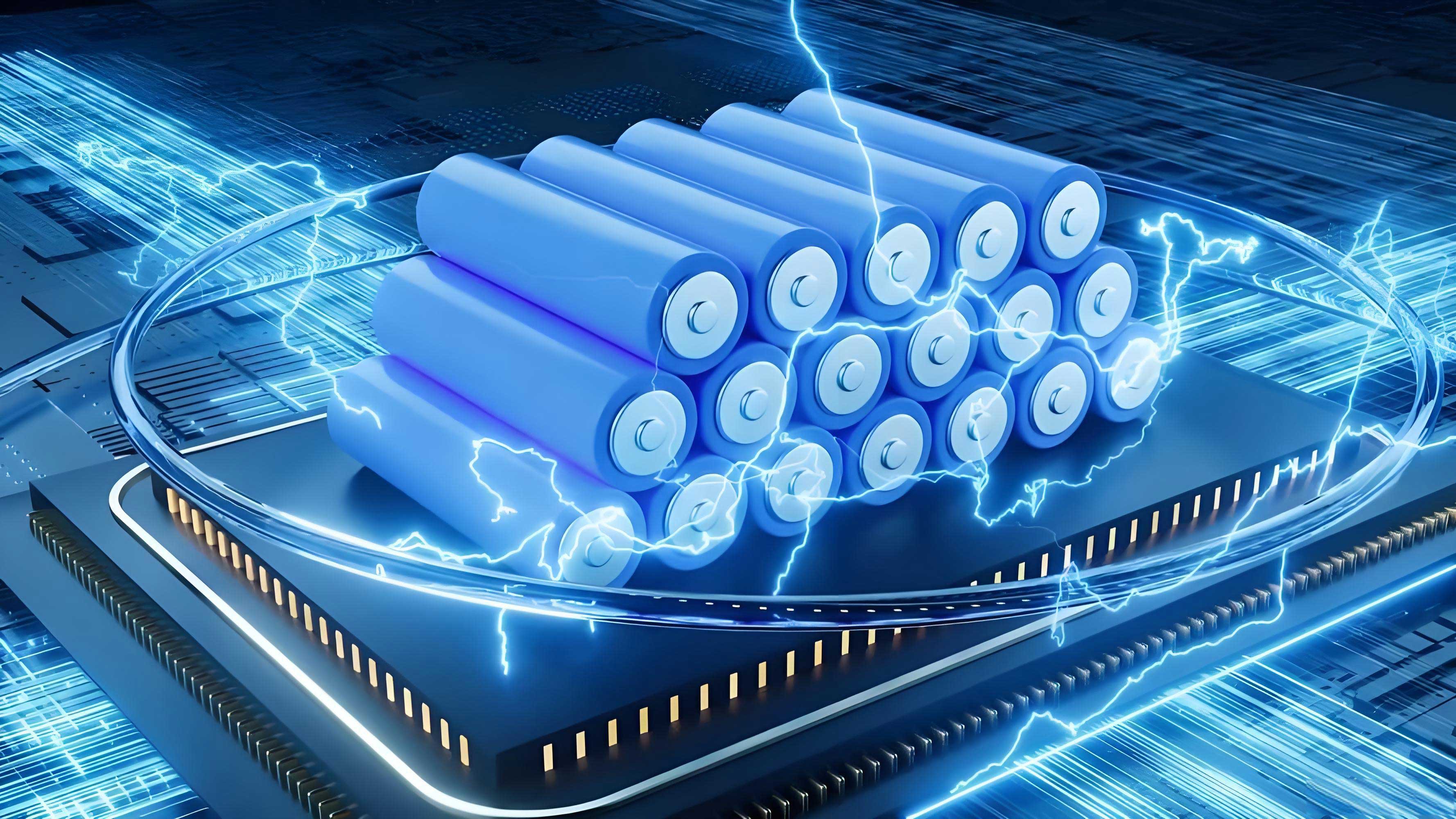
Fundamentally, a sodium-ion battery consists of a cathode, an anode, an electrolyte, a separator, and current collectors. The working principle hinges on the reversible movement of sodium ions between electrodes during charge and discharge cycles. For instance, when charging, Na⁺ ions de-intercalate from the cathode, travel through the electrolyte, and intercalate into the anode, while electrons flow externally, creating a potential difference. The discharge process reverses this. A typical reaction for a sodium-ion battery with a layered oxide cathode (e.g., NaₓMO₂) and a hard carbon anode can be represented as:
Cathode reaction: $$ \text{Na}_x\text{MO}_2 \rightleftharpoons \text{Na}_{x-y}\text{MO}_2 + y\text{Na}^+ + y e^- $$
Anode reaction: $$ n\text{C} + y\text{Na}^+ + y e^- \rightleftharpoons \text{Na}_y\text{C}_n $$
Overall cell reaction: $$ \text{Na}_x\text{MO}_2 + n\text{C} \rightleftharpoons \text{Na}_{x-y}\text{MO}_2 + \text{Na}_y\text{C}_n $$
This mechanism mirrors lithium-ion batteries but with distinct kinetic and thermodynamic properties due to sodium’s larger ionic radius (1.02 Å for Na⁺ vs. 0.76 Å for Li⁺). The diffusion coefficient of Na⁺ in electrodes, $$ D_{\text{Na}^+} $$, is often lower, impacting rate capability, yet advantages in interfacial kinetics compensate. The sodium-ion battery’s operation relies on optimizing materials to facilitate efficient ion transport, which is crucial for substation applications requiring rapid response.
The advantages of sodium-ion batteries are multifaceted, spanning resource availability, cost, performance, and safety. To quantify these, consider the following comparative analysis. First, resource abundance: sodium’s crustal abundance is approximately 2.36%, versus 0.006% for lithium, making it 423 times more plentiful. This translates to raw material cost savings. For example, the price of sodium carbonate (Na₂CO₃) is around $30 per ton, while battery-grade lithium carbonate (Li₂CO₃) can exceed $10,000 per ton. This cost disparity is a primary driver for adopting sodium-ion battery technology in grid-scale storage.
| Parameter | Sodium-ion Battery | Lithium-ion Battery (LFP) | Lead-acid Battery |
|---|---|---|---|
| Energy Density (W·h/kg) | 80-100 | 120-150 | 30-40 |
| Cycle Life (cycles) | >4000 | 2000-3000 | 300-500 |
| Material Cost Index | 1 (base) | 3-5 | 0.8-1.2 |
| Operating Temperature Range (°C) | -40 to 60 | -20 to 50 | -20 to 40 |
| Safety Performance | High (no fire/explosion in tests) | Moderate (risk of thermal runaway) | Low (acid leakage, gas emission) |
| Environmental Impact | Low | Moderate | High (lead pollution) |
From a performance perspective, the sodium-ion battery exhibits excellent rate capability due to lower solvation energy and Stokes radius of Na⁺ ions. The ionic conductivity in electrolytes, $$ \sigma_{\text{ion}} $$, can be expressed as: $$ \sigma_{\text{ion}} = \sum n_i q_i \mu_i $$ where $$ n_i $$ is ion concentration, $$ q_i $$ is charge, and $$ \mu_i $$ is mobility. For sodium-based electrolytes, higher mobility often results in faster charging. Additionally, the sodium-ion battery’s thermal stability is superior; the formation of sodium dendrites is less prone to causing short circuits compared to lithium dendrites, as sodium’s higher reactivity leads to self-dissolution in certain electrolytes. This enhances safety, a critical factor for substations where reliability is paramount.
In substation applications, the sodium-ion battery can play transformative roles. Firstly, it can replace traditional lead-acid batteries in DC power systems. A typical substation DC system includes battery banks for backup power, but lead-acid batteries suffer from short lifespan, high maintenance, and environmental hazards. By contrast, a sodium-ion battery offers longer cycle life, reduced weight, and minimal upkeep. The economic benefit can be modeled using a cost-of-ownership formula: $$ \text{TCO} = C_{\text{cap}} + \sum_{t=1}^{N} \frac{C_{\text{maintenance}, t}}{(1+r)^t} $$ where TCO is total cost of ownership, $$ C_{\text{cap}} $$ is capital cost, $$ N $$ is lifespan in years, and $$ r $$ is discount rate. For sodium-ion batteries, lower $$ C_{\text{cap}} $$ and $$ C_{\text{maintenance}} $$ due to durability yield a lower TCO, making them ideal for DC systems.
Secondly, sodium-ion batteries can integrate with renewable sources to form photovoltaic (PV) plus storage systems, replacing diesel generators for emergency power and reducing substation line loss. In a substation AC auxiliary system, critical loads like transformer cooling and fire protection require uninterrupted supply. A PV-sodium-ion battery hybrid can provide clean energy during normal operation, lowering line loss rate, and instantaneously backup during outages. The line loss reduction can be estimated as: $$ \Delta P_{\text{loss}} = \frac{(P_{\text{load}} – P_{\text{PV}})^2 R}{V^2} – \frac{P_{\text{load}}^2 R}{V^2} $$ where $$ P_{\text{load}} $$ is load power, $$ P_{\text{PV}} $$ is PV output, $$ R $$ is resistance, and $$ V $$ is voltage. By injecting $$ P_{\text{PV}} $$, losses decrease, enhancing efficiency. The sodium-ion battery’s fast response ensures seamless transition, outperforming generators that require manual start-up.
| Scenario | Function | Benefits | Key Metrics |
|---|---|---|---|
| DC System Replacement | Backup for protection and control | Long cycle life, low maintenance, compact size | Cycle life >4000, energy density 90 W·h/kg |
| PV-Energy Storage Integration | Peak shaving, emergency backup | Reduced line loss, zero emissions, instant response | Response time <100 ms, round-trip efficiency >95% |
| Grid Frequency Regulation | Ancillary services | High power density, cost-effective | Power density 500-1000 W/kg, cost <$100/kWh |
Despite the promise, deploying sodium-ion batteries in substations faces several challenges. First, cell selection is complex due to diverse material options. Cathodes can include layered oxides (e.g., NaMnO₂), polyanion compounds (e.g., Na₃V₂(PO₄)₃), or Prussian blue analogs, each with trade-offs in voltage, capacity, and stability. Anodes range from hard carbon to alloy-based materials. The optimal choice depends on substation requirements, such as operating temperature and duty cycle. A material selection framework might involve evaluating parameters via a scoring function: $$ S = w_1 \cdot C_{\text{cap}} + w_2 \cdot E_{\text{dens}} + w_3 \cdot T_{\text{stab}} $$ where $$ w_i $$ are weights for capacity, energy density, and thermal stability. Standardized testing in real substation environments is needed to refine this.
Second, operational stability in field conditions remains unproven. While laboratory tests show promising results—for instance, capacity retention above 80% after 4000 cycles—long-term performance under substation loads, vibration, and electromagnetic interference requires validation. Accelerated aging models can help, such as the Arrhenius equation for temperature-dependent degradation: $$ k = A e^{-E_a/(RT)} $$ where $$ k $$ is degradation rate, $$ E_a $$ is activation energy, $$ R $$ is gas constant, and $$ T $$ is temperature. By simulating years of operation in months, we can predict sodium-ion battery lifespan, but field trials are essential.
Third,配套 systems must be adapted. For DC applications, existing battery management systems (BMS) designed for lead-acid may not suit sodium-ion batteries. New algorithms for state-of-charge (SOC) estimation are needed, possibly based on coulomb counting with correction: $$ \text{SOC}(t) = \text{SOC}(0) – \frac{1}{Q_{\text{nom}}} \int_0^t \eta I(\tau) d\tau $$ where $$ Q_{\text{nom}} $$ is nominal capacity, $$ \eta $$ is efficiency, and $$ I $$ is current. For AC integration, protection schemes must be updated to handle bidirectional power flow and fault scenarios. Automatic transfer switches (ATS) should incorporate logic to isolate the sodium-ion battery during internal faults, preventing secondary damage. This requires collaboration between battery engineers and power system designers.
Fourth, safety concerns persist, albeit less than for lithium-ion batteries. Electrolyte flammability is a risk; developing solid-state or non-flammable liquid electrolytes could mitigate this. The sodium-ion battery’s thermal runaway threshold, $$ T_{\text{runaway}} $$, is higher, but ensuring robust cell design is crucial. Safety testing standards for substations, including overcharge, short-circuit, and mechanical abuse tests, must be established specifically for sodium-ion battery technology.
Looking ahead, the future of sodium-ion batteries in substations hinges on technological advancements and systemic integration. Research should focus on improving energy density through novel materials, perhaps using nanotechnology to enhance electrode kinetics. For example, designing porous carbon anodes with surface area $$ A_s $$ can increase Na⁺ storage sites, boosting capacity. A theoretical capacity model might be: $$ C_{\text{theo}} = \frac{nF}{3.6M} $$ where $$ n $$ is electrons transferred per formula unit, $$ F $$ is Faraday constant, and $$ M $$ is molar mass. Scaling up production to reduce costs is also vital; economies of scale could drive the price below $50 per kWh, making sodium-ion battery systems ubiquitous in power grids.
Moreover, integration with smart grid technologies will amplify benefits. Sodium-ion batteries could provide frequency regulation services, responding to grid signals within seconds. The power output $$ P_{\text{bat}} $$ can be controlled via droop characteristics: $$ f – f_0 = -K (P_{\text{bat}} – P_0) $$ where $$ f $$ is frequency, $$ f_0 $$ is nominal frequency, and $$ K $$ is droop constant. This enhances grid stability while generating revenue. In microgrids within substations, sodium-ion batteries can enable islanded operation during outages, ensuring continuous power to critical loads.
In conclusion, the sodium-ion battery represents a paradigm shift for substation energy storage. Its resource abundance, cost-effectiveness, and safety profile make it a strong contender to replace incumbent technologies. By addressing challenges in cell selection, stability, system integration, and safety, we can unlock its full potential. As research progresses from lab to field, sodium-ion batteries are poised to become a cornerstone of resilient and sustainable power systems, contributing to energy security and environmental goals. The journey ahead requires concerted efforts, but the prospects for sodium-ion battery adoption in substations are undoubtedly bright.
Throughout this discussion, the versatility of the sodium-ion battery has been highlighted repeatedly. From DC backup to AC grid support, its applications are vast. As we advance, continuous innovation and real-world testing will shape the next generation of sodium-ion battery solutions, ensuring they meet the rigorous demands of modern substations. The transition to sodium-based energy storage is not just a technical evolution but a strategic imperative for a greener and more reliable grid.