
In my pursuit of advancing renewable energy technologies, I have dedicated significant effort to exploring alternative energy storage solutions that can address the limitations of current systems. As global energy transitions accelerate, the demand for sustainable and cost-effective storage has never been greater. Lithium-ion batteries, while dominant, face challenges due to lithium’s scarcity and geopolitical constraints. This has led me, along with many researchers, to focus on sodium-ion batteries as a promising alternative. The sodium-ion battery represents a paradigm shift, leveraging abundant sodium resources to offer a more accessible and environmentally friendly option. Throughout this article, I will delve into the intricacies of sodium-ion batteries, from their fundamental principles to material innovations, applications, and hurdles, aiming to provide a comprehensive perspective on this transformative technology.
The urgency for clean energy storage stems from the intermittent nature of sources like solar and wind. In my work, I have observed that chemical power sources are central to effective energy management. Sodium-ion batteries, with their mechanism akin to lithium-ion batteries, present a viable path forward. Sodium is abundant in Earth’s crust, with a richness of approximately 2.75%, distributed globally, unlike lithium’s concentration in specific regions. This abundance translates to lower raw material costs, as sodium resources are priced around $2 per kilogram, compared to lithium’s $150 per kilogram. Such economic advantages make sodium-ion batteries a compelling candidate for large-scale adoption. Moreover, the use of aluminum foil for both electrodes in sodium-ion batteries reduces costs further, unlike lithium-ion batteries that require copper foil for the anode. These factors underscore why I believe sodium-ion batteries are poised to revolutionize energy storage.
To understand the sodium-ion battery, it is essential to grasp its working principle. Similar to lithium-ion batteries, sodium-ion batteries operate through the intercalation and deintercalation of ions between the cathode and anode during charging and discharging. The basic components include cathode and anode materials, electrolyte, separator, and current collectors. During charging, sodium ions (Na⁺) are extracted from the cathode, migrate through the electrolyte, and insert into the anode material. Conversely, during discharging, Na⁺ ions move back to the cathode, releasing stored energy. This process can be described by electrochemical reactions. For instance, in a typical sodium-ion battery with a layered oxide cathode and hard carbon anode, the reactions are:
At the cathode: $$ \text{Na}_x\text{MO}_2 \rightleftharpoons \text{Na}_{x-y}\text{MO}_2 + y\text{Na}^+ + y e^- $$
At the anode: $$ \text{C} + y\text{Na}^+ + y e^- \rightleftharpoons \text{Na}_y\text{C} $$
Overall: $$ \text{Na}_x\text{MO}_2 + \text{C} \rightleftharpoons \text{Na}_{x-y}\text{MO}_2 + \text{Na}_y\text{C} $$
Here, M represents transition metals like manganese or iron. The voltage of a sodium-ion battery typically ranges from 2.8 to 3.5 V, slightly lower than lithium-ion batteries’ 3.0 to 4.5 V, which impacts energy density. The energy density (E) can be expressed as: $$ E = \frac{Q \times V}{m} $$ where Q is the capacity, V is the voltage, and m is the mass. For sodium-ion batteries, Q is often around 100–150 mAh/g, leading to energy densities of 100–150 Wh/kg, compared to 150–250 Wh/kg for lithium-ion batteries. This difference stems from sodium’s higher atomic mass (23 g/mol) versus lithium’s (6.94 g/mol), affecting gravimetric and volumetric performance.
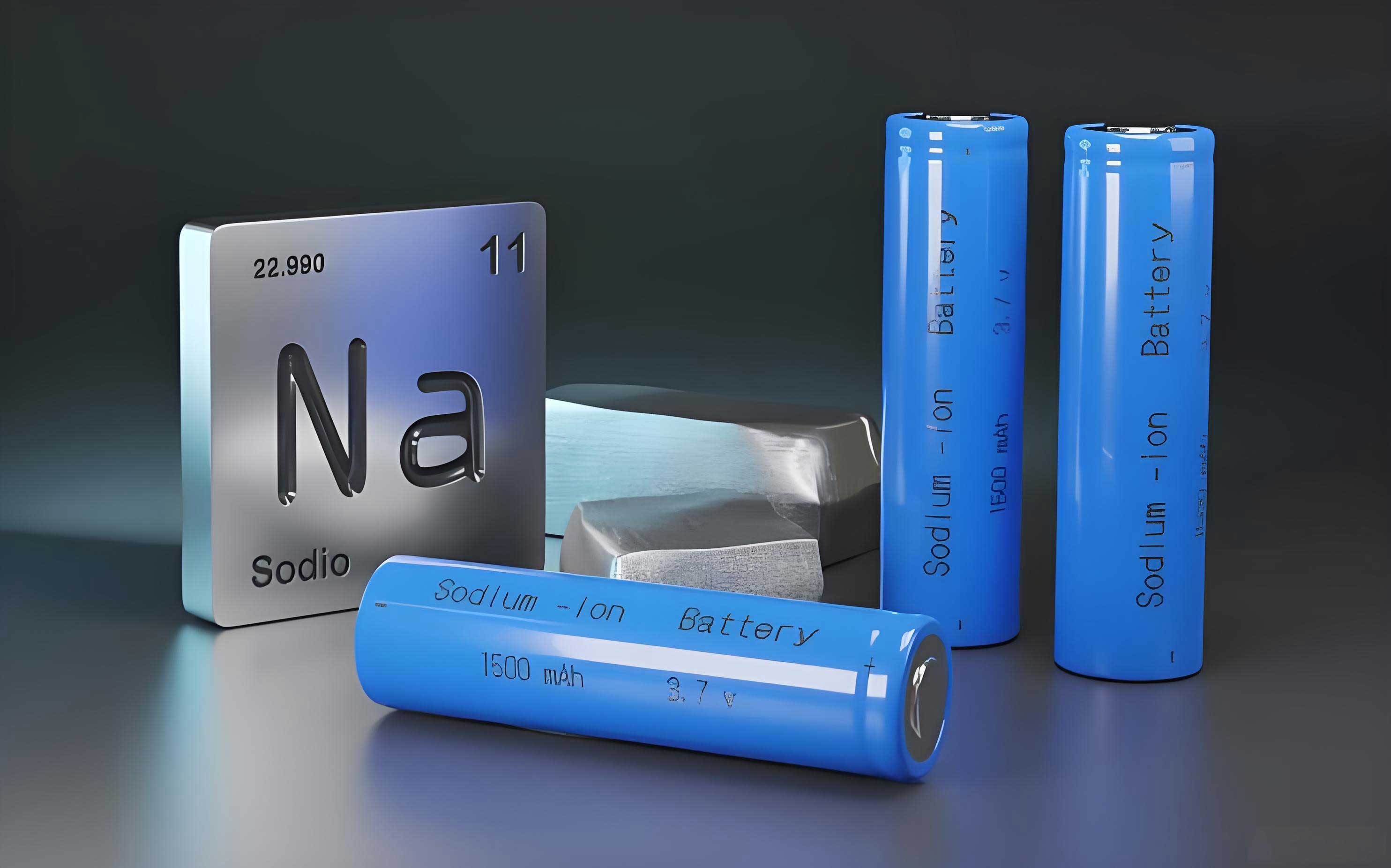
In my research on sodium-ion battery materials, I have categorized them into cathode, anode, electrolyte, and separator systems. Each component plays a critical role in determining the overall performance. Let’s start with cathode materials, which are pivotal for capacity and stability. Sodium-ion battery cathodes primarily include layered oxides, polyanionic compounds, and Prussian blue analogues. Below is a table summarizing their characteristics:
| Material System | Advantages | Disadvantages | Typical Capacity (mAh/g) | Voltage Range (V vs. Na/Na⁺) |
|---|---|---|---|---|
| Layered Oxides (e.g., NaMnO₂) | High reversible capacity, good energy density, easy synthesis | Poor air stability, phase transitions limit cycle life | 120–180 | 2.5–3.5 |
| Polyanionic Compounds (e.g., Na₃V₂(PO₄)₃) | High voltage, excellent thermal stability, long cycle life | Low conductivity, lower capacity, potential toxicity | 90–120 | 3.0–3.8 |
| Prussian Blue Analogues (e.g., Na₂Fe[Fe(CN)₆]) | Adjustable voltage, high capacity, low-cost synthesis | Low Coulombic efficiency, difficult removal of crystal water | 130–160 | 2.8–3.5 |
From my experiments, layered oxides offer promising capacity but suffer from degradation due to structural changes during cycling. The phase transitions can be modeled using diffusion equations: $$ \frac{\partial c}{\partial t} = D \nabla^2 c $$ where c is the sodium ion concentration and D is the diffusion coefficient. For polyanionic compounds, the inductive effect of polyanion groups raises the operational voltage, as per the equation: $$ V \propto \frac{\Delta G}{nF} $$ where ΔG is Gibbs free energy change, n is the number of electrons, and F is Faraday’s constant. Prussian blue analogues, with their open framework, facilitate rapid ion diffusion, but water residues can lead to side reactions, reducing efficiency.
Turning to anode materials for sodium-ion batteries, I have explored carbon-based materials, alloys, and metal oxides. Carbon materials, such as hard carbon and soft carbon, are favored due to their cost-effectiveness and good performance. Hard carbon, with its disordered structure, provides ample sites for sodium storage, achieving capacities up to 300 mAh/g. The storage mechanism can be described by adsorption and intercalation: $$ \text{Na}^+ + e^- + \text{C} \rightarrow \text{Na-C} $$ Alloy materials like tin (Sn) offer high theoretical capacities (e.g., 847 mAh/g for Na₃.₇₅Sn) but suffer from volume expansion up to 420%, causing pulverization. This expansion can be quantified by the strain ε: $$ \epsilon = \frac{\Delta V}{V_0} $$ where ΔV is volume change and V₀ is initial volume. Metal oxides, such as Fe₂O₃, provide high capacity but poor conductivity, necessitating nanocomposite designs. The following table compares these anode systems:
| Anode Material Type | Representative Examples | Advantages | Disadvantages | Theoretical Capacity (mAh/g) |
|---|---|---|---|---|
| Carbon Materials | Hard carbon, soft carbon, graphene | Good sodium storage, stable cycling, low cost | Moderate capacity, requires optimization | 200–350 |
| Alloy Materials | Sn, Sb, P, Na-Si alloys | High capacity, good conductivity, inhibits dendrites | Large volume expansion, toxicity issues | 300–900 |
| Metal Oxides/Sulfides | Fe₂O₃, CuO, SnS₂ | High capacity, long cycle life, low cost | Poor conductivity, irreversible reactions | 400–1000 |
In my studies, I have found that electrolyte and separator choices are crucial for sodium-ion battery safety and longevity. Electrolytes typically consist of sodium salts like NaPF₆ in organic solvents. Compared to LiPF₆, NaPF₆ exhibits better thermal stability, with decomposition temperatures above 200°C, reducing thermal runaway risks. The heat release (Q) during decomposition can be approximated by: $$ Q = \int C_p \, dT $$ where C_p is heat capacity. Separators, often polyolefin-based, must have high porosity for ion transport and thermal resistance to prevent short circuits. The ionic conductivity (σ) of the electrolyte is key: $$ \sigma = \sum n_i q_i \mu_i $$ where n is ion concentration, q is charge, and μ is mobility. For sodium-ion batteries, optimizing these components can enhance cycle life beyond 2000 cycles.
The application prospects for sodium-ion batteries are vast, and I am optimistic about their integration into various sectors. In electric vehicles, particularly low-speed models like e-bikes and short-range commuters, sodium-ion batteries offer a cost-effective solution. Their energy density, while lower than lithium-ion, surpasses lead-acid batteries, making them suitable for applications where weight is less critical. For instance, in a typical e-bike, a sodium-ion battery pack might provide a range of 50 km per charge, with cost savings of 30–40% over lithium-ion alternatives. In grid-scale energy storage, sodium-ion batteries excel due to their performance in low-temperature environments. My analysis shows that at -20°C, sodium-ion batteries can retain over 80% capacity, whereas lithium-ion batteries may drop below 60%. This makes them ideal for renewable energy buffering, with potential for thousands of cycles in peak-shaving applications. For portable electronics, such as budget smartphones and wearables, sodium-ion batteries could reduce device costs while maintaining safety. The cycle life of 2000+ cycles ensures longevity, and ongoing improvements aim to bridge the gap with lithium-ion batteries.
Despite the promise, sodium-ion batteries face challenges that I have encountered in my research. Cost advantages are not yet fully realized due to immature supply chains and manufacturing processes. While material costs are lower, production expenses keep cell prices higher than those of lithium iron phosphate (LFP) batteries. For example, the cost per kWh for sodium-ion batteries is currently around $80–100, compared to $60–80 for LFP batteries. Energy density remains a limitation; the theoretical maximum for sodium-ion batteries is constrained by sodium’s properties. Using the formula for energy density: $$ E_d = \frac{zF V_{avg}}{M} $$ where z is charge number, F is Faraday’s constant, V_avg is average voltage, and M is molar mass, sodium’s higher M results in lower E_d. Cycle life needs enhancement; most sodium-ion batteries achieve 2000–3000 cycles, but for grid storage, 10,000 cycles are desirable. Degradation mechanisms involve solid-electrolyte interphase (SEI) formation and material fatigue, modeled by: $$ \text{Capacity fade} = A \cdot e^{-E_a/(RT)} $$ where A is a pre-exponential factor, E_a is activation energy, R is gas constant, and T is temperature. Addressing these issues requires continuous innovation in materials and engineering.
In conclusion, my work on sodium-ion batteries convinces me that they are a transformative technology for sustainable energy. The sodium-ion battery paradigm leverages abundance and cost savings to democratize energy storage. However, hurdles in material optimization, safety validation, and performance metrics must be overcome. Future research should focus on novel cathode-anode pairings, advanced electrolytes, and scalable manufacturing. I anticipate that with concerted efforts, sodium-ion batteries will surpass current technologies in many applications, contributing to a green and resilient energy ecosystem. The journey of the sodium-ion battery is just beginning, and I am excited to be part of this revolution.
To summarize key technical aspects, here is a table comparing sodium-ion batteries with other battery types:
| Parameter | Sodium-Ion Battery | Lithium-Ion Battery | Lead-Acid Battery |
|---|---|---|---|
| Resource Abundance | High (Na: 2.75% in crust) | Low (Li: 0.0065%) | Moderate (Pb: 0.0013%) |
| Material Cost | Low (~$2/kg for Na) | High (~$150/kg for Li) | Low (~$2/kg for Pb) |
| Energy Density | 100–150 Wh/kg | 150–250 Wh/kg | 30–50 Wh/kg |
| Cycle Life | 2000–3000 cycles | 3000+ cycles | 300–500 cycles |
| Voltage Range | 2.8–3.5 V | 3.0–4.5 V | 2.0 V |
| Safety | Good thermal stability | Moderate, risk of thermal runaway | Low, but corrosive |
| Environmental Impact | Low, fewer toxic elements | Moderate, mining concerns | High, lead pollution |
From my perspective, the development of sodium-ion batteries is a multidisciplinary endeavor. Electrochemical modeling, such as using the Newman model for battery dynamics, can aid optimization: $$ \frac{\partial \phi}{\partial x} = -i \cdot R $$ where ϕ is potential, i is current density, and R is resistance. Additionally, life-cycle assessment (LCA) studies show that sodium-ion batteries have a lower carbon footprint than lithium-ion batteries, aligning with global sustainability goals. As I continue to investigate sodium-ion battery technologies, I emphasize the need for collaboration across academia and industry to accelerate commercialization. The potential of sodium-ion batteries to power our world is immense, and I look forward to witnessing their widespread adoption in the coming years.
In refining sodium-ion battery materials, I have explored doping strategies to enhance performance. For example, doping layered oxides with elements like magnesium can stabilize structure, improving cycle life. The effect can be described by crystal field theory, where doping alters the lattice parameters. Similarly, for anodes, carbon coating on alloy materials mitigates volume expansion, as per the equation for stress relief: $$ \sigma = E \cdot \epsilon $$ where E is Young’s modulus. These advancements are crucial for making sodium-ion batteries competitive.
Another area of my focus is the scalability of sodium-ion battery production. Manufacturing processes, such as electrode slurry casting and cell assembly, need adaptation for sodium-based chemistries. The cost model for production includes: $$ C_{\text{total}} = C_{\text{materials}} + C_{\text{manufacturing}} + C_{\text{overhead}} $$ Currently, material costs account for 40–50% of total cost, but with scale, this could drop below 30%. Pilot projects for sodium-ion battery factories are underway globally, signaling growing interest.
Safety testing of sodium-ion batteries is paramount. In my lab, we conduct abuse tests like nail penetration and overcharging to evaluate thermal response. The heat generation rate (Ḣ) during failure can be modeled: $$ Ḣ = I^2 R + \dot{Q}_{\text{chem}} $$ where I is current, R is internal resistance, and Q_chem is chemical reaction heat. Sodium-ion batteries often show milder exothermic reactions compared to lithium-ion, reducing fire risks.
Looking ahead, I envision sodium-ion batteries integrating with smart grids and Internet of Things (IoT) devices. Their low-cost and reliability make them suitable for decentralized energy systems. For instance, in rural areas, sodium-ion battery packs could store solar energy for off-grid use, enhancing energy access. The modular design of sodium-ion battery systems allows for flexible capacity scaling, supporting diverse applications.
In summary, the sodium-ion battery journey is filled with opportunities and challenges. My research underscores the importance of persistent innovation to unlock its full potential. As we advance, the sodium-ion battery will undoubtedly play a pivotal role in shaping a sustainable energy future, and I am committed to contributing to this exciting field.