
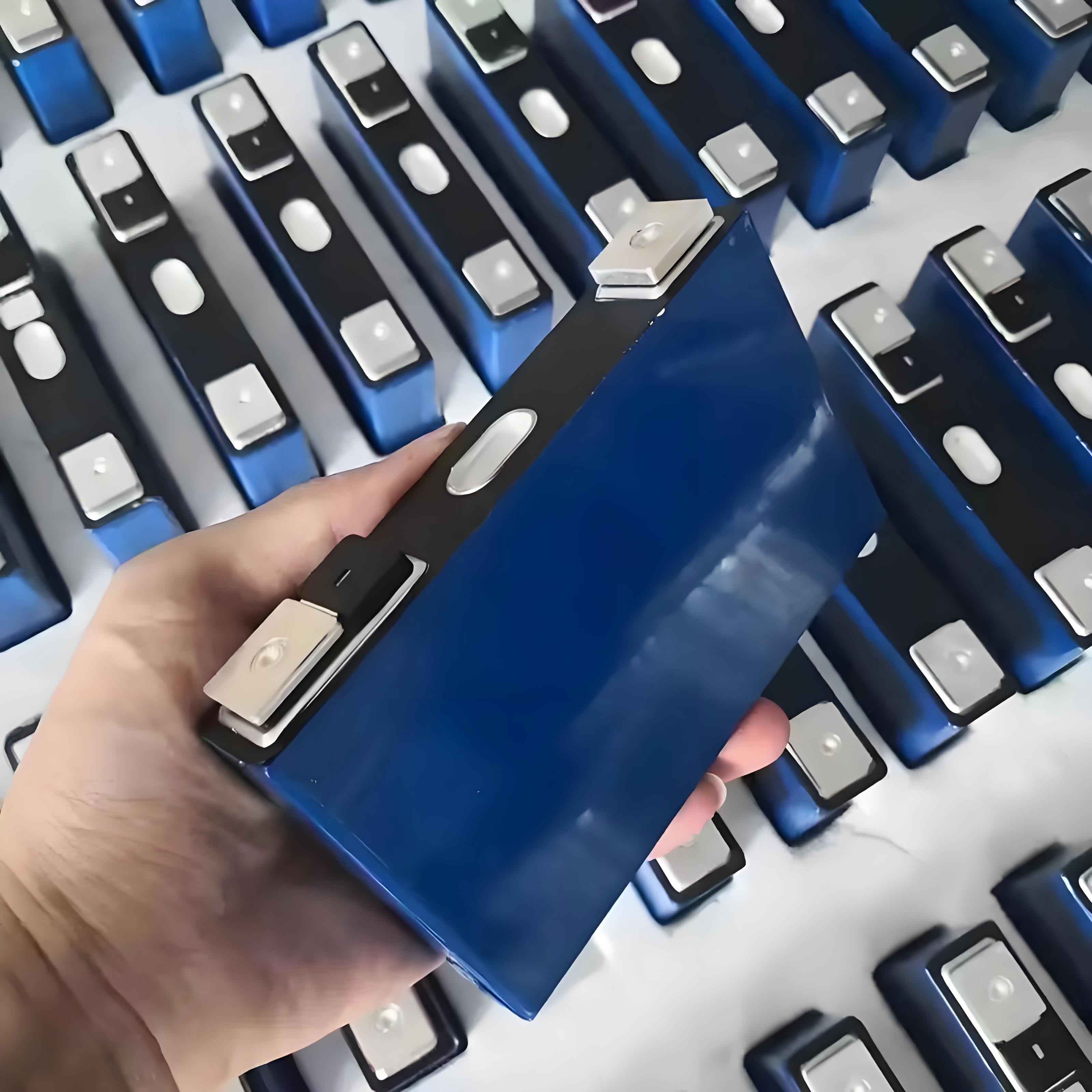
The recovery of valuable components from spent lithium iron phosphate (LiFePO4) batteries is critical for sustainable resource utilization and environmental protection. This study systematically investigates the leaching kinetics of lithium (Li) and iron (Fe) from spent LiFePO4 electrode powder using sulfuric acid (H₂SO₄) as the leaching agent. Key parameters such as acid concentration, temperature, particle size, and agitation speed were optimized, and the leaching mechanism was elucidated through kinetic modeling.
1. Experimental Methodology
1.1 Materials and Setup
Spent LiFePO4 electrode powder was characterized using X-ray diffraction (XRD) and inductively coupled plasma optical emission spectroscopy (ICP-OES). The powder primarily consisted of LiFePO₄, Li₃Fe₂(PO₄)₃, and Fe₂O₃ phases. Leaching experiments were conducted in a 1,000 mL three-neck flask equipped with a mechanical stirrer and temperature control.
1.2 Procedure
- Leaching Conditions:
- Acid concentration: 1.5–3.5 mol/L H₂SO₄
- Temperature: 55–95°C
- Particle size: 0.095–0.375 mm
- Agitation speed: 200–600 rpm
- Liquid-to-solid ratio (L/S): 100 mL/g
Samples were collected at intervals (0.5–120 min), filtered, and analyzed for Li and Fe concentrations. Leaching efficiency (xx) was calculated as:x=Ci⋅Vm0⋅Wi×100%x=m0⋅WiCi⋅V×100%
where CiCi = concentration of element ii (g/L), VV = solution volume (L), m0m0 = initial powder mass (g), and WiWi = mass fraction of ii in the powder.
2. Results and Discussion
2.1 Optimization of Leaching Parameters
2.1.1 Sulfuric Acid Concentration
Leaching efficiency increased with H₂SO₄ concentration (Figure 1). At 2.5 mol/L H₂SO₄, Fe and Li achieved >99.8% efficiency within 90 min. Higher concentrations (3.5 mol/L) did not significantly improve kinetics but increased operational costs.
Table 1: Effect of H₂SO₄ Concentration on Leaching Efficiency
| H₂SO₄ (mol/L) | Li Efficiency (%) | Fe Efficiency (%) |
|---|---|---|
| 1.5 | 93.8 | 80.0 |
| 2.5 | 99.8 | 99.8 |
| 3.5 | 100.0 | 100.0 |
2.1.2 Temperature
Elevated temperatures accelerated leaching due to enhanced diffusion and reaction rates. At 75°C, Li and Fe reached equilibrium within 10 min and 90 min, respectively. Activation energies (EaEa) were derived from Arrhenius plots:k=A⋅exp(−EaRT)k=A⋅exp(−RTEa)
where kk = rate constant, AA = pre-exponential factor, RR = gas constant (8.314 J/mol·K), and TT = temperature (K).
Table 2: Apparent Activation Energies
| Element | EaEa (kJ/mol) |
|---|---|
| Li | 8.45 |
| Fe | 11.03 |
2.1.3 Particle Size
Smaller particles (0.14 mm) exhibited higher leaching rates due to increased surface area. Fe leaching required finer particles to overcome diffusion limitations, while Li leaching was less size-dependent.
Table 3: Particle Size Impact on Leaching Efficiency
| Size (mm) | Li Efficiency (%) | Fe Efficiency (%) |
|---|---|---|
| 0.375 | 76.5 | 72.7 |
| 0.14 | 99.9 | 97.1 |
| 0.095 | 100.0 | 100.0 |
2.1.4 Agitation Speed
Optimal agitation (400 rpm) ensured homogeneous mixing without excessive energy consumption. Higher speeds (>600 rpm) caused negligible improvement.
2.2 Kinetic Modeling
The leaching process followed the Avrami model, indicating surface reaction control:−ln(1−x)=k⋅tn−ln(1−x)=k⋅tn
where kk = rate constant, tt = time (min), and nn = reaction order. Linear regression of ln[−ln(1−x)]ln[−ln(1−x)] vs. lntlnt yielded nn and kk.
Table 4: Avrami Model Parameters
| Parameter | Li | Fe |
|---|---|---|
| nn | 0.2867 | 0.2349 |
| lnklnk | 0.2852 | -0.2540 |
| R2R2 | 0.9995 | 0.9987 |
The rate constant kk was expressed as:kLi=0.68⋅C0.3381⋅D−0.2208⋅W0.5640⋅exp(−1016.3T)kLi=0.68⋅C0.3381⋅D−0.2208⋅W0.5640⋅exp(−T1016.3)kFe=1.25⋅C0.5228⋅D−0.3191⋅W0.3718⋅exp(−1326.6T)kFe=1.25⋅C0.5228⋅D−0.3191⋅W0.3718⋅exp(−T1326.6)
where CC = acid concentration (mol/L), DD = particle size (mm), and WW = agitation speed (rpm).
3. Industrial Implications
The optimized conditions (2.5 mol/L H₂SO₄, 75°C, 0.14 mm, 400 rpm) enable >99.8% recovery of Li and Fe, reducing reliance on virgin resources. The low EaEa values suggest energy-efficient scalability for recycling spent LiFePO4 battery.
4. Conclusion
This study establishes a robust framework for simultaneous Li and Fe recovery from spent LiFePO4 battery electrode powder. The Avrami model accurately describes the leaching kinetics, providing theoretical guidance for industrial-scale recycling. Future work should explore hybrid leaching systems and direct regeneration of LiFePO4 cathode materials.