
The ubiquity of lithium-ion batteries in modern technology, from portable electronics to electric vehicles and grid-scale energy storage, is a testament to their superior energy and power density. However, this very capability is intrinsically linked to a critical operational constraint: temperature. The performance, longevity, and paramount safety of a li ion battery are exquisitely sensitive to its thermal state. Operating at elevated temperatures accelerates degradation mechanisms, while low temperatures severely limit power capability and can induce hazardous lithium plating. In extreme cases, excessive or uneven heat generation can trigger thermal runaway—an uncontrollable, self-accelerating exothermic reaction leading to fire or explosion. Consequently, precise thermal management is not merely an enhancement but a fundamental requirement for reliable and safe li ion battery systems. Effective thermal management, however, hinges on accurate knowledge of the internal temperature distribution, which is notoriously difficult to measure directly without invasive and potentially damaging instrumentation.
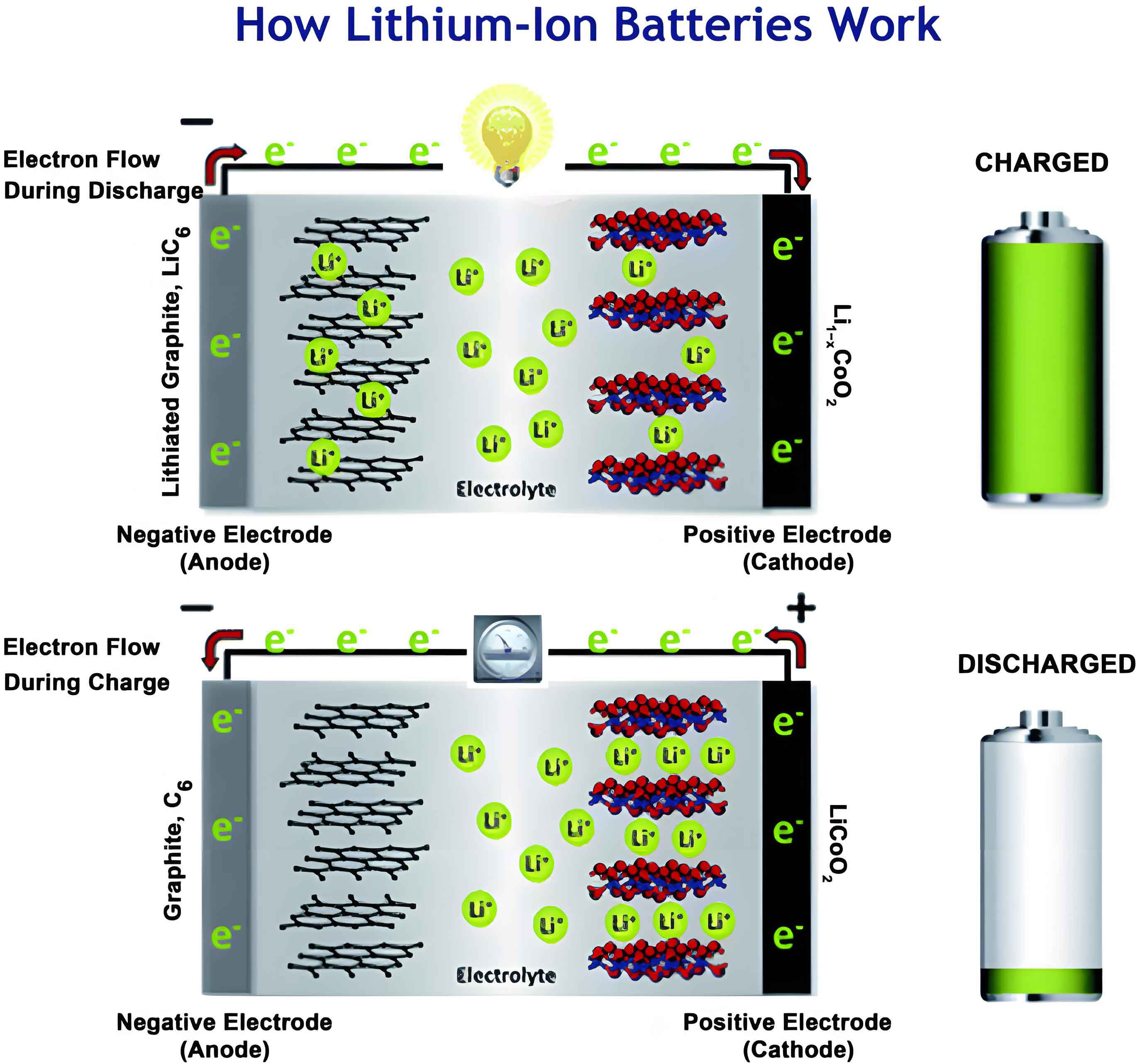
Traditional approaches to internal temperature estimation often rely on coupled electrochemical-thermal models. These models compute the heat generation rate (the internal heat source field) based on theoretical descriptions of the internal phenomena, such as the Bernardi model which accounts for irreversible joule heating, reversible entropic heating, and reaction heat. The calculated heat source is then used as an input to a heat transfer model to simulate the temperature field. While powerful, this paradigm faces significant challenges. The internal electro-chemical-thermal processes within a li ion battery are profoundly complex, involving multi-scale coupled phenomena. Simplified empirical heat generation models often fail to capture the true spatial and temporal distribution of heat sources, especially under dynamic loads, aging, or during fault conditions like internal short circuits. Furthermore, during the onset of thermal runaway, the standard heat generation models become completely invalid, rendering any temperature estimation scheme based on them useless at the most critical moment. This creates a fundamental gap: we need to know the internal temperature to ensure safety, but to estimate that temperature accurately, we require a precise model of the internal heat generation, which is itself elusive and scenario-dependent.
This work proposes a paradigm shift. Instead of attempting to model the intricate and often unpredictable heat generation within a li ion battery, we treat the internal heat source field itself as an unknown state to be estimated concurrently with the temperature field. We develop a method for the simultaneous, real-time, three-dimensional reconstruction of both the transient temperature field and the volumetric heat source field using only readily available surface temperature measurements and a model of the heat conduction process. This approach effectively bypasses the need for an explicit, and potentially inaccurate, heat generation model. The core of our methodology involves two key steps: first, the formulation of an extended state-space model that encapsulates the dynamics of both temperature and heat source distributions, and second, the application of a Kalman filter to optimally fuse the model predictions with noisy surface measurements to reconstruct the full internal state.
The governing equation for heat conduction within a li ion battery, considering both the core and casing, forms the physical basis. For the battery core, the three-dimensional, transient heat conduction with an internal heat source is described by:
$$
\rho_{co} c_{p,co} \frac{\partial T}{\partial t} = \lambda_x \frac{\partial^2 T}{\partial x^2} + \lambda_y \frac{\partial^2 T}{\partial y^2} + \lambda_z \frac{\partial^2 T}{\partial z^2} + q(\mathbf{r}, t)
$$
where \( \rho_{co} \) and \( c_{p,co} \) are the density and specific heat capacity of the core, \( \lambda_x, \lambda_y, \lambda_z \) are the anisotropic thermal conductivities, \( T \) is temperature, \( t \) is time, and \( q(\mathbf{r}, t) \) is the volumetric heat generation rate (the internal heat source field) which is a function of space \( \mathbf{r} \) and time. For the casing material, the equation is similar but without the \( q \) term and with an isotropic conductivity \( \lambda_{ca} \). The boundary condition at the outer surface accounts for convective and linearized radiative cooling to an ambient temperature \( T_{air} \):
$$
-\lambda_{ca} \frac{\partial T}{\partial n} \bigg|_{\text{surface}} = h (T – T_{air})
$$
where \( h \) is a combined heat transfer coefficient and \( \partial / \partial n \) denotes the derivative normal to the surface.
To render this continuous model suitable for real-time estimation, we discretize the li ion battery volume into a finite number of control volumes/nodes. Using an energy balance approach (e.g., finite volume method), we derive a discrete-time state-space representation. The temperature at all \( N = M \times N \times P \) grid nodes is assembled into a state vector \( \mathbf{x}_k \) at time step \( k \):
$$
\mathbf{x}_k = [T_{1,1,1}^k, T_{2,1,1}^k, …, T_{M,N,P}^k]^T \in \mathbb{R}^{N \times 1}
$$
The discrete-time dynamics of the temperature field, driven by the internal heat source field \( \mathbf{q}_k \) (arranged similarly as a vector) and the ambient temperature \( T_{air} \), can be expressed as:
$$
\mathbf{x}_k = \mathbf{F} \mathbf{x}_{k-1} + \mathbf{G}_1 \mathbf{q}_{k-1} + \mathbf{G}_2 T_{air, k-1}
$$
Here, \( \mathbf{F} \) is the state transition matrix encoding the heat conduction physics between nodes, \( \mathbf{G}_1 \) is a diagonal input matrix mapping the local heat generation to each node’s temperature change, and \( \mathbf{G}_2 \) is an input vector for the ambient temperature effect. The measurement equation relates a subset of \( R \) measured surface node temperatures to the full state:
$$
\mathbf{y}_k = \mathbf{H} \mathbf{x}_k + \mathbf{v}_k
$$
where \( \mathbf{y}_k \in \mathbb{R}^{R \times 1} \) is the measurement vector, \( \mathbf{H} \) is a selection matrix (containing 0s and 1s) indicating which nodes are measured, and \( \mathbf{v}_k \) is measurement noise.
The standard approach would be to use a model for \( \mathbf{q}_k \) (e.g., \( \mathbf{q}_k = f(I, V, SOC, \mathbf{x}_k) \)) and then use a Kalman filter to estimate only \( \mathbf{x}_k \). Our innovation is to treat the heat source field \( \mathbf{q}_k \) as an additional unknown state. We define an extended state vector \( \mathbf{x}^*_k \) that concatenates the temperature field and the heat source field:
$$
\mathbf{x}^*_k = \begin{bmatrix} \mathbf{x}_k \\ \mathbf{q}_k \end{bmatrix} \in \mathbb{R}^{2N \times 1}
$$
To create a dynamic model for this extended state, we need a model for the evolution of \( \mathbf{q}_k \). A key assumption, often valid over short time scales relative to the thermal dynamics, is that the heat source field is piece-wise constant or slowly varying. A simple and effective model is a random walk:
$$
\mathbf{q}_k = \mathbf{q}_{k-1} + \mathbf{w}_{q, k-1}
$$
where \( \mathbf{w}_{q, k-1} \) is a process noise term that allows the heat source to adapt over time. Combining this with the temperature dynamics equation, we construct the extended state-space model for the li ion battery:
$$
\begin{aligned}
\mathbf{x}^*_k &= \mathbf{F}^* \mathbf{x}^*_{k-1} + \mathbf{G}^* u^*_{k-1} + \mathbf{w}^*_{k-1} \\
\mathbf{y}_k &= \mathbf{H}^* \mathbf{x}^*_k + \mathbf{v}_k
\end{aligned}
$$
where the extended matrices are:
$$
\mathbf{F}^* = \begin{bmatrix} \mathbf{F} & \mathbf{G}_1 \\ \mathbf{0} & \mathbf{I} \end{bmatrix}, \quad \mathbf{G}^* = \begin{bmatrix} \mathbf{G}_2 \\ \mathbf{0} \end{bmatrix}, \quad \mathbf{H}^* = \begin{bmatrix} \mathbf{H} & \mathbf{0} \end{bmatrix}
$$
and \( u^* = T_{air} \). The process noise \( \mathbf{w}^*_k \) now includes noise for both the temperature and heat source states, with covariance matrix \( \mathbf{Q} = \text{blockdiag}(\mathbf{Q}_T, \mathbf{Q}_q) \).
With this formulation, the problem is perfectly suited for a Kalman filter. The Kalman filter provides the optimal recursive solution for estimating the states of a linear dynamic system from noisy measurements. It operates in a two-step cycle: prediction and update. For our extended state-space model of the li ion battery, the steps are as follows:
1. Prediction Step:
Given the previous posterior estimate \( \hat{\mathbf{x}}^*_{k-1|k-1} \) and its error covariance \( \mathbf{P}^*_{k-1|k-1} \), the filter predicts the current state and covariance based solely on the model:
$$
\begin{aligned}
\hat{\mathbf{x}}^*_{k|k-1} &= \mathbf{F}^* \hat{\mathbf{x}}^*_{k-1|k-1} + \mathbf{G}^* u^*_{k-1} \\
\mathbf{P}^*_{k|k-1} &= \mathbf{F}^* \mathbf{P}^*_{k-1|k-1} \mathbf{F}^{*T} + \mathbf{Q}
\end{aligned}
$$
2. Update (Correction) Step:
When a new surface temperature measurement \( \mathbf{y}_k \) arrives, the filter corrects the prediction. It first computes the Kalman gain \( \mathbf{K}_k \), which optimally weights the confidence in the model prediction versus the new measurement:
$$
\mathbf{K}_k = \mathbf{P}^*_{k|k-1} \mathbf{H}^{*T} (\mathbf{H}^* \mathbf{P}^*_{k|k-1} \mathbf{H}^{*T} + \mathbf{R})^{-1}
$$
where \( \mathbf{R} \) is the measurement noise covariance. The posterior (corrected) state estimate and its covariance are then computed:
$$
\begin{aligned}
\hat{\mathbf{x}}^*_{k|k} &= \hat{\mathbf{x}}^*_{k|k-1} + \mathbf{K}_k (\mathbf{y}_k – \mathbf{H}^* \hat{\mathbf{x}}^*_{k|k-1}) \\
\mathbf{P}^*_{k|k} &= (\mathbf{I} – \mathbf{K}_k \mathbf{H}^*) \mathbf{P}^*_{k|k-1}
\end{aligned}
$$
The output \( \hat{\mathbf{x}}^*_{k|k} = [\hat{\mathbf{x}}_{k|k}^T, \hat{\mathbf{q}}_{k|k}^T]^T \) provides the simultaneous, real-time reconstruction of the full 3D temperature field and the 3D heat source field inside the li ion battery. This cycle repeats at each time step, continuously adapting the estimates as new data arrives.
To validate the proposed methodology, comprehensive numerical experiments were conducted, simulating both charge and discharge cycles of a large-format prismatic li ion battery. A detailed 3D model of the battery was created, incorporating anisotropic thermal properties for the jellyroll (core) and an aluminum casing. For the purpose of generating “true” data to test the observer, a spatial heat source field was calculated using an enhanced Bernardi model, but critically, this model was not used within the Kalman filter—only the heat conduction model (\( \mathbf{F}^*, \mathbf{G}^*, \mathbf{H}^* \)) was used. Surface temperature “measurements” were simulated by sampling the true temperature at selected surface nodes and adding Gaussian noise.
The battery was discretized into a grid of 9×5×5 nodes (225 total nodes, hence 450 extended states). Key parameters for the simulation are summarized below:
| Parameter | Symbol | Value | Unit |
|---|---|---|---|
| Core Density | \( \rho_{co} \) | 2090 | kg/m³ |
| Core Specific Heat | \( c_{p,co} \) | 795 | J/(kg·K) |
| Core Conductivity (x,y,z) | \( \lambda_x, \lambda_y, \lambda_z \) | 32.2, 32.2, 0.75 | W/(m·K) |
| Casing Conductivity | \( \lambda_{ca} \) | 238 | W/(m·K) |
| Combined Heat Transfer Coeff. | \( h \) | 35 | W/(m²·K) |
| Number of Surface Sensors | \( R \) | 162 | – |
| Process Noise Std. Dev. (Temp.) | \( \sigma_T \) | 0.05 | K |
| Process Noise Std. Dev. (Heat Source) | \( \sigma_q \) | 2.0×10³ | W/m³ |
| Measurement Noise Std. Dev. | \( \sigma_y \) | 0.3 | K |
The Kalman filter was initialized with a guess for the initial temperature and heat source fields. The results demonstrated the powerful capability of the method. The reconstructed 3D temperature field closely tracked the true simulated field throughout both charge and discharge cycles, accurately capturing spatial non-uniformities. Simultaneously, the reconstructed 3D heat source field successfully followed the temporal and spatial evolution of the internal heating, despite the filter having no prior knowledge of the heat generation model’s form. To quantify the performance, we define the instantaneous average reconstruction error for the temperature field at time \( k \) as:
$$
e_k = \sqrt{ \frac{(\hat{\mathbf{x}}_{k|k} – \mathbf{x}_k^{\text{true}})^T (\hat{\mathbf{x}}_{k|k} – \mathbf{x}_k^{\text{true}})}{N} }
$$
The following table summarizes the key performance metrics under baseline conditions:
| Operational Phase | Max. Avg. Error \( e_k \) | Convergence Time | Remark |
|---|---|---|---|
| Discharge Cycle | < 0.75 K | < 30 s | Accurately tracks dynamic load profile. |
| Charge Cycle (CC-CV) | < 0.5 K | < 20 s | Handles transition from constant current to constant voltage smoothly. |
A critical analysis was performed to evaluate the robustness and practicality of the method for managing a li ion battery:
1. Influence of Sensor Number and Placement: The number of surface temperature sensors \( R \) directly impacts cost and complexity. Tests were run with \( R = 162, 102, \) and \( 64 \), with sensors uniformly distributed. As expected, reducing sensor count increased the average reconstruction error \( e_k \) and slightly slowed the initial convergence. However, the filter remained stable and the error trends were consistent, indicating the method is not hyper-sensitive to the exact sensor configuration, offering flexibility for practical implementation in a li ion battery pack.
2. Robustness to Ambient Temperature Variations: A Kalman filter designed (tuned) for an ambient temperature of 300 K was tested with simulated ambient temperatures of 280 K and 320 K. The results showed that the reconstruction error \( e_k \) was only marginally affected. The filter’s inherent ability to adjust the estimated heat source field compensates for the unmodeled change in boundary conditions, demonstrating significant robustness for a li ion battery operating in varying environments.
3. Sensitivity to Measurement Noise: The standard deviation of the measurement noise \( \sigma_y \) was varied from a very low value (0.05 K) to a high value (1.0 K). As the table below shows, while increased noise elevates the error during transient heating phases, the filter maintains good tracking, and the impact on the estimated temperature at critical internal points (e.g., the core) remains acceptable. This highlights the noise-filtering capability of the Kalman framework.
| Measurement Noise \( \sigma_y \) | Avg. Error \( e_k \) (Peak) | Core Temp. Error (Max) |
|---|---|---|
| 0.05 K | ~0.15 K | < 0.3 K |
| 0.30 K (Baseline) | ~0.45 K | < 0.7 K |
| 1.00 K | ~0.95 K | < 1.3 K |
The proposed method of simultaneous 3D reconstruction for a li ion battery represents a significant advancement in thermal monitoring. By employing an extended state-space model that incorporates the heat source field as a state and utilizing a Kalman filter for estimation, we successfully decouple the temperature estimation problem from the need for an accurate, first-principles heat generation model. This makes the approach widely applicable: it works during normal charge/discharge cycles where empirical models may be approximate, and, critically, it holds the potential to function during abnormal or fault conditions (like internal shorts) where standard models fail entirely. The numerical experiments confirm the method’s accuracy, robustness to sensor count and ambient changes, and tolerance to measurement noise.
However, trade-offs exist. The dimension of the state vector is doubled, increasing computational load compared to temperature-only filters. While still suitable for real-time operation for a single li ion battery, scaling to a large battery pack requires efficient distributed or reduced-order implementations. Furthermore, the accuracy of the reconstructed heat source field depends on the observability of the system, which is influenced by sensor placement. Future work will focus on optimal sensor placement strategies to maximize observability for both fields, developing adaptive or non-linear filtering techniques (like Extended or Unscented Kalman Filters) to handle stronger non-linearities in boundary conditions, and experimentally validating the method on real li ion battery cells under various stress and failure scenarios. Ultimately, this technique provides a powerful model-based sensing framework that can serve as the core for next-generation, proactive thermal management and safety预警 systems for lithium-ion batteries.