
In the context of the global push for carbon neutrality and the rapid development of new energy technologies, electrochemical energy storage systems, particularly lithium-ion batteries, have gained immense prominence. Among these, the LiFePO4 battery, with its excellent cycle life, stability, safety, and cost-effectiveness, has become a cornerstone for applications in electric vehicles, large-scale energy storage, and portable electronics. However, thermal runaway remains a critical safety concern for lithium-ion batteries, often triggered by thermal abuse, electrical abuse, or mechanical abuse. This study focuses on simulating the thermal runaway behavior of LiFePO4 batteries under thermal abuse conditions, specifically analyzing the temperature and temperature rise rate dynamics to develop a predictive framework for hazard prevention.
Thermal runaway in LiFePO4 batteries is a complex process involving exothermic side reactions that escalate uncontrollably. Previous research has extensively explored factors such as state of charge (SOC), battery chemistry, and triggering methods, but a nuanced understanding of temperature rise rate thresholds under varying conditions is still evolving. This article presents a comprehensive simulation-based investigation using a coupled modeling approach to elucidate the thermal runaway mechanisms in 18650-type LiFePO4 batteries. The study emphasizes the role of temperature rise rate as a key indicator for early warning systems.
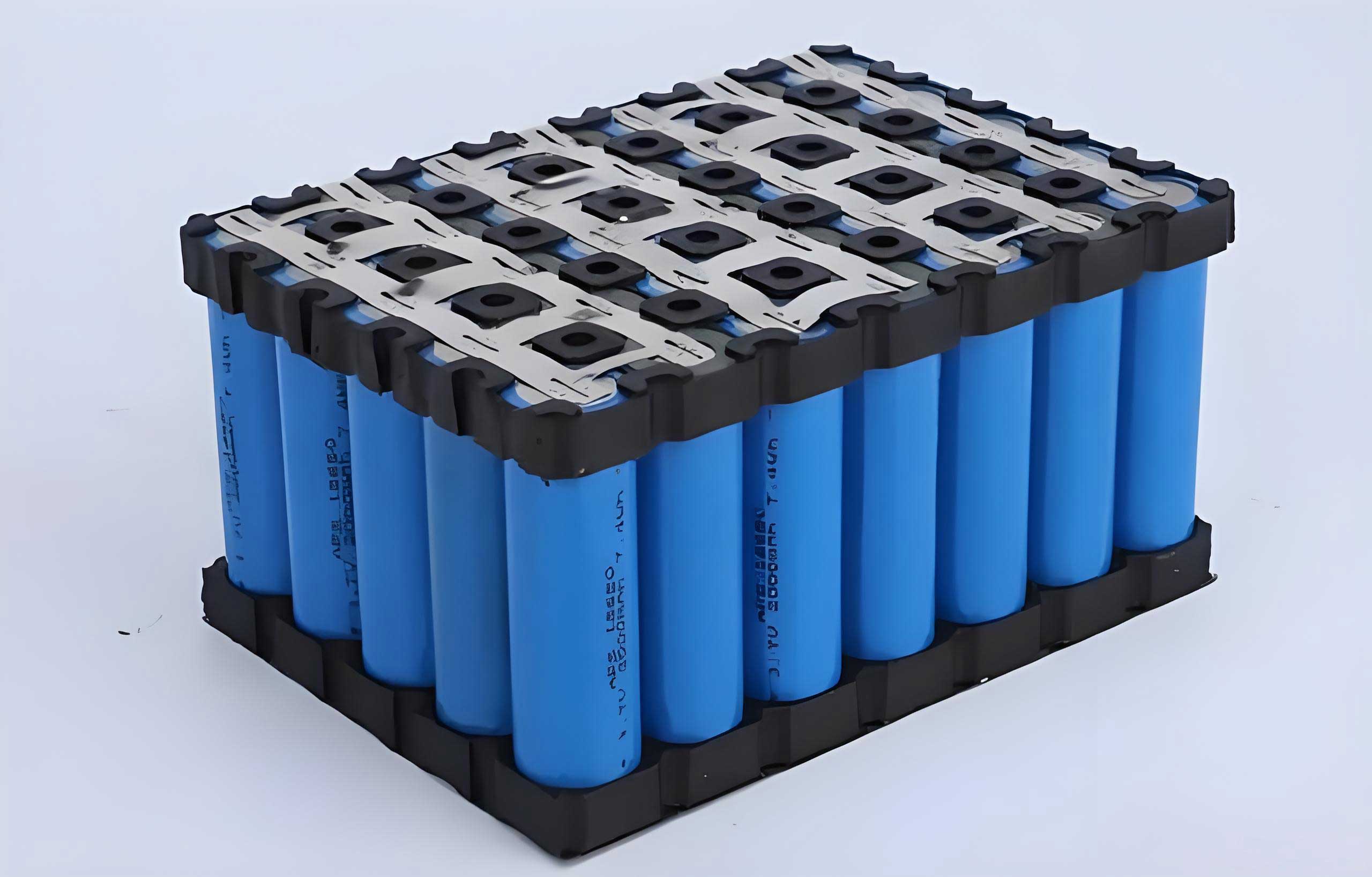
The thermal runaway process in LiFePO4 batteries is driven by sequential exothermic reactions that initiate at specific temperature thresholds. These include the decomposition of the solid electrolyte interphase (SEI) layer, reactions between the negative electrode and electrolyte, positive electrode decomposition, and electrolyte decomposition. Each reaction contributes to the total heat generation, which can be modeled mathematically. The overall heat release rate $Q_{tot}$ is the sum of individual reaction heats:
$$ Q_{tot} = Q_{sei} + Q_{ne} + Q_{pe} + Q_{e} $$
where $Q_{sei}$ represents heat from SEI decomposition, $Q_{ne}$ from negative electrode reactions, $Q_{pe}$ from positive electrode reactions, and $Q_{e}$ from electrolyte decomposition. The reaction rates are governed by Arrhenius-type equations, incorporating factors like activation energy and pre-exponential factors. For instance, the SEI decomposition rate $R_{sei}$ is given by:
$$ R_{sei}(T, c_{sei}) = A_{sei} c_{sei} \exp\left(-\frac{E_{a,sei}}{RT}\right) $$
Here, $A_{sei}$ is the pre-exponential factor, $c_{sei}$ is the proportion of unstable lithium in the SEI layer, $E_{a,sei}$ is the activation energy, $R$ is the universal gas constant, and $T$ is the temperature. Similar equations apply to other reactions, with parameters tailored to the LiFePO4 battery chemistry.
To simulate the thermal behavior, a two-dimensional axisymmetric model was developed using COMSOL Multiphysics software. The model simplifies the internal structure of the LiFePO4 battery by homogenizing material parameters across the cell layers, including the positive electrode, negative electrode, separator, and current collectors. The homogenized thermal conductivity, heat capacity, and density are calculated using weighted averages based on layer thicknesses. For example, the angular thermal conductivity $kT_{bat}^{ang}$ is derived as:
$$ kT_{bat}^{ang} = \frac{\sum_i kT_i L_i}{\sum_i L_i} $$
where $kT_i$ and $L_i$ are the thermal conductivity and thickness of each layer, respectively. This approach reduces computational complexity while maintaining accuracy for thermal analysis. The LiFePO4 battery model assumes that SOC is linearly related to the lithium-ion concentration at the negative electrode surface, expressed as:
$$ SOC(t) = \frac{c(t)}{c_{n,max}} \times 100\% $$
where $c(t)$ is the lithium-ion concentration at time $t$, and $c_{n,max}$ is the maximum concentration in the negative electrode. This SOC representation is crucial for linking electrochemical states to thermal responses.
The simulation parameters for the LiFePO4 battery are summarized in the following tables, covering physical dimensions, material properties, and reaction kinetics. These parameters are essential for replicating real-world behavior in the model.
| Parameter | Value | Unit |
|---|---|---|
| Diameter | 18 | mm |
| Height | 65 | mm |
| Rated Capacity | 1800 | mAh |
| Charge/Discharge Cut-off Voltage | 2.5–3.65 | V |
| Parameter | Positive Current Collector | Negative Current Collector | Unit |
|---|---|---|---|
| Thickness | 16 | 9 | μm |
| Thermal Conductivity | 238 | 398 | W/(m·K) |
| Density | 2700 | 8900 | kg/m³ |
| Heat Capacity | 903 | 385 | J/(kg·K) |
| Component | Thickness (μm) | Thermal Conductivity (W/(m·K)) | Density (kg/m³) | Heat Capacity (J/(kg·K)) |
|---|---|---|---|---|
| Positive Electrode | 92 | 1.48 | 1500 | 1260.21 |
| Separator | 20 | 0.334 | 492 | 1978.16 |
| Negative Electrode | 59 | 1.04 | 2660 | 1437.4 |
| Reaction | Pre-exponential Factor (s⁻¹) | Activation Energy (J/mol) | Heat Release per Mass (J/g) | Reactant Content (kg/m³) |
|---|---|---|---|---|
| SEI Decomposition | 1.667 × 10¹⁵ | 1.3508 × 10⁵ | 257 | 610 |
| Negative Electrode | 2.5 × 10¹³ | 1.3508 × 10⁵ | 1714 | 610 |
| Positive Electrode | 6.667 × 10¹³ | 1.3961 × 10⁵ | 314 | 1220 |
| Electrolyte Decomposition | 5.14 × 10²⁵ | 2.74 × 10⁵ | 155 | 406.9 |
The simulation setup involved exposing the LiFePO4 battery to various ambient temperatures in a controlled chamber, ranging from 120°C to 240°C, with SOC levels set at 5%, 25%, 50%, 75%, and 100%. The initial battery temperature was 25°C. The model incorporated boundary conditions for heat flux and radiation, coupling ordinary differential equations for reaction kinetics with global differential equations for heat transfer. Mesh sensitivity analysis confirmed that grid size had negligible impact on results, so a standard mesh was used for all simulations.
Results indicate that thermal runaway in LiFePO4 batteries is highly dependent on both SOC and ambient temperature. At lower chamber temperatures (120°C and 150°C), no thermal runaway occurred regardless of SOC, as the heat generation from side reactions was insufficient to overcome dissipation. However, at higher temperatures (180°C, 210°C, and 240°C), thermal runaway was triggered, with its severity increasing with SOC and ambient temperature. The maximum temperature during thermal runaway and the time to onset were recorded, as summarized below.
| SOC (%) | Chamber Temperature (°C) | Time to Onset (s) | Maximum Temperature (°C) |
|---|---|---|---|
| 100 | 180 | 1387 | 306 |
| 100 | 210 | 861.8 | 331 |
| 100 | 240 | 612 | 792 |
| 75 | 180 | 1415 | 304 |
| 75 | 210 | 874 | 328.9 |
| 75 | 240 | 615 | 764 |
| 50 | 180 | 1465 | 300.6 |
| 50 | 210 | 897 | 324.78 |
| 50 | 240 | 635 | 759 |
| 25 | 180 | 1537 | 292 |
| 25 | 210 | 928 | 316.51 |
| 25 | 240 | 654.8 | 753 |
| 5 | 180 | 1673.6 | 267 |
| 5 | 210 | 973.5 | 293.67 |
| 5 | 240 | 685.4 | 322.34 |
A key finding is the dynamic behavior of the temperature rise rate during heating and thermal runaway. The rate initially decreases to a minimum point before rapidly increasing, indicating a transition to thermal runaway. This pattern is consistent across all SOC and temperature conditions for the LiFePO4 battery. The threshold for thermal runaway onset can be defined by the difference between the initial temperature rise rate ($\theta_1$) and the minimum rate at the inflection point ($\theta_2$), denoted as $\Delta \theta = \theta_1 – \theta_2$. The values of these parameters are detailed in the following table.
| SOC (%) | Chamber Temperature (°C) | Initial Rate $\theta_1$ (°C/s) | Minimum Rate $\theta_2$ (°C/s) | $\Delta \theta$ (°C/s) | Maximum Rate $\theta_{max}$ (°C/s) |
|---|---|---|---|---|---|
| 100 | 180 | 0.43 | 0.07 | 0.36 | 10.43 |
| 100 | 210 | 0.58 | 0.16 | 0.42 | 60.76 |
| 100 | 240 | 0.78 | 0.25 | 0.53 | 1364.16 |
| 75 | 180 | 0.43 | 0.06 | 0.37 | 9.93 |
| 75 | 210 | 0.58 | 0.15 | 0.43 | 49.44 |
| 75 | 240 | 0.78 | 0.24 | 0.54 | 421.27 |
| 50 | 180 | 0.43 | 0.06 | 0.37 | 9.17 |
| 50 | 210 | 0.58 | 0.14 | 0.44 | 48.23 |
| 50 | 240 | 0.77 | 0.22 | 0.55 | 154.65 |
| 25 | 180 | 0.43 | 0.05 | 0.38 | 6.94 |
| 25 | 210 | 0.58 | 0.12 | 0.46 | 40.7 |
| 25 | 240 | 0.78 | 0.20 | 0.58 | 136.9 |
| 5 | 180 | 0.43 | 0.04 | 0.39 | 4.16 |
| 5 | 210 | 0.58 | 0.10 | 0.48 | 18.92 |
| 5 | 240 | 0.78 | 0.17 | 0.61 | 50.08 |
The data show that $\Delta \theta$ increases with higher ambient temperatures but decreases with higher SOC for the LiFePO4 battery. For instance, at 240°C, $\Delta \theta$ ranges from 0.61°C/s at 5% SOC to 0.53°C/s at 100% SOC, indicating that batteries with lower SOC have a larger threshold before thermal runaway. This implies that higher SOC levels in LiFePO4 batteries reduce the safety margin, making them more prone to rapid thermal escalation. The maximum temperature rise rate $\theta_{max}$ also exhibits significant variation, reaching extreme values like 1364.16°C/s at 100% SOC and 240°C, highlighting the violent nature of thermal runaway under severe conditions.
To further analyze the trends, mathematical relationships can be derived. The temperature rise rate during heating phase can be modeled as a function of time and reaction kinetics. For example, the overall heat balance equation for the LiFePO4 battery is:
$$ \rho C_p \frac{dT}{dt} = \nabla \cdot (k \nabla T) + Q_{tot} $$
where $\rho$ is density, $C_p$ is heat capacity, $k$ is thermal conductivity, and $Q_{tot}$ is the total heat generation from side reactions. Solving this equation numerically reveals the inflection point where $\frac{d^2T}{dt^2} = 0$, corresponding to the minimum rate $\theta_2$. The difference $\Delta \theta$ serves as a predictive metric: if the observed temperature rise rate change exceeds $\Delta \theta$, thermal runaway is imminent. This threshold-based approach offers a more nuanced alternative to fixed rate criteria, such as the commonly cited 1°C/s rule, which may not apply universally to LiFePO4 batteries under diverse conditions.
In addition to temperature and rate analysis, the simulation provides insights into the internal reaction dynamics of the LiFePO4 battery. The sequential activation of side reactions—starting with SEI decomposition around 70–90°C, followed by negative electrode reactions above 120°C, positive electrode reactions, and electrolyte decomposition beyond 200°C—creates a feedback loop that accelerates heat generation. The model captures this by coupling reaction progress variables, such as $c_{sei}$ for SEI decomposition and $c_{neg}$ for negative electrode reactions, with temperature evolution. The rate equations are integrated over time using the ODE solver in COMSOL, ensuring accurate representation of transient behavior.
Validation of the LiFePO4 battery model was performed by comparing simulation results with experimental data from literature. While direct replication is challenging due to differences in battery size and capacity, the trends align well, particularly in the timing and magnitude of temperature spikes. For instance, simulations at 155°C ambient temperature show a similar thermal runaway profile to published studies, albeit with variations attributable to the smaller capacity (1800 mAh) of the modeled LiFePO4 battery. This underscores the model’s utility for qualitative and relative analyses, even if absolute values may differ based on specific design parameters.
The implications of this study are profound for safety management in LiFePO4 battery systems. By monitoring temperature rise rate in real-time, early warning systems can be designed to detect the $\Delta \theta$ threshold and trigger interventions, such as cooling or isolation, before catastrophic failure. This is especially relevant for applications like electric vehicles and grid storage, where thermal runaway can lead to fires or explosions. The LiFePO4 battery, despite its inherent safety advantages, still requires vigilant thermal management, and this research contributes a framework for proactive risk assessment.
In conclusion, the simulation study on LiFePO4 battery thermal runaway reveals intricate dependencies on SOC and ambient temperature. Thermal runaway in LiFePO4 batteries is characterized by a distinct temperature rise rate pattern, with a threshold $\Delta \theta$ that varies based on operating conditions. Higher SOC and ambient temperatures accelerate thermal runaway, reducing the time to onset and increasing severity. The proposed threshold method, leveraging initial and inflection point rates, offers a dynamic criterion for predicting thermal runaway in LiFePO4 batteries, enhancing safety protocols. Future work could expand this model to include additional factors like battery aging or mechanical stress, further refining the predictive capabilities for LiFePO4 battery systems in real-world scenarios.