
In recent years, the rapid expansion of renewable energy sources like solar and wind power has necessitated the widespread adoption of electrochemical energy storage systems to address intermittency and stability issues. Among these, lithium-ion batteries, particularly lithium iron phosphate (LiFePO4) batteries, have become a cornerstone due to their high efficiency, long cycle life, and enhanced safety profile compared to other chemistries. However, the increasing deployment of LiFePO4 battery-based energy storage stations has been accompanied by a concerning rise in fire and explosion accidents triggered by thermal runaway events. These incidents have resulted in significant casualties, property damage, and operational downtime, highlighting an urgent need to comprehensively understand and mitigate the associated hazards. Thermal runaway in LiFePO4 batteries involves complex exothermic reactions leading to gas generation, venting, and potential combustion or explosion if ignited within confined spaces like prefabricated storage cabins.
Our research focuses on numerically simulating the entire chain of events following thermal runaway in a LiFePO4 battery energy storage system: the leakage of flammable gases, their diffusion within and around a storage cabin, and subsequent explosion dynamics. We employ advanced computational fluid dynamics (CFD) tools to model these phenomena, aiming to characterize the hazards and inform safer design practices. The core objective is to analyze how varying conditions, such as gas leakage duration and ignition source location, influence gas concentration profiles, explosion overpressures, flame propagation, and overall risk to adjacent structures. This study provides a detailed, first-principles-based assessment of LiFePO4 battery thermal runaway dangers in realistic large-scale settings.
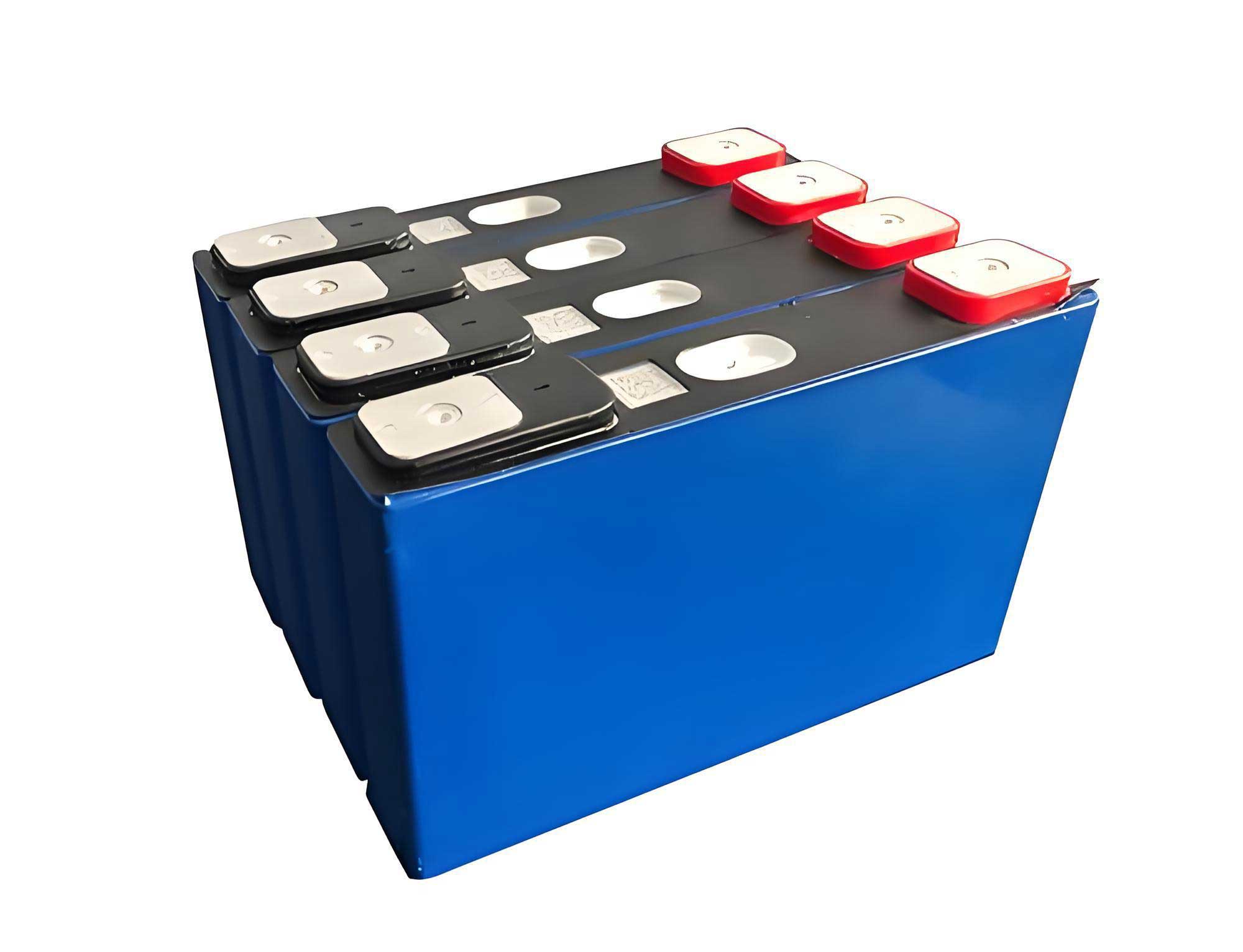
The numerical investigation is conducted using the FLACS (Flame Acceleration Simulator) software, a well-validated CFD package specifically designed for simulating gas dispersion, explosions, and fires in complex geometries. FLACS solves the compressible Navier-Stokes equations along with transport equations for species, energy, and turbulence using a finite volume method. The general conservation equation for a scalar variable \(\phi\) is expressed as:
$$ \frac{\partial}{\partial t} (\rho \phi) + \frac{\partial}{\partial x_j} (u_j \rho \phi) – \frac{\partial}{\partial x_j} \left( \rho \Gamma_\phi \frac{\partial \phi}{\partial x_j} \right) = S_\phi $$
where \(\rho\) is the gas density, \(u_j\) is the velocity vector in the \(j\)-th direction, \(\Gamma_\phi\) is the diffusion coefficient, and \(S_\phi\) is the source term. For turbulent flows, the standard \(k-\epsilon\) model is typically employed. The software’s explosion module incorporates detailed combustion models, allowing for accurate prediction of flame acceleration and pressure build-up in obstructed environments.
We construct a 1:1 scale geometrical model of a standard prefabricated energy storage cabin, which is a common unit in modern LiFePO4 battery-based storage power stations. The overall station layout consists of five such cabins arranged in a cross pattern. Each cabin has internal dimensions of 12.2 m in length, 2.4 m in width, and 3.0 m in height. The interior contains two rows of battery racks, each with 7 layers and 16 columns, housing LiFePO4 battery modules. Each module comprises 36 individual LiFePO4 battery cells with a capacity of 86 Ah. A central aisle of 0.8 m width separates the racks. The cabin is equipped with pressure relief panels (vents) on its doors and side walls to mitigate internal overpressure. The material properties and vent activation pressures are set based on industrial standards.
The source of flammable gas is defined based on experimental data from LiFePO4 battery thermal runaway. The composition of the vent gas is crucial for realistic simulation. We adopt a representative gas mixture derived from experimental studies, which includes hydrogen (H₂), carbon monoxide (CO), methane (CH₄), ethylene (C₂H₄), and carbon dioxide (CO₂). The volumetric fractions are as follows: 38.86% H₂, 11.7% CO, 9.31% CH₄, 9.8% C₂H₄, and 30.33% CO₂. The total mass of gas released per battery module during a thermal runaway event is scaled from experimental data for smaller cells. For a module of 36 cells (86 Ah each), the total gas mass \(M_{gas}\) is estimated as:
$$ M_{gas} = n_{cells} \times m_{gas,cell} $$
where \(n_{cells} = 36\) and \(m_{gas,cell}\) is the gas mass per cell. Based on scaling, \(M_{gas} \approx 7.59 \, \text{kg}\) per module. We model a severe but plausible scenario where thermal runaway propagates to 10 adjacent modules within a cabin. The total leakage mass is therefore 75.9 kg. The gas release is modeled as a constant mass flow rate over a discharge period \(\Delta t = 10 \, \text{s}\), yielding a flow rate \(\dot{m}\):
$$ \dot{m} = \frac{M_{total}}{\Delta t} = \frac{75.9 \, \text{kg}}{10 \, \text{s}} = 7.59 \, \text{kg/s} $$
The release temperature is set to 200°C, consistent with measured jet temperatures during LiFePO4 battery venting. The leakage sources are positioned at the height of the third rack layer, symmetrically on both sides of the cabin aisle.
The computational domain encompasses the entire five-cabin station and surrounding space, measuring 48 m × 22 m × 6 m. A graded mesh system is employed, with fine grid resolution (0.05 m) in critical areas such as inside the cabins, near leakage sources, and around vents to capture steep gradients in flow and concentration fields. Coarser grids are used in the far field to reduce computational cost. A mesh sensitivity analysis confirmed that a 0.05 m minimum grid size yields grid-independent results for explosion overpressures. The total number of computational cells is approximately 1.93 million. Initial ambient conditions are set to 20°C and 101.325 kPa. For the dispersion simulation, the boundary conditions are specified to allow free outflow, and the initial turbulence intensity is set low.
The explosion simulations are initialized using the gas concentration fields obtained from the dispersion simulations at specific times. This approach captures the non-uniform gas cloud present at the moment of ignition, which is more realistic than assuming a homogeneous mixture. The key parameters analyzed include the equivalence ratio (ER), which defines the fuel-to-oxidizer ratio relative to the stoichiometric mixture. For the LiFePO4 battery gas mixture, the lower flammability limit (LFL) and upper flammability limit (UFL) are determined to be ER ≈ 0.476 and ER ≈ 4.812, respectively. Ignition is modeled as a point source of energy at specified locations and times.
We design multiple simulation cases to systematically investigate the influence of leakage duration and ignition height. The leakage duration, denoted as \(\Delta t\), is the time gas is released before we consider the state for ignition. The diffusion time, \(t\), is the total elapsed time from the start of leakage. Ignition is triggered at different moments (\(\tau\)) during the early leakage phase and at different vertical heights (\(Z\)) within the central cabin. The table below summarizes the primary simulation matrix.
| Case ID | Leakage Duration, \(\Delta t\) (s) | Diffusion Time, \(t\) (s) | Ignition Time, \(\tau\) (s) | Ignition Height, \(Z\) (m) | Ignition Coordinates (X, Y) (m) |
|---|---|---|---|---|---|
| 1 | 1 | 1 | 1 | 1.75 | (13.4, 5.61) |
| 2 | 2 | 2 | 2 | 1.75 | (14.7, 5.70) |
| 3 | 3 | 3 | 3 | 1.75 | (14.7, 5.70) |
| 4 | 4 | 4 | 4 | 1.75 | (14.7, 5.70) |
| 5 | 4 | 4 | 4 | 1.45 | (14.7, 5.70) |
| 6 | 4 | 4 | 4 | 1.15 | (14.7, 5.70) |
| 7 | 4 | 4 | 4 | 0.85 | (14.7, 5.70) |
| 8 | 4 | 4 | 4 | 0.55 | (14.7, 5.70) |
The behavior of the flammable gas cloud following thermal runaway of the LiFePO4 battery modules is critical for assessing the explosion risk. The dispersion simulations reveal a consistent pattern. Due to the buoyancy of the hot gas mixture (rich in H₂ and CO), the leaked gases rapidly rise and accumulate beneath the cabin roof almost immediately after release. A high-concentration zone forms at the ceiling and then gradually descends, filling the cabin volume from top to bottom. The progression of the gas cloud’s flammable range (ER between LFL and UFL) over time is quantified in the table below, showing the approximate volume fraction of the cabin within the explosive range.
| Time since leakage start, \(t\) (s) | Gas Cloud Status in Central Cabin | Approx. Cabin Volume within Flammable Limits (%) | Remarks |
|---|---|---|---|
| 2 | High concentration at roof, spreading downwards | ~30% | Gas begins to reach side vents. |
| 3 | Upper half filled, cloud reaches cabin doors | ~55% | Internal pressure opens door vents (0.2 bar). |
| 4 | Cloud expands into adjacent cabin space laterally | ~70% | Gas envelops exterior walls of neighboring cabins. |
| 5-7 | Cabin nearly saturated with flammable mixture | >90% | Homogeneous conditions approach, but gradient persists. | 10 (leak stops) | Full cabin volume remains flammable for seconds | ~100% | Slow ventilation maintains hazard. | 16 (6 s after stop) | High concentrations persist, especially near ceiling | ~80% | Risk remains significant due to confined space. |
The spatial distribution can be described by the evolution of the vertical concentration profile \(C(z,t)\), which we approximate analytically. Assuming a simplified one-dimensional diffusion-advection model driven by buoyancy, the concentration at height \(z\) and time \(t\) can be expressed as:
$$ C(z,t) \approx C_0 \cdot \left[1 – \text{erf}\left(\frac{z – h(t)}{\sqrt{4 D t}}\right)\right] $$
where \(C_0\) is a reference concentration near the source, \(h(t)\) is the height of the buoyant front (increasing with time), \(D\) is an effective diffusivity, and erf is the error function. This illustrates the top-down filling process. The rapid external dispersion is also notable. Within 3-4 seconds, the gas cloud escaping from vents wraps around the exterior of adjacent LiFePO4 battery cabins, creating a hazardous envelope. However, the concentration in the open gaps between cabins is often below the LFL due to dilution, forming a “hollow” pattern around the cabin structures.
The explosion simulations yield vital data on overpressure, flame dynamics, and thermal hazards. For ignitions during the early leakage phase (\(\tau = 1, 2, 3\) s), the explosion probability is high because the gas cloud is within flammable limits in significant portions of the cabin. The generated overpressure \(\Delta P\) increases with leakage duration, as a larger mass of flammable mixture is available. The maximum overpressure \(P_{max}\) observed inside the central cabin for these early ignition cases follows the trend:
$$ P_{max}(\tau) \approx P_0 + k \cdot \tau $$
where \(P_0\) is a base pressure and \(k\) is a positive constant. The specific values from our simulations are summarized below.
| Ignition Time \(\tau\) (s) | Max. Internal Overpressure, \(P_{max}\) (bar gauge) | Flame Ejection Pattern | Peak Temp. near Cabin (K) |
|---|---|---|---|
| 1 | 0.45 | Unilateral jet from one door | ~1800 |
| 2 | 0.62 | Bilateral jets from both doors | ~2100 |
| 3 | 0.74 | Full venting, flames impinge adjacent cabins | ~2400 |
The pressure impulse \(I\), defined as the integral of overpressure over time, also increases substantially, posing greater structural threat. The pressure loading on the walls and vents of the neighboring LiFePO4 battery cabins is critical for cascading failures. For the \(\tau=3\) s case, the pressure on the adjacent cabin door \(P_{adj}\) exceeds its design vent opening pressure (0.2 bar) significantly, which can be expressed as:
$$ P_{adj}(t) = P_{max, central} \cdot f(d, A_v) \cdot e^{-\lambda t} $$
where \(f(d, A_v)\) is a decay function depending on distance \(d\) and vent area \(A_v\), and \(\lambda\) is a damping coefficient. This indicates a high risk of secondary ignition if the flame front enters the neighboring cabin.
For ignitions at a fixed leakage duration (\(\Delta t = 4\) s) but varying heights, the results demonstrate a strong dependence on vertical position. At this stage, the cabin atmosphere is highly stratified. Ignition at the ceiling level (Z = 1.75 m) yields the most severe explosion because the mixture there is near the stoichiometric ratio, providing optimal fuel-oxidizer balance for rapid energy release. Ignition at lower heights, where the gas is richer (higher ER) due to accumulating heavier hydrocarbons and less oxygen availability, results in slower combustion and lower pressures. The table below quantifies this effect.
| Ignition Height \(Z\) (m) | Local Equivalence Ratio (ER) at Ignition | Max. Internal Overpressure \(P_{max}\) (bar gauge) | Peak Adjacent Cabin Door Pressure (bar gauge) |
|---|---|---|---|
| 1.75 | ~1.2 (Near stoichiometric) | 0.74 | 0.28 |
| 1.45 | ~2.1 | 0.61 | 0.22 |
| 1.15 | ~3.0 | 0.55 | 0.19 |
| 0.85 | ~3.8 | 0.52 | 0.17 |
| 0.55 | ~4.5 (Near UFL) | 0.58 | 0.20 |
The non-monotonic trend for very low heights (e.g., 0.55 m) shows a slight pressure increase, potentially due to the presence of slower-burning but energy-dense gases like ethylene and methane from the LiFePO4 battery vent mixture. The relationship between overpressure and ignition height \(Z\) for a fixed time can be approximated by a polynomial:
$$ P_{max}(Z) \approx aZ^2 + bZ + c $$
where coefficients \(a, b, c\) are derived from curve fitting the simulation data. The flame speed \(S_f\) and combustion rate also vary with height, influencing the pressure rise rate \(dP/dt\).
The thermal hazard is equally severe. The fireball and jet temperatures exceed 2000 K, capable of irradiating and heating adjacent LiFePO4 battery modules to their thermal runaway thresholds. The radiative heat flux \(q”\) at a distance \(r\) from the cabin opening can be estimated using the point-source approximation:
$$ q”(r) = \frac{\chi_r \cdot \dot{Q}}{4 \pi r^2} $$
where \(\chi_r\) is the radiative fraction and \(\dot{Q}\) is the total heat release rate of the burning LiFePO4 battery gas cloud. For large releases, \(\dot{Q}\) can be on the order of hundreds of MW.
Our comprehensive simulations lead to several key conclusions regarding the safety of LiFePO4 battery energy storage systems. First, the thermal runaway of LiFePO4 batteries in a confined cabin produces a buoyant, rapidly dispersing flammable gas cloud that fills the space from the ceiling downward within seconds. This creates an extended period during which the entire cabin volume is within explosive limits, presenting a continuous ignition hazard. Second, the timing of ignition drastically affects the explosion severity. Ignitions occurring during the early gas release phase (first 3 seconds) result in progressively stronger explosions as more fuel accumulates. The worst-case overpressures observed can exceed 0.7 bar gauge, sufficient to cause structural deformation and fully open all relief vents. Third, the vertical location of an ignition source is a critical parameter. Due to stratification, ignition near the ceiling (around 1.75 m height) generates the most violent explosion because the mixture there is closest to the optimal stoichiometric ratio for the complex LiFePO4 battery gas blend. Fourth, the external gas dispersion poses a significant, though somewhat lesser, risk to adjacent cabins. Flammable gases can envelop neighboring structures quickly, but concentration in open spaces may be sub-flammable. However, the explosion from the primary cabin can project flames and high pressures onto adjacent units, potentially breaching their vents and causing cascading thermal runaway events in other LiFePO4 battery racks.
These findings underscore the necessity of integrating gas detection, ventilation, and explosion suppression systems specifically designed for the unique gas composition and behavior stemming from LiFePO4 battery failures. Pressure relief venting should be optimized not only for overpressure but also to guide safe gas expulsion away from other units. The design of LiFePO4 battery cabin layouts should increase spacing or incorporate blast walls to mitigate domino effects. Furthermore, ignition source control is paramount, especially during the initial minutes following a thermal runaway initiation. This study provides a quantitative framework for evaluating safety measures and underscores the severe but manageable hazards associated with large-scale LiFePO4 battery energy storage. Future work will involve coupling these gas dynamics models with detailed electrochemical-thermal models of LiFePO4 battery failure to create a fully integrated risk assessment tool.