
In my research, I address a critical challenge in the deployment of shared energy storage systems: the impact of energy storage battery capacity attenuation on economic viability. As the world shifts toward renewable energy integration, energy storage batteries have become indispensable for stabilizing grids and enhancing efficiency. However, the gradual degradation of battery health over time significantly affects the long-term profitability and operational effectiveness of shared energy storage stations. In this article, I propose a comprehensive configuration scheme that incorporates battery state-of-health (SOH) changes, leveraging advanced modeling techniques to optimize shared energy storage for combined cooling, heating, and power (CCHP) microgrid systems. My approach aims to minimize lifecycle costs while ensuring reliable service, with a focus on the energy storage battery’s performance decay.
The concept of shared energy storage has gained traction as a solution to high upfront costs and underutilization of distributed storage. In this model, a central energy storage battery facility is owned and operated by a service provider, who leases capacity to multiple users, such as CCHP microgrids. This allows for pooled resources, reducing individual investment and improving overall system flexibility. However, the economic benefits depend heavily on the energy storage battery’s longevity and efficiency. Without accounting for capacity attenuation, configurations may be suboptimal, leading to diminished returns over time. My work delves into this issue by developing a dual-layer optimization framework that explicitly considers battery health degradation through methods like rain flow counting and SOH modeling.
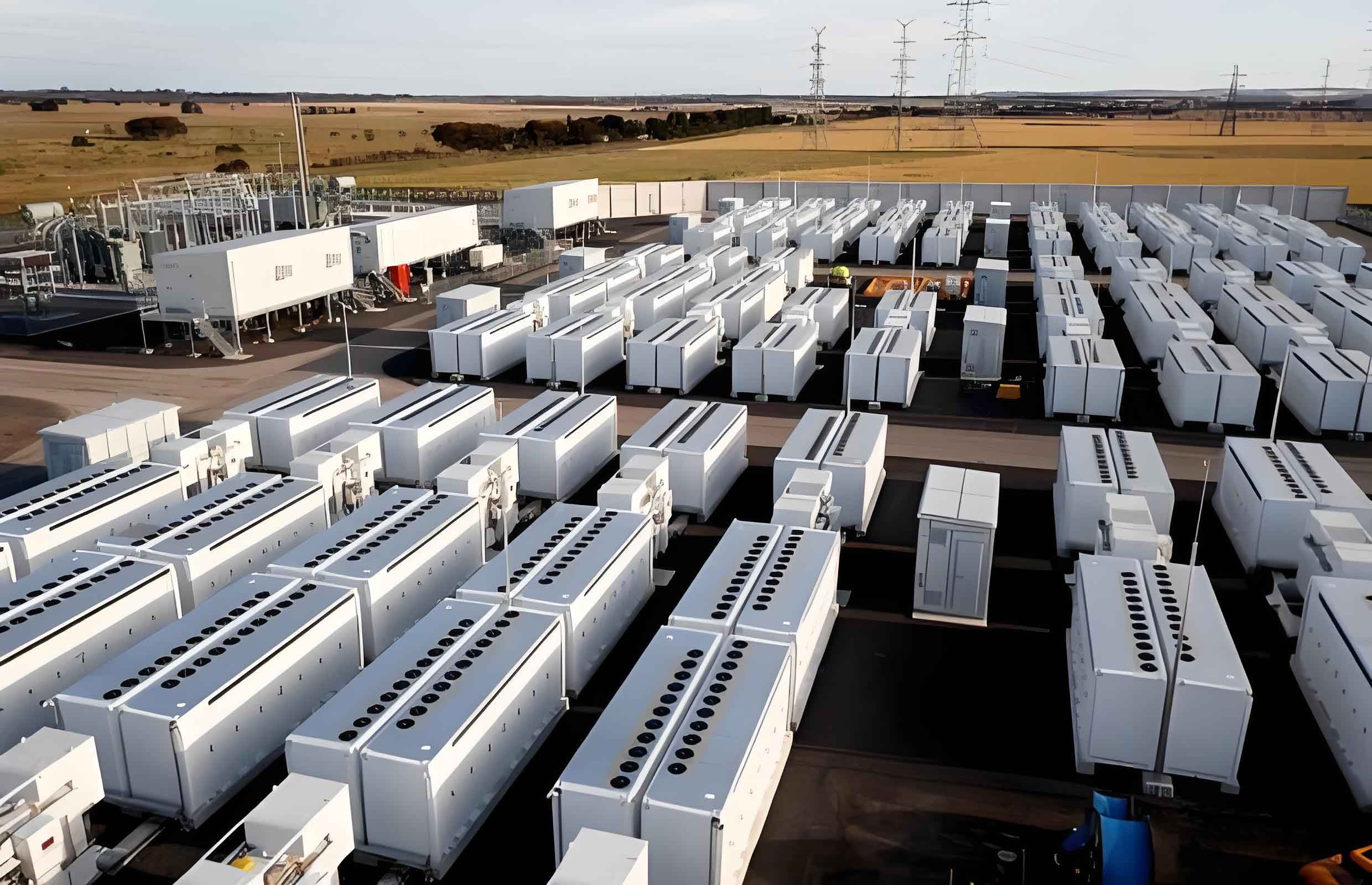
To begin, I analyze the operational dynamics of shared energy storage serving CCHP microgrids. A typical CCHP system integrates燃气 turbines,燃气 boilers, wind turbines, photovoltaic panels, and cooling/heating devices, providing electricity, heat, and cold to users. These systems often face challenges like curtailment of renewables due to their small scale and variable loads. By connecting to a shared energy storage battery station, they can store excess energy during low-demand periods and draw power during peaks, enhancing renewable utilization and reducing costs. The energy storage battery station profits through price arbitrage and service fees charged to CCHP systems for power exchanges. This setup not only improves economic outcomes but also supports grid stability by smoothing demand fluctuations.
My configuration model is built on a dual-layer optimization structure. The outer layer determines the optimal capacity and power rating of the shared energy storage battery station, while the inner layer optimizes the daily operation of CCHP systems under given storage parameters. The objective is to minimize the total lifecycle cost of the energy storage battery facility over a designated operational period, accounting for battery degradation. I formulate this as follows:
Let \( N_y \) be the design lifetime in years, \( N_w \) the number of typical days per year, and \( T_w \) the days corresponding to each typical day. The annual cost \( C_{ess} \) is minimized:
$$ \min C_{ess} = \frac{1}{N_y} \sum_{y=1}^{N_y} \sum_{w=1}^{N_w} T_w \left[ C_{inv} + \sum_{i=1}^{N_i} \left( C_{ess,s} – C_{ess,b} – C_{serve} \right) \right] $$
Here, \( C_{inv} \) represents the daily investment and maintenance cost of the energy storage battery station, \( C_{ess,s} \) is the cost of purchasing electricity from CCHP systems, \( C_{ess,b} \) is the revenue from selling electricity to CCHP systems, and \( C_{serve} \) is the service fee income. The investment cost includes capital expenses for power and capacity, amortized over the lifetime, and maintenance costs. For instance, if \( \delta_P \) is the unit power investment cost, \( \delta_S \) the unit capacity cost, \( \delta_M \) the unit maintenance cost, \( P_{ess,max} \) the maximum power, and \( E_{ess,max} \) the maximum capacity, then:
$$ C_{inv} = \frac{r(1+r)^\gamma}{N_w T_w [(1+r)^\gamma – 1]} \left( \delta_P P_{ess,max} + \delta_S E_{ess,max} \right) + \frac{\delta_M P_{ess,max}}{N_w T_w} $$
where \( r \) is the annual interest rate and \( \gamma \) the lifespan. The energy storage battery’s degradation directly influences \( E_{ess,max} \) over time, which I model using SOH calculations.
A key aspect of my research is the incorporation of battery health state changes. The energy storage battery, typically lithium iron phosphate (LiFePO4) due to its commercial prevalence, experiences capacity fade with cycling. I use the rain flow method to analyze the state-of-charge (SOC) profiles and determine discharge depths (DOD) for each cycle. This method involves rotating the SOC curve and tracing “rainflows” to identify half-cycles, which are then paired to form full cycles with specific DOD values. The DOD range is divided into intervals, such as [0, 40%], (40%, 60%], and (60%, 80%], with cycle counts \( n_{40} \), \( n_{60} \), and \( n_{80} \). The SOH is expressed as a function of cycles \( n \) for a given DOD:
$$ SOH = 1 + B_{DOD} n + C_{DOD} n^2 + D_{DOD} n^3 $$
where \( B_{DOD} \), \( C_{DOD} \), and \( D_{DOD} \) are coefficients derived from experimental data. By aggregating cycles and equivalently converting them to a reference DOD (e.g., 80%), I compute the annual SOH. The remaining capacity \( E’ \) of the energy storage battery at year-end is:
$$ E’ = E_{ess,max} \cdot SOH $$
This dynamic model ensures that configuration decisions reflect realistic battery aging, preventing overestimation of available energy storage battery capacity.
The inner-layer optimization focuses on CCHP system operation. For each CCHP system \( i \), the goal is to minimize daily costs, including grid electricity purchases,燃气 costs, and transactions with the energy storage battery station. The objective function is:
$$ \min C_{CCHP} = \frac{1}{N_y} \sum_{y=1}^{N_y} \sum_{w=1}^{N_w} \sum_{i=1}^{N_i} T_w \left( C_{grid} + C_{flue} – C_{ess,s} + C_{ess,b} + C_{serve} \right) $$
subject to constraints like power balances for electricity, cooling, and heating, device output limits, and exchange limits with the grid and energy storage battery station. For example, the electricity balance for a CCHP system at time \( t \) is:
$$ P_{GT}(t) + P_{WD}(t) + P_{PV}(t) + P_{grid}(t) + P_{ess,b}(t) = P_{ess,s}(t) + P_{EC}(t) + P_{LD}(t) $$
where \( P_{GT} \) is燃气 turbine output, \( P_{WD} \) wind power, \( P_{PV} \) photovoltaic power, \( P_{grid} \) grid purchase, \( P_{ess,b} \) power bought from the energy storage battery, \( P_{ess,s} \) power sold to the energy storage battery, \( P_{EC} \) electric chiller consumption, and \( P_{LD} \) electrical load. Similar equations govern cooling and heating, incorporating devices like燃气 boilers and heat exchangers.
To solve this dual-layer problem, I employ the Karush-Kuhn-Tucker (KKT) conditions to transform the inner layer into constraints for the outer layer. Since the inner optimization is convex and continuously differentiable, its KKT conditions provide necessary optimality criteria. I introduce Lagrange multipliers for constraints and apply complementary slackness, then linearize using big-M methods to obtain a single-level mixed-integer linear program. This allows efficient solving with tools like YALMIP and CPLEX. An iterative process adjusts battery SOH annually based on operational data, ensuring consistency between configuration and degradation.
For numerical validation, I consider three scenarios: Scenario 1 configures the shared energy storage battery without accounting for capacity attenuation; Scenario 2 includes battery degradation in the configuration; and Scenario 3 operates CCHP systems independently without any energy storage battery. The setup involves three CCHP systems connected to a shared station, with four typical days representing seasonal variations. Parameters include electricity prices, service fees, and battery specifications. The energy storage battery used is LiFePO4 with an initial SOH of 1, and the lifetime is set to 8 years. Results are summarized in the table below.
| Scenario | Rated Power (kW) | Rated Capacity (kWh) | Investment Cost (104 CNY) | CCHP Annual Cost (104 CNY) | Renewable Utilization (%) |
|---|---|---|---|---|---|
| 1 (No attenuation considered) | 4,050 | 10,796 | 245.31 | 238.32 | 100 |
| 2 (Attenuation considered) | 4,745 | 12,650 | 287.41 | 234.88 | 100 |
| 3 (No storage) | N/A | N/A | 0 | 270.44 | 68.9 |
As shown, integrating a shared energy storage battery significantly boosts renewable utilization from 68.9% to 100% and reduces CCHP costs. Scenario 2, which considers battery attenuation, requires a larger configuration (17.16% more capacity) but yields lower annual costs for CCHP systems compared to Scenario 1. This highlights the importance of factoring in energy storage battery degradation for economic optimization. Over the lifecycle, the energy storage battery’s SOH declines, affecting performance; my model captures this through iterative updates. For instance, in Scenario 1, without degradation consideration, the battery capacity may drop below 30% of initial by year 8, impairing profitability. In contrast, Scenario 2 maintains higher residual capacity, leading to better long-term returns.
To delve deeper, I analyze the cumulative net profit of the energy storage battery station over time. Let \( R_{cum}(y) \) denote the cumulative profit after year \( y \), calculated as total revenue minus costs. For Scenario 2, the initial investment is higher, but the profit decline is slower due to robust capacity planning. The profit curve can be approximated by:
$$ R_{cum}(y) = \sum_{k=1}^{y} \left[ \sum_{i=1}^{N_i} \left( \theta_0 (P_{ess,b}^T + P_{ess,s}^T) + (\theta_2 – \theta_1) P_{exchange} \right) – C_{inv} \right] $$
where \( \theta_0 \) is the service fee, \( \theta_1 \) and \( \theta_2 \) are buy/sell electricity prices, and \( P_{exchange} \) is the net power exchange. My simulations show that Scenario 2 surpasses Scenario 1 in cumulative profit after about 5 years, ending with a 21.68% higher profit at year 8. This demonstrates that upfront investment in a larger energy storage battery, guided by attenuation-aware configuration, pays off in the long run.
Further insights come from examining the battery SOC profiles and degradation patterns. Using the rain flow method on optimized SOC data, I compute annual DOD distributions and corresponding SOH values. For example, in year 1, a typical day might show SOC fluctuating between 10% and 90%, leading to DOD cycles that accelerate capacity fade. The energy storage battery’s health model updates each year, influencing operational constraints. The iterative solution process ensures consistency: I start with an initial SOH guess, solve the dual-layer model, derive new SOC curves, recalculate SOH via rain flow, and repeat until convergence. This method accurately reflects the coupling between configuration and degradation.
My approach also considers practical constraints on the energy storage battery station. The power and capacity must satisfy energy-to-power ratio limits:
$$ E_{ess,max} = \beta P_{ess,max} $$
where \( \beta \) is the energy ratio of the battery. Charging and discharging efficiencies \( \eta_{abs} \) and \( \eta_{relea} \) are included, and SOC bounds ensure safe operation. Additionally, the station cannot simultaneously charge and discharge, enforced by binary variables. These details are crucial for realistic modeling of energy storage battery behavior.
In terms of broader implications, my research underscores the value of shared energy storage in decarbonizing energy systems. By optimizing configuration with battery attenuation in mind, stakeholders can enhance sustainability and economic resilience. The energy storage battery plays a pivotal role here, as its longevity dictates system viability. Future work could explore different battery chemistries, dynamic pricing schemes, or integration with larger grids. However, the core principle remains: accounting for energy storage battery capacity attenuation is essential for effective shared storage deployment.
In conclusion, I have developed a dual-layer optimization framework for configuring shared energy storage battery stations that incorporates battery health degradation. Through rain flow analysis and SOH modeling, I capture capacity fade effects, leading to more robust configurations than those ignoring attenuation. Numerical results confirm that my approach reduces lifecycle costs, improves renewable utilization, and increases profitability for both storage providers and CCHP users. The energy storage battery, as a critical component, demands careful consideration in planning; my method provides a scalable solution for the growing shared storage market. As energy systems evolve, such models will be vital for harnessing the full potential of energy storage batteries in a sustainable economy.
To elaborate on technical details, the rain flow method algorithm involves parsing SOC time series data. Let \( SOC(t) \) be the state-of-charge at time \( t \), sampled over intervals. The algorithm identifies peaks and valleys, then applies rain flow counting to extract cycles. For each cycle, the DOD is computed as the difference between maximum and minimum SOC in that cycle. These DOD values are binned, and cycles are converted to equivalent cycles at a reference DOD using the SOH model. This process is automated in my simulation, enabling efficient lifespan assessment for the energy storage battery.
Moreover, the dual-layer model’s KKT transformation involves defining Lagrangian functions for the inner problem. For instance, with objective \( f(x) \) and constraints \( g(x) \leq 0 \), the Lagrangian is \( L(x, \lambda) = f(x) + \lambda^T g(x) \). The KKT conditions include stationarity, primal feasibility, dual feasibility, and complementary slackness. By adding these as constraints to the outer problem, I eliminate the inner optimization, simplifying computation. This approach is generalizable to other storage optimization problems involving energy storage batteries.
I also investigate sensitivity analyses, such as varying battery degradation rates or electricity prices. These analyses reinforce that energy storage battery performance is a key driver of system economics. For example, faster degradation necessitates larger initial capacity to maintain service levels, impacting investment decisions. My model can adapt to such variations, providing flexible planning tools.
In summary, the integration of shared energy storage battery systems with CCHP microgrids offers significant benefits, but only if battery attenuation is properly managed. My research contributes a practical methodology for achieving this, combining advanced modeling with realistic operational insights. As the world advances toward cleaner energy, such innovations will be crucial for building resilient and efficient power networks centered around reliable energy storage batteries.