
The proliferation of distributed photovoltaic (PV) generation represents a significant shift in modern energy systems. Characterized by on-site construction and a “self-consumption with surplus fed to the grid” model, distributed PV effectively reduces transmission losses associated with long-distance power delivery, thereby enhancing overall energy utilization efficiency. As supportive policies continue to evolve, the share of distributed PV in the energy mix is poised for substantial growth. At the heart of any distributed PV system lies the grid connected inverter, a device whose performance is paramount not only for the system’s own efficacy but also for the safety and stability of the wider grid it joins. This article delves into the technical intricacies of selecting an appropriate grid connected inverter for distributed solar installations.
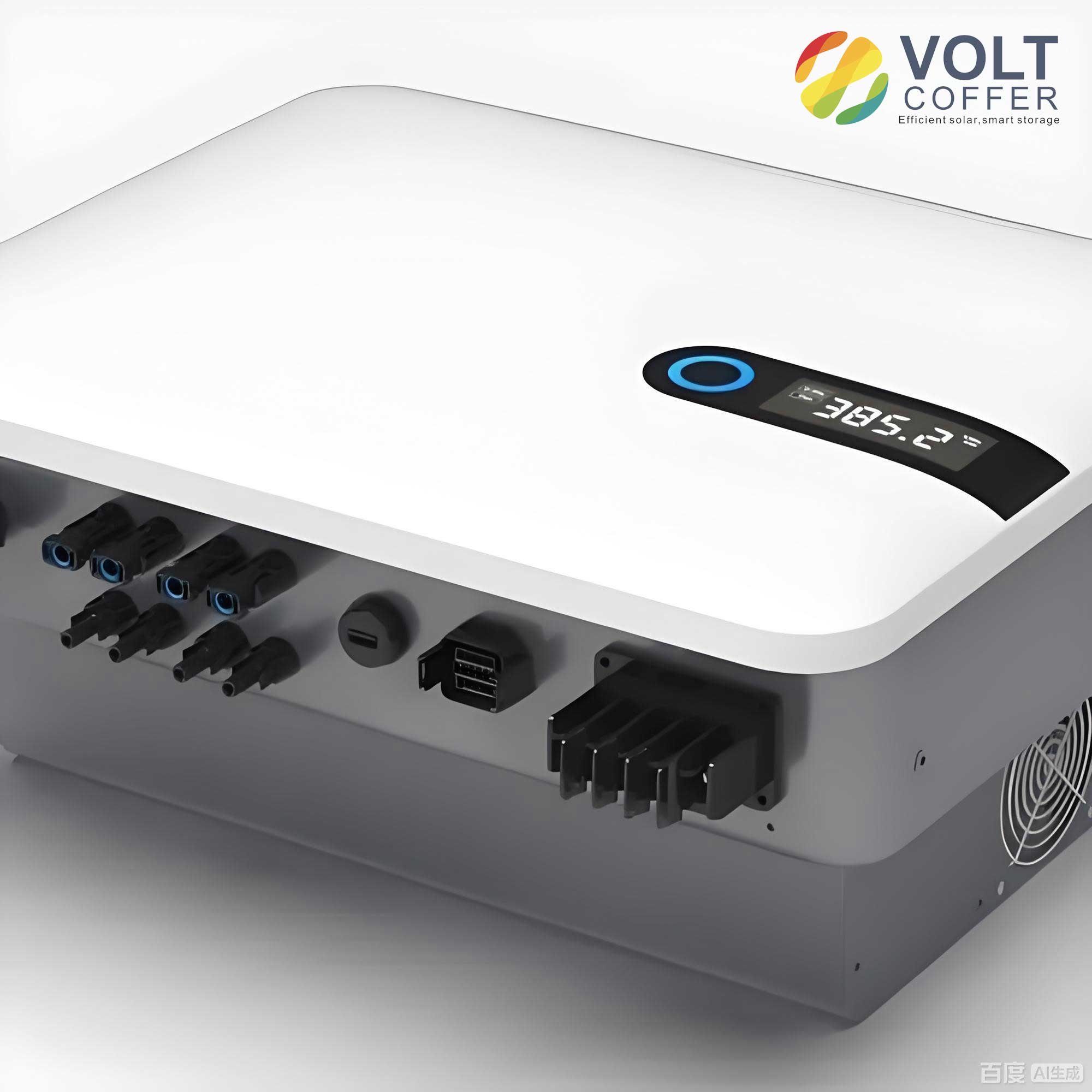
Classification of Grid-Connected Inverters
Grid connected inverters can be categorized based on several criteria, each influencing their application scope. Understanding these classifications is the first step toward a proper selection.
| Classification Basis | Type | Key Characteristics / Standards |
|---|---|---|
| Grid Connection Voltage Class | A Class Inverter | Applied in PV power stations. Must comply with grid connection requirements specified in standards like GB/T19964 (equivalent to high-power plant interconnection norms). |
| B Class Inverter | Applied in distributed PV systems. Must comply with requirements in standards like GB/T29319 for low- and medium-voltage interconnection. | |
| Output AC Phase | Single-Phase Inverter | Outputs single-phase AC, typically for small-scale residential systems (<~10 kW). |
| Three-Phase Inverter | Outputs three-phase AC, standard for commercial, industrial, and larger residential systems. | |
| Grid Interaction | Grid-Tie (On-Grid) Inverter | Synchronizes with the utility grid to feed power. Cannot operate during a grid outage (unless specifically designed with backup). |
| Off-Grid Inverter | Designed for standalone systems with battery storage, not for direct grid connection. | |
| Application Architecture | Central Inverter | High power (e.g., 500kW+). Multiple PV strings are combined into a DC bus before conversion. High efficiency but single point of failure. |
| String Inverter | Power range ~3-60 kW (mainstream 30-40 kW). Each inverter connects to one or several series-connected PV strings. Offers modularity, individual MPPT, and is dominant in sub-1 MW installations. | |
| Microinverter | Very low power (~250W-1 kW). Attached to individual or a few PV modules. Enables module-level MPPT and monitoring, maximizing yield in shaded conditions, but at higher cost. | |
| Operating Environment | Outdoor Type | Designed for direct outdoor installation with robust environmental protection. |
| Indoor Type I / II | Designed for controlled indoor environments with varying temperature specifications. | |
| Electrical Isolation | Isolated (Transformer-Based) | Incorporates a transformer (low-frequency or high-frequency) providing galvanic isolation between DC and AC sides. Enhances safety and prevents DC current injection. |
| Non-Isolated (Transformerless) | No transformer, leading to higher efficiency, lighter weight, and lower cost. Requires stringent protective measures to prevent DC injection. |
Principles for Selecting a Grid-Connected Inverter
The selection of a grid connected inverter must adhere to relevant design codes and standards, balancing technical parameters, environmental conditions, and economic viability. The core considerations are outlined below.
1. Power Rating and Sizing
The power rating of the grid connected inverter is fundamentally tied to the PV array’s capacity. The primary relationship is defined by the Inverter Loading Ratio (ILR) or oversizing ratio.
1.1 Nominal Matching: Ideally, the inverter’s rated AC power ($P_{inv, AC}$) is matched to the PV array’s expected maximum AC output. For sites with consistently high irradiance, a 1:1 ratio is common.
1.2 Oversizing (Overloading): To optimize system economics, the DC power of the PV array ($P_{PV, DC}$) is often larger than the inverter’s AC rating. This accounts for:
- PV module power degradation over time.
- Energy losses due to soiling, wiring, and mismatch.
- Sub-optimal irradiance conditions (the inverter rarely operates at full DC input for extended periods).
The Inverter Loading Ratio is calculated as:
$$ ILR = \frac{P_{PV, DC (STC)}}{P_{inv, AC}} $$
Where $P_{PV, DC (STC)}$ is the PV array power under Standard Test Conditions.
Based on IEC guidelines and operational data, a rational ILR typically falls between 1.1 and 1.3:
$$ 1.1 \leq ILR \leq 1.3 $$
For regions with poorer solar resources, a higher ILR (e.g., 1.2-1.3) can be beneficial to capture more energy during low-light periods, while a lower ILR (e.g., 1.0-1.1) may be suitable for high-irradiance regions.
1.3 Altitude Derating: The cooling capacity of air decreases with altitude. For installations above 2000m, the grid connected inverter must be derated. A common rule is a derating of approximately 0.5% for every 100m above 2000m.
$$ P_{inv, rated}(h) = P_{inv, rated}(0) \times \left[1 – 0.005 \times \frac{(h – 2000)}{100}\right] \quad \text{for } h > 2000m $$
Where $h$ is the installation altitude in meters.
2. Voltage Considerations
The voltage parameters of the grid connected inverter must satisfy constraints on both the DC input and AC output sides.
2.1 DC Input Voltage (MPPT Range): The maximum open-circuit voltage ($V_{OC}$) of any series-connected PV string must remain below the maximum DC input voltage ($V_{DC, max}$) of the inverter at the coldest expected ambient temperature.
$$ V_{OC, array}(T_{min}) = V_{OC, STC} \times [1 + \beta_{Voc} \times (T_{min} – T_{STC})] \leq V_{DC, max} $$
Where:
- $\beta_{Voc}$ is the module’s open-circuit voltage temperature coefficient (%/°C).
- $T_{min}$ is the minimum recorded/expected ambient temperature (°C).
- $T_{STC}$ = 25°C.
Conversely, the inverter’s Minimum DC Startup Voltage and MPPT lower limit must be below the operating voltage of the array under high-temperature conditions to ensure proper operation.
2.2 AC Output Voltage and Grid Connection: The choice of AC output voltage (and thus the inverter type) is dictated by system size and local grid codes. The following table provides a generalized guideline:
| System Capacity Range | Recommended AC Connection | Inverter Type & Configuration |
|---|---|---|
| ≤ 8 kW | 220/230V, Single-Phase | Single-phase grid connected inverter with power rating close to PV capacity. |
| 8 kW ~ 400 kW | 380/400V, Three-Phase | Three-phase grid connected inverter(s). For smaller systems within this range without a suitable 3-phase unit, multiple single-phase inverters can be used, provided the total PV capacity is divided equally among the three phases. |
| 400 kW ~ 6 MW | 10 kV (or higher), Three-Phase | Multiple medium-voltage three-phase inverters or low-voltage inverters coupled with a step-up transformer. A modular approach with several grid connected inverters operating in parallel is typical. |
The final decision must consider grid impact studies, feeder capacity, and specific utility requirements.
3. Protection Features
A reliable grid connected inverter is a critical protective device. Its protection features can be categorized as follows:
| Protection Category | Specific Functions | Purpose |
|---|---|---|
| DC Side / Internal Protection | Input Over/Under Voltage, Input Overcurrent, DC Short-Circuit, Over-Temperature, Surge/ Lightning Protection. | Protects the inverter’s internal circuitry from abnormal DC conditions and environmental transients. |
| AC Side / Grid Protection | Output Overvoltage, Output Overcurrent, Over/Under Frequency, Anti-Islanding. | Ensures the inverter disconnects safely during grid abnormalities to protect personnel, equipment, and the grid itself. |
Anti-Islanding Protection: This is mandatory for B-Class (distributed) grid connected inverters. They must detect a grid loss (island condition) and cease energizing the local network within 2 seconds. A-Class inverters for large plants may have different, often grid-operator-controlled, requirements.
4. Environmental Specifications
The grid connected inverter must be specified for its intended installation environment. Key parameters include:
| Parameter | Outdoor Type | Indoor Type I | Indoor Type II |
|---|---|---|---|
| Ambient Temperature | -20°C to +50°C | 0°C to +40°C | -20°C to +50°C |
| Relative Humidity | ≤ 100% (Condensation allowed) | ≤ 85% (No condensation) | ≤ 95% (No condensation) |
| Ingress Protection (IP) Rating | IP54 (Dust protected, water splashes) | IP20 (Finger touch protection only) | IP20 |
| Cooling Method | Natural Convection or Forced Air (with filters) | Natural or Forced Air | Natural or Forced Air |
For most distributed rooftop applications, an outdoor-type grid connected inverter with an IP65 rating (fully dust-tight and protected against water jets) is increasingly becoming the standard for enhanced durability.
5. Functional and Grid Support Capabilities
Modern grid connected inverters are expected to be active grid citizens. Essential functions include:
5.1 Electrical Isolation: Achieved via an internal transformer (in isolated types). This prevents DC current injection into the grid, a critical safety requirement in many standards, and provides a reference ground point.
5.2 Fault Ride-Through (FRT): Primarily for A-Class inverters in large plants. The inverter must remain connected and support the grid during short-duration voltage dips (Low Voltage Ride-Through – LVRT) or swells, as per grid code voltage vs. time profiles.
5.3 Voltage and Frequency Operating Range: The grid connected inverter must operate normally within a specified voltage window (e.g., 0.85 to 1.10 per unit) and frequency range (e.g., 47.5 – 51.5 Hz for a 50Hz grid), disconnecting safely outside these limits.
5.4 Communication and Monitoring: A mandatory feature. The inverter must have communication ports (RS485, Ethernet, WiFi, 4G) to transmit operational data (power, energy, faults) to a monitoring platform and receive control setpoints (e.g., active power curtailment).
5.5 Active Power Control: The ability to regulate real power output ($P_{out}$) as per a reference ($P_{ref}$) from an external controller or according to a pre-set curve. Control error should be within ±1%, with response time <1s.
$$ P_{out} = f(P_{ref}) \quad \text{with high accuracy and speed} $$
5.6 Reactive Power Control / Power Factor Regulation: Advanced inverters can provide or absorb reactive power ($Q$). They can operate in fixed Power Factor (PF) mode, fixed $Q$ mode, or voltage-dependent (Volt-Var) mode to support grid voltage stability.
$$ Q = \pm \sqrt{S_{rated}^2 – P^2} \quad \text{(within inverter capability curve)} $$
5.7 Reconnection Protocol: After a protective shutdown due to grid anomaly, a B-Class grid connected inverter should wait for a stable grid (typically verified for 60-300 seconds) before automatically reconnecting. This delay is configurable.
Conclusion
The selection of a grid connected inverter for a distributed photovoltaic plant is a multidimensional optimization process. It necessitates a careful balance between the technical parameters—such as power rating (considering oversizing and altitude effects), voltage ranges (DC input matching and AC output compliance), and comprehensive protection features—and the harsh realities of the installation environment, which dictate the required enclosure protection and temperature tolerance. Furthermore, the evolving role of distributed energy resources demands that the chosen grid connected inverter possesses advanced grid-support functions like reactive power control and seamless communication for smart grid integration. Ultimately, the optimal choice is one that aligns the system’s design goals (maximizing yield, ensuring safety, providing grid services) with reliability, longevity, and economic feasibility. A meticulous evaluation based on the principles outlined herein forms the foundation for a robust, efficient, and grid-friendly distributed PV installation.