
This paper investigates the critical safety issues of mobile energy storage batteries by proposing a state estimation model based on intelligent Battery Management System (BMS) technology. The study first analyzes the key technical parameters and safety characteristics of mobile energy storage batteries. The application of intelligent BMS technology and its main scenarios in battery safety are then examined. A battery model based on the BMS framework and a dual extended Kalman filter (DEKF) approach for battery status monitoring are established to estimate state of charge, internal resistance, capacity, and state of health. Simulation results demonstrate that the proposed DEKF model significantly improves the monitoring efficiency compared to the standard extended Kalman filter. The model offers a robust solution for enhancing the safety and reliability of mobile energy storage batteries in power systems.
1. Introduction
With the advancement of equipment technology, energy storage batteries are playing an increasingly important role as key energy storage devices. However, ensuring the safety, stability, and reliability of energy storage batteries presents a crucial challenge. During long-term operation, effective safety status monitoring is essential for early detection of potential issues and ensuring safe system operation. Traditional monitoring methods often rely on physical model-based mathematical modeling, which can be overly complex and suffer from low accuracy due to the internal physicochemical characteristics of batteries, especially under complex and variable real-world working conditions. To address these issues, intelligent Battery Management System (BMS) technology has emerged, employing advanced data processing, algorithms, and sensor technology to enhance the precision and real-time capability of battery safety status monitoring. This study aims to leverage intelligent BMS technology combined with a dual extended Kalman filter algorithm to achieve accurate monitoring of the safety status of mobile energy storage batteries. The dual extended Kalman filter, as an efficient state estimation method, can more accurately estimate key parameters such as state of charge, state of health, and temperature. Regarding battery safety characteristics, literature has explored safety developments in lithium iron phosphate battery storage systems and analyzed fire safety in lithium battery chemical energy storage stations. Studies have also proposed smart monitoring systems for battery electrochemical energy storage station safety and comprehensive performance evaluation standards for energy storage lithium batteries oriented towards safe and high-quality applications. The safety evaluation of lithium-ion battery energy storage and detection methods based on fire accident tree models have also been investigated. These studies indicate that safety performance assessment and judgment for batteries, especially lithium-based, are crucial for system operation. In terms of intelligent BMS application, research on electric vehicle power battery safety management systems and safety management analysis of electric vehicle batteries has been conducted. The above references demonstrate that BMS is widely applied, primarily in electric vehicles, and highlight the necessity of BMS for maintaining safe operation of energy storage batteries in mobile applications. For Kalman filter state estimation, techniques based on battery energy storage systems and dual extended Kalman filters for wind power intelligent scheduling have been proposed. Joint estimation methods for energy and power states of energy storage batteries using extended Kalman filters, as well as SOH estimation methods based on improved dual Kalman filters, have been developed. The impact of measurement and modeling errors on the accuracy of unscented Kalman filter SOC algorithms has been analyzed. Furthermore, adaptive extended Kalman filter methods for state of charge estimation of energy storage batteries have been presented. These studies indicate that Kalman filtering provides reliable and accurate battery state estimation. However, research on extended Kalman filtering for dynamic changes in battery resistance and capacity remains limited, necessitating further investigation. Therefore, this paper proposes a safety estimation model for mobile energy storage batteries based on intelligent BMS technology, focusing on estimating battery state of charge, internal resistance, capacity, and state of health. The application process of BMS in intelligent estimation is considered, and the model is analyzed in the context of high-capacity mobile energy storage requirements for power utilities.
2. Technical Parameters of Mobile Energy Storage Batteries
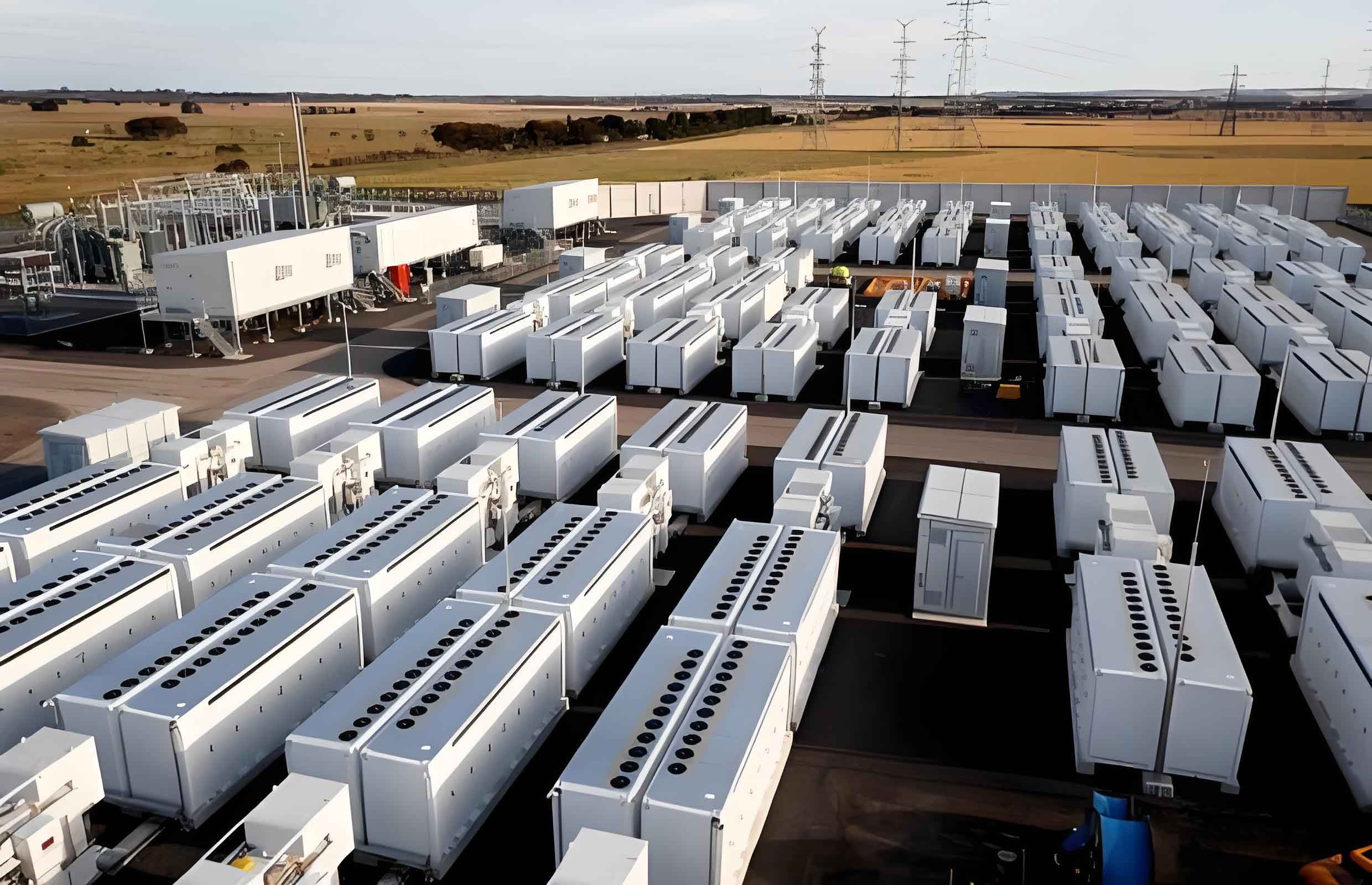
Mobile energy storage primarily employs battery types such as lead-carbon batteries, lithium iron phosphate batteries, and vanadium redox flow batteries. Among these, lithium iron phosphate batteries are most widely used due to their high capacity and long life. This study focuses on lithium-based batteries. Key technical parameters include:
| Parameter | Description | Unit |
|---|---|---|
| Capacity | Total energy that can be stored, e.g., kilowatt-hours (kWh) | kWh |
| Energy Density | Energy stored per unit volume or mass | Wh/L or Wh/kg |
| Power Density | Rate of energy release per unit volume or mass | W/L or W/kg |
| State of Charge (SoC) | Percentage of remaining charge relative to maximum capacity | % |
| Open-Circuit Voltage (OCV) | Voltage when no load is connected | V |
| Internal Resistance | Opposition to current flow within the battery | Ω |
| Charge/Discharge Rate (C-rate) | Rate at which battery is charged or discharged relative to its capacity | C |
Understanding these parameters is essential for assessing the safety and performance of mobile energy storage batteries.
3. Safety Characteristics of Mobile Energy Storage Batteries
Safety hazards for energy storage batteries include overcharge, overcurrent, internal short circuits, external short circuits, and excessive temperature. These are influenced by module structure, material selection, BMS, and cell thermal management.
| Safety Factor | Influence | Potential Consequence |
|---|---|---|
| Module Structure | Poor design leads to uneven temperature distribution; good design isolates cells and dissipates heat | Thermal runaway, fire, explosion |
| Material Selection | Lithium iron phosphate provides better thermal stability; improper materials increase risk | Decreased stability, higher thermal runaway risk |
| BMS | Inadequate BMS fails to detect overcharge, overcurrent, or high temperature | Thermal runaway, safety incidents |
| Cell Thermal Management | Absence or failure of temperature sensors and cooling measures | Uncontrolled temperature rise, fire |
Addressing these factors through proper design and control is critical for ensuring the safety of mobile energy storage batteries.
4. Intelligent BMS Technology
An intelligent BMS is responsible for monitoring, controlling, and protecting the battery to ensure safe, stable, and efficient operation. Key technical principles include:
- Parameter Monitoring: Real-time sensing of voltage, current, temperature, and SoC.
- State Estimation & Prediction: Using mathematical models and algorithms to estimate remaining capacity, health, and lifetime.
- Battery Protection & Balancing: Preventing overcharge, overdischarge, overcurrent, and overtemperature; balancing cell voltages.
- Communication & Control: Remote monitoring and control via data transmission.
The functional modules of a typical BMS include:
| Module | Function |
|---|---|
| Parameter Acquisition | Measures voltage, current, temperature, etc. |
| State Estimation & Control | Analyzes data, estimates state, controls charging/discharging. |
| Protection | Responds to abnormal conditions (overcharge, overdischarge, short circuit). |
| Equalization | Balances cell voltages to improve lifespan. |
| Communication | Transmits data to external systems. |
BMS plays a vital role in safety management by implementing overcharge/overdischarge protection, temperature monitoring and control, short circuit protection, and battery health monitoring. For example, insufficient charging or overvoltage can lead to smoke, fire, or leakage, as summarized in the table below:
| BMS Charging Management | Effect | Safety Concern |
|---|---|---|
| No energy input | Insufficient output | System failure |
| Low energy input | Insufficient output | Power loss |
| Overvoltage per cell | Overcurrent in pack | Smoke, fire, leakage (unsafe exotherm) |
| High system voltage | Exposed high voltage | Electric shock hazard |
5. Battery Modeling and Safety State Estimation
5.1 Battery Equivalent Circuit Model
An equivalent circuit model is used to represent the lithium battery. The model includes open-circuit voltage (OCV), series resistance $R_0$, and two RC networks ($R_1C_1$ and $R_2C_2$) representing transient dynamics.
The battery output voltage $V_b$ is a function of SoC $z(t)$ and is expressed as:
$$ V_b(t) = V_{ocv}(z(t)) – I(t)R_0 – V_1(t) – V_2(t) $$
The OCV is modeled as a polynomial of SoC:
$$ V_{ocv}(z(t)) = \sum_{m=1}^{6} p_m z(t)^{6-m} $$
The SoC update equation is:
$$ z(t+1) = z(t) – \frac{\Delta T}{Q} \eta(t) I(t) $$
where $\Delta T$ is the sampling time, $Q$ is the battery capacity, and $\eta$ is the Coulombic efficiency.
The voltages across the RC networks evolve as:
$$ V_1(t+1) = V_1(t) \left(1 – \frac{\Delta T}{R_1C_1}\right) + \frac{\Delta T}{C_1} I(t) $$
$$ V_2(t+1) = V_2(t) \left(1 – \frac{\Delta T}{R_2C_2}\right) + \frac{\Delta T}{C_2} I(t) $$
The state-space model is:
$$ \mathbf{x}(t+1) = \mathbf{A} \mathbf{x}(t) + \mathbf{B} u(t) + \mathbf{w}(t) $$
where $\mathbf{x} = [V_1, V_2, z]^T$, $u = I$, and
$$ \mathbf{A} = \begin{bmatrix}
1 – \frac{\Delta T}{R_1C_1} & 0 & 0 \\
0 & 1 – \frac{\Delta T}{R_2C_2} & 0 \\
0 & 0 & 1
\end{bmatrix}, \quad
\mathbf{B} = \begin{bmatrix}
\frac{\Delta T}{C_1} \\
\frac{\Delta T}{C_2} \\
-\frac{\Delta T}{Q} \eta(t)
\end{bmatrix} $$
The model parameters are identified by minimizing the sum of squared errors between measured and estimated voltages using a nonlinear generalized reduced gradient algorithm:
$$ F = \min \sum_{i=1}^{n} (V_b(i) – \hat{V}_b(i))^2 $$
subject to the constraints $V_b(t) = V_{ocv}(z(t)) – I(t)R_0 – V_1(t) – V_2(t)$ and $C_1, C_2, R_1, R_2 \geq 0$.
5.2 Dual Extended Kalman Filter for Battery Monitoring
The dual extended Kalman filter (DEKF) uses two EKFs: one for fast-varying states (x) and one for slow-varying parameters ($\theta$). The state EKF estimates SoC, $V_1$, and $V_2$, while the parameter EKF estimates internal resistance $R_0$ and capacity $Q$.
The parameter dynamics are modeled as:
$$ \theta_{k+1} = \theta_k + q_k $$
where $\theta = [R_0, Q]^T$ and $q_k$ is process noise.
The state of health (SoH) is estimated using capacity degradation:
$$ \text{SoH} = \frac{C_i}{C_0} \times 100\% $$
where $C_i$ is estimated capacity and $C_0$ is nominal capacity.
Alternatively, SoH based on internal resistance is:
$$ \text{SoH} = \frac{R_{eol} – R_b}{R_{eol} – R_n} \times 100\% $$
with $R_{eol} = 1.6 R_n$, where $R_{eol}$ is end-of-life resistance, $R_b$ is measured resistance, and $R_n$ is new battery resistance.
The monitoring process is as follows:
- State-space modeling: Build the model with states SoC, $V_1$, $V_2$.
- Dual EKF update: Use voltage and current measurements to recursively update state and parameter estimates.
- Parameter estimation: Obtain real-time estimates of SoC, $R_0$, $Q$, and SoH.
6. Simulation Results and Analysis
6.1 Simulation Setup
Simulations were performed in MATLAB for a 50 kWh mobile energy storage battery used in distribution grid maintenance. The battery was subjected to charging and discharging cycles under standard conditions.
6.2 State of Charge Estimation
The DEKF was used to estimate SoC during charge and discharge cycles. The results showed high accuracy: for a charging cycle, the SoC estimation error was 0.3% and voltage error 0.13%; for a discharging cycle, the SoC error was 0.58% and voltage error $1.05 \times 10^{-4}$. The DEKF outperformed the standard EKF, as shown in the table below.
| Cycle | SoC Estimation Error (Charge) | SoC Estimation Error (Discharge) | ||
|---|---|---|---|---|
| EKF | DEKF | EKF | DEKF | |
| 1 | 0.0094 | 0.0059 | 0.0014 | 0.0019 |
| 2 | 0.0032 | 0.0019 | 0.0058 | 0.0045 |
| 3 | 0.0105 | 0.0147 | 0.0087 | 0.0078 |
The DEKF generally produced lower absolute errors because it simultaneously updated internal resistance and capacity, leading to more accurate SoC estimation.
6.3 State of Health Estimation
Capacity-based SoH remained at 100% after three cycles, as the battery was new. The internal resistance method showed slight degradation, as shown in the tables.
| Cycle | Capacity (Ah) | SoH (%) |
|---|---|---|
| 1 | 1400 | 100 |
| 2 | 1400 | 100 |
| 3 | 1400 | 100 |
| Cycle | Internal Resistance (Ω) | SoH (%) |
|---|---|---|
| 1 | 0.030073 | 99.91 |
| 2 | 0.030042 | 99.96 |
| 3 | 0.030005 | 99.98 |
The DEKF tracked minor changes in internal resistance, allowing early detection of aging effects in the energy storage battery.
7. Conclusion
This paper presented a safety analysis and estimation model for mobile energy storage batteries based on intelligent BMS and dual extended Kalman filter. The proposed DEKF model demonstrated superior performance over the standard EKF, achieving lower estimation errors for SoC and providing reliable SoH assessment through capacity and internal resistance tracking. The simulation results confirmed that the DEKF approach enhances the accuracy of state estimation, especially under dynamic conditions. This work contributes to improving the safety and reliability of mobile energy storage batteries in power system applications by enabling precise monitoring of critical parameters. Future research can extend the model to incorporate thermal dynamics and multiple degradation modes to further enhance safety predictions for large-scale energy storage battery systems.