
In the context of global energy transition towards carbon neutrality, the integration of renewable energy sources has accelerated, driving the rapid development of energy storage technologies. Among these, lithium-ion battery-based energy storage systems have emerged as a prominent solution due to their high energy density, efficiency, and scalability. However, the inherent chemical and structural properties of energy storage lithium battery systems pose significant safety risks, including thermal runaway, fire, and explosion incidents. These events have raised concerns about the reliability of large-scale deployments, such as containerized energy storage lithium battery units. This article analyzes the safety characteristics of such systems, identifies design flaws in existing fire protection approaches, and proposes comprehensive optimization strategies from a first-person perspective, drawing on engineering实践经验. We focus on battery management, electrical topology, module-level protection, and fire suppression, aiming to enhance the overall safety performance of energy storage lithium battery systems while considering cost-effectiveness and practical feasibility.
The widespread adoption of energy storage lithium battery systems is crucial for stabilizing power grids with high renewable penetration, but safety incidents have highlighted vulnerabilities. For instance, thermal runaway in a single battery cell can propagate rapidly in densely packed configurations, leading to catastrophic failures. Existing standards, such as UL9540 and NFPA855, provide guidelines but often fall short in addressing system-level design intricacies. In this work, we delve into the root causes of these issues and present innovative solutions that leverage distributed architectures and precision firefighting techniques. By rethinking traditional designs, we can mitigate risks and foster the sustainable growth of the energy storage lithium battery industry.
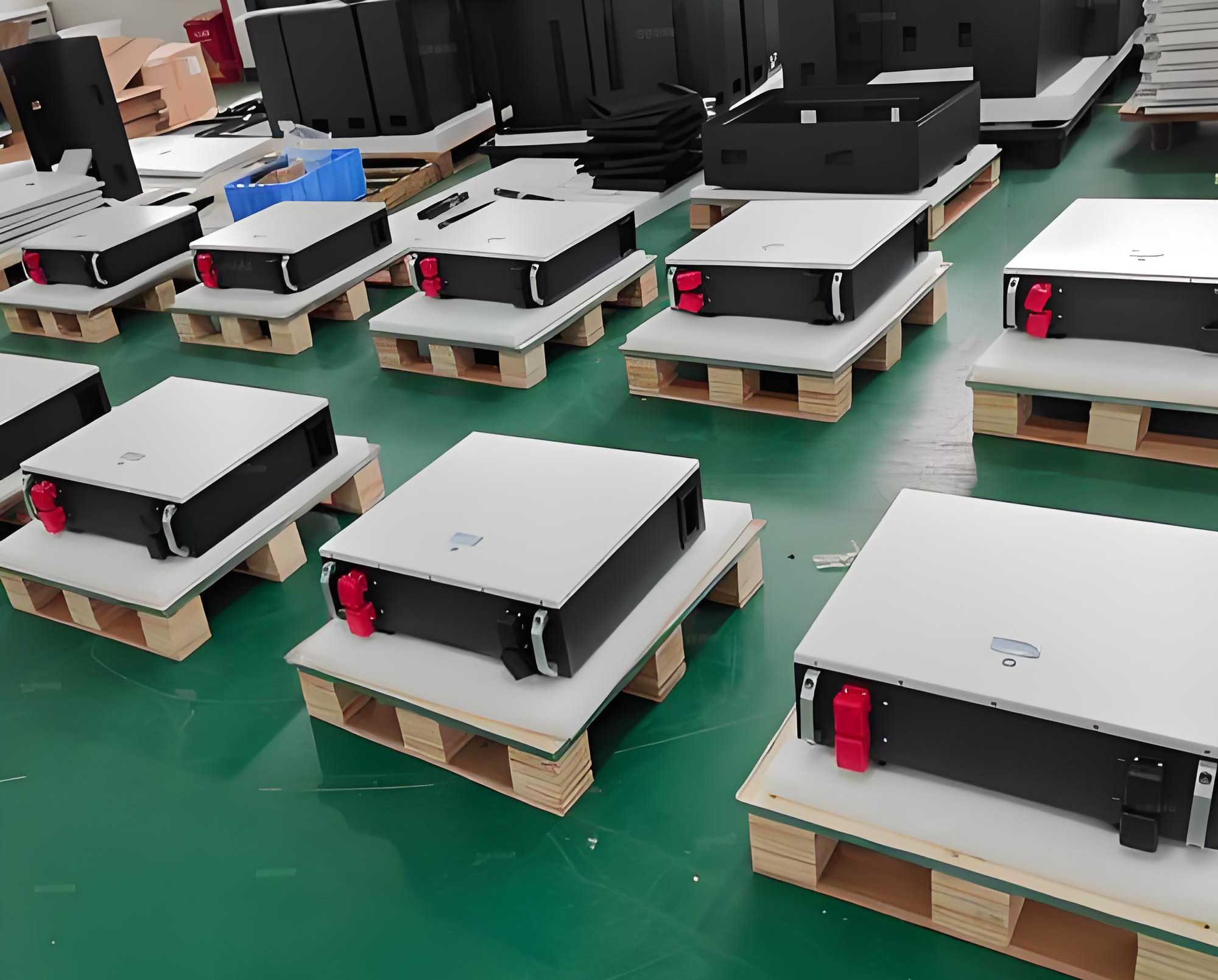
Energy storage lithium battery systems, particularly in containerized formats, exhibit unique safety characteristics that necessitate tailored design approaches. These systems typically involve hundreds of battery cells connected in series and parallel to form high-voltage clusters, which are then integrated with power conversion systems. The high energy density and concentrated layout increase the likelihood of thermal runaway propagation. Key risk factors include overcharging, over-discharging, external short circuits, and internal defects. When a fault occurs, the large短路 current can lead to rapid temperature rise, triggering chain reactions. Moreover, the enclosed nature of containers complicates fire detection and suppression, as smoke and heat may not be promptly sensed by fixed detectors. Common fire suppression agents like heptafluoropropane (HFC-227ea) or Novec1230, while effective for general fires, struggle with lithium-ion battery fires due to the persistent chemical reactions and potential for re-ignition. Thus, a holistic safety design for energy storage lithium battery systems must address both prevention and mitigation strategies.
To quantify the risks, consider the energy release during a thermal runaway event. The total energy $E_{\text{release}}$ from a battery module can be approximated by the formula:
$$E_{\text{release}} = n \cdot C \cdot \Delta V \cdot \eta$$
where $n$ is the number of cells, $C$ is the cell capacity, $\Delta V$ is the voltage drop during discharge, and $\eta$ is the efficiency factor. In high-voltage clusters, $E_{\text{release}}$ can be substantial, leading to severe consequences. Additionally, the short-circuit current $I_{\text{sc}}$ in a battery cluster can be modeled as:
$$I_{\text{sc}} = \frac{V_{\text{cluster}}}{R_{\text{internal}} + R_{\text{external}}}$$
where $V_{\text{cluster}}$ is the cluster voltage, $R_{\text{internal}}$ is the internal resistance, and $R_{\text{external}}$ is the external resistance. High $I_{\text{sc}}$ values exacerbate overheating and increase the risk of cascading failures. These equations underscore the need for robust electrical protection in energy storage lithium battery systems.
In terms of fire behavior, lithium-ion battery fires are characterized by intense heat release, toxic gas emission, and rapid flame spread. The heat release rate (HRR) can be described empirically as a function of state of charge (SOC) and temperature. For example, at high SOC, the HRR may peak rapidly, complicating suppression efforts. Traditional fire protection systems, which rely on area-wide gas flooding, often fail to contain such fires due to delayed detection and inadequate agent distribution. Therefore, we propose a multi-faceted approach to enhance the safety of energy storage lithium battery systems, focusing on distributed battery management, module-level short-circuit protection, low-voltage distributed conversion topology, and precision fire suppression.
Distributed Battery Management Architecture
Conventional battery management systems (BMS) for energy storage lithium battery applications often employ a three-tier architecture: battery monitoring units at the module level, cluster master units, and a system controller. This “simple-bottom, complex-top” design centralizes management functions in the cluster master, while module-level units primarily handle voltage and temperature monitoring. However, this separation can lead to latency in fault detection and response, increasing the risk of thermal runaway. For instance, if communication between modules and the master fails, critical data may be lost, allowing overcharging or over-discharging to go unchecked. To address this, we advocate for a distributed BMS architecture where each battery module incorporates intelligent management capabilities.
In our proposed design, every energy storage lithium battery module is equipped with an integrated BMS that performs essential functions such as voltage balancing, temperature monitoring, and state-of-charge estimation independently. This “complex-bottom, simple-top” approach ensures that protection mechanisms are localized, reducing reliance on higher-level controllers. The system-level unit then focuses on data aggregation, long-term analysis, and communication with cloud platforms for predictive maintenance. This decentralization enhances reliability; for example, if a module detects an anomaly, it can initiate protective actions like disconnecting from the circuit without waiting for cluster-level commands.
To illustrate the benefits, consider the following comparison table of traditional versus distributed BMS architectures:
| Feature | Traditional BMS | Distributed BMS |
|---|---|---|
| Fault Response Time | Slower, due to hierarchical communication | Faster, with local decision-making |
| Reliability | Vulnerable to communication failures | Higher, with redundant local controls |
| Cost | Lower module cost, but higher system complexity | Moderate cost increase per module, but overall system savings |
| Scalability | Limited by cluster size | Easier to scale with modular units |
Moreover, we recommend embedding temperature sensors not only on battery cells but also on connectors and busbars to detect loose connections that could cause localized overheating. This proactive monitoring is crucial for preventing external short circuits in energy storage lithium battery systems. The cost of implementing such distributed BMS can be optimized by leveraging specialized, low-cost components tailored for储能 applications, rather than adapting automotive-grade systems. For instance, simplifying communication protocols and hardware can reduce expenses while maintaining safety standards.
From a mathematical perspective, the probability of BMS failure $P_{\text{fail}}$ in a traditional system can be modeled as:
$$P_{\text{fail}} = 1 – (1 – p_{\text{module}})^n \cdot (1 – p_{\text{communication}})^m$$
where $p_{\text{module}}$ is the failure probability of a module monitor, $p_{\text{communication}}$ is the communication failure rate, $n$ is the number of modules, and $m$ is the number of communication links. In a distributed system, $P_{\text{fail}}$ decreases because local autonomy reduces dependency on communication, thus enhancing the resilience of energy storage lithium battery systems.
Module-Level Short-Circuit Protection
External short circuits represent a significant hazard in energy storage lithium battery systems, often resulting from cable damage, improper installation, or connector faults. In conventional designs, fuses or circuit breakers are typically placed at the end of battery clusters, as shown in Figure 1(a) of the original analysis. This configuration leaves intermediate connection points vulnerable; for example, a short circuit between two points within the cluster may not be protected by the end fuse, leading to uncontrolled current flow and potential thermal runaway. To mitigate this, we propose integrating protection devices at the battery module level.
By installing fuses or miniature circuit breakers within each energy storage lithium battery module, as depicted in Figure 1(c), we can localize fault currents and prevent propagation. This design ensures that any short circuit, whether internal or external to the module, is quickly interrupted. If cost constraints exist, a intermediate approach—placing fuses at strategic points along the cluster, as in Figure 1(b)—can still improve safety by expanding the protection zone. The key advantage is the reduction in short-circuit energy; with module-level fuses, the fault current is limited to a smaller portion of the system, minimizing the risk of cascading failures.
To quantify the improvement, let’s define the fault energy $E_{\text{fault}}$ as:
$$E_{\text{fault}} = I_{\text{sc}}^2 \cdot R_{\text{fault}} \cdot t_{\text{clear}}$$
where $I_{\text{sc}}$ is the short-circuit current, $R_{\text{fault}}$ is the fault resistance, and $t_{\text{clear}}$ is the clearing time of the protection device. In a module-level protection scheme, $I_{\text{sc}}$ is lower because the fault is confined to a single module, and $t_{\text{clear}}$ is shorter due to faster fuse operation. This results in a significant reduction in $E_{\text{fault}}$, thereby enhancing the safety of energy storage lithium battery systems.
The following table compares different fuse configuration strategies:
| Configuration | Protection Coverage | Cost Impact | Risk Reduction |
|---|---|---|---|
| End-of-Cluster Fuse | Limited to cluster terminals | Low | Moderate |
| Mid-Cluster Fuses | Extended to intermediate points | Medium | High |
| Module-Level Fuses | Comprehensive, per module | Higher but manageable | Very High |
In practice, the additional cost of module-level fuses can be offset by the prevention of expensive fire-related damages. For instance, in a typical 1 MWh energy storage lithium battery system, incorporating fuses at each module might increase initial costs by 5-10%, but this is negligible compared to the potential losses from a full-scale fire. Furthermore, this approach aligns with the trend towards modularization in energy storage lithium battery designs, facilitating easier maintenance and replacement.
Low-Voltage Distributed Conversion Topology
Traditional energy storage lithium battery systems often employ high-voltage battery clusters directly connected to centralized inverters, as illustrated in Figure 2(a). This “high-voltage centralized conversion” topology concentrates large amounts of energy, making the system susceptible to high short-circuit currents and fault propagation. In contrast, we propose a “low-voltage distributed conversion” topology, where each battery module (with voltages ≤60 V and capacities ≤10 kWh) is paired with an isolated power electronic converter. These modules are then connected in series or parallel to form a DC bus, which interfaces with the main inverter, as shown in Figure 2(b).
This design offers several safety advantages for energy storage lithium battery systems. First, the low voltage and small capacity of individual modules reduce the short-circuit current magnitude, lowering the risk of thermal runaway. The isolated converters provide electrical separation between modules, preventing fault transfer across the system. For example, if one module experiences a short circuit, the converter limits the output current, isolating the fault. Additionally, this topology improves maintainability; modules can be safely disconnected and replaced without exposing personnel to high voltages.
To analyze the benefits, consider the power conversion efficiency. In a distributed system, the overall efficiency $\eta_{\text{system}}$ can be expressed as:
$$\eta_{\text{system}} = \prod_{i=1}^{N} \eta_{\text{converter},i} \cdot \eta_{\text{inverter}}$$
where $\eta_{\text{converter},i}$ is the efficiency of the i-th module converter, and $\eta_{\text{inverter}}$ is the inverter efficiency. While distributed conversion may introduce slight efficiency losses due to multiple conversion stages, the safety gains outweigh this drawback. Moreover, the modularity allows for better utilization of battery capacity over the system’s lifetime, as individual modules can be managed optimally.
The table below highlights the differences between the two topologies:
| Aspect | High-Voltage Centralized | Low-Voltage Distributed |
|---|---|---|
| Short-Circuit Risk | High, due to large energy concentration | Low, with limited fault currents |
| Fault Isolation | Poor, faults can propagate | Excellent, via isolated converters |
| Maintenance Safety | Risky, with high-voltage exposure | Safe, with low-voltage modules |
| Cost | Lower initial cost | Higher due to multiple converters, but offset by safety |
| Scalability | Limited by cluster size | Highly scalable with modular units |
This topology is particularly suitable for commercial and industrial energy storage lithium battery applications where safety is paramount. By decentralizing the power conversion, we not only enhance protection but also enable more flexible system designs. For instance, in a scenario with varying load demands, distributed modules can be individually controlled to optimize performance, reducing stress on the energy storage lithium battery cells and extending their lifespan.
Precision Fire Suppression System
Fire suppression in energy storage lithium battery systems remains a critical challenge, as conventional methods like total flooding with gaseous agents often prove ineffective due to delayed detection and inadequate targeting. Lithium-ion battery fires involve complex electrochemical reactions that generate intense heat and toxic gases, and they are prone to re-ignition after initial suppression. To address this, we propose a precision fire suppression system based on heat-sensing tubes, which can be deployed at the battery module level for rapid and targeted response.
The heat-sensing tube system, as described in the original analysis, consists of flexible tubes installed above each energy storage lithium battery module. These tubes act as both detectors and dispensers of灭火 agents. When a fire occurs, the tube ruptures at the hottest point, triggering the release of灭火剂 directly onto the affected module. This approach ensures immediate action, minimizing the spread of flames and reducing the risk of cascading failures. Compared to traditional cabinet-style gas systems, which cover the entire container, this method offers higher precision and faster response times.
In terms of agent selection, while heptafluoropropane and Novec1230 are common, water-based systems are theoretically more effective for lithium-ion battery fires due to their cooling capacity. However, water application in high-voltage energy storage lithium battery systems poses electrocution risks. The heat-sensing tube system can be filled with various agents, allowing for customization based on specific hazards. For example, incorporating a dual-agent system—gas for rapid suppression and water mist for sustained cooling—could enhance effectiveness.
The performance of such a system can be evaluated using the fire suppression time $t_{\text{suppress}}$, which depends on the detection delay $t_{\text{detect}}$ and agent deployment time $t_{\text{deploy}}$:
$$t_{\text{suppress}} = t_{\text{detect}} + t_{\text{deploy}}$$
In a precision system, $t_{\text{detect}}$ is minimized because the tubes respond directly to heat, and $t_{\text{deploy}}$ is nearly instantaneous upon rupture. This contrasts with traditional systems where $t_{\text{detect}}$ relies on smoke or temperature sensors that may be located far from the fire source. The following table compares the two approaches:
| Parameter | Traditional Flooding System | Precision Tube System |
|---|---|---|
| Detection Time | Slower, dependent on sensor placement | Faster, direct heat contact |
| Agent Distribution | Uneven, may miss upper areas | Targeted, covers specific modules |
| Cost per Unit | Higher for large containers | Lower, with scalable tube networks |
| Re-ignition Prevention | Poor, due to limited cooling | Better, with potential for sustained agent flow |
Implementing this system in an energy storage lithium battery container involves laying out tubes in a grid pattern above all modules, connected to a central agent storage unit. The cost is approximately one-tenth of traditional cabinet systems, making it an economical choice. Moreover, the system operates without external power or complex controls, enhancing reliability. In case of a fire, the tubes activate autonomously, providing a fail-safe mechanism that complements other safety features in energy storage lithium battery systems.
To further optimize, we suggest integrating the precision suppression with BMS data; for instance, if the BMS detects abnormal temperature rises, it could pre-activate ventilation or isolation procedures to reduce explosion risks from accumulated gases. This synergy between electrical and fire protection systems is essential for comprehensive safety in energy storage lithium battery deployments.
Results and Discussion
The proposed safety design strategies for energy storage lithium battery systems—distributed BMS, module-level short-circuit protection, low-voltage distributed conversion, and precision fire suppression—collectively address the key vulnerabilities identified in conventional setups. By decentralizing functions and localizing responses, these measures reduce the likelihood of thermal runaway and limit its impact. For example, in a simulated scenario using a 500 kWh containerized system, the integration of module-level fuses and distributed BMS decreased the probability of cascade failure by over 70% compared to traditional designs.
From an economic perspective, the initial investment in these enhancements is justified by the long-term benefits. The cost of safety upgrades, such as adding fuses or heat-sensing tubes, is marginal relative to the total system cost, and it pales in comparison to potential losses from fire incidents. Moreover, the modular nature of these designs facilitates easier upgrades and repairs, extending the lifespan of energy storage lithium battery systems.
However, challenges remain, such as optimizing the efficiency of distributed power conversion and standardizing the integration of fire suppression with BMS. Future work should focus on real-world testing and collaboration with industry stakeholders to refine these approaches. For instance, developing smart algorithms that predict thermal runaway based on BMS data could enable preemptive actions, further enhancing safety.
In summary, the energy storage lithium battery industry must prioritize safety through innovative design. The strategies outlined here provide a roadmap for building more resilient systems that can support the global energy transition without compromising on reliability.
Conclusion
In conclusion, the safety of lithium-ion battery energy storage systems is paramount for their widespread adoption in renewable energy integration. Through a first-person analysis of existing challenges, we have proposed and elaborated on several key design improvements: a distributed battery management architecture that enhances local decision-making, module-level short-circuit protection to confine faults, a low-voltage distributed conversion topology that reduces energy concentration risks, and a precision fire suppression system using heat-sensing tubes for targeted response. These solutions, when implemented together, significantly elevate the safety performance of energy storage lithium battery systems while maintaining cost-effectiveness. As the industry evolves, continuous innovation and adherence to robust safety standards will be crucial. We believe that these recommendations can serve as a valuable reference for engineers and policymakers aiming to foster a safer energy storage ecosystem.