
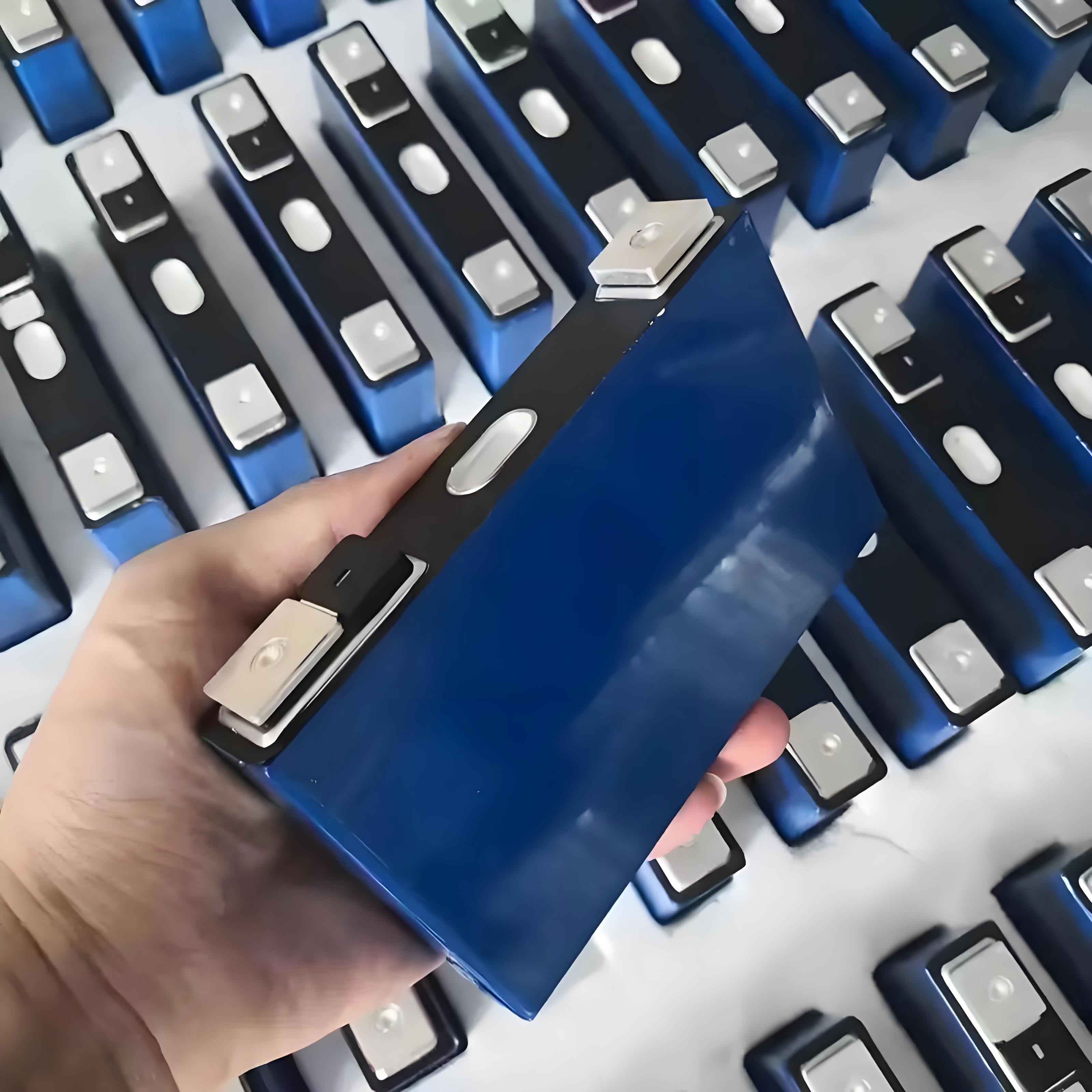
The LiFePO4 battery industry is experiencing a transformative phase driven by surging demand and technological advancements. As the dominant choice for electric vehicles (EVs) and energy storage systems, LiFePO4 batteries now account for over 74% of China’s power battery installations. This growth is propelled by their cost-effectiveness and improved energy density through material innovation.
Market Dynamics and Price Adjustments
Recent months have witnessed significant order surges from major manufacturers:
| Company | Order Details | Timeframe |
|---|---|---|
| Longpan Tech | 260k tons to LGES | 2024-2028 |
| Fulin Jinggong | 140k tons/year to CATL | 2025-2027 |
| Hunan Yuneng | Partial price increases confirmed | Q1 2025 |
The price adjustment mechanism follows this formula:
$$ P_{LiFePO4} = \alpha \cdot P_{Li_2CO_3} + \beta \cdot P_{FePO_4} + C_{processing} $$
Where:
– $\alpha$ = Lithium carbonate discount factor (0.92-0.96)
– $\beta$ = Iron phosphate coefficient
– $C_{processing}$ = Production cost ($1,500-$3,000/ton)
High-Compaction Density: The New Battleground
Energy density improvements are governed by:
$$ E_{density} = \frac{C_{specific} \cdot V_{cell} \cdot \rho_{compaction}}{M_{total}} $$
Where $\rho_{compaction}$ has become the critical factor. Current product generations show distinct performance characteristics:
| Generation | Compaction Density (g/cm³) | Price Premium |
|---|---|---|
| 2nd Gen | 2.4 | Base |
| 3rd Gen | 2.5 | +¥800/ton |
| 4th Gen | ≥2.6 | +¥1,500-3,000/ton |
Leading battery manufacturers are driving this transition:
– CATL’s Shenxing PLUS battery achieves 205Wh/kg through particle grading
– BYD’s 2nd-gen Blade Battery targets 190Wh/kg
– CALB’s “Diamond” series enhances fast-charging capabilities
Cost Challenges and Vertical Integration
Despite price increases, profitability remains constrained by:
$$ \Delta Profit = \Delta Price – (\Delta FePO_4 + \Delta Energy_{cost} + \Delta Depreciation) $$
Where secondary sintering for high-density products adds 15-20% energy consumption.
Major players are adopting vertical integration strategies:
| Company | Integration Depth | Key Projects |
|---|---|---|
| Hunan Yuneng | Mining→Recycling | 500ktpa phosphate rock |
| Wanrun New Energy | FePO4 self-sufficiency | Cycling industrial park |
| Longpan Tech | Lithium carbonate JV | 40ktpa with CATL |
The integration benefit can be modeled as:
$$ C_{saving} = \sum_{i=1}^n (P_{market}^i – C_{production}^i) \cdot Q^i $$
Where $n$ represents integrated production stages from raw materials to final LiFePO4.
Future Outlook
The LiFePO4 battery market is projected to maintain 40%+ CAGR through 2030, with technological differentiation becoming critical. Key development vectors include:
1. Ultra-high compaction density (>2.7g/cm³)
2. Low-temperature performance enhancement
3. Recyclability improvements
4. Sodium-ion hybrid systems
As battery manufacturers demand higher energy densities and lower costs simultaneously, the industry will likely consolidate around players mastering both material science and production economics. The ultimate goal remains:
$$ \max \left( \frac{E_{density}}{C_{total}} \right) $$
Through continuous innovation in LiFePO4 battery technology and manufacturing optimization.