
As a researcher in power electronics, I have extensively studied the challenges and solutions associated with LCL-type grid connected inverters in photovoltaic systems. The transition towards renewable energy sources, particularly solar power, has accelerated under global carbon neutrality goals, making the efficiency and reliability of grid connected inverters paramount. These inverters serve as critical interfaces between photovoltaic arrays and the utility grid, converting DC power to AC power with minimal harmonic distortion. The LCL filter is widely adopted due to its superior high-frequency attenuation and compact size compared to simple L or LC filters. However, the inherent resonance of the LCL filter introduces stability issues that complicate control design. In this article, I will delve into the resonance phenomena, analyze various suppression techniques, and explore adaptive strategies for weak grid conditions, all while emphasizing the role of grid connected inverters in modern power systems.
The LCL filter consists of an inverter-side inductor \( L_1 \), a capacitor \( C_f \), and a grid-side inductor \( L_2 \). Its third-order dynamics can lead to resonance peaks that may excite oscillations and degrade power quality. The resonance frequency \( f_r \) is given by:
$$ f_r = \frac{1}{2\pi} \sqrt{\frac{L_1 + L_2}{L_1 L_2 C_f}} $$
This resonance can destabilize the grid connected inverter if not properly damped. To understand this, consider the transfer function from the inverter output voltage to the grid current. For a simplified model ignoring parasitic resistances, the transfer function \( G(s) \) is:
$$ G(s) = \frac{i_g(s)}{v_i(s)} = \frac{1}{L_1 L_2 C_f s^3 + (L_1 + L_2)s} $$
where \( i_g \) is the grid current and \( v_i \) is the inverter voltage. The denominator indicates a pair of complex poles at the resonance frequency, leading to underdamped behavior. In practice, grid impedance variations further shift \( f_r \), necessitating robust control methods. The following table summarizes key parameters of a typical LCL filter used in grid connected inverters:
| Parameter | Symbol | Typical Value | Unit |
|---|---|---|---|
| Inverter-side Inductance | \( L_1 \) | 1.5 | mH |
| Grid-side Inductance | \( L_2 \) | 0.5 | mH |
| Filter Capacitance | \( C_f \) | 10 | μF |
| Resonance Frequency | \( f_r \) | 1250 | Hz |
| Switching Frequency | \( f_s \) | 10,000 | Hz |
Resonance suppression techniques are broadly categorized into passive and active damping. Passive damping involves adding physical resistors in series or parallel with the filter components, but this leads to energy losses and reduced efficiency. For instance, a resistor \( R_d \) in series with the capacitor modifies the transfer function to:
$$ G_d(s) = \frac{1}{L_1 L_2 C_f s^3 + L_1 C_f R_d s^2 + (L_1 + L_2)s + R_d} $$
While simple, this method is less favored in high-efficiency grid connected inverters due to thermal issues. Active damping, on the other hand, uses control algorithms to emulate damping without significant losses. I have explored several active damping approaches, which can be compared as follows:
| Method | Principle | Advantages | Disadvantages |
|---|---|---|---|
| Model Reduction | Reduces LCL to first-order system via control decoupling | Simplifies control design | Sensitive to parameter variations |
| Digital Filtering | Uses low-pass, lead-lag, or notch filters to reshape frequency response | Effective resonance peak suppression | Phase lag may affect stability |
| State Feedback | Feeds back capacitor current or voltage to add virtual damping | Minimal impact on other frequencies | Requires accurate sensors |
| Multi-variable Control | Combines multiple states for enhanced robustness | Improved performance in weak grids | Complex implementation |
Among these, capacitor current feedback is particularly popular for grid connected inverters. By feeding back the capacitor current \( i_c \), a virtual resistor \( R_v \) is introduced in parallel with \( C_f \), altering the system dynamics. The control law can be expressed as:
$$ v_i = G_c(s) (i_{ref} – i_g) – H(s) i_c $$
where \( G_c(s) \) is the current controller (often a PI controller) and \( H(s) \) is the feedback gain. For ideal damping, \( H(s) = R_v \), yielding a modified transfer function with damped poles. The effectiveness of this method hinges on precise measurement and tuning, which becomes challenging in weak grids with variable impedance.
Weak grids, characterized by high grid impedance \( L_g \), alter the resonance frequency of the LCL filter. The total grid-side inductance becomes \( L_2 + L_g \), shifting \( f_r \) to:
$$ f_r’ = \frac{1}{2\pi} \sqrt{\frac{L_1 + L_2 + L_g}{L_1 (L_2 + L_g) C_f}} $$
This shift can detune fixed-parameter damping methods, leading to instability or harmonic distortion. To illustrate, consider a scenario where \( L_g \) varies from 0 to 2 mH. The resonance frequency may drift by up to 30%, as shown in the table below:
| Grid Impedance \( L_g \) (mH) | Resonance Frequency \( f_r’ \) (Hz) | Percentage Change |
|---|---|---|
| 0.0 | 1250 | 0% |
| 0.5 | 1125 | -10% |
| 1.0 | 1020 | -18.4% |
| 2.0 | 860 | -31.2% |
Such variations necessitate adaptive control strategies for grid connected inverters. One approach is online identification of grid impedance using injection signals or estimation algorithms. Based on the estimated \( L_g \), the damping parameters can be adjusted in real-time. For example, the feedback gain \( H(s) \) in capacitor current feedback can be tuned as:
$$ H(s) = R_v \cdot \frac{f_r’^2}{f_r^2} $$
where \( f_r \) is the nominal resonance frequency. This adaptive damping ensures stability across varying grid conditions. Another method involves using resonant controllers with adjustable frequencies to compensate for harmonic distortions caused by resonance shifts. The controller transfer function might include terms like:
$$ G_{res}(s) = \sum_{h} \frac{K_h s}{s^2 + (2\pi h f_r’)^2} $$
where \( h \) denotes harmonic order and \( K_h \) is the gain. Such techniques enhance the robustness of grid connected inverters in weak grids.
Simulation studies validate these concepts. Without adaptive damping, the grid current from a grid connected inverter exhibits significant oscillations when grid impedance changes. Implementing adaptive capacitor current feedback stabilizes the current waveform, reducing total harmonic distortion (THD) below 5%. The improvement can be quantified using performance indices like ITAE (Integral of Time-weighted Absolute Error), given by:
$$ \text{ITAE} = \int_0^T t |e(t)| dt $$
where \( e(t) \) is the current error. Adaptive methods typically yield lower ITAE values, indicating better dynamic response. For instance, in a test with \( L_g \) step change from 0 to 1 mH, the ITAE reduced from 0.15 to 0.05 with adaptive control. These results underscore the importance of advanced damping for reliable operation of grid connected inverters.
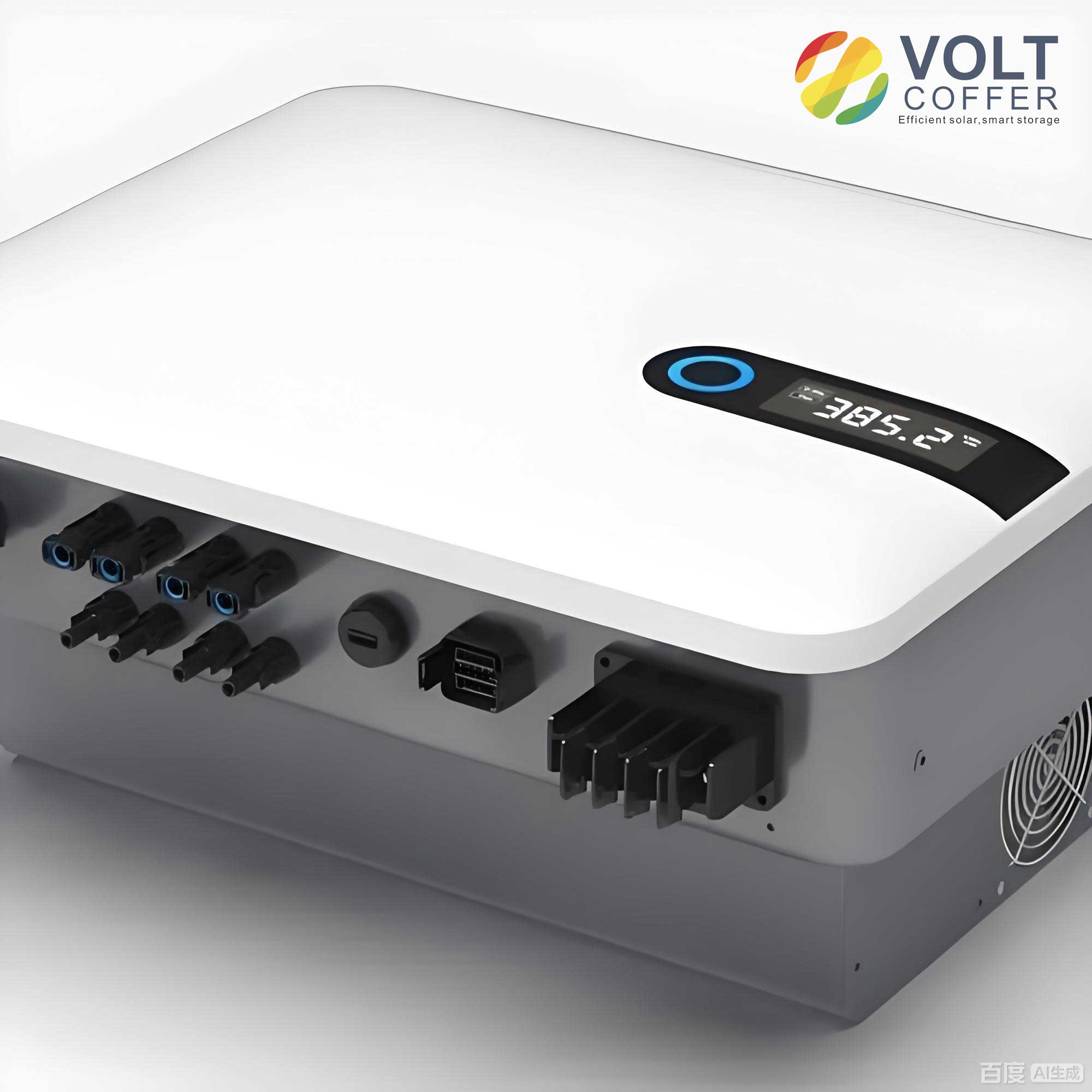
Beyond traditional methods, emerging technologies like model predictive control (MPC) and artificial intelligence (AI) offer promising avenues for resonance suppression in grid connected inverters. MPC can optimize switching actions to minimize resonance excitation, while AI algorithms can learn grid impedance patterns and predict optimal damping parameters. The integration of these techniques into grid connected inverters could revolutionize their adaptability in future power networks dominated by renewables.
In conclusion, resonance suppression in LCL-type grid connected inverters is a critical area of research as photovoltaic penetration increases. From passive damping to adaptive active methods, each technique has trade-offs in complexity, cost, and performance. Weak grid conditions pose additional challenges, but through impedance estimation and adaptive control, grid connected inverters can maintain stability and power quality. Future work should focus on standardizing these methods for mass deployment, ensuring that grid connected inverters contribute reliably to the decarbonization of energy systems. As I continue to explore this field, the evolution of grid connected inverters remains central to achieving sustainable power grids.