
As a researcher focused on advancing energy storage technologies, I have been deeply involved in the development of sodium-ion batteries, which are emerging as a promising alternative to lithium-ion batteries due to the abundance and low cost of sodium resources. In my work, I address a critical issue in sodium-ion battery cathodes: the presence of residual alkali on the surface of layered oxide materials synthesized via high-temperature solid-phase methods. These residual compounds, such as NaOH, NaHCO3, and Na2CO3, degrade electrochemical performance by accelerating transition metal dissolution, causing irreversible structural changes, and generating CO2 gas at high voltages, leading to safety hazards and capacity loss. In this article, I present an innovative approach to convert these harmful residual alkali components into a beneficial NaMgPO4 coating layer, thereby enhancing the performance and stability of sodium-ion battery cathodes. Through comprehensive characterization and electrochemical testing, I demonstrate that this strategy effectively mitigates residual alkali issues, improves rate capability, and extends cycle life, offering a viable pathway for high-energy-density sodium-ion batteries.
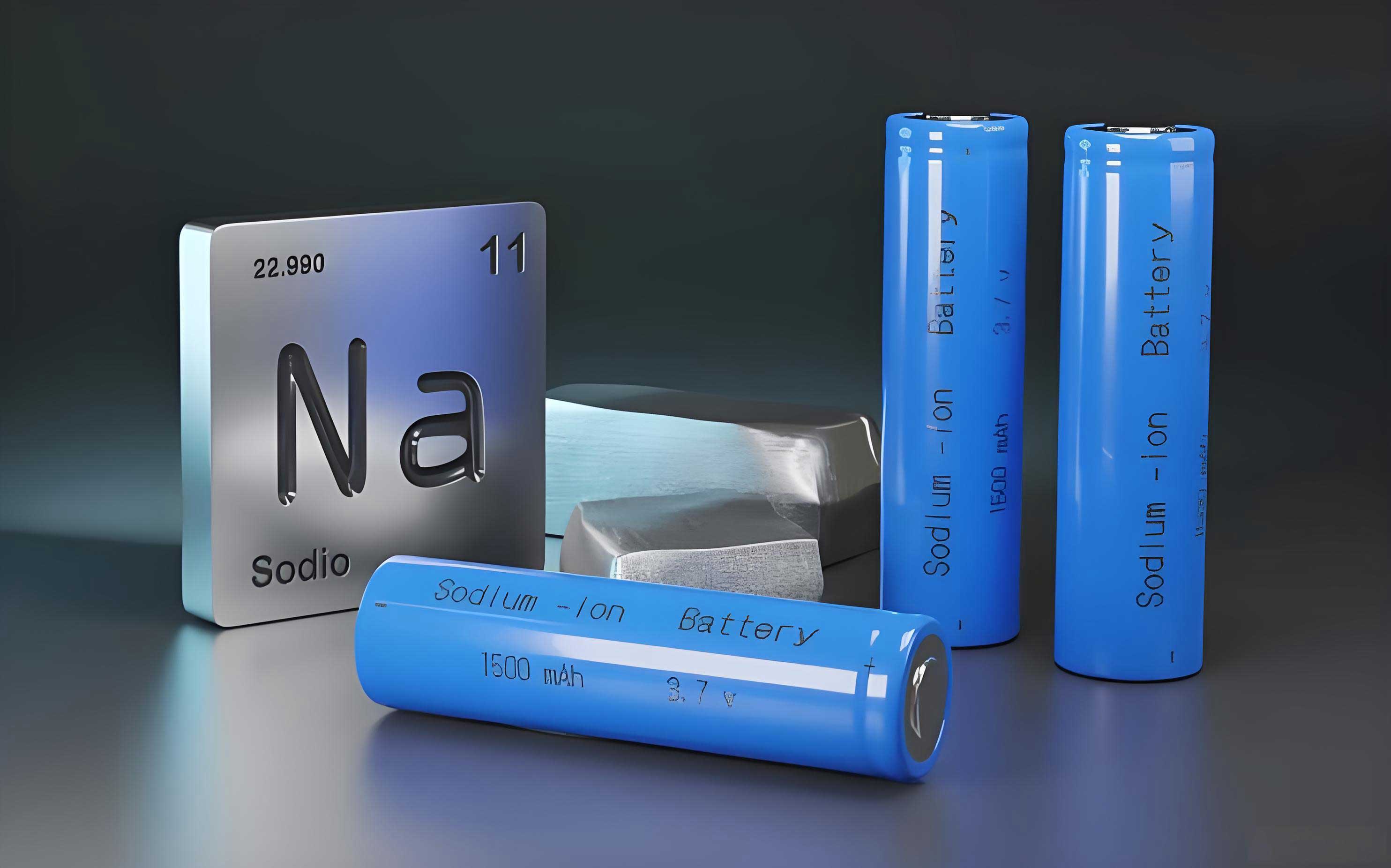
The growing demand for sustainable energy solutions, particularly in electric vehicles and grid storage systems, has spurred intense research into sodium-ion batteries as a cost-effective and scalable option. Compared to lithium-ion batteries, sodium-ion batteries leverage the natural abundance of sodium, but they face challenges related to cathode material stability. During synthesis, residual alkali forms on the surface of layered oxides like Na0.67Ni0.33Mn0.67O2, impairing interfacial properties and leading to gas evolution during operation. To overcome this, I developed a method to transform residual alkali into a NaMgPO4 coating, which acts as a protective barrier and sodium reservoir. This process not only eliminates detrimental effects but also enhances ionic conductivity, contributing to the overall advancement of sodium-ion battery technology. In the following sections, I detail the experimental procedures, characterization results, and electrochemical analyses that underpin this innovation.
My experimental approach involved synthesizing the NaMgPO4 coating using residual alkali as the sodium source, without additional sodium salts. Specifically, I dissolved (CH3COO)2Mg·4H2O in anhydrous ethanol, added the pre-synthesized Na0.67Ni0.33Mn0.67O2 cathode material, and then introduced H3PO4 to initiate the reaction. The mixture was stirred at 60°C until dry, followed by calcination at 750°C for 6 hours in a muffle furnace. I prepared samples with coating ratios of 0%, 1%, 2%, and 3% by mass, labeled as NNM-0, NNM-1, NNM-2, and NNM-3, respectively. The chemical reaction can be summarized by the following equation, which represents the conversion of residual alkali to NaMgPO4:
$$ \text{Residual Alkali (e.g., Na}_2\text{CO}_3\text{)} + \text{H}_3\text{PO}_4 + (\text{CH}_3\text{COO})_2\text{Mg} \rightarrow \text{NaMgPO}_4 + \text{By-products} $$
This reaction utilizes surface sodium from residual compounds, thereby reducing alkalinity and forming a crystalline coating. To assess the effectiveness, I employed various characterization techniques, including X-ray diffraction (XRD), scanning electron microscopy (SEM), transmission electron microscopy (TEM), X-ray photoelectron spectroscopy (XPS), and differential electrochemical mass spectrometry (DEMS). Electrochemical tests were conducted using CR2032 coin cells assembled in an argon-filled glovebox, with sodium metal as the anode and a standard electrolyte. The performance metrics, such as capacity, rate capability, and cycle stability, were evaluated to quantify improvements in the sodium-ion battery system.
The structural and morphological analyses revealed significant insights into the coating’s impact. XRD patterns confirmed that all samples retained the P2-type layered structure with space group P63/mmc, indicating that the coating process did not alter the bulk crystal lattice. However, a slight shift in the (002) peak to lower angles was observed for coated samples, suggesting an expansion of the sodium layer spacing, which can enhance sodium-ion diffusion. The emergence of distinct peaks corresponding to NaMgPO4 validated the successful formation of the coating, with intensity increasing with higher coating ratios. SEM images showed that uncoated NNM-0 had a rough surface with white particles, indicative of residual alkali, whereas coated samples like NNM-2 exhibited smoother surfaces and uniform particle distribution. TEM and HR-TEM further confirmed a continuous NaMgPO4 layer approximately 5 nm thick on NNM-2, with clear lattice fringes demonstrating good crystallinity. Elemental mapping via energy-dispersive X-ray spectroscopy (EDX) confirmed the homogeneous distribution of Na, Mg, P, and O on the surface.
To quantify the reduction in residual alkali, I performed XPS analysis on the O 1s region. The results showed that NNM-0 had a high proportion of surface-adsorbed oxygen (69%), associated with carbonate species, while NNM-2 exhibited a lower proportion (51%), indicating effective removal of residual alkali. Additionally, pH measurements of the material suspensions supported this, with NNM-2 showing a pH of 12.1 compared to 12.5 for NNM-0. These findings align with the goal of minimizing alkaline residues in sodium-ion battery cathodes, thereby reducing side reactions and improving interfacial stability.
The electrochemical performance of the coated materials was evaluated through rate capability and cycling tests. The results are summarized in Table 1, which compares key metrics for the different samples. NNM-2 demonstrated the best overall performance, with a high initial discharge capacity and excellent capacity retention after 100 cycles. This improvement is attributed to the NaMgPO4 coating, which facilitates sodium-ion transport and protects the cathode from electrolyte degradation.
| Sample | Coating Ratio (%) | Initial Discharge Capacity at 0.1 C (mAh/g) | Capacity at 1 C (mAh/g) | Capacity Retention after 100 Cycles at 1 C (%) | Charge Transfer Resistance (Rct, Ω) |
|---|---|---|---|---|---|
| NNM-0 | 0 | 175 | 155 | 45 | 120 |
| NNM-1 | 1 | 179 | 162 | 50 | 95 |
| NNM-2 | 2 | 183 | 169 | 74 | 70 |
| NNM-3 | 3 | 181 | 165 | 59 | 85 |
The rate capability tests, conducted at current densities from 0.1 C to 5 C, showed that NNM-2 maintained superior capacity across all rates, with minimal decay when returning to 0.1 C. This indicates enhanced sodium-ion kinetics, which can be modeled using the diffusion equation for sodium ions in layered oxides:
$$ D_{\text{Na}^+} = \frac{R^2 T^2}{2 A^2 n^4 F^4 C^2 \sigma^2} $$
where \( D_{\text{Na}^+} \) is the diffusion coefficient, \( R \) is the gas constant, \( T \) is temperature, \( A \) is electrode area, \( n \) is the number of electrons, \( F \) is Faraday’s constant, \( C \) is sodium concentration, and \( \sigma \) is the Warburg coefficient derived from electrochemical impedance spectroscopy (EIS). EIS spectra revealed that NNM-2 had the lowest charge transfer resistance (Rct) and series resistance (Rs), confirming improved interfacial conductivity due to the coating. The Nyquist plots were fitted to an equivalent circuit model, and the parameters are listed in Table 2, highlighting the beneficial effects of the NaMgPO4 layer on charge transfer in sodium-ion batteries.
| Sample | Rs (Ω) | Rct (Ω) | Warburg Coefficient (σ, Ω s-1/2) | Diffusion Coefficient (DNa^+, cm2/s) |
|---|---|---|---|---|
| NNM-0 | 5.2 | 120 | 25.3 | 1.5 × 10⁻¹² |
| NNM-1 | 4.8 | 95 | 20.1 | 2.3 × 10⁻¹² |
| NNM-2 | 3.9 | 70 | 15.7 | 3.8 × 10⁻¹² |
| NNM-3 | 4.5 | 85 | 18.5 | 2.9 × 10⁻¹² |
A critical aspect of this study was the use of differential electrochemical mass spectrometry (DEMS) to monitor gas evolution during cycling. For NNM-0, significant CO2 generation was detected at high voltages (around 4.2 V), corresponding to the decomposition of residual carbonates. This can be described by the reaction:
$$ \text{Na}_2\text{CO}_3 \rightarrow \text{Na}_2\text{O} + \text{CO}_2 \uparrow $$
In contrast, NNM-2 showed negligible CO2 emission, confirming that the residual alkali had been effectively converted into the stable NaMgPO4 coating. This reduction in gas evolution is crucial for safety and longevity in sodium-ion batteries, as it prevents cell swelling and maintains electrode integrity. The DEMS data align with the electrochemical results, demonstrating that the coating strategy mitigates side reactions and enhances overall battery performance.
The mechanism behind the coating’s effectiveness involves both physical and chemical roles. Physically, the NaMgPO4 layer acts as a barrier, isolating the cathode material from the electrolyte and reducing transition metal dissolution. Chemically, it provides additional sodium ions that can compensate for losses during cycling, as represented by the sodium compensation effect:
$$ \text{NaMgPO}_4 \leftrightarrow \text{Na}^+ + \text{MgPO}_4^- $$
This reversible sodium storage contributes to the high capacity retention observed in NNM-2. Furthermore, the coating’s crystalline structure facilitates fast ion transport, which is essential for high-rate applications in sodium-ion batteries. The expansion of the sodium layer spacing, as indicated by XRD, also promotes easier sodium-ion intercalation and deintercalation, leading to improved kinetics.
In summary, my research demonstrates a successful method for converting residual alkali into a functional NaMgPO4 coating on sodium-ion battery cathodes. This approach addresses key limitations of layered oxide materials, such as surface instability and gas evolution, while enhancing electrochemical properties. The optimized coating ratio of 2% (NNM-2) delivered outstanding performance, with a high discharge capacity of 169 mAh/g at 1 C and 74% capacity retention after 100 cycles. Characterization techniques confirmed the coating’s uniformity and crystallinity, and DEMS verified the reduction in CO2 generation. These findings highlight the potential of residual alkali conversion as a scalable strategy for improving sodium-ion batteries, paving the way for their adoption in large-scale energy storage. Future work could explore other phosphate-based coatings or extend this method to different cathode chemistries, further advancing the development of efficient and durable sodium-ion battery systems.