
In recent years, as a strategic emerging industry, energy storage has become a critical component in enhancing the security, flexibility, and overall efficiency of energy systems. Among various energy storage technologies, the LiFePO4 battery, or lithium iron phosphate battery, has garnered significant attention due to its structural stability, excellent cycle performance, and high safety. I have observed that with the rapid development of the energy storage sector, safety issues related to batteries have emerged as a key obstacle to progress. Therefore, in this article, I will delve into the current research status of management technologies and safety protection technologies for LiFePO4 batteries. Based on application trends, I will first discuss battery management technologies from the perspective of state detection, then explore safety protection technologies, including active and passive measures. Finally, I will provide recommendations for the integrated development of LiFePO4 batteries in terms of technical standards, condition monitoring, and safety protection. Throughout this discussion, I aim to highlight the importance of the LiFePO4 battery in modern energy systems and emphasize how advanced management and protection can mitigate risks.
The widespread adoption of LiFePO4 batteries spans multiple sectors, including 5G base stations, electric vehicles, and energy storage power plants. I have noted that national policies and standards have been instrumental in promoting the use of LiFePO4 batteries. For instance, in China, guidelines from the Ministry of Industry and Information Technology encourage the application of LiFePO4 batteries in communication base stations, while standards like GB/T 36276—2018 specify technical requirements for lithium-ion batteries in power storage. These regulations ensure that LiFePO4 batteries meet safety and performance criteria, fostering a stable market growth. The demand for LiFePO4 batteries has surged, particularly in renewable energy integration, where they help address issues such as wind and solar power curtailment. For example, energy storage stations in Jiangsu and Qinghai utilize LiFePO4 battery systems to enhance grid regulation and support multi-energy complementarity. This growing reliance on LiFePO4 batteries underscores the need for robust management and safety systems to prevent incidents like thermal runaway or fires, which have been reported in some energy storage projects.
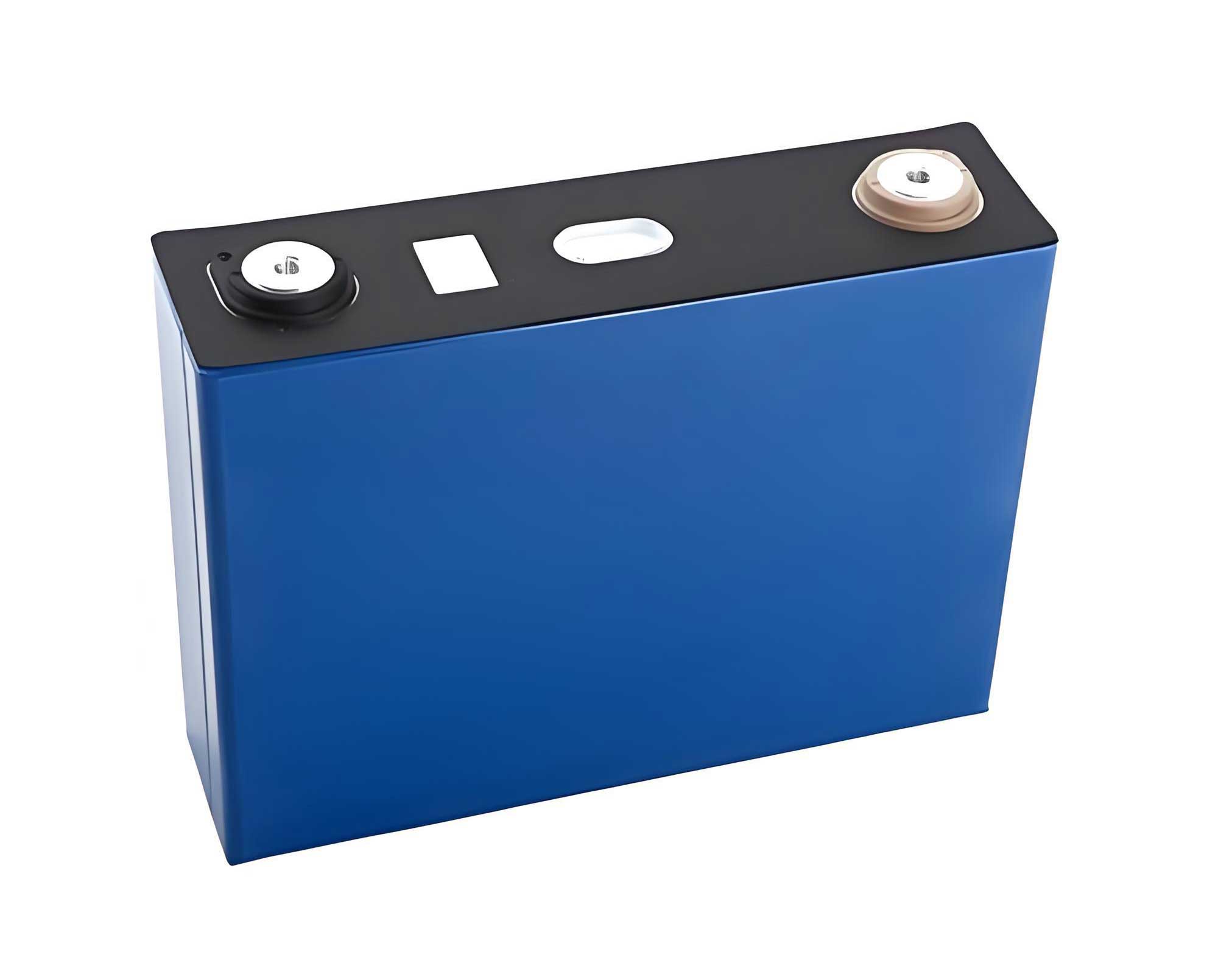
When it comes to battery management technologies for LiFePO4 batteries, the core lies in the battery management system (BMS). A BMS is responsible for real-time monitoring, protection, and optimization of battery operations. I have found that state detection and analysis are crucial functions of a BMS, as they directly impact the performance and lifespan of LiFePO4 batteries. Key parameters include state of charge (SOC) and state of health (SOH). SOC represents the remaining capacity of a LiFePO4 battery, and its accurate estimation is essential for preventing overcharge or over-discharge. Various methods have been developed for SOC estimation, each with its own principles and advantages. Table 1 summarizes common SOC estimation techniques applied to LiFePO4 batteries.
| Method | Principle | Advantages and Disadvantages |
|---|---|---|
| Ampere-hour (Ah) Integration | Calculates SOC by integrating current over time: $$SOC = SOC_0 – \frac{1}{Q_N} \int_0^t \eta I(\tau) d\tau$$ where \(SOC_0\) is initial SOC, \(Q_N\) is battery capacity, \(\eta\) is discharge rate, and \(I\) is current. | Simple but accumulates errors over time; requires initial SOC accuracy. |
| Open-Circuit Voltage (OCV) | Uses the relationship between OCV and SOC after rest: $$SOC = f(V_{oc})$$ where \(V_{oc}\) is open-circuit voltage. | Accurate for static conditions but impractical for dynamic operations in LiFePO4 batteries. |
| Kalman Filter | Estimates SOC based on state-space models: $$x_{k+1} = A x_k + B u_k + w_k$$ $$y_k = C x_k + D u_k + v_k$$ where \(x_k\) includes SOC, and \(w_k, v_k\) are noises. | Robust against noise and suitable for real-time LiFePO4 battery applications; computationally intensive. |
| Neural Networks | Trains models on data to predict SOC: $$SOC = \text{NN}(V, I, T)$$ with inputs like voltage, current, and temperature. | Adaptable to nonlinearities in LiFePO4 batteries but requires large datasets and high processing power. |
| Multi-method Fusion | Combines methods like Ah integration with OCV or Kalman filter for correction. | Enhances accuracy for LiFePO4 batteries by compensating individual limitations; complex implementation. |
In my analysis, SOH estimation is equally important for LiFePO4 batteries, as it indicates the aging degree and remaining useful life. SOH is typically defined as the ratio of current maximum capacity to initial capacity: $$SOH = \frac{C_{now}}{C_N} \times 100\%$$ where \(C_{now}\) is the present dischargeable capacity and \(C_N\) is the nominal capacity. For LiFePO4 batteries, SOH can be estimated through direct discharge tests, internal resistance measurements, or impedance spectroscopy. I have observed that combining SOC and SOH estimation improves overall management, as it allows for adaptive control strategies that extend the lifespan of LiFePO4 batteries. Moreover, advanced BMS for LiFePO4 batteries often incorporate algorithms like extended Kalman filters or particle filters to simultaneously estimate SOC and SOH, ensuring reliable operation under varying conditions.
Beyond state estimation, battery management for LiFePO4 batteries involves energy control and balancing. Due to manufacturing variances, individual cells in a LiFePO4 battery pack may have inconsistencies in capacity, internal resistance, or voltage. This can lead to imbalances during charging and discharging, reducing overall efficiency and safety. I have studied various balancing techniques for LiFePO4 batteries, which can be categorized into dissipative and non-dissipative methods. Dissipative balancing, such as resistor-based shunting, is simple but wastes energy as heat. Non-dissipative balancing, including inductor- or capacitor-based circuits, transfers energy between cells with minimal loss. Table 2 compares these balancing approaches for LiFePO4 batteries.
| Type | Mechanism | Application in LiFePO4 Batteries |
|---|---|---|
| Dissipative (Passive) | Uses resistors to bleed excess charge from higher-voltage cells. | Suitable for small-scale LiFePO4 battery systems; low cost but inefficient. |
| Non-dissipative (Active) | Employs converters (e.g., buck-boost) to redistribute energy among cells. | Ideal for large LiFePO4 battery packs in EVs or storage; higher efficiency but complex. |
| Switched Capacitor | Transfers charge via capacitors switched between cells. | Used in modular LiFePO4 battery designs; moderate efficiency and scalability. |
| Inductive Balancing | Utilizes transformers or inductors to move energy bidirectionally. | Effective for high-power LiFePO4 battery applications; fast balancing but bulky. |
In practice, I recommend that BMS for LiFePO4 batteries integrate adaptive balancing strategies based on real-time SOC and SOH data. For instance, during charging of a LiFePO4 battery pack, the BMS can activate balancing circuits to equalize cell voltages, preventing overcharge in weaker cells. This not only enhances safety but also prolongs the cycle life of the LiFePO4 battery system. Furthermore, thermal management is a critical aspect of energy control for LiFePO4 batteries. Since temperature affects performance and degradation, BMS often include sensors to monitor cell temperatures and trigger cooling or heating systems. I have found that liquid cooling is increasingly adopted for high-density LiFePO4 battery packs due to its superior heat dissipation compared to air cooling.
Turning to safety protection technologies for LiFePO4 batteries, I have identified several key areas: fault diagnosis, thermal runaway detection, and integrated safety measures. The LiFePO4 battery, while inherently safer than other lithium-ion chemistries, is still prone to risks like short circuits, overcurrent, or thermal runaway if improperly managed. Fault diagnosis systems for LiFePO4 batteries aim to detect anomalies early, such as internal short circuits or connection failures. Techniques include model-based approaches, where parameters like internal resistance are estimated online: $$R_{int} = \frac{V_{oc} – V_t}{I}$$ where \(V_{oc}\) is open-circuit voltage, \(V_t\) is terminal voltage, and \(I\) is current. Deviations in \(R_{int}\) can indicate faults in LiFePO4 batteries. Additionally, data-driven methods using machine learning can analyze voltage and current patterns to predict failures in LiFePO4 battery packs.
Thermal runaway is a major safety concern for LiFePO4 batteries, albeit less frequent than in nickel-rich batteries. It occurs when heat generation exceeds dissipation, leading to a self-sustaining reaction. For LiFePO4 batteries, thermal runaway can be triggered by external factors like overcharge, internal defects, or high ambient temperatures. I have researched various detection and prevention methods for LiFePO4 batteries. Early warning systems monitor parameters such as temperature rise rate, gas emission, or voltage drop. For example, a sudden temperature increase in a LiFePO4 battery cell can be modeled using heat generation equations: $$\frac{dT}{dt} = \frac{Q_{gen} – Q_{diss}}{m C_p}$$ where \(Q_{gen}\) is heat from reactions, \(Q_{diss}\) is dissipated heat, \(m\) is mass, and \(C_p\) is specific heat. When \(\frac{dT}{dt}\) exceeds a threshold, the system can alert or shut down the LiFePO4 battery. Moreover, thermal management systems, as part of safety protection, include phase-change materials or coolant loops to maintain LiFePO4 batteries within safe operating ranges.
To standardize safety requirements for LiFePO4 batteries, international and national standards have been established. For instance, GB/T 36276—2018 outlines tests for battery cells and modules, including overcharge, short circuit, and thermal runaway assessments. I have summarized key safety tests for LiFePO4 batteries in Table 3, which highlights the rigorous evaluations needed to ensure reliability. These standards emphasize that safety protection for LiFePO4 batteries must encompass not only the cell level but also pack design and system integration.
| Test Type | Condition | Requirement for LiFePO4 Batteries |
|---|---|---|
| Overcharge | Charge beyond rated voltage | No fire or explosion; BMS should cut off current. |
| Short Circuit | External short across terminals | No thermal runaway; protective devices must activate. |
| Thermal Abuse | Heating to high temperatures | LiFePO4 battery should vent safely without ignition. |
| Crush or Impact | Mechanical deformation | No leakage or fire; housing integrity maintained. |
| Thermal Runaway Propagation | Inducing failure in one cell | Containment to prevent spread in LiFePO4 battery pack. |
In addition to active protection, passive safety measures for LiFePO4 batteries include physical barriers, flame-retardant electrolytes, and fire suppression systems. I have observed that for large-scale energy storage systems using LiFePO4 batteries, compartmentalization and ventilation are critical to mitigate hazards. For example, prefabricated cabins for LiFePO4 battery storage often incorporate gas detection and aerosol fire extinguishers. Furthermore, the integration of BMS with energy management systems (EMS) and power conversion systems (PCS) enhances overall safety for LiFePO4 battery installations. By sharing data on SOC, temperature, and fault status, these systems can coordinate responses, such as reducing charge rates or isolating faulty modules in LiFePO4 battery arrays.
Based on my research, I propose several recommendations for the integrated development of LiFePO4 batteries. First, technical standards should be unified globally to ensure consistency in manufacturing and application of LiFePO4 batteries. This includes harmonizing test protocols for SOC estimation, SOH monitoring, and safety certifications. Second, condition monitoring systems for LiFePO4 batteries should leverage advanced sensors and IoT technologies to enable real-time data analytics and predictive maintenance. For instance, embedding fiber-optic sensors in LiFePO4 battery cells can provide precise temperature mapping. Third, safety protection for LiFePO4 batteries must adopt a multi-layered approach, combining cell-level safeguards with system-level controls. This involves designing LiFePO4 battery packs with thermal barriers, using materials that inhibit fire propagation, and implementing automated emergency shutdown procedures.
Moreover, I emphasize that the management and protection of LiFePO4 batteries should consider the entire lifecycle, from production to recycling. For example, early detection of aging in LiFePO4 batteries can facilitate timely replacement or repurposing for second-life applications, such as in grid storage. Additionally, research into solid-state electrolytes or surface coatings could further enhance the intrinsic safety of LiFePO4 batteries. In terms of economics, improving the energy density and cost-effectiveness of LiFePO4 batteries will drive broader adoption, but this must not compromise safety. Therefore, ongoing innovation in BMS algorithms and materials science is essential for the future of LiFePO4 batteries.
In conclusion, the LiFePO4 battery represents a pivotal technology in the energy storage landscape, offering a balance of performance and safety. Through my analysis, I have detailed how advanced management technologies, including accurate SOC/SOH estimation and intelligent balancing, can optimize the operation of LiFePO4 batteries. Simultaneously, comprehensive safety protection technologies, from fault diagnosis to thermal runaway prevention, are crucial to mitigating risks associated with LiFePO4 batteries. By integrating these aspects and adhering to robust standards, the industry can unlock the full potential of LiFePO4 batteries in diverse applications. As we move forward, continued research and collaboration will be key to addressing challenges and ensuring the sustainable growth of LiFePO4 battery-based energy systems.
To reinforce these points, I have included mathematical formulations and tables throughout this article to summarize key concepts. For instance, the SOC dynamics in a LiFePO4 battery can be expressed with differential equations, while the efficiency of balancing circuits can be quantified using energy transfer ratios. Furthermore, the safety metrics for LiFePO4 batteries, such as threshold temperatures or internal resistance limits, can be derived from empirical models. By embracing such technical rigor, stakeholders can better understand and implement effective solutions for LiFePO4 batteries. Ultimately, the goal is to foster a safe and reliable ecosystem where LiFePO4 batteries contribute significantly to global energy transitions.
In summary, this article has explored the current state of management and safety protection technologies for LiFePO4 batteries from a first-person perspective. I have discussed various methods and systems, emphasizing the importance of continuous improvement. The LiFePO4 battery, with its unique properties, will undoubtedly play a central role in future energy storage, and by advancing its management and safety frameworks, we can harness its benefits while minimizing risks. I hope this insights serve as a valuable reference for researchers, engineers, and policymakers involved in the LiFePO4 battery domain.