
As we delve into the realm of energy storage systems, sodium-ion batteries have emerged as a promising alternative to lithium-ion batteries, particularly for large-scale applications due to their cost-effectiveness, safety, and abundance of sodium resources. In this article, we explore the advancements in separators for rechargeable sodium-ion batteries, which play a critical role in determining electrochemical performance, durability, and safety. We will discuss various types of separators, their properties, and ongoing research efforts, while incorporating tables and formulas to summarize key aspects. The focus will remain on the keyword ‘sodium-ion battery’ to emphasize its importance throughout.
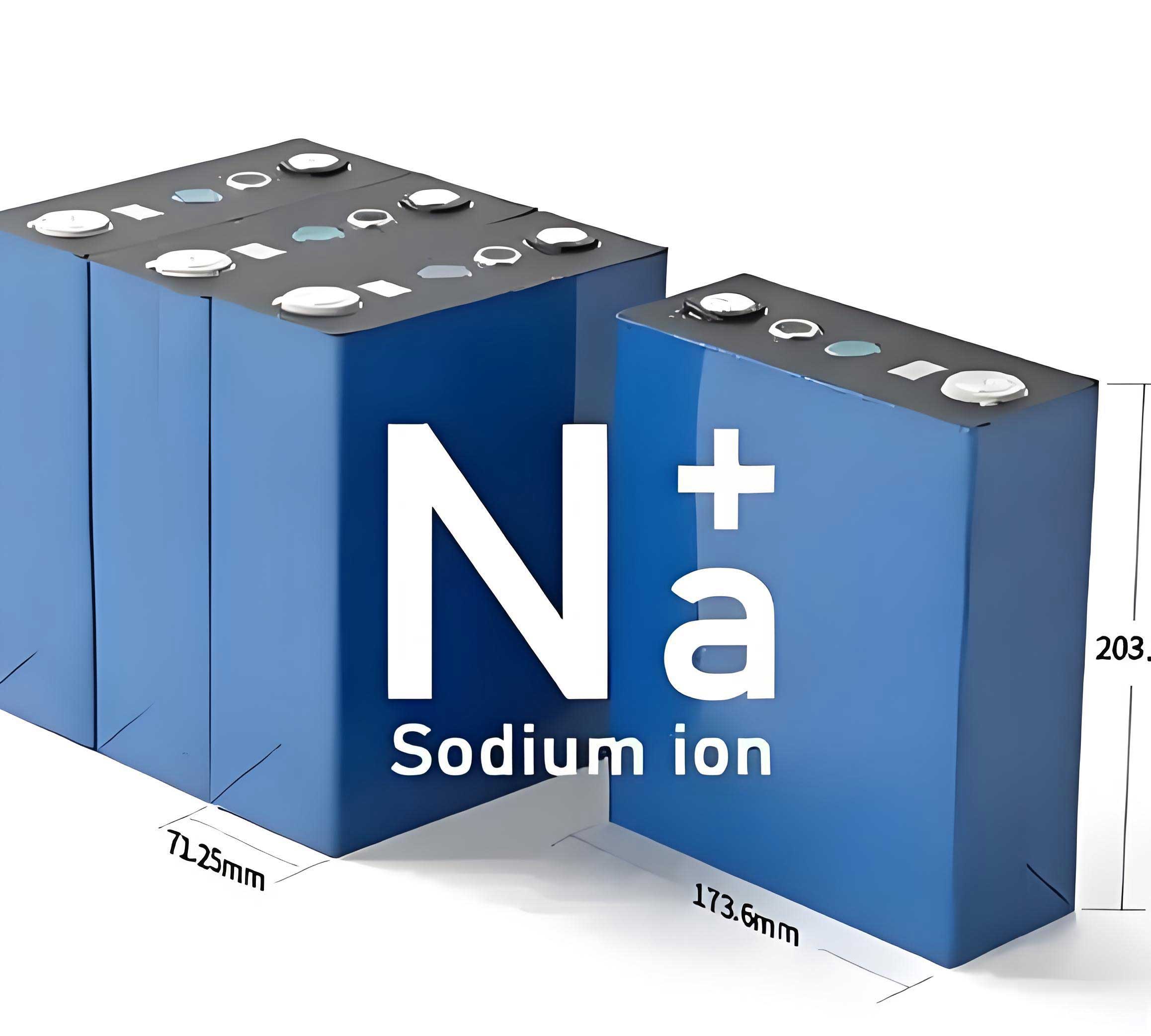
The working principle of a sodium-ion battery involves the shuttling of sodium ions between the cathode and anode during charge and discharge cycles, similar to lithium-ion batteries. However, the differences in ionic size and chemistry necessitate tailored components, including separators. An ideal separator for a sodium-ion battery must exhibit high ionic permeability, electronic insulation, mechanical strength, thermal stability, and electrolyte wettability. Failure modes such as thermal shrinkage, dendrite penetration, and physical damage can compromise battery safety, making separator development a key research area. In recent years, significant progress has been made in modifying existing separators and designing novel ones to enhance the performance of sodium-ion batteries.
We begin by examining the fundamental properties required for separators in sodium-ion batteries. The ionic conductivity, often represented by the formula $$ \sigma = \frac{L}{R \cdot A} $$ where σ is the ionic conductivity (in S/cm), L is the separator thickness (in cm), R is the resistance (in Ω), and A is the area (in cm²), is crucial for efficient ion transport. Additionally, the porosity (ε) can be calculated as $$ \epsilon = \frac{V_{\text{pores}}}{V_{\text{total}}} \times 100\% $$ where V_{\text{pores}} is the volume of pores and V_{\text{total}} is the total volume. High porosity improves electrolyte uptake, but must be balanced with mechanical integrity. Thermal stability is another critical factor, as separators must withstand operational temperatures without degrading. For sodium-ion batteries, these parameters are often optimized through material selection and structural modifications.
Various separator types have been investigated for sodium-ion batteries, each with distinct advantages and limitations. Below, we summarize these in a table to provide a clear overview.
| Separator Type | Key Materials | Advantages | Disadvantages | Typical Ionic Conductivity (mS/cm) |
|---|---|---|---|---|
| Polyolefin Microporous Membranes | Polyethylene (PE), Polypropylene (PP) | Good mechanical properties, chemical stability, low cost | Poor electrolyte wettability, low thermal stability | 0.1–0.5 |
| Glass Fiber Membranes | SiO₂, Al₂O₃ fibers | High porosity, excellent thermal stability | Poor mechanical strength, thick structure | 0.2–0.8 |
| Polymer Electrolyte Membranes | PVDF, PVDF-HFP, PEO | Enhanced safety, flexibility, good interfacial contact | Low ionic conductivity at room temperature | 0.5–4.0 |
| Electrospun Membranes | PAN, PVDF, composite fibers | High porosity, tunable morphology, good wettability | Slow production, mechanical weaknesses | 1.0–5.0 |
| Cellulose-Based Membranes | CNF, CMC, HEC | Biodegradable, excellent wettability, thermal stability | Inhomogeneity, solubility issues | 0.5–3.0 |
| Cation Exchange Membranes | Nafion, modified polymers | Cation selectivity, good chemical stability | High cost, low conductivity in non-aqueous systems | 0.3–2.0 |
Polyolefin microporous membranes, such as those made from PE or PP, are widely used in lithium-ion batteries but face challenges in sodium-ion batteries due to poor wettability with carbonate-based electrolytes. To address this, researchers have incorporated ceramic coatings like SiO₂, Al₂O₃, or TiO₂. For instance, a modified PE separator with SiO₂ nanoparticles can exhibit improved thermal stability up to 140°C and enhanced ionic conductivity. The ionic conductivity in such composites can be modeled using the Maxwell-Garnett equation for effective medium theory: $$ \sigma_{\text{eff}} = \sigma_m \frac{1 + 2\phi f}{1 – \phi f} $$ where σ_{\text{eff}} is the effective conductivity, σ_m is the matrix conductivity, φ is the volume fraction of filler, and f is a factor dependent on particle shape. This approach has led to better performance in sodium-ion battery cells, with cycle life improvements exceeding 95% capacity retention after 50 cycles.
Glass fiber membranes, commonly used in lab-scale sodium-ion battery experiments, offer high porosity (around 75%) and thermal resistance. However, their mechanical weakness limits practical applications. Modifications such as incorporating cellulose or PTFE nanoparticles have been explored to enhance strength and ion transport. The Na⁺ transference number (t₊), a key parameter for separator efficiency in sodium-ion batteries, can be expressed as $$ t_+ = \frac{I_s (\Delta V – I_0 R_0)}{I_0 (\Delta V – I_s R_s)} $$ where I₀ and I_s are initial and steady-state currents, ΔV is the applied voltage, and R₀ and R_s are initial and steady-state resistances. Studies show that modified glass fiber membranes can achieve t₊ values above 0.8, facilitating uniform sodium deposition and inhibiting dendrite growth in sodium-ion battery systems.
Polymer electrolyte membranes, including solid polymer electrolytes (SPEs) and gel polymer electrolytes (GPEs), are gaining attention for sodium-ion batteries due to their potential for enhanced safety. Materials like PVDF-HFP and PEO are often blended with sodium salts (e.g., NaClO₄) and plasticizers. The ionic conductivity in these systems follows the Vogel-Tammann-Fulcher (VTF) equation: $$ \sigma = A T^{-1/2} \exp\left(-\frac{B}{T – T_0}\right) $$ where A and B are constants, T is temperature, and T₀ is the glass transition temperature. For example, GPEs with ionic liquids have achieved conductivities of up to 4 mS/cm at room temperature, enabling stable cycling in sodium-ion battery configurations over 1,000 cycles. We emphasize that optimizing these membranes is crucial for advancing sodium-ion battery technology toward solid-state implementations.
Electrospun membranes, fabricated from polymers like PAN or PVDF, offer nanofibrous structures with high surface area and interconnected pores. These membranes can be tailored for sodium-ion battery separators by controlling fiber diameter and porosity. The electrolyte uptake (U) can be calculated as $$ U = \frac{W_w – W_d}{W_d} \times 100\% $$ where W_w and W_d are wet and dry weights, respectively. Electrospun PAN membranes have shown uptake values exceeding 300%, leading to ionic conductivities around 4 mS/cm. Additionally, the incorporation of ceramic nanoparticles (e.g., Al₂O₃) improves thermal stability, withstanding temperatures above 250°C. This makes electrospun separators promising for high-performance sodium-ion battery applications, especially in terms of rate capability and cycle life.
Cellulose-based membranes, derived from renewable resources, exhibit excellent electrolyte affinity and thermal stability for sodium-ion batteries. Materials such as cellulose nanofibers (CNF) or hydroxyethyl cellulose (HEC) can be processed into porous films. The porosity and pore size distribution are critical for ion transport; they can be analyzed using the Brunauer-Emmett-Teller (BET) method, with surface area S given by $$ S = \frac{V_m N_A \sigma}{M} $$ where V_m is monolayer volume, N_A is Avogadro’s number, σ is cross-sectional area, and M is molar mass. Cellulose membranes have demonstrated ionic conductivities up to 3 mS/cm and Na⁺ transference numbers around 0.9, outperforming commercial polyolefin separators in sodium-ion battery tests. Their biodegradability also aligns with sustainable energy storage goals for sodium-ion battery systems.
Cation exchange membranes, such as Nafion, are known for their selective ion transport but are less common in sodium-ion batteries due to cost and conductivity issues in organic electrolytes. When swollen with non-aqueous solvents, Nafion membranes can achieve conductivities of 0.35 mS/cm at room temperature. The Donnan exclusion principle governs ion selectivity: $$ \frac{C_{+,\text{membrane}}}{C_{+,\text{solution}}} = \exp\left(-\frac{zF\Delta\psi}{RT}\right) $$ where C₊ is cation concentration, z is charge number, F is Faraday’s constant, Δψ is potential difference, R is gas constant, and T is temperature. Modified versions with Al₂O₃ coatings have been used in sodium-ion battery cells to suppress polysulfide shuttling, enhancing cycle stability. Research in this area aims to balance performance and economics for sodium-ion battery commercialization.
In addition to these types, composite and functionalized separators are being developed to address multiple challenges in sodium-ion batteries. For example, Janus membranes with asymmetric properties can simultaneously enhance ion transport and block dendrites. The effectiveness of such separators can be evaluated using the Sand’s time model for dendrite initiation: $$ t_s = \frac{\pi D \left( \frac{e C_0}{2J} \right)^2}{4} $$ where D is diffusion coefficient, e is electron charge, C₀ is initial concentration, and J is current density. By extending t_s, separators can delay short-circuit events in sodium-ion battery cells. Moreover, smart separators with self-healing or flame-retardant properties are emerging to improve safety, which is paramount for large-scale sodium-ion battery deployments.
The challenges in separator development for sodium-ion batteries are multifaceted. Key issues include achieving optimal electrolyte wettability without compromising mechanical strength, enhancing ionic conductivity at lower temperatures, and ensuring long-term stability against sodium dendrites. Future research directions may focus on hybrid materials, such as combining polymers with MOFs or COFs, to create ordered pore structures. The ionic conductivity in such hybrids can be approximated by percolation theory: $$ \sigma \propto (p – p_c)^t $$ where p is filler concentration, p_c is percolation threshold, and t is critical exponent. Additionally, in-situ characterization techniques and computational modeling will be vital for understanding failure mechanisms and guiding design. We believe that continued innovation in separators will accelerate the adoption of sodium-ion battery technology in grid storage and electric vehicles.
To summarize, separators are a critical component in sodium-ion batteries, influencing performance, safety, and longevity. We have reviewed various separator types, their modifications, and the underlying principles governing their function. Tables and formulas have been used to encapsulate key data and relationships. As research progresses, the development of cost-effective, high-performance separators will be essential for realizing the full potential of sodium-ion battery systems. We encourage further exploration into multifunctional and sustainable materials to meet the evolving demands of energy storage.