
In recent years, the rapid advancement of electric vehicles and portable electronics has driven significant demand for high-performance energy storage systems. Among these, the li-ion battery stands out as a pivotal technology due to its high energy density, long cycle life, and relatively low self-discharge rate. As a critical component in li-ion batteries, the separator plays an essential role in ensuring safety, efficiency, and longevity. In this article, I will delve into the research progress on poly(p-phenylene terephthalamide) (PPTA) as a promising separator material for li-ion batteries, highlighting its unique properties, fabrication methods, and potential to address limitations in conventional隔膜.
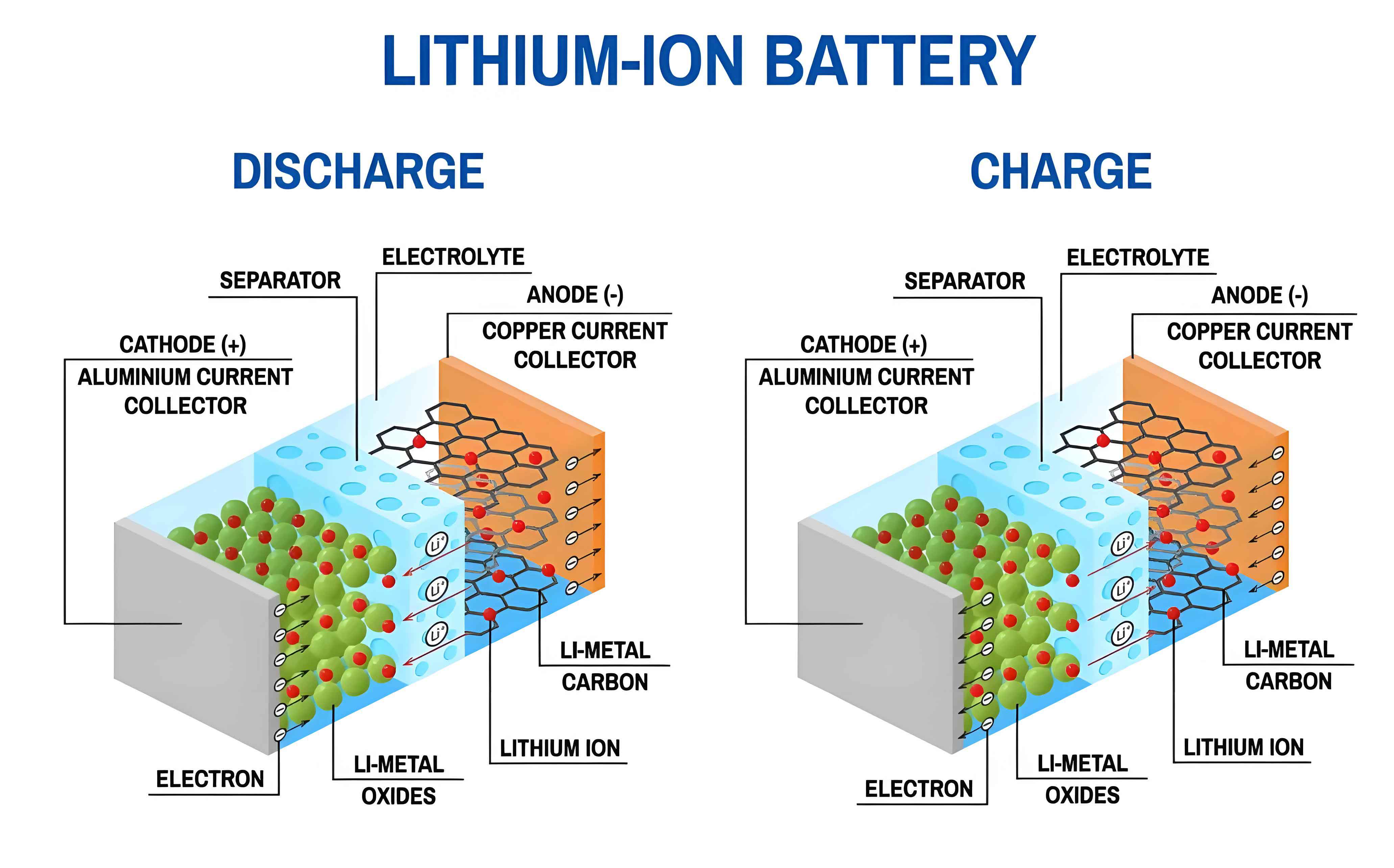
The separator in a li-ion battery is a porous membrane placed between the cathode and anode. Its primary functions include preventing physical contact between electrodes to avoid short circuits, facilitating ionic transport through electrolyte saturation, and providing thermal stability to enhance safety. With the increasing demands for higher capacity, faster charging, and improved safety in li-ion batteries, the development of advanced separator materials has become a focal point of research. Traditional separators, typically made from polyolefins like polyethylene (PE) and polypropylene (PP), face challenges such as low melting points, poor wettability, and limited mechanical strength. These issues can lead to thermal runaway, reduced cycle life, and safety hazards in li-ion batteries. Therefore, exploring novel materials like PPTA, known for its exceptional thermal stability, mechanical robustness, and chemical resistance, is crucial for next-generation li-ion battery technologies.
To understand the significance of PPTA in li-ion battery applications, it is essential to first review the performance requirements for separators in li-ion batteries. These requirements are stringent and multifaceted, encompassing safety, electrochemical performance, and physical stability. I have summarized them in the table below to provide a clear overview.
| Category | Property | Specification | Role in Li-Ion Battery |
|---|---|---|---|
| Safety | Puncture Strength | ≥400 gf | Prevents short circuits caused by lithium dendrites or electrode debris. |
| Thermal Stability | 130–180°C | Avoids membrane melting and maintains structural integrity at high temperatures. | |
| Shutdown Temperature | Above normal operating temperature, below melting point | Blocks ion transport during overheating to prevent thermal runaway. | |
| Electrochemical Performance | Thickness | 16–50 μm | Reduces internal resistance and enhances energy density in li-ion batteries. |
| Porosity | 30–80% | Ensures sufficient electrolyte uptake and ion conductivity for efficient li-ion battery operation. | |
| Wettability | High electrolyte absorption | Promotes rapid wetting and uniform ion distribution in the li-ion battery. | |
| Physical Stability | Tensile Strength | ≥110 MPa | Prevents deformation during li-ion battery assembly and cycling. |
| Elongation at Break | Adequate strain tolerance | Ensures durability under mechanical stress in li-ion batteries. | |
| Thermal Shrinkage | ≤1% | Maintains dimensional stability under thermal conditions in li-ion batteries. | |
| Chemical Stability | Resistant to electrolytes | Prolongs separator lifespan by avoiding degradation in li-ion battery environments. |
The performance requirements underscore the need for materials that can withstand harsh conditions while optimizing li-ion battery efficiency. Traditional polyolefin separators, though widely used, often fall short in thermal and mechanical properties. For instance, PE and PP have melting points around 130°C and 160°C, respectively, which can lead to safety issues in high-power li-ion batteries. Moreover, their hydrophobic nature results in poor electrolyte wettability, increasing interfacial resistance and reducing li-ion battery performance. To address these limitations, researchers have explored various advancements in separator technology, which I will discuss in the following sections.
The evolution of li-ion battery separators has seen significant progress from conventional polyolefin membranes to advanced composite and functional materials. Initially, dry and wet processing methods were employed to produce microporous PE and PP membranes. Dry processes involve stretching to create pores, while wet processes use solvent extraction to form uniform pores. However, these methods often yield separators with inconsistent porosity and limited thermal stability. For example, dry-processed PP separators may have anisotropic properties, affecting li-ion battery uniformity. In contrast, wet-processed separators offer better pore distribution but at higher costs. To enhance safety, composite separators like PP/PE/PP multilayers were developed, combining the low shutdown temperature of PE with the high melting point of PP. Such innovations aim to improve the thermal management of li-ion batteries, yet challenges remain in achieving optimal balance between performance and cost.
Another notable advancement is the development of coated or composite separators. These involve applying functional layers, such as ceramics or polymers, onto polyolefin substrates to enhance properties. For instance, ceramic coatings like alumina (Al₂O₃) or silica (SiO₂) can improve thermal stability and wettability in li-ion batteries. The coating process can be expressed in terms of material deposition: $$C = \frac{m_{coating}}{A_{separator}}$$ where \(C\) is the coating density, \(m_{coating}\) is the mass of coating material, and \(A_{separator}\) is the area of the separator. This approach has led to separators with shutdown temperatures up to 180°C, significantly boosting li-ion battery safety. Additionally, polymer coatings like polyvinylidene fluoride (PVDF) or polyimide (PI) can enhance adhesion to electrodes and ionic conductivity. However, coated separators may increase thickness and cost, potentially impacting li-ion battery energy density. Therefore, research continues to optimize coating materials and techniques for li-ion batteries.
In pursuit of higher performance, multifunctional新型隔膜 materials have emerged, including non-woven fabrics, electrospun nanofibers, and solid-state electrolytes. Non-woven separators, made from materials like polyester (PET) or cellulose, offer high porosity and excellent thermal stability. For example, PET non-wovens can withstand temperatures up to 240°C, making them suitable for high-safety li-ion batteries. Electrospinning technology enables the production of nanofiber membranes with tunable pore structures. The process involves applying a high voltage to a polymer solution, described by the Taylor cone equation: $$V_c = \sqrt{\frac{\gamma \cos \theta}{\epsilon_0 r}}$$ where \(V_c\) is the critical voltage, \(\gamma\) is the surface tension, \(\theta\) is the contact angle, \(\epsilon_0\) is the permittivity of free space, and \(r\) is the nozzle radius. Electrospun separators, such as those from PI, exhibit superior thermal resistance and electrolyte uptake, enhancing li-ion battery cycle life. Moreover, solid-state separators, which integrate electrolyte functions, promise improved safety by eliminating flammable liquid electrolytes in li-ion batteries. These innovations highlight the ongoing efforts to overcome limitations in traditional li-ion battery隔膜.
Among the novel materials, PPTA has garnered attention for its exceptional properties, positioning it as a potential game-changer for li-ion battery separators. PPTA, also known as aramid, is a rigid-rod polymer with a molecular structure characterized by alternating benzene rings and amide groups. Its chemical formula can be represented as: $$\text{(C}_{14}\text{H}_{10}\text{N}_{2}\text{O}_{2})_n$$ This structure confers high crystallinity, strong hydrogen bonding, and excellent thermal stability, with a decomposition temperature above 500°C. These attributes make PPTA resistant to heat, chemicals, and mechanical stress, which are critical for li-ion battery safety. Specifically, PPTA separators can maintain integrity at elevated temperatures, reducing the risk of thermal runaway in li-ion batteries. Additionally, its hydrophilic nature improves electrolyte wettability compared to polyolefins, potentially lowering interfacial resistance and enhancing li-ion battery performance.
However, fabricating PPTA into porous membranes for li-ion batteries presents challenges due to its insolubility in common solvents and high melting point. Traditional methods like melt processing are unsuitable, necessitating alternative approaches. I will explore three primary fabrication methods for PPTA-based separators: chemical splitting, surfactant-assisted dispersion, and composite formation. Each method aims to achieve optimal porosity, thickness, and mechanical strength for li-ion battery applications.
The chemical splitting method involves deprotonating PPTA in alkaline solutions to produce aramid nanofibers (ANFs). This process breaks the hydrogen bonds, dispersing PPTA into nanoscale fibers that can form porous networks. The reaction can be simplified as: $$\text{PPTA} + \text{KOH} \rightarrow \text{PPTA}^- + \text{K}^+ + \text{H}_2\text{O}$$ These ANFs are then assembled into membranes through techniques like vacuum filtration or layer-by-layer deposition. For li-ion batteries, ANF membranes offer high porosity (often exceeding 70%) and excellent mechanical strength, with tensile strengths reaching up to 200 MPa. Moreover, their nanofibrous structure provides uniform pore sizes below 100 nm, which can inhibit lithium dendrite growth in li-ion batteries. Research has shown that ANF-based separators exhibit low thermal shrinkage (<5% at 200°C) and high ionic conductivity when combined with polymers like polyethylene oxide (PEO). This makes them promising for enhancing safety and cycle life in li-ion batteries.
The surfactant-assisted method utilizes surfactants to disperse PPTA in organic solvents, enabling the formation of fine fibers or particles. Surfactants reduce interfacial tension, allowing PPTA to be processed into nanofibers through mechanical shearing or electrospinning. The dispersion stability can be described by the DLVO theory, considering van der Waals forces and electrostatic repulsion: $$U_T = U_A + U_R$$ where \(U_T\) is the total interaction energy, \(U_A\) is the attractive potential, and \(U_R\) is the repulsive potential. This method can produce PPTA membranes with controlled pore sizes and thicknesses suitable for li-ion batteries. For instance, electrospun PPTA nanofiber membranes have demonstrated孔隙率 values around 80% and thermal stability up to 300°C. These properties contribute to improved electrolyte retention and reduced short-circuit risks in li-ion batteries. However, the use of surfactants may introduce impurities, affecting the electrochemical stability of li-ion电池隔膜.
Composite approaches involve blending PPTA with other materials to leverage synergistic effects. A common strategy is to combine PPTA with polyolefins like PP or PE to create hybrid separators. In this process, PPTA fibers or nanofibers are incorporated into a polyolefin matrix during membrane fabrication. The composite’s properties can be modeled using the rule of mixtures: $$P_c = V_f P_f + V_m P_m$$ where \(P_c\) is the composite property (e.g., tensile strength), \(V_f\) and \(V_m\) are volume fractions of PPTA and matrix, and \(P_f\) and \(P_m\) are their respective properties. Such composites offer enhanced thermal stability—PPTA components prevent melting up to 400°C—while maintaining the flexibility and low cost of polyolefins. For li-ion batteries, PPTA/PP composite separators have shown superior electrolyte uptake and cycling performance compared to pure PP separators. Additionally, non-woven PPTA mats, made from fibrillated PPTA pulp, provide孔径 distributions below 1 μm, which is ideal for preventing electrode penetration in li-ion batteries.
To illustrate the advantages of PPTA separators over conventional materials, I have compiled a comparative table based on key performance metrics for li-ion batteries.
| Material | Thickness (μm) | Porosity (%) | Thermal Stability (°C) | Tensile Strength (MPa) | Electrolyte Wettability | Suitability for Li-Ion Battery |
|---|---|---|---|---|---|---|
| Polyethylene (PE) | 20–25 | 40–50 | ~130 | 100–150 | Moderate | Limited by low melting point |
| Polypropylene (PP) | 25–30 | 35–45 | ~160 | 120–180 | Poor | Better thermal resistance but hydrophobic |
| Ceramic-Coated PE | 25–35 | 50–60 | ~180 | 150–200 | Good | Enhanced safety but increased cost |
| Electrospun PI | 15–40 | 70–85 | ~400 | 50–100 | Excellent | High temperature tolerance, suitable for advanced li-ion batteries |
| PPTA Nanofiber | 10–30 | 75–90 | >500 | 200–300 | Excellent | Superior thermal and mechanical properties, ideal for high-safety li-ion batteries |
| PPTA/PP Composite | 20–40 | 60–80 | ~300 | 180–250 | Good | Balanced performance for cost-effective li-ion batteries |
The table highlights that PPTA-based separators excel in thermal stability and mechanical strength, addressing critical safety concerns in li-ion batteries. For instance, the high decomposition temperature of PPTA ensures that separators remain intact during overheating events, preventing short circuits in li-ion batteries. Furthermore, the nanofibrous structure of PPTA membranes facilitates high porosity, which enhances ion transport and electrolyte retention. This can lead to lower internal resistance and improved rate capability in li-ion batteries. Mathematical modeling of ion transport through porous separators can be described by the Newman’s equation: $$j = \frac{D_{eff} \nabla c}{RT}$$ where \(j\) is the ion flux, \(D_{eff}\) is the effective diffusion coefficient, \(c\) is the ion concentration, \(R\) is the gas constant, and \(T\) is the temperature. In PPTA separators, the uniform pore distribution maximizes \(D_{eff}\), optimizing li-ion battery performance.
Despite these advantages, several challenges hinder the widespread adoption of PPTA separators in li-ion batteries. Fabrication complexity is a major issue; methods like chemical splitting require controlled conditions and may involve toxic solvents. Scalability is another concern, as producing uniform PPTA nanofiber membranes at industrial scales remains difficult. Cost is also a factor, as PPTA is more expensive than polyolefins, though this may be offset by longer li-ion battery lifespan and enhanced safety. Additionally, achieving optimal pore size and distribution for specific li-ion battery chemistries (e.g., high-voltage or fast-charging systems) requires further research. To overcome these hurdles, future work should focus on developing eco-friendly processing techniques, such as water-based dispersion methods, and integrating PPTA with emerging materials like solid electrolytes. Moreover, computational studies using density functional theory (DFT) can optimize PPTA’s interactions with electrolytes: $$E_{binding} = E_{total} – (E_{PPTA} + E_{electrolyte})$$ where \(E_{binding}\) is the binding energy, guiding the design of compatible separators for li-ion batteries.
Looking ahead, the potential of PPTA separators extends beyond conventional li-ion batteries to next-generation systems like lithium-sulfur and solid-state batteries. In lithium-sulfur batteries, PPTA’s chemical resistance can mitigate polysulfide shuttle effects, improving cycle life. For solid-state li-ion batteries, PPTA membranes can serve as robust scaffolds for solid electrolytes, enhancing mechanical integrity. Furthermore, functionalization of PPTA with ionic groups or nanoparticles could tailor properties for specific li-ion battery applications. For example, grafting sulfonate groups onto PPTA chains can increase ionic conductivity: $$\sigma = n e \mu$$ where \(\sigma\) is conductivity, \(n\) is charge carrier concentration, \(e\) is electron charge, and \(\mu\) is mobility. Such modifications could make PPTA separators integral to high-performance li-ion batteries.
In conclusion, the research progress on PPTA separator materials demonstrates their significant potential to advance li-ion battery technology. With exceptional thermal stability, mechanical strength, and wettability, PPTA addresses key limitations of traditional polyolefin separators, offering enhanced safety and performance for li-ion batteries. Fabrication methods like chemical splitting and composite formation have enabled the production of porous membranes with desirable properties for li-ion batteries. However, challenges in processing, cost, and scalability must be addressed through continued innovation. As demand for safer and more efficient li-ion batteries grows, PPTA-based separators are poised to play a crucial role in enabling next-generation energy storage solutions. I believe that ongoing interdisciplinary efforts will unlock the full potential of PPTA, paving the way for更可靠 and powerful li-ion batteries in the future.
To summarize the key points, I emphasize that the evolution of separator materials is central to the advancement of li-ion batteries. From polyolefins to advanced polymers like PPTA, each step has contributed to improving li-ion battery safety and efficiency. The integration of PPTA into li-ion battery隔膜 represents a promising direction, with research highlighting its superior properties. As I have discussed, the development of PPTA separators involves addressing technical hurdles while leveraging their inherent advantages. Ultimately, the goal is to create li-ion batteries that are not only high-performing but also safe and sustainable, meeting the growing needs of modern technology.