
The rapid development of the global economy has led to significant energy shortages and environmental challenges, primarily due to the extensive use of traditional fossil fuels. This unsustainable energy structure necessitates a shift towards clean energy alternatives. Solar energy, with an average daily radiation of approximately $$2.2 \times 10^{24}$$ J reaching the Earth annually, holds immense potential as a renewable resource. If fully harnessed, it could replace billions of tons of standard coal equivalent, thereby reducing carbon emissions substantially. Photovoltaic technology, which converts solar energy into electricity, is a key solution to this transition. With continuous advancements and cost reductions, solar power has become an economically viable and environmentally friendly option, gaining widespread adoption worldwide.
In the 1950s, Bell Labs developed the first commercially viable crystalline silicon solar cell with an efficiency of 6%, marking the beginning of efficient solar energy utilization. Today, photovoltaic materials include CdTe, CIGSe, Si, and organic-inorganic hybrid perovskites. Among these, silicon-based solar cells dominate the market with over 90% share, making them the mainstream product. The highest certified efficiency for silicon solar cells has reached 27.1%, approaching the theoretical limit of 29%. To further突破 efficiency bottlenecks, it is essential to reduce thermalization losses and utilize photon energy more effectively. Multi-junction solar cells, such as those based on GaAs, have demonstrated efficiencies up to 47%, highlighting the potential of tandem configurations. Perovskite materials, with their tunable bandgaps ranging from 1.2 to 2.0 eV, offer a theoretical efficiency limit of 33% under the Shockley-Queisser model, and laboratory efficiencies have already achieved 26.1%. By combining wide-bandgap perovskites (1.65–1.80 eV) with narrow-bandgap solar cells, high-performance tandem solar cells can be fabricated, including perovskite-perovskite (Sn-Pb), perovskite-CIGSe, perovskite-organic, and perovskite-silicon configurations. The highest recorded efficiencies for these are 28.2%, 24.2%, 23.4%, and 34.6%, respectively. Due to the leading efficiency of perovskite-silicon tandem cells and the dominant market share of silicon solar cells, this technology has attracted significant attention for future large-scale production.
Tandem solar cells are classified based on their connection methods: two-terminal (2T) and four-terminal (4T) configurations. In 2T tandem cells, the top perovskite cell and bottom silicon cell are electrically integrated into a monolithic structure with two electrodes, requiring current matching between sub-cells. This design minimizes parasitic absorption but involves complex optimization. In contrast, 4T tandem cells feature optically coupled but electrically independent sub-cells, each with its own electrodes, allowing for separate optimization of each cell. However, the additional substrates and electrodes in 4T configurations increase balance-of-system costs and levelized cost of electricity (LCOE). The theoretical efficiency limits for both 2T and 4T perovskite-silicon tandem cells can reach up to 46% under standard AM1.5G illumination, as derived from detailed balance calculations. The efficiency $$ \eta $$ of a tandem cell can be expressed as:
$$ \eta = \frac{J_{sc} \times V_{oc} \times FF}{P_{in}} $$
where $$ J_{sc} $$ is the short-circuit current density, $$ V_{oc} $$ is the open-circuit voltage, FF is the fill factor, and $$ P_{in} $$ is the incident power. For optimal performance, the bandgaps of the top and bottom cells must be carefully matched. The following table summarizes the theoretical and achieved efficiencies for different tandem configurations:
| Tandem Type | Theoretical Efficiency (%) | Record Efficiency (%) |
|---|---|---|
| Perovskite-Silicon (2T) | 46 | 34.6 |
| Perovskite-Silicon (4T) | 46 | 31.5 |
| Perovskite-Perovskite | 45 | 28.2 |
| Perovskite-CIGSe | 42 | 24.2 |
The development of perovskite-silicon tandem solar cells has progressed rapidly, with 4T configurations initially leading in efficiency due to simpler fabrication requirements. In 2017, a record efficiency of 26.4% was achieved for a 4T tandem cell. Researchers have focused on enhancing the transparency and stability of the top perovskite cell to improve light transmission to the bottom silicon cell. For instance, the use of gold nanomesh electrodes sandwiched between MoO₃ layers has been demonstrated to provide high conductivity and optical transparency, enabling a semi-transparent perovskite cell with an efficiency of over 22%. When mechanically stacked with a silicon heterojunction bottom cell exhibiting 23.3% efficiency, the combined 4T tandem efficiency reached 27.0%. Further improvements involved surface modifications of hole transport layers, such as Spiro-MeOTAD, using lithium oxides to suppress ion diffusion and enhance stability. These advancements have led to certified semi-transparent perovskite solar cell efficiencies of 21.68% with fill factors exceeding 80% and operational stability over 99% after 240 hours. The equivalent efficiency of 4T perovskite-silicon tandem cells has surpassed 31.5%, exceeding the individual efficiencies of single-junction cells.
The bottom silicon sub-cell in 4T configurations requires excellent surface passivation and electrode design to maximize performance. Silicon heterojunction cells, with their high open-circuit voltages, are preferred due to effective carrier separation. Other silicon technologies, such as PERC, TOPCon, and IBC, have also been integrated into 4T tandems. For example, a 4T tandem combining a perovskite top cell with an IBC silicon cell achieved an efficiency of 24.5%. In 2020, a 4T tandem using a TOPCon silicon bottom cell reached 26.7% efficiency, leveraging its low recombination losses. Recent work with additive engineering in perovskites, such as using diethyl dithiocarbamate ammonium to reduce iodine content and defect density, has enabled 4T tandem efficiencies exceeding 30.24%.
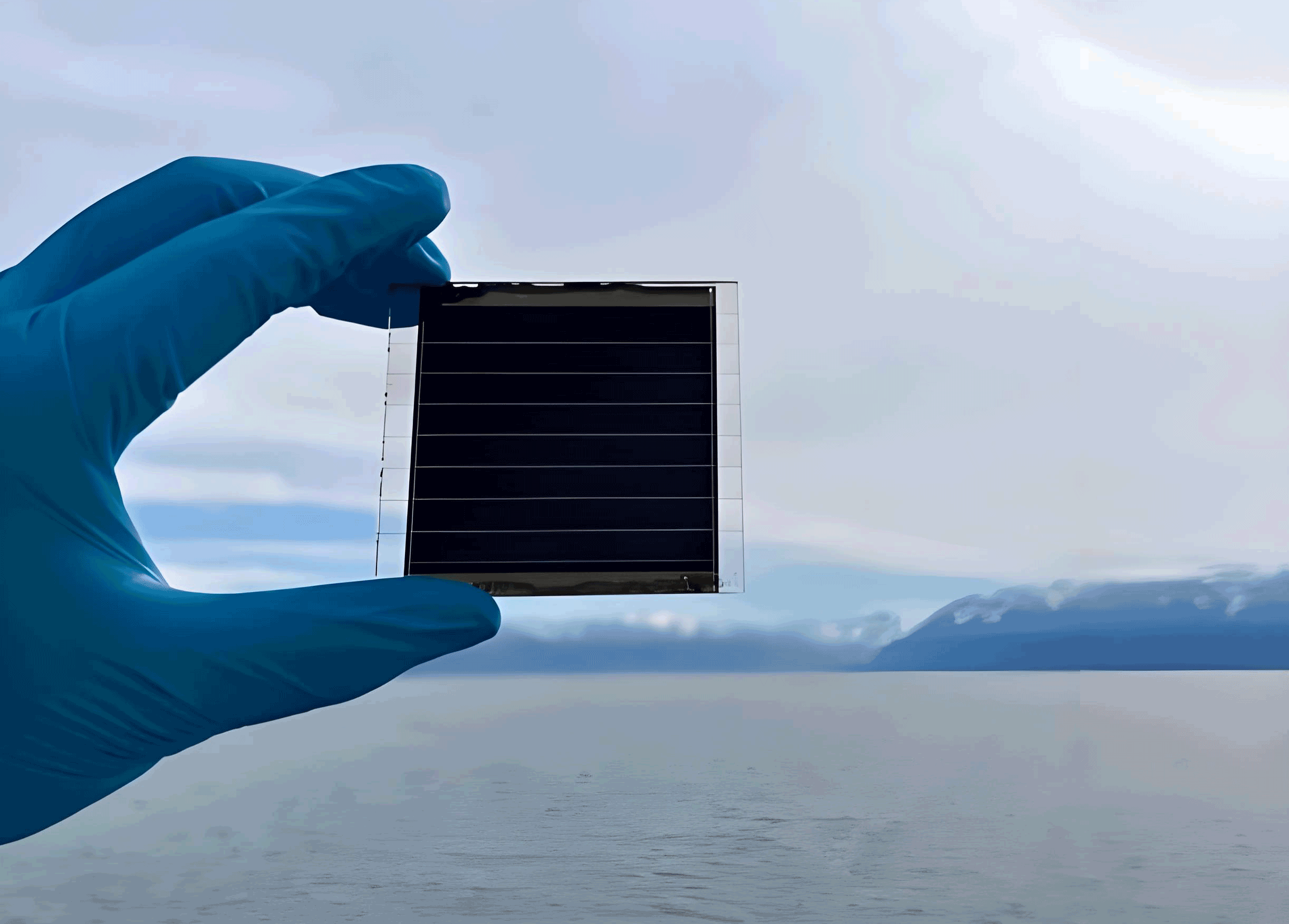
In 2T perovskite-silicon tandem solar cells, the sub-cells are monolithically integrated, necessitating careful current matching and interface engineering. The first 2T tandem cell was reported in 2015 with an efficiency of 13.7%, using a full-area Al-BSF silicon bottom cell. Since then, efficiencies have surged, with record values reaching 34.6% in 2024. Key innovations include the use of nanocrystalline silicon layers as recombination junctions to avoid optical losses, triple-halide perovskites to suppress phase segregation, and 2D/3D perovskite structures for enhanced stability. For instance, a 2D/3D perovskite top cell combined with a silicon heterojunction bottom cell demonstrated an efficiency of 26.7% and retained over 80% of its initial performance after 1000 hours. The following equation highlights the current density matching condition for 2T tandems:
$$ J_{sc,top} = J_{sc,bottom} $$
where $$ J_{sc,top} $$ and $$ J_{sc,bottom} $$ are the short-circuit current densities of the top and bottom cells, respectively. To achieve this, the optical properties of the interlayer and electrodes must be optimized. The table below compares the performance of different silicon bottom cells in 2T tandems:
| Silicon Bottom Cell Type | Record Tandem Efficiency (%) | Advantages |
|---|---|---|
| Silicon Heterojunction | 34.6 | High $$ V_{oc} $$, excellent passivation |
| TOPCon | 27.0 | High temperature tolerance, low recombination |
| PERC | 25.5 | Cost-effective, established production |
| IBC | 24.5 | Low shading losses, high current density |
The choice of silicon bottom cell significantly impacts the tandem performance. n-type silicon wafers are often preferred due to longer carrier lifetimes and absence of light-induced degradation. Homojunction cells like PERC and TOPCon offer higher temperature tolerance (>400°C), making them compatible with high-temperature perovskite processing. In contrast, heterojunction cells require lower temperatures (<250°C) to preserve the amorphous silicon passivation layers. TOPCon structures, with tunnel oxide and doped polysilicon layers, provide excellent surface passivation and have achieved efficiencies up to 27% in single-junction configurations. The potential $$ \Phi $$ of a silicon cell can be modeled using the diode equation:
$$ J = J_0 \left( e^{\frac{qV}{nkT}} – 1 \right) – J_{sc} $$
where $$ J_0 $$ is the saturation current density, $$ n $$ is the ideality factor, $$ k $$ is Boltzmann’s constant, and $$ T $$ is temperature. For tandem applications, the silicon cell must have high infrared transparency to allow unabsorbed light to reach the perovskite top cell.
Despite the high efficiencies achieved, perovskite-silicon tandem solar cells face several challenges that hinder commercialization. Stability remains a critical issue, as perovskite materials are susceptible to ion migration, phase segregation, and degradation under environmental stressors such as moisture, heat, and light. Accelerated testing under conditions like 85°C/85% relative humidity often reveals significant performance decay, falling short of industrial standards like IEC 61215. Strategies to improve stability include incorporating inorganic cations like Cs⁺, Rb⁺, and K⁺ to reduce defect density, and using low-dimensional perovskites with organic ligands such as octylammonium to form hydrophobic layers that suppress degradation. For example, 2D/3D perovskite structures have demonstrated enhanced thermal and moisture resistance, with devices retaining over 90% of initial efficiency after 1000 hours of operation.
Another challenge is the textured surface of industrial silicon cells, which is designed to enhance light trapping but complicates the conformal deposition of perovskite layers via solution-based methods. To address this, researchers have reduced pyramid sizes or adopted hybrid evaporation-solution approaches to ensure uniform coverage. However, thicker perovskite films may introduce cracks or poor contact in valley regions. Physical vapor deposition offers an alternative for conformal growth but often results in inferior film quality. Optimizing precursor concentration, coating speed, and solvent evaporation parameters in techniques like blade-coating or slot-die coating has enabled larger-area fabrication with reduced defects.
Scalability to large-area modules is essential for commercialization. While lab-scale cells with areas around 1 cm² have shown high efficiencies, scaling to industrial sizes introduces uniformity issues. Coating methods like blade-coating and slot-die coating, combined with solvent engineering, have produced uniform perovskite films on areas exceeding 10×10 cm². The relationship between coating parameters and film quality can be expressed as:
$$ \text{Film Thickness} \propto \frac{\text{Solution Concentration} \times \text{Coating Speed}}{\text{Gas Flow Rate}} $$
Additionally, the use of evaporation techniques in tandem with solution processing shows promise for large-scale production. The following table outlines key challenges and potential solutions:
| Challenge | Impact | Potential Solutions |
|---|---|---|
| Stability | Performance decay under stress | Inorganic cations, 2D/3D perovskites, encapsulation |
| Textured Silicon Surface | Non-uniform perovskite deposition | Reduced texture size, hybrid deposition methods |
| Large-Area Fabrication | Efficiency loss due to inhomogeneity | Blade-coating, slot-die coating, solvent engineering |
In conclusion, perovskite-silicon tandem solar cells have demonstrated remarkable progress in efficiency, with 2T configurations now outperforming 4T designs. The theoretical potential of these tandem cells is substantial, and ongoing research focuses on overcoming stability and scalability barriers. Future directions include the development of robust encapsulation techniques, advanced interface engineering, and integration with existing silicon production lines. As perovskite solar cell technology matures, it holds the promise of revolutionizing the photovoltaic industry by enabling efficiencies beyond the single-junction limit while leveraging the established infrastructure of silicon solar cells. Continued innovation in materials science and manufacturing processes will be crucial to realizing the full potential of perovskite-silicon tandem solar cells in global energy systems.