
In recent years, perovskite solar cells have emerged as a promising third-generation photovoltaic technology due to their high power conversion efficiency and tunable optoelectronic properties. As a researcher in this field, I have observed that the performance of perovskite solar cells is often limited by defects within the perovskite layer, such as ion vacancies and uncoordinated ions, which lead to non-radiative recombination and reduced stability. To address these issues, multifunctional additives containing multiple functional groups have been developed to passivate defects, modulate crystallization, and enhance the overall device performance. In this article, I will discuss the role of various multifunctional additives based on functional groups like C=O, S=C, and S=O, and how they contribute to improving the efficiency and longevity of perovskite solar cells. I will also incorporate tables and mathematical formulations to summarize key findings and mechanisms.
The general formula for perovskite materials is ABX3, where A is an organic or inorganic cation, B is a metal cation like Pb2+ or Sn2+, and X is a halide anion. The power conversion efficiency (PCE) of perovskite solar cells has surpassed 26%, approaching the Shockley-Queisser limit of approximately 33%. However, defects at grain boundaries and interfaces can trap charge carriers, leading to losses in PCE. Multifunctional additives interact with these defects through Lewis acid-base interactions, hydrogen bonding, and coordination bonds, thereby reducing trap densities and improving charge transport. For instance, additives with C=O groups can coordinate with Pb2+ ions, while those with S=O groups can passivate halide vacancies. The effectiveness of these additives can be quantified using parameters like defect density (Nt) and charge carrier lifetime (τ), which are critical for optimizing perovskite solar cells.
Let me begin by examining additives based on C=O functional groups. These include molecules such as amides, esters, and acids that form coordination complexes with undercoordinated Pb2+ ions. For example, 2,2-difluoropropionamide (DFPDA) contains C=O, amino, and fluorine groups, which collectively passivate defects and slow down crystallization, leading to larger grain sizes and a PCE of up to 22.21%. The coordination between C=O and Pb2+ can be described by the equilibrium constant K for the reaction: $$ \text{Pb}^{2+} + \text{C=O} \rightleftharpoons [\text{Pb-O-C}]^{2+} $$ This reduces the defect density and enhances stability. Similarly, cellulose acetate (CA) with -C-O-C- and -COO- groups has been shown to improve the crystallinity of CsPbIBr2 perovskite films. Another additive, orotic acid (ORO), uses its carboxyl groups to form hydrogen bonds with I– defects and coordinate with Pb2+, resulting in a lower defect density and higher PCE. To summarize the impact of C=O-based additives, I have compiled a table comparing their effects on perovskite solar cells.
| Additive | Functional Groups | PCE Improvement | Key Mechanisms |
|---|---|---|---|
| DFPDA | C=O, -NH2, -F | Up to 22.21% | Coordination with Pb2+, hydrogen bonding, hydrophobic protection |
| Cellulose Acetate (CA) | -C-O-C-, -COO- | Enhanced stability | Slowed crystallization, defect passivation |
| Orotic Acid (ORO) | Carboxyl, π-electron cloud | High PCE | Hydrogen bonding, coordination, improved crystallinity |
| 4-Fluorobenzamide (FBAD) | C=O, -NH2, -F | 24.08% | Defect passivation, phase stabilization |
In addition to defect passivation, these additives can influence the energy level alignment in perovskite solar cells. For instance, dopamine (DA) as an interfacial modifier adjusts the band structure between TiO2 and SnO2 layers, facilitating charge separation. The energy difference ΔE between the valence band of the perovskite and the hole transport layer can be minimized using additives, as expressed by: $$ \Delta E = E_{\text{v, perovskite}} – E_{\text{v, HTL}} $$ where a smaller ΔE reduces recombination losses. Similarly, pentafluorobenzyl acrylate (PFPA) not only passivates surface defects but also optimizes the energy level alignment at the perovskite/Spiro-OMeTAD interface, achieving a PCE of 22.42%. This highlights the multifunctional nature of these additives in enhancing both electronic properties and stability in perovskite solar cells.
Now, turning to additives based on S=C and S=O functional groups, these include thiourea derivatives and sulfonates that effectively passivate defects through sulfur-based coordination. For example, thiourea (Tu) forms stable intermediates with [PbI6]4- octahedra, regulating crystallization and reducing defect densities. The coordination between S=C and Pb2+ can be represented as: $$ \text{Pb}^{2+} + \text{S=C} \rightleftharpoons [\text{Pb-S-C}]^{2+} $$ This leads to a PCE exceeding 24% in FAxMA1-xPbI3 perovskite solar cells. Another additive, 4-thioureidobenzoic acid (4-TBA), combines S=C and carboxylic acid groups to passivate uncoordinated Pb2+ and fill Cs+ vacancies, resulting in a PCE of 20.26%. The hydrophobic benzene ring in 4-TBA also provides a protective layer against moisture. Sulfonate-based additives, such as scandium trifluoromethanesulfonate [Sc(OTf)3], use the S=O group to coordinate with Pb2+ and incorporate Sc3+ ions to extend carrier lifetimes, achieving a PCE of 20.63% in inverted perovskite solar cells. Sodium dodecylbenzene sulfonate (SDBS) and sodium p-toluenesulfonate (STS) are other examples where sulfonate groups interact with Pb2+ and cations like Na+ to reduce defect densities. The following table summarizes the effects of S=C and S=O-based additives on perovskite solar cells.
| Additive | Functional Groups | PCE Improvement | Key Mechanisms |
|---|---|---|---|
| Thiourea (Tu) | S=C, -NH2 | >24% | Coordination with [PbI6]4-, crystallization regulation |
| 4-TBA | S=C, -COOH | 20.26% | Defect passivation, hydrophobic protection |
| Sc(OTf)3 | S=O, Sc3+ | 20.63% | Coordination with Pb2+, extended carrier lifetime |
| SDBS | S=O, benzene ring | Improved stability | Slow crystallization, defect reduction |
| STS | S=O, Na+ | High PCE | Electrostatic interactions, defect passivation |
The incorporation of these additives often follows a kinetic model where the crystallization rate is modified. For instance, the growth of perovskite grains can be described by the Avrami equation: $$ X(t) = 1 – \exp(-kt^n) $$ where X(t) is the fraction of crystallized material, k is the rate constant, and n is the Avrami exponent. Additives like Tu increase n, indicating a more ordered crystallization process. Moreover, the defect passivation efficiency can be modeled using the Langmuir isotherm: $$ \theta = \frac{K C}{1 + K C} $$ where θ is the surface coverage, K is the adsorption constant, and C is the additive concentration. This helps in optimizing the amount of additive for maximum performance in perovskite solar cells.
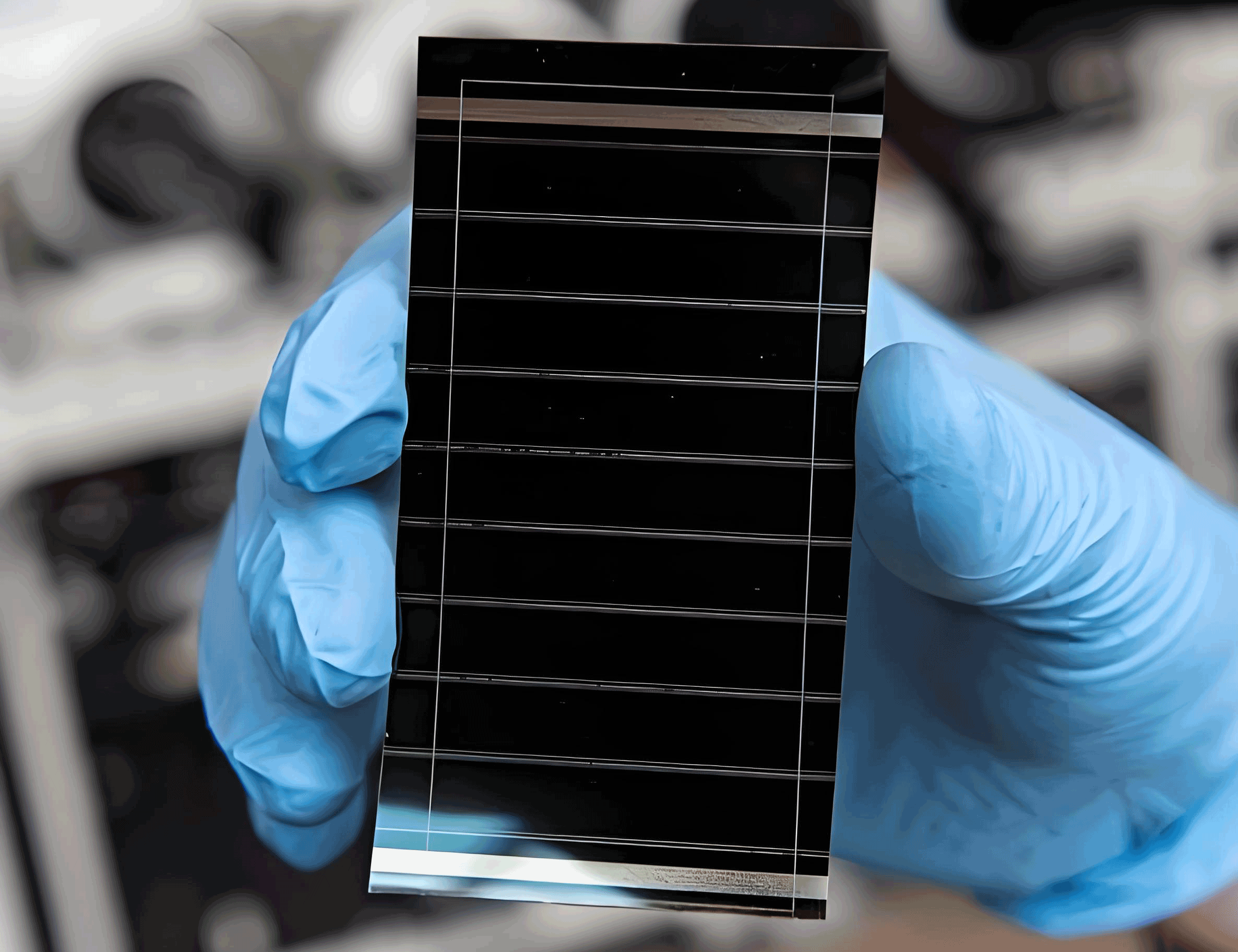
In conclusion, multifunctional additives play a crucial role in advancing perovskite solar cells by addressing defects and improving stability. Through my analysis, I have shown that C=O-based additives excel in coordination and energy level tuning, while S=C and S=O-based additives offer strong defect passivation and hydrophobic protection. The synergy between different functional groups in these additives enables comprehensive improvements in PCE and longevity. Future research should focus on designing novel additives with tailored properties, such as enhanced hydrophobicity or ionic conductivity, to further push the boundaries of perovskite solar cell performance. Additionally, in-depth studies on the interaction mechanisms using advanced characterization techniques will be essential for unlocking the full potential of these multifunctional components in perovskite solar cells.
To quantify the benefits, the overall improvement in PCE can be expressed as a function of defect density reduction: $$ \text{PCE} = \text{PCE}_0 – \alpha N_t $$ where PCE0 is the ideal efficiency, α is a constant, and Nt is the trap density. By minimizing Nt through additive engineering, perovskite solar cells can achieve higher efficiencies closer to the theoretical limit. As we continue to explore these strategies, the integration of multifunctional additives will undoubtedly remain a key avenue for developing next-generation perovskite solar cells with commercial viability.