
In the context of globalization and increasing energy demands, the search for efficient and sustainable energy storage solutions has become paramount. The lithium-ion battery stands out as the dominant electrochemical energy storage system due to its superior energy density, long cycle life, and declining cost. Its applications span from portable electronics to electric vehicles and large-scale grid storage, making it a cornerstone of modern technology. The performance, cost, and safety of a lithium-ion battery are intrinsically linked to the properties of its cathode material. Among the various candidates, lithium-rich manganese-based (LRM) cathode materials have garnered significant research attention as one of the most promising next-generation cathodes for high-energy-density lithium-ion battery systems.
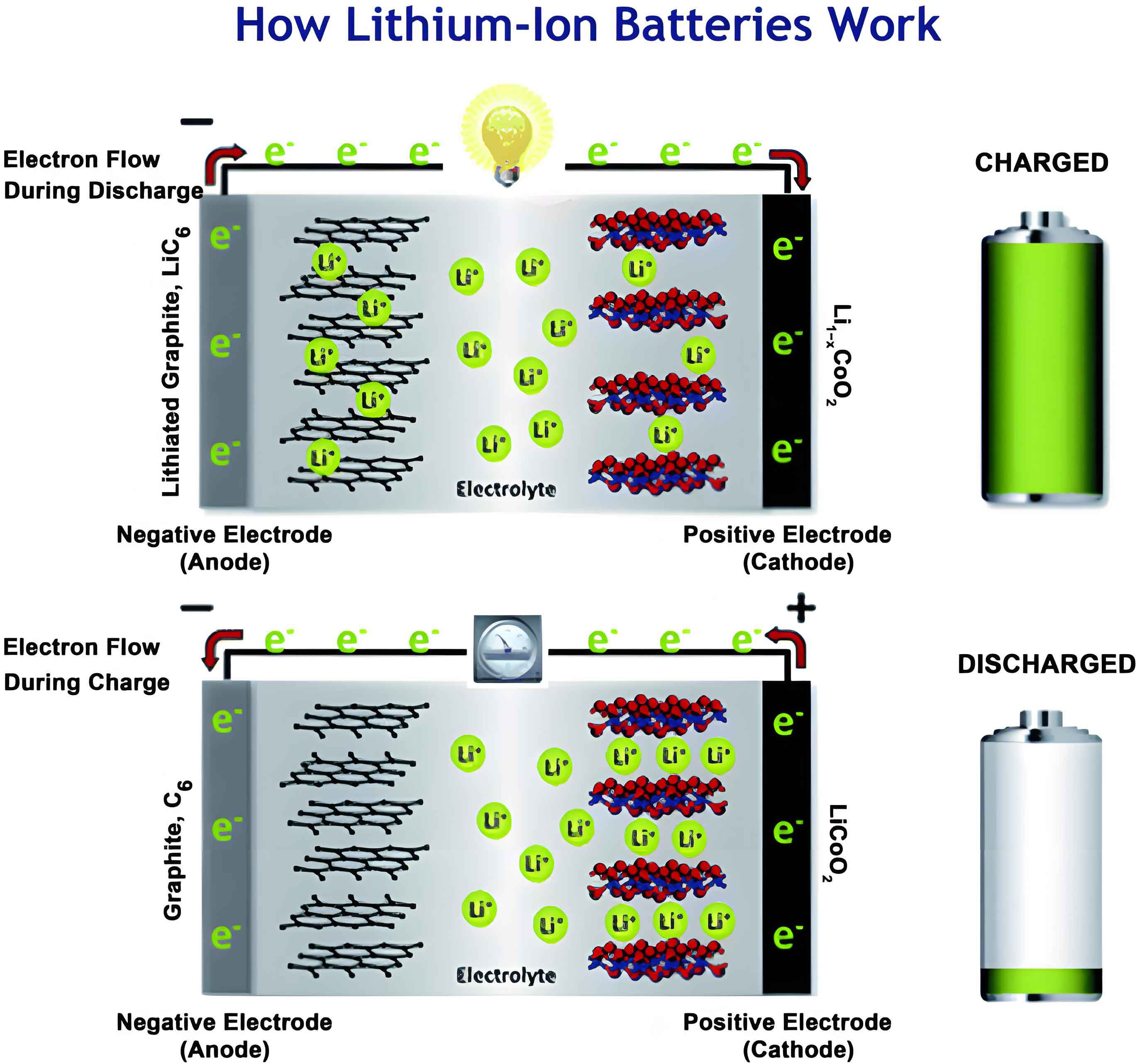
LRM materials offer a compelling combination of high specific capacity (often >250 mAh g⁻¹), high operating voltage, improved thermal stability compared to high-nickel layered oxides, and lower cost due to the reduced cobalt content. However, their path to commercialization is hindered by several intrinsic challenges, including low first-cycle Coulombic efficiency, severe voltage decay during cycling, mediocre rate capability, and structural instability. This article provides a comprehensive overview of the structural characteristics, synthesis methods, modification strategies, and future perspectives for LRM cathode materials, aiming to elucidate the ongoing efforts to harness their full potential for advanced lithium-ion battery technology.
1. Structural Characteristics of Lithium-Rich Manganese-Based Cathodes
The exceptional capacity of LRM materials originates from their unique composite structure, which allows for reversible cationic (transition metal) and anionic (oxygen) redox activities. The debate on their precise atomic arrangement has converged towards two primary structural models, which are now understood to represent different perspectives of a complex reality.
1.1 Two-Phase Composite Model (Nanocomposite Domain Model)
This model, historically significant, describes LRM materials as an intimate nanocomposite of two layered phases: a LiMO2 component (with the R3m space group, M = Ni, Co, Mn, etc.) and a Li2MnO3-like component (with the C2/m space group). The overall composition can be represented as:
$$ xLi_2MnO_3 \cdot (1-x)LiMO_2 $$
In the LiMO2 structure, Li+ and transition metal (TM) ions occupy alternating octahedral sites in the oxygen close-packed framework. The Li2MnO3 component is structurally similar but features a specific ordering where Li+ ions occupy one-third of the TM layer sites in a honeycomb pattern, with Mn4+ occupying the remaining sites. This model effectively explains the characteristic activation plateau around 4.5 V during the first charge, associated with the irreversible extraction of Li2O from the Li2MnO3 domains.
1.2 Single-Phase Solid Solution Model
This model, now more widely accepted for describing the bulk structure, views LRM materials as a homogeneous layered solid solution with cation ordering. The general formula is:
$$ Li_{1+x}Ni_yCo_zMn_{1-x-y-z}O_2 $$
Here, the excess lithium (x) and transition metals are integrated into the same TM layer. When x is significant, the system tends to form a long-range ordered superstructure, often described as Li2MnO3-type ordering within a LiMO2 lattice. This ordering is crucial for stabilizing the structure and enabling the anionic redox activity. At lower lithium content, this long-range order may break down, leading to local phase separation. The solid-solution model better accounts for the continuous changes in lattice parameters observed during cycling.
The electrochemical behavior of an LRM cathode in a lithium-ion battery involves complex interplay between these structural features: the initial charge involves Li+ extraction from the LiMO2 regions (cationic redox) followed by the activation of the Li2MnO3-like regions involving oxygen redox and loss, which ultimately creates a stabilized, high-capacity layered structure for subsequent cycles.
2. Synthesis Methods for LRM Cathode Materials
The electrochemical performance of an LRM cathode in a lithium-ion battery is profoundly influenced by its synthesis route, which dictates morphology, particle size, crystallinity, and cation distribution. The following table summarizes the key synthesis methods, their principles, and their comparative advantages and disadvantages.
| Synthesis Method | Core Principle | Key Advantages | Major Disadvantages |
|---|---|---|---|
| Sol-Gel Method | A wet-chemical process where metal precursors are mixed in a solution, undergo hydrolysis/polycondensation to form a gel, which is then dried and calcined. | Excellent chemical homogeneity at the molecular level. Precise stoichiometric control. Ability to form nano-sized particles with high surface area. | High cost of organic precursors. Long processing time. Difficult to scale up for mass production. Potential for residual carbon impurities. |
| Co-Precipitation Method | Simultaneous precipitation of transition metal hydroxides/carbonates from a mixed salt solution by controlling pH and concentration, followed by filtration, drying, and lithiation. | Superior control over particle morphology (e.g., spherical shapes) and size distribution. High tap density achievable. Excellent compositional uniformity. Most suitable for industrial-scale production. | Complex process control (pH, temperature, stirring rate). Generation of wastewater. Long process chain from precursor to final product. |
| High-Temperature Solid-State Reaction | Direct mixing and grinding of solid lithium and transition metal source compounds, followed by high-temperature calcination (700–1000°C). | Simple process, easy to operate. Low cost of raw materials and equipment. Direct route suitable for some material modifications. | Poor homogeneity, irregular morphology. Large particle size with broad distribution. Requires prolonged grinding and high temperatures, leading to potential Li loss and impurity formation. |
| Spray Pyrolysis / Hydrothermal/Solvothermal | Spray: Atomization of precursor solution into droplets rapidly dried/decomposed in a hot zone. Hydro/Solvo: Crystallization from aqueous/organic solution under high pressure and temperature. | Spray: Can produce spherical, hollow, or dense particles; continuous process. Hydro/Solvo: High crystallinity at lower temperatures; unique nanostructures (wires, plates). | Spray: High energy consumption; complex equipment. Hydro/Solvo: Low yield; high pressure required; often used for research-scale synthesis. |
For instance, the sol-gel method’s ability to produce nano-crystalline materials can enhance rate capability but often suffers from severe particle agglomeration and low volumetric energy density. In contrast, the co-precipitation method is the industry-preferred route for manufacturing commercial layered oxide cathodes for lithium-ion battery applications, as it reliably produces spherical secondary particles composed of densely packed primary nanoparticles, offering a good balance between tap density, kinetics, and stability.
3. Key Challenges and Corresponding Modification Strategies
Despite their high capacity, the practical application of LRM materials in a commercial lithium-ion battery is impeded by several interconnected drawbacks. The following equation schematically represents the first-cycle activation process, highlighting the source of inefficiency:
$$ Li_{1+x}M_{1-x}O_2 \ (LRM) \rightarrow LiM’O_2 + x/2 \ Li_2O \ (Irreversible\ Loss) $$
Where M represents the transition metals and M’ indicates their oxidized states. The loss of Li2O (or oxygen) leads directly to low first-cycle Coulombic efficiency (CE). Subsequent challenges include transition metal migration, layer-to-spinel phase transformation causing voltage decay, and surface parasitic reactions with the electrolyte. Various modification strategies have been developed to address these issues.
3.1 Bulk Doping (Ion Substitution)
Bulk doping involves the partial substitution of cations or anions in the crystal lattice with foreign ions to enhance structural and electrochemical stability. The effectiveness of a dopant (D) can be evaluated by its impact on the formation energy of defects, often described by equations considering charge compensation. For example, aliovalent cation doping (e.g., Al3+, Mg2+, Zr4+, Ti4+) can strengthen the TM-O bonds, suppress oxygen release, and inhibit TM migration. The substitution of Mn4+ with a more stable cation like Ti4+ can be represented as:
$$ Li(Li_{0.2}Ni_{0.13}Co_{0.13}Mn_{0.54-y}Ti_y)O_2 $$
Similarly, anion doping (e.g., F–, S2- for O2-) strengthens the lattice due to higher bond dissociation energy (e.g., M-F vs. M-O) and can mitigate oxygen redox activity, reducing voltage fade. Doping generally improves first-cycle CE, cycle life, and thermal stability of the lithium-ion battery cathode.
3.2 Surface Coating/Modification
Surface coating creates a physical and chemical barrier between the reactive cathode surface and the corrosive electrolyte. This layer mitigates transition metal dissolution, HF attack, and unwanted side reactions, thereby improving cycling stability and safety. Coatings can be categorized as follows:
| Coating Material Type | Examples | Primary Function & Benefits | Potential Drawbacks |
|---|---|---|---|
| Electrochemically Active | LiFePO4, LiMn2O4, Li4Ti5O12 | Provides additional Li+ storage; can act as a fast ion-conducting layer; buffers volume changes. | May add extra weight without proportional capacity gain; complex synthesis for uniform coating. |
| Electrochemically Inert (Metal Oxides/Fluorides/Phosphates) | Al2O3, ZnO, ZrO2, AlF3, AlPO4 | Excellent chemical/electrochemical stability; effectively scavenges HF; protects bulk structure. | Often poor electronic/ionic conductor; thick coatings can hinder kinetics. |
| Fast Ion Conductors | Li3PO4, Li2SiO3, Li2ZrO3, Perovskites (LLTO, LLZO) | Enhances Li+ transport kinetics at the interface; reduces polarization; improves rate performance. | Synthesis parameters need precise control to form a continuous ion-conducting phase. |
| Conductive Polymers & Carbon | Polypyrrole, PANI, Graphene, Carbon Nanotubes | Enhances electronic conductivity of the composite cathode; flexible coating accommodates strain. | May be unstable at high voltages; can increase interfacial resistance if not optimized. |
The optimal coating is typically ultrathin (nanometer-scale), conformal, and stable. A well-designed coating is crucial for building a long-lasting and safe lithium-ion battery with an LRM cathode.
3.3 Synergistic Modification: Doping & Coating
The most effective strategy often combines bulk doping and surface coating—an “inside-out” modification. Doping stabilizes the bulk crystal structure from within, inhibiting phase transitions and oxygen loss, while the coating protects the surface from external corrosive attacks. For example, a material system like Mg/F co-doped LRM coated with a Li3PO4 layer has shown remarkable improvement in capacity retention and voltage stability compared to singly modified counterparts. This synergistic approach simultaneously addresses bulk and interfacial degradation mechanisms, pushing the performance boundaries of the lithium-ion battery.
3.4 Morphology and Architecture Design
Engineering the particle morphology is another critical avenue. Designing single-crystal LRM materials, as opposed to conventional polycrystalline secondary particles, can fundamentally eliminate grain boundaries. This minimizes microcrack formation during cycling, reduces electrolyte infiltration and parasitic reactions, and enhances mechanical integrity. The synthesis of such single crystals often requires precise control over nucleation and growth kinetics during high-temperature calcination. Furthermore, constructing hierarchical porous structures or core-shell architectures can optimize Li+ and electron transport pathways, improving the rate capability of the lithium-ion battery.
4. Future Perspectives and Research Directions
To realize the full commercial potential of LRM cathode materials in the next generation of lithium-ion battery technology, future research should focus on the following multi-disciplinary directions:
4.1 Advanced Synthesis and Precise Control: Developing novel, scalable synthesis routes (e.g., advanced continuous co-precipitation, low-temperature molten salt methods) that offer finer control over composition gradient, surface termination, and cation ordering. The goal is to produce materials with “built-in” stability directly from synthesis.
4.2 Deepening Fundamental Understanding: Utilizing advanced in-situ/operando characterization techniques (such as high-resolution transmission electron microscopy, X-ray absorption spectroscopy, and neutron diffraction) coupled with first-principles calculations to unravel the real-time dynamics of anionic/cationic redox, oxygen evolution, and phase transformation at the atomic scale. This knowledge is essential for targeted material design.
4.3 Exploration of Multi-Modal and Hierarchical Modifications: Moving beyond simple single-element doping or single-layer coating. Research should explore gradient doping profiles, multi-component hybrid coatings (e.g., oxide + conductor), and the construction of sophisticated architectures like yolk-shell or concentration-gradient core-shell particles to manage stress and interface simultaneously.
4.4 Compatibility Engineering: System-level optimization is crucial. This includes developing new electrolyte formulations (e.g., localized high-concentration electrolytes, solid electrolytes) and functional additives specifically tailored to stabilize the LRM cathode interface. Pairing LRM cathodes with advanced anodes (like silicon-based anodes) in a full-cell lithium-ion battery configuration requires careful balancing of capacities and pre-lithiation strategies to offset the initial irreversible capacity loss.
4.5 Sustainable and Cost-Effective Design: Further reduction or complete elimination of cobalt, optimization of nickel content for balance between energy and stability, and development of closed-loop recycling processes for LRM materials are imperative for sustainable large-scale deployment in the electric vehicle and energy storage markets.
5. Conclusion
Lithium-rich manganese-based cathode materials represent a critical frontier in the quest for higher energy density lithium-ion battery systems. Their complex structure, embodying both cationic and anionic redox activities, is the source of their high capacity but also their primary challenges, including voltage fade and interfacial instability. Significant progress has been made in understanding these materials through advanced structural models. Synthesis methods like co-precipitation provide a pathway for controllable manufacturing, while modification strategies—particularly the synergistic combination of bulk doping and surface coating—have demonstrated substantial improvements in electrochemical performance.
While hurdles remain, the ongoing research efforts focused on atomic-scale engineering, advanced characterization, and system-level integration are steadily paving the way for their practical application. With continued innovation, LRM cathodes hold the promise to significantly enhance the energy density and cost-effectiveness of lithium-ion battery packs, thereby accelerating the adoption of electric vehicles and enabling more efficient grid-scale renewable energy storage, ultimately contributing to a more sustainable energy future.