
In the quest for sustainable energy storage solutions, sodium-ion batteries have emerged as a promising alternative to lithium-ion batteries, primarily due to the abundance and low cost of sodium resources. As a key component, carbon anode materials play a pivotal role in determining the performance of sodium-ion batteries, including energy density, cycle stability, and charge-discharge efficiency. In this article, I will comprehensively explore the advancements in carbon anode materials for sodium-ion batteries, delving into their classifications, electrochemical properties, preparation methods, and modification strategies. The goal is to provide a foundational understanding and technical insights that can drive the development of more efficient and economical sodium-ion battery systems, thereby accelerating their adoption in large-scale energy storage applications.
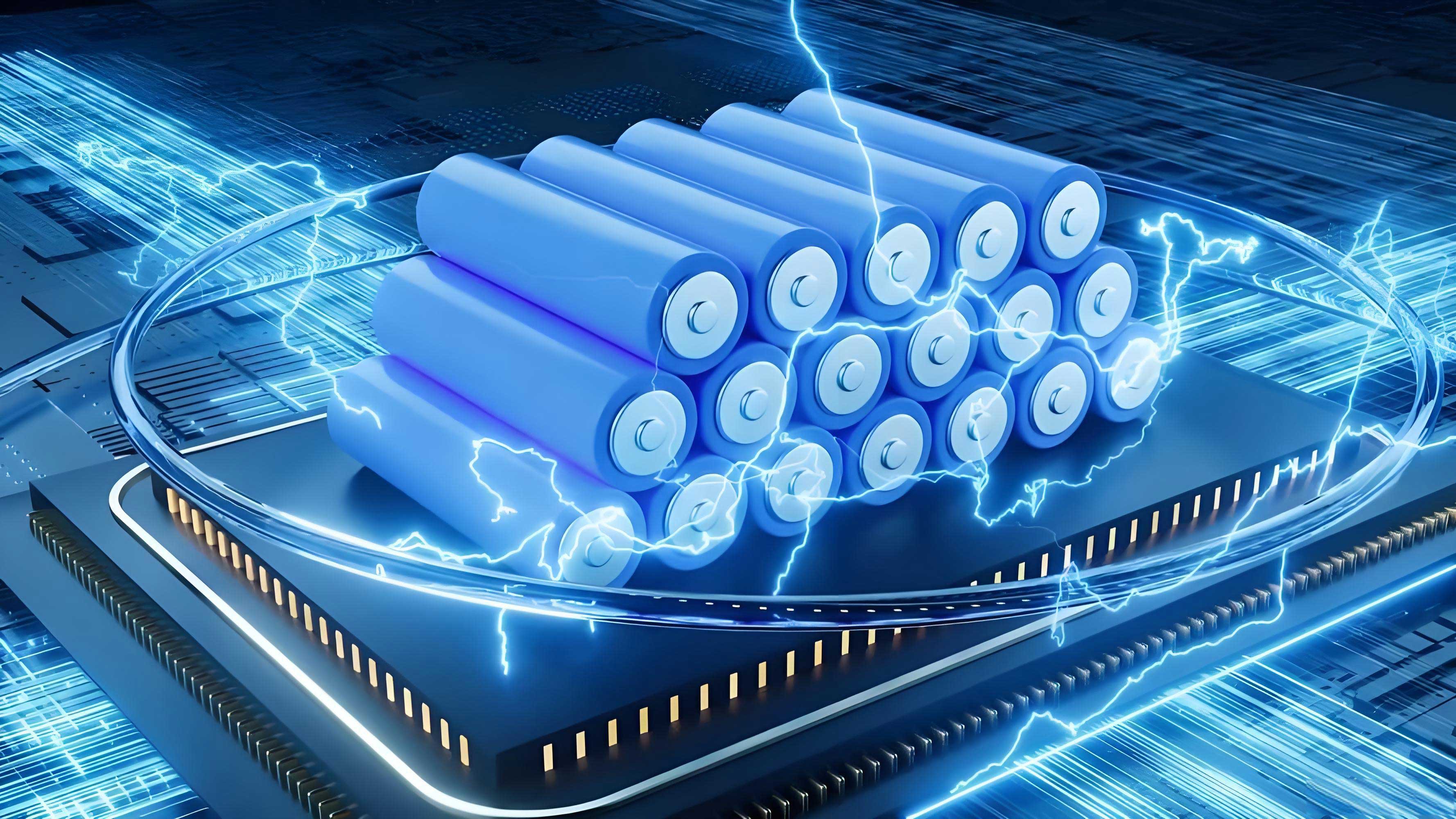
The growing demand for energy storage, particularly in electric vehicles and grid-scale applications, has underscored the limitations of lithium-ion batteries, such as high material costs, uneven resource distribution, and finite cycle life. Sodium-ion batteries, leveraging the Earth’s crustal abundance of sodium—over 1000 times that of lithium—offer significant advantages in cost-effectiveness and supply chain stability. However, challenges remain in matching the energy density and cycle stability of lithium-ion batteries, largely due to the larger ionic radius of sodium ions and their distinct electrochemical behaviors. Carbon materials, with their excellent conductivity, chemical stability, and tunable structures, have been widely adopted as anodes in sodium-ion batteries. Yet, enhancing their sodium storage capacity while maintaining robust cycle performance is a critical research focus. This review aims to synthesize recent progress in carbon anode materials for sodium-ion batteries, offering a scientific framework for future innovations in this field.
The fundamental working principle of sodium-ion batteries mirrors that of lithium-ion batteries, involving the movement of sodium ions between cathode and anode during charge and discharge cycles. The basic structure comprises a cathode typically made of transition metal oxides, an anode often based on carbon materials or metal compounds, an electrolyte facilitating ion transport, and a separator preventing short circuits. The charge-discharge mechanism revolves around the intercalation and de-intercalation of sodium ions into electrode materials, a process governed by factors like material composition, structural integrity, and interfacial reactions. Optimizing these parameters is essential for improving the efficiency and longevity of sodium-ion batteries. For instance, strategic charging protocols can mitigate adverse phase transitions and enhance thermal management, as highlighted in recent studies. The kinetics of sodium ion movement can be described by simplified equations, such as the intercalation reaction in carbon anodes: $$ \text{C} + x\text{Na}^+ + x e^- \leftrightarrow \text{Na}_x\text{C} $$ where \( x \) represents the stoichiometric coefficient of sodium intercalation. This reaction underscores the reversible storage mechanism that is central to battery performance. Further, the diffusion of sodium ions within carbon matrices can be modeled using Fick’s laws, emphasizing the importance of material porosity and morphology: $$ J = -D \frac{\partial C}{\partial x} $$ Here, \( J \) is the flux of sodium ions, \( D \) is the diffusion coefficient, and \( \frac{\partial C}{\partial x} \) is the concentration gradient. Understanding these principles is crucial for designing advanced carbon anodes tailored for sodium-ion batteries.
Carbon anode materials for sodium-ion batteries can be broadly categorized into hard carbon, soft carbon, and graphite, each with distinct characteristics that influence their suitability for battery applications. The table below summarizes the key properties of these carbon types, highlighting their theoretical capacities and performance metrics.
| Carbon Type | Theoretical Sodium Storage Capacity (mAh/g) | Key Advantages | Limitations | Typical Applications |
|---|---|---|---|---|
| Hard Carbon | >500 | High capacity, excellent cycle stability, good rate capability | Complex synthesis, cost variability | High-energy-density sodium-ion batteries |
| Soft Carbon | ~222 | Easier processing, moderate conductivity | Capacity degradation at high temperatures | Mid-range energy storage systems |
| Graphite | ~35 | High conductivity, structural stability | Low sodium storage, poor rate performance | Limited use in sodium-ion batteries |
The electrochemical performance of carbon materials in sodium-ion batteries is influenced by multiple factors, including microstructure, surface chemistry, and preparation techniques. For example, the porosity and specific surface area of carbon directly affect ion accessibility and storage sites, which can be quantified using the Brunauer-Emmett-Teller (BET) equation for surface area analysis: $$ S = \frac{V_m N_A \sigma}{m} $$ where \( S \) is the specific surface area, \( V_m \) is the monolayer adsorption volume, \( N_A \) is Avogadro’s number, \( \sigma \) is the cross-sectional area of adsorbate molecules, and \( m \) is the mass of the sample. Additionally, defects and functional groups on carbon surfaces can enhance sodium ion adsorption, as described by the Langmuir isotherm model: $$ \theta = \frac{K P}{1 + K P} $$ Here, \( \theta \) is the fractional coverage of adsorption sites, \( K \) is the equilibrium constant, and \( P \) is the pressure of sodium ions in the electrolyte. These factors collectively determine the reversible capacity and cycling stability of sodium-ion batteries.
Preparation methods for carbon anode materials are diverse, ranging from physical to chemical techniques, each offering unique control over material properties. Physical methods, such as high-temperature heat treatment and physical vapor deposition, focus on altering material morphology without chemical reactions. For instance, annealing carbon precursors at controlled temperatures can induce graphitization, improving conductivity. The degree of graphitization can be expressed using the stacking height \( L_c \) from X-ray diffraction, calculated as: $$ L_c = \frac{K \lambda}{\beta \cos \theta} $$ where \( K \) is a constant (typically 0.9), \( \lambda \) is the X-ray wavelength, \( \beta \) is the full width at half maximum of the diffraction peak, and \( \theta \) is the Bragg angle. Chemical methods, including chemical vapor deposition (CVD) and hydrothermal synthesis, enable precise tuning of chemical composition and nanostructure. In CVD, the growth of carbon nanotubes or graphene layers can be modeled using reaction kinetics equations, such as: $$ \frac{dC}{dt} = k (C_0 – C) $$ where \( \frac{dC}{dt} \) is the deposition rate, \( k \) is the rate constant, and \( C_0 \) and \( C \) are initial and current precursor concentrations. Emerging techniques, like 3D printing and nano-composite fabrication, further expand the possibilities for designing hierarchical carbon structures with optimized ion transport pathways. The table below compares common preparation methods for carbon anode materials in sodium-ion batteries.
| Method | Key Processes | Advantages | Disadvantages | Typical Outcomes |
|---|---|---|---|---|
| Physical Methods | Heat treatment, milling, vapor deposition | Simple, scalable, minimal chemical waste | Limited control over chemical functionality | Hard carbon with tuned porosity |
| Chemical Methods | CVD, hydrothermal, solvothermal | Precise structure control, functionalization capability | Complex processes, higher cost | Graphene-based composites, porous carbons |
| Emerging Techniques | 3D printing, template-assisted synthesis | Customizable architectures, enhanced performance | Technology immaturity, scalability challenges | 3D silicon-carbon hybrids, nano-architected carbons |
To enhance the performance of carbon anode materials in sodium-ion batteries, various functionalization and modification strategies have been developed. Doping with heteroatoms, such as nitrogen, boron, or sulfur, is a prevalent approach to tailor electronic properties and introduce active sites for sodium storage. The doping effect can be analyzed using density functional theory (DFT) calculations, where the change in Fermi level \( E_F \) upon doping is given by: $$ \Delta E_F = \frac{\partial E}{\partial N} $$ Here, \( \Delta E_F \) is the shift in Fermi energy, \( E \) is the total energy, and \( N \) is the number of electrons. Nitrogen doping, for example, can increase the defect density in carbon, promoting sodium ion adsorption and improving capacity. Experimental studies show that doped carbon materials often exhibit enhanced conductivity, which can be described by the conductivity formula: $$ \sigma = n e \mu $$ where \( \sigma \) is electrical conductivity, \( n \) is charge carrier concentration, \( e \) is electron charge, and \( \mu \) is carrier mobility. This modification is crucial for optimizing the rate capability of sodium-ion batteries.
Heat treatment and post-processing techniques are another avenue for refining carbon materials. Controlled thermal annealing can eliminate structural disorders and enhance crystallinity, leading to better cycle stability. The annealing process follows Arrhenius kinetics, where the rate constant \( k \) is: $$ k = A e^{-E_a / RT} $$ with \( A \) as the pre-exponential factor, \( E_a \) the activation energy, \( R \) the gas constant, and \( T \) the temperature. Post-treatments like chemical activation or surface coating with polymers can further modify surface properties, increasing wettability with electrolytes and reducing side reactions. For instance, coating carbon with a thin layer of conductive polymer can stabilize the solid-electrolyte interphase (SEI), a critical factor for long-term cycling in sodium-ion batteries. The SEI formation involves complex electrochemical reactions, often modeled using equivalent circuit models in impedance spectroscopy.
Carbon composite design integrates carbon with other functional materials, such as metal oxides, conductive polymers, or silicon, to synergistically improve performance. These composites leverage the high conductivity of carbon and the high capacity of secondary phases, addressing the limitations of pure carbon anodes. The overall capacity of a composite can be estimated using a rule of mixtures: $$ C_{\text{composite}} = f_{\text{carbon}} C_{\text{carbon}} + f_{\text{additive}} C_{\text{additive}} $$ where \( C_{\text{composite}} \), \( C_{\text{carbon}} \), and \( C_{\text{additive}} \) are the capacities of the composite, carbon, and additive, respectively, and \( f \) represents the weight fractions. For example, graphene-metal oxide composites offer enhanced ion diffusion paths due to graphene’s high surface area, as quantified by the diffusion coefficient \( D_{\text{eff}} \): $$ D_{\text{eff}} = \phi D_{\text{bulk}} + (1 – \phi) D_{\text{interface}} $$ Here, \( \phi \) is the volume fraction of the conductive phase, and \( D_{\text{bulk}} \) and \( D_{\text{interface}} \) are diffusion coefficients in bulk and interfacial regions. Such designs are pivotal for achieving high-energy-density sodium-ion batteries with robust cycling performance.
The advancement of sodium-ion battery technology heavily relies on continuous innovation in carbon anode materials. From hard carbon to doped composites, each evolution brings us closer to overcoming the energy density and stability gaps compared to lithium-ion batteries. Future research should focus on scalable synthesis methods, in-depth mechanistic studies using in-situ characterization techniques, and the development of standardized testing protocols. Moreover, integrating machine learning for material discovery could accelerate the identification of optimal carbon structures for sodium storage. As we push the boundaries, sodium-ion batteries are poised to play a transformative role in the global energy landscape, offering a sustainable and cost-effective storage solution for renewable energy integration and electrified transportation.
In summary, carbon anode materials are at the heart of sodium-ion battery development, with ongoing research revealing vast potential through structural and chemical modifications. By leveraging doping, composite engineering, and advanced preparation techniques, we can unlock higher capacities and longer cycle lives. The journey toward commercial viability requires collaborative efforts across academia and industry, driven by a deep understanding of sodium ion dynamics in carbon matrices. As I reflect on the progress, it is clear that sodium-ion batteries, empowered by innovative carbon anodes, will be a cornerstone of future energy storage systems, contributing to a greener and more resilient power grid.